
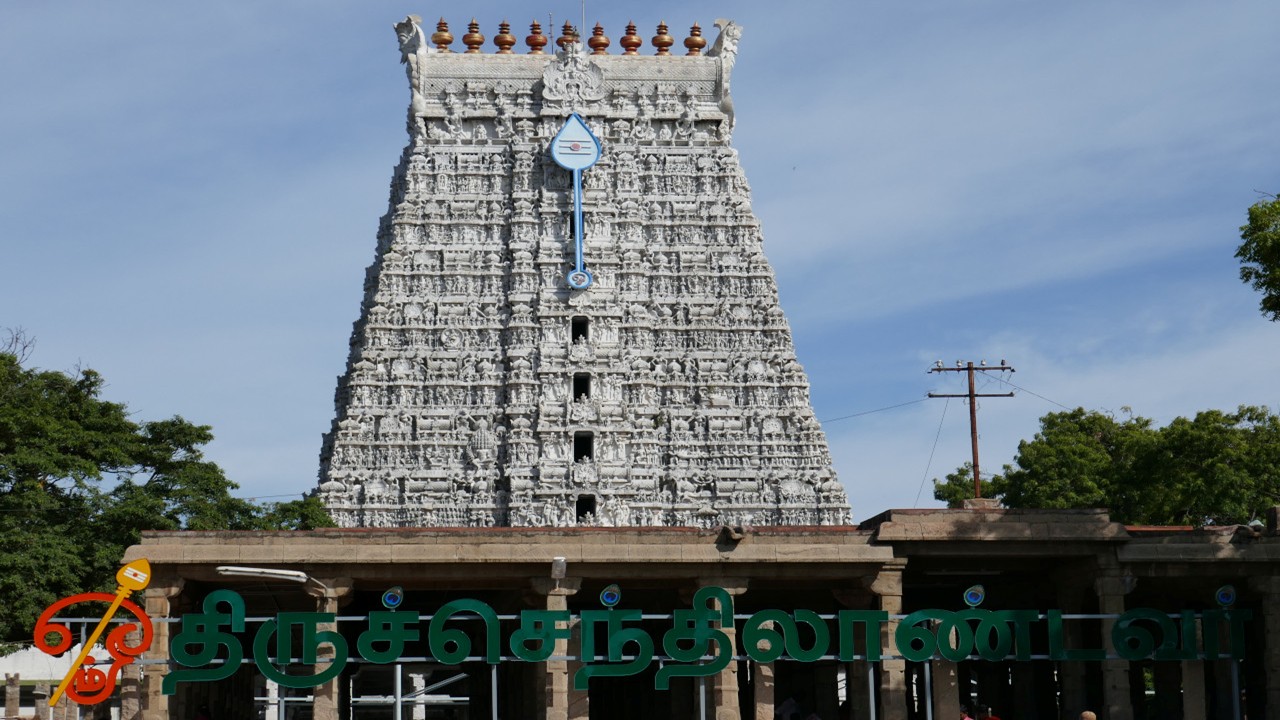
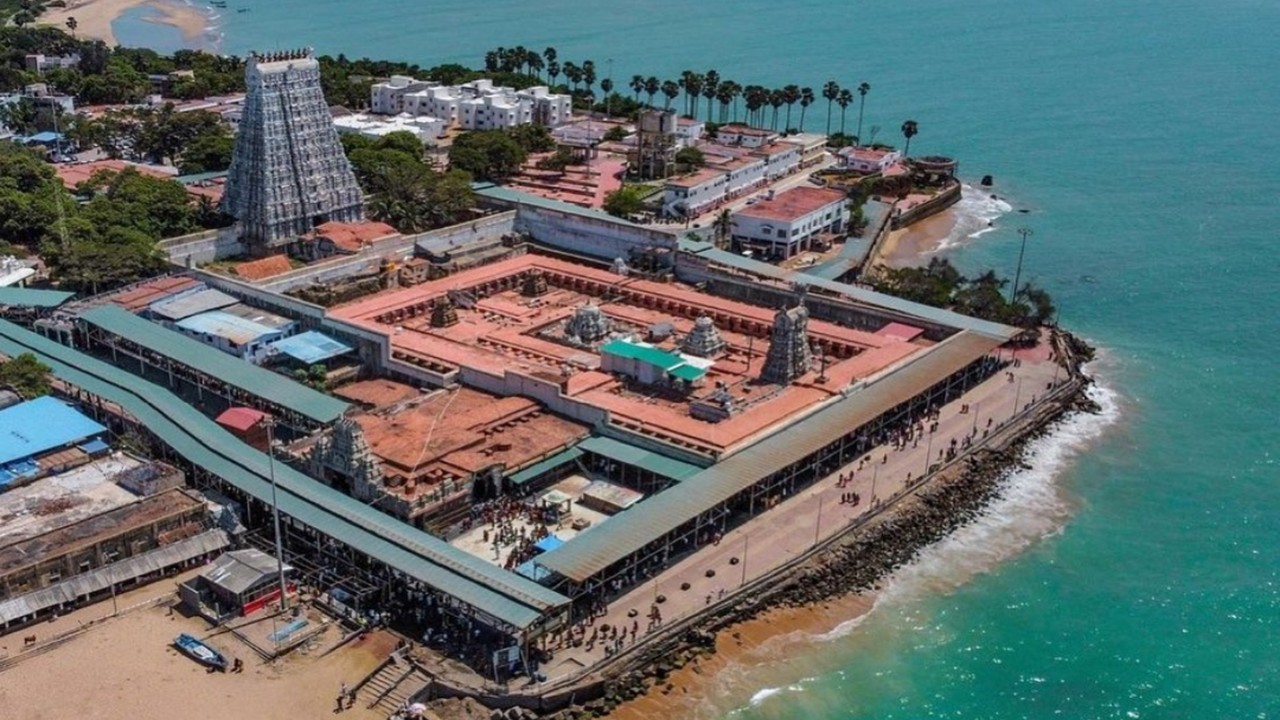
On the southeastern coast of Tamil Nadu, where the waves of the Bay of Bengal sing eternal hymns to the shore, stands one of the most revered sanctuaries of Sri Murugan: the Tiruchendur Subramanya Swamy Temple. Unlike the other sacred abodes of Murugan that rise amid hills and forests, Tiruchendur rests magnificently beside the sea, creating a rare union of spiritual grandeur and natural beauty. It is the second of the Arupadai Veedu, the six most sacred shrines of Sri Murugan, and for countless devotees, it is not merely a temple but a living battlefield of dharma where divine grace triumphed over evil. The temple’s traditions draw deeply from the Skanda Purana and the Tamil Kanda Puranam, where Murugan is honoured as Skanda, Kumara, and Subrahmanya. Tradition also holds that Adi Shankaracharya composed the revered Subrahmanya Bhujangam after worshipping at Tiruchendur.
The Divine Victory of Murugan
The spiritual significance of Tiruchendur originates from the Kanda Puranam written by Katchiappa Shivacharya. According to the sacred narrative, the demon brothers Surapadman, Simhamukhan, and Tarakasura performed intense austerities and received powerful boons from Bhagavan Shiva. Armed with near invincibility, they conquered the celestial worlds and oppressed the devatas.
Unable to bear their suffering, the devatas sought refuge in Shiva. From Shiva’s divine energy emerged six sparks that eventually manifested as Sri Murugan, the six-faced warrior devata destined to destroy the forces of adharma. Appointed commander of the celestial armies, Murugan marched toward the fortress of Surapadman and chose the shores of Tiruchendur as his military camp.
After a fierce battle that lasted several days, Murugan defeated Simhamukhan and Tarakasura before confronting Surapadman. In his final attempt to escape, Surapadman transformed himself into a gigantic mango tree in the middle of the ocean. Murugan hurled his sacred Vel and split the tree into two. One half became a peacock, which Murugan accepted as his vahana or mount, and the other transformed into a rooster, which became his emblem.
Following this victory, Murugan wished to worship Shiva in gratitude. The divine architect Mayan constructed a shrine at Tiruchendur, where Murugan performed the first Shiva Puja here as Jaganathar Shiva (also called Jaganatheeswarar) within the vicinity.
The Dutch Episode
One of the most fascinating events in the history of the Tiruchendur Murugan Temple occurred during the seventeenth century, when European colonial rivalries reached the shores of Tamil Nadu. During the Dutch Portuguese conflicts, the Dutch East India Company occupied the sacred temple between 1646 and 1648, converting parts of the complex into a military stronghold. The occupation deeply distressed the local population, for Tiruchendur was already one of the most revered shrines of Sri Murugan and the second of the sacred Arupadai Veedu.
When the Dutch finally agreed to vacate the temple under pressure from the Madurai Nayak rulers, they are said to have removed the principal bronze Utsava Murti of Sri Murugan along with other valuable temple treasures and carried them aboard a ship bound for Dutch-controlled Ceylon (present-day Sri Lanka).
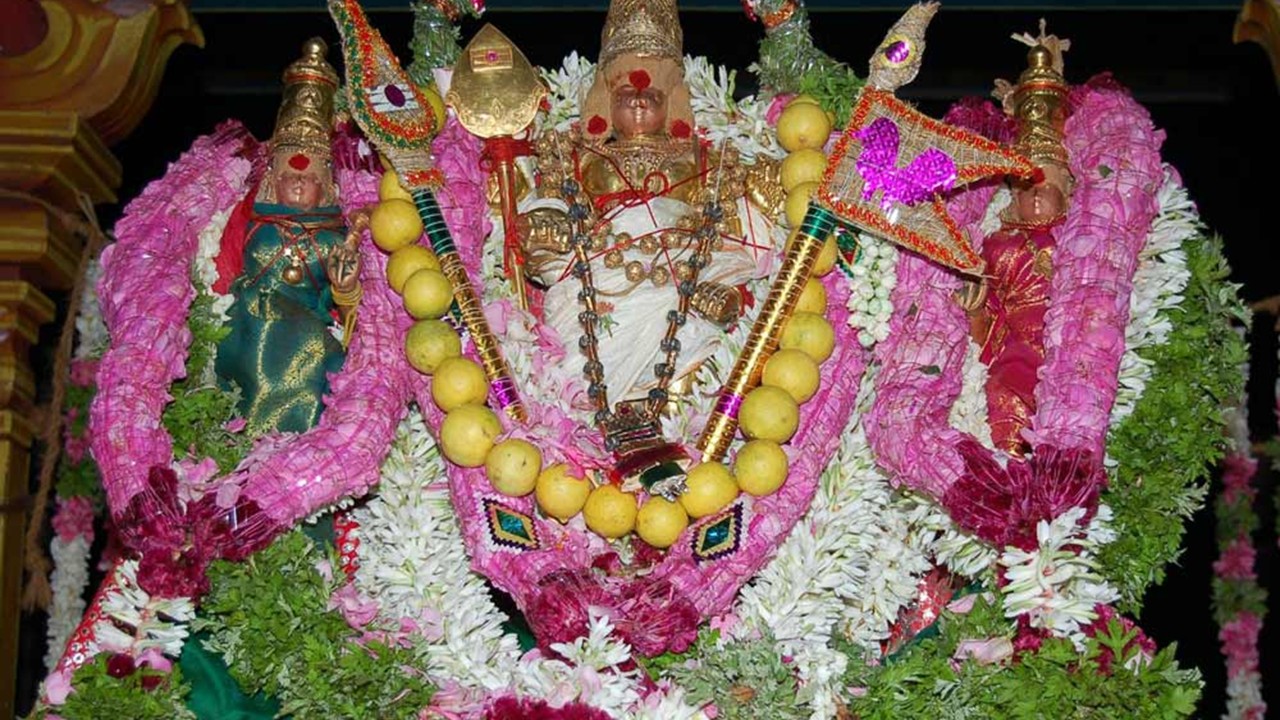
According to temple tradition, as the vessel sailed away from the Tamil coast, it encountered a violent storm. The sea became turbulent, the winds raged fiercely, and the frightened sailors believed the sacred deity was the cause of their misfortune. In panic, they threw the deity into the sea. Almost immediately, the storm subsided and calm returned to the waters. Devotees regard this as a divine miracle demonstrating Murugan’s power.
The story continues with Vadamalaiyappa Pillai, a devoted temple patron, who is believed to have received a divine vision in his dream where Sri Murugan revealed the submerged deity’s exact location. The vision pointed to signs at sea, including a floating lemon, a garland, and unusual sea conditions marking the spot. Guided by these signs, search parties recovered the deity from the sea and restored it to Tiruchendur with great celebration. This event remains one of the temple’s most cherished miracles and symbolizes the Murugan’s eternal protection of his sacred abode.
Literary Glory of Tiruchendur
The antiquity of Tiruchendur extends far beyond recorded history. Ancient Tamil literature refers to the shrine by names such as Tiruchiralaiwai. Literary and inscriptional evidence suggests that the site has been revered for nearly two millennia. References appear in Sangam literature, including Tirumurugatrupadai, one of the earliest devotional works dedicated to Murugan. Over centuries, the temple received patronage from Pandya rulers, Chera kings, and later the Travancore royal family. Numerous renovations were undertaken to protect the structure from the corrosive effects of the sea.
The shrine is praised in Tirumurugatrupadai of Nakkirar, one of the earliest extant Tamil devotional classics. It also finds mention in Purananuru, Silappadikaram, Tiruppukazh of Arunagirinathar, Kanda Puranam, and Tiruchendur Pillai Tamil. The verses composed in praise of Senthil Andavar continue to be recited daily throughout Tamil Nadu and among Murugan devotees worldwide.
Architecture and The Deity
The present-day Tiruchendur Murugan Temple is not the creation of a single king or dynasty. While the ancient shrine was expanded by the Pandya and Chera rulers over many centuries, the majestic temple seen today is largely the result of extensive reconstruction carried out by saintly renovators such as Mauna Swamigal, Kasi Swamigal, and Arumuga Swamigal, whose efforts culminated in the temple’s reconsecration in 1941.
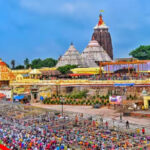
The temple’s massive nine-tiered Raja gopuram, rising 140 feet, serves as a landmark visible from far out at sea, traditionally associated with the patronage of the Desika Moorthi Swamigal line and several wealthy devotees over different periods. Unusually, the principal gopuram faces west rather than east, a rare architectural distinction among major temples. Built primarily in the Dravidian style, the temple combines structural elegance with spiritual symbolism. The vast complex includes spacious prakaras, pillared halls, shrines, mandapams, and ritual spaces designed according to ancient Agamic principles.
The sanctum represents one of the most distinctive aspects of the temple. Tradition holds that the earliest shrine was carved into the red sandstone formation near the coast. Subsequent expansions transformed the site into the grand complex visible today. Another remarkable feature is the famous Nazhi Kinaru. Just a short distance from the salty sea lies a freshwater spring. Pilgrims traditionally bathe in the sea and then cleanse themselves in this tiny freshwater well. The existence of sweet water so close to the ocean has fascinated devotees for centuries.
The presiding deity is Sri Subramanya, affectionately worshipped as Senthil Andavar. Unlike representations of the warrior Murugan preparing for battle, the deity here stands in a majestic and serene posture, holding a lotus while facing east. Tradition states that this form represents Murugan after the victory over Surapadman, engaged in worship of Bhagavan Shiva. Within the temple complex are shrines dedicated to Shanmukha, Valli, Deivanai, Bhagavan Shiva, Sri Vinayaka, and Sri Mahavishnu.
Festivals
The most celebrated festival at Tiruchendur is Skanda Sashti. The six-day festival culminates in the spectacular Soorasamharam, a dramatic re-enactment of Murugan’s victory over Surapadman. Thousands gather on the seashore to witness this sacred event, regarded as one of Tamil Nadu’s most powerful religious observances.
Many local devotees refer to the Tiruchendur Sea as “Senthil Kadal” (the Sea of Senthil) and believe that offering prayers at the shoreline carries special merit because Murugan himself is believed to have camped on these shores before and after the battle. Pilgrims traditionally begin their worship with a sacred dip in the ocean, offer prayers along the shoreline, and then proceed to the miraculous Nazhi Kinaru before entering the shrine.
Other major celebrations include Vaikasi Visakam, Thaipusam, the Masi Brahmotsavam, Kumbhabhishekam, and the Avani Festival. Temple car processions, floral decorations, Boat festivals, devotional music, and scriptural discourses transform the town into a vibrant center of faith throughout the year.
Darshan Timings of the Temple
The temple is open on all the days of the year between 5:00 AM to 9:00 PM.
Nearby Places to Visit
Sri Vaikuntanatha Perumal Temple, Srivaikuntam: A Nava Tirupati Divya Desham dedicated to Sri Vaikuntanatha Perumal, praised by Nammalvar, on the banks of the Tamiraparani River.
Alwarthirunagari: A revered Divya Desham and birthplace of Sri Nammalvar, with Adinatha Perumal as the presiding deity.
Kulasai Mutharamman Temple, Kulasekarapattinam: One of the most famous Devi temples in Tamil Nadu, known for its spectacular Navaratri and Dasara celebrations.
How to Reach Tiruchendur Temple?
The best way to plan is through Tirtha Yatra’s Pandiyanadu Divya Desham Yatra package. All the arrangements for your Yatra will be taken care of which you focus only on the spiritual experience of the journey.
By Air: Tuticorin Airport, about 40 km away, is the nearest airport, with taxis and buses available to Tiruchendur. Madurai International Airport, around 180 km away, is another option for pilgrims from major Indian cities.
By Train: Tiruchendur Railway Station is close to the temple and well connected to Chennai, Tirunelveli, Madurai, and other major Tamil Nadu cities.
By Road: Tiruchendur is well connected by TNSTC and private buses, with frequent services from Tirunelveli, Thoothukudi, Madurai and Kanyakumari. Private vehicles can access the temple via good highways, with parking near the complex.
0
Leave a Reply