
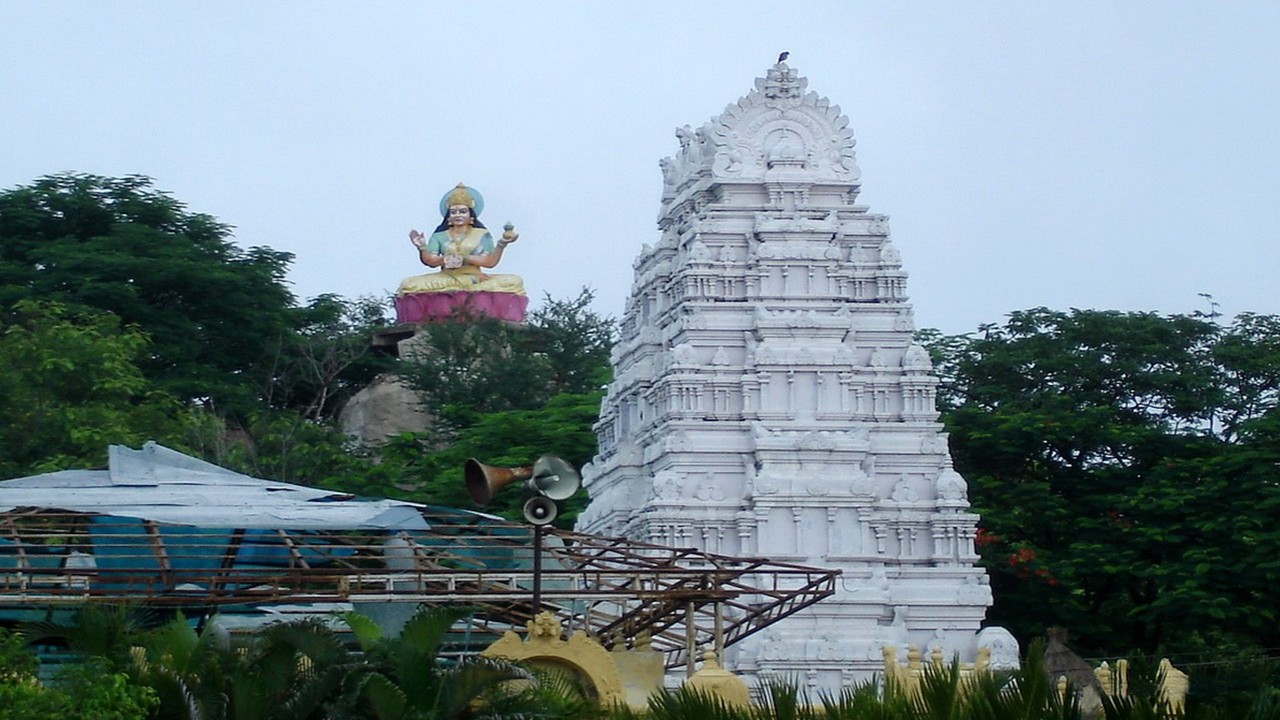
On the serene banks of the sacred Godavari River in northern Telangana near Nirmal district stands the revered Sri Gnana Saraswati Temple of Basara, one of the most celebrated shrines dedicated to Mata Saraswati in India. For countless generations, this ancient kshetra has been the spiritual gateway through which children begin their journey into learning. The temple is especially renowned for the sacred Aksharabhyasam ceremony, where young devotees are formally initiated into the world of letters under the blessings of the Goddess of Knowledge.
Unlike many major temples associated primarily with prosperity or liberation, Basara occupies a unique place as a tirtha dedicated to wisdom, learning, speech, arts, and spiritual knowledge. Nestled amid the historic Dandakaranya region, the spiritual atmosphere of Basara is deeply connected with the history of Maharshi Vyasa, the compiler of the four Vedas and one of the greatest literary figures of Sanatana Dharma. The temple tradition associates the kshetra with Vyasa’s worship of Saraswati, who in Vedic literature is revered both as a sacred river and as the divine embodiment of wisdom, speech, and knowledge.
The famous prayer recited during Vidyarambham occupies a special place in the temple’s rituals, “Sarasvati namastubhyam, varade kamarupini, vidyarambham karishyami, siddhir bhavatu me sada,”
Meaning: “O Mata Saraswati, I bow to You. O bestower of boons, O fulfiller of noble desires, I am commencing my pursuit of knowledge. May I always attain success in it.”
Sage Vyasa and the Birth of Basara
The sacred tradition of Basara begins in the age following the Mahabharata war. According to the temple’s Sthala purana, Maharshi Veda Vyasa, the compiler of the Vedas and author of the Mahabharata, set out on a quest for peace following the war of Kurukshetra. He arrived in the Kumaranchala hills, which are situated on the banks of the Godavari River, on his voyage journeyed southward with his disciples in search of a peaceful place for meditation. Drawn by the tranquillity of the Godavari’s banks and the forests of Dandakaranya, he chose this location as his meditation.
Local tradition narrates that Mata Saraswati is believed to have appeared before the sage and ordained him to build temples for the Shakti trio: Maha Saraswathi, Maha Lakshmi and Maha Kali. After his daily bath in the Godavari, Vyasa would bring three handfuls of sacred sand from the river. Through intense meditation and divine grace, these mounds of sand manifested as the forms of Saraswati, Lakshmi, and Kali. The sage consecrated these divine images and began worshipping them regularly. Over time, the place came to be known as Vyasa Puri or Vasara, which gradually evolved into the present name Basara due to the influence of the Maharashtrian residents.
The history preserves an important Vedic and Puranic symbolism. Saraswati represents knowledge and wisdom, Lakshmi represents prosperity, and Kali represents power and transformation. The devout ‘Narahari Maluka’ is said to have carried out severe penance in the cave, which is around 100 metres from the temple.
Evolution of the Shrine
Traditional accounts attribute an early temple structure to regional rulers connected with Karnataka and the Deccan. Some records associate the temple’s development with early medieval dynasties, while the existing structure is often linked to the Chalukyan architectural period. It is said that the king of Nandedu, King Bijalu, built this temple in the sixth century.
Historical traditions further state that the temple suffered damage during periods of political turmoil and invasions in the Deccan. The images were later re-established by local chiefs and devotees, ensuring the continuity of worship.
During the Nizam and colonial periods, Basara continued to function as a regional pilgrimage center. Although the temple was not a major political institution, it remained an important religious destination for communities across present-day Telangana, Maharashtra, and Karnataka.
Today, the temple is administered under the Sri Gnana Saraswati Devasthanam and the Telangana Endowments system. Daily worship and ritual traditions are maintained through temple priests and hereditary Archaka lineages who continue centuries-old practices. Local tradition also remembers the contribution of Makkaji Patel, a Veera Shaiva leader who is believed to have helped protect the shrine during periods of unrest.
Architecture
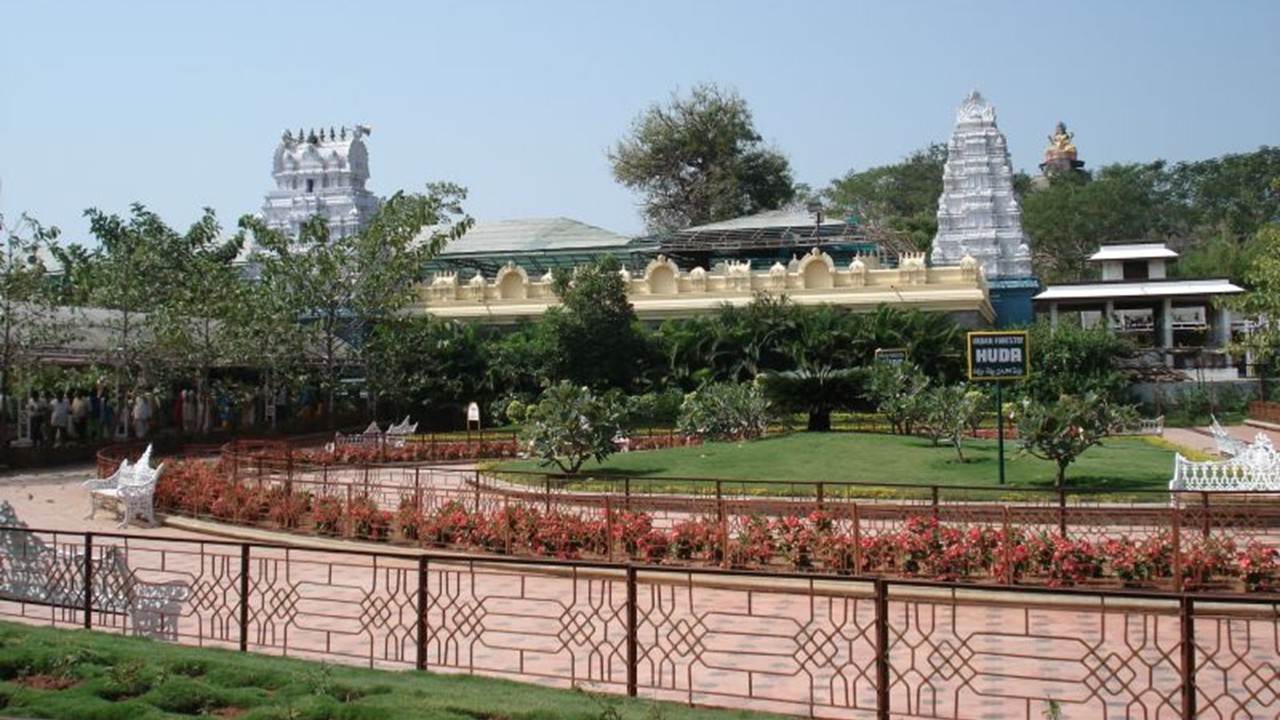
Unlike the richly sculpted temple complexes of Tamil Nadu or Karnataka, the shrine radiates an ancient austerity that suits its identity as a tapas kshetra established by sages. The complex contains gopurams, spacious mandapams, circumambulatory pathways, ritual halls, and shrines dedicated to multiple deities. The temple’s location near the Godavari enhances its sacred atmosphere.
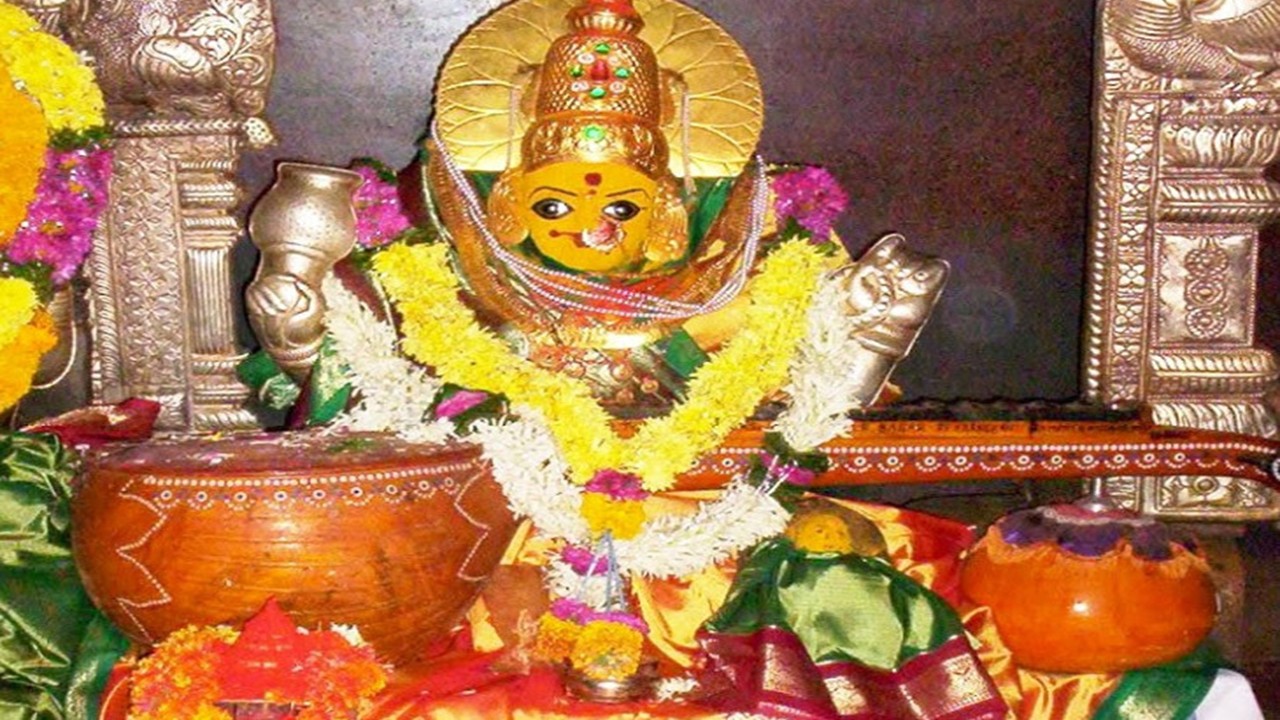
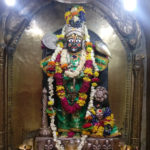
The presiding deity, Sri Gnana Saraswati Devi, is depicted in a seated posture holding the veena, symbolizing divine knowledge and artistic inspiration. A distinctive feature of the deity is the application of turmeric, which forms an integral part of the temple’s worship tradition. Devotees believe that receiving this sacred turmeric as prasadam brings blessings in education and intellectual pursuits.
Adjacent to the main sanctum is the shrine of Sri Maha Lakshmi, while Sri Maha Kali occupies a separate shrine within the complex. Together they represent the sacred trinity established by Vyasa. Additional shrines dedicated to Sri Dattatreya and other deities can also be found within the temple precincts.
Nearby lies the famous Vyasa Guha, a cave associated with the sage’s meditation. Another fascinating feature is the presence of eight sacred tirthas, traditionally known as Indra Tirtha, Surya Tirtha, Vyasa Tirtha, Valmiki Tirtha, Vishnu Tirtha, Ganesha Tirtha, Putra Tirtha, and Shiva Tirtha. The mysterious four-sided monolithic stone known as Vedavathi, said to produce different sounds when struck on different sides, remains one of Basara’s lesser-known attractions.
Festivals
The temple reaches its highest spiritual fervour during Devi Navaratri, when thousands of devotees gather to worship Saraswati, Lakshmi, and Kali. The nine-day celebrations include special pujas, alankarams, cultural programs, and devotional recitations.
Vasant Panchami, dedicated to Saraswati worship, is another major occasion. Maha Shivaratri, the Annual Brahmotsavam, and Vyasa Pournima are also celebrated with great enthusiasm. Vasant Panchami, dedicated to Saraswati worship, draws especially large numbers of devotees.
Aksharabhyasam remains the temple’s signature ritual. Parents bring young children, often at the very start of speech, and place writing slates before them, seeking Mata Saraswati’s blessings for their education. Writing the first letters in rice before the Goddess elevates learning into a sacred offering, rather than treating it as a purely worldly pursuit. For generations, students preparing for examinations, musicians striving for excellence, and scholars pursuing knowledge have visited the temple with deep faith.
Darshan Timings of the Temple
The temple is open on all the days of the year between 4:00 AM to 1:00 PM and 2:00 PM to 8:30 PM.
Nearby Places to Visit
Vyasa Guha: A sacred cave associated with Maharshi Veda Vyasa, where he is believed to have performed penance and worshipped Mata Saraswati.
Suryeswara Swamy Temple: An ancient shrine dedicated to Bhagavan Shiva, located near the banks of the Godavari River. Pilgrims often combine a visit to this temple with their Saraswati darshan.
Papahareshwara Pushkarini: Also known as the sacred temple tank near the shrine, this ancient water body is revered for its purificatory significance and is linked to the eight sacred tirthas of Basara.
How to Reach Gnana Saraswati Temple?
By Road: Regular TSRTC and private buses connect Basara with Hyderabad, Nizamabad, Nirmal, Bhainsa, and Nanded. The temple is approximately 210 km from Hyderabad and 35 km from Nizamabad, making it easily accessible by road.
By Rail: Basar Railway Station on the Secunderabad-Manmad railway line offers direct connectivity from Hyderabad, Secunderabad, Nizamabad, and Nanded. The temple is located a short distance from the railway station.
By Air: The nearest airport is Rajiv Gandhi International Airport, Hyderabad, located about 205-220 km from Basara. From the airport, pilgrims can hire a taxi or travel by train or bus to reach the temple.
0
Leave a Reply