
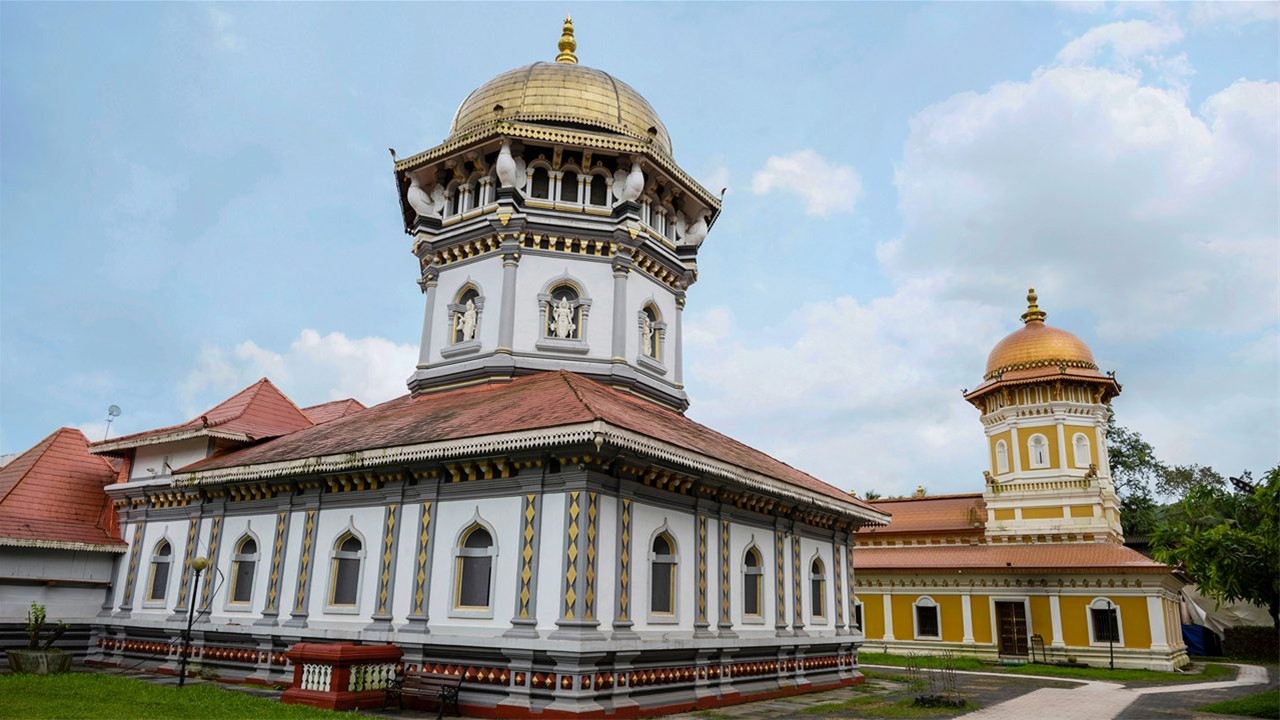
The temple stands as a symbol of Goa’s enduring traditions. During the period of Portuguese rule, the sacred deity of Mahalasa was moved from Verna to Mardol to protect it from attacks and religious persecution. The relocation ensured the continued worship of the deity and helped preserve an important spiritual tradition of Goa.
Today, the temple attracts devotees throughout the year. Its tranquil surroundings, beautifully maintained temple complex, traditional architecture, and vibrant festivals make it an important pilgrimage destination in Goa.
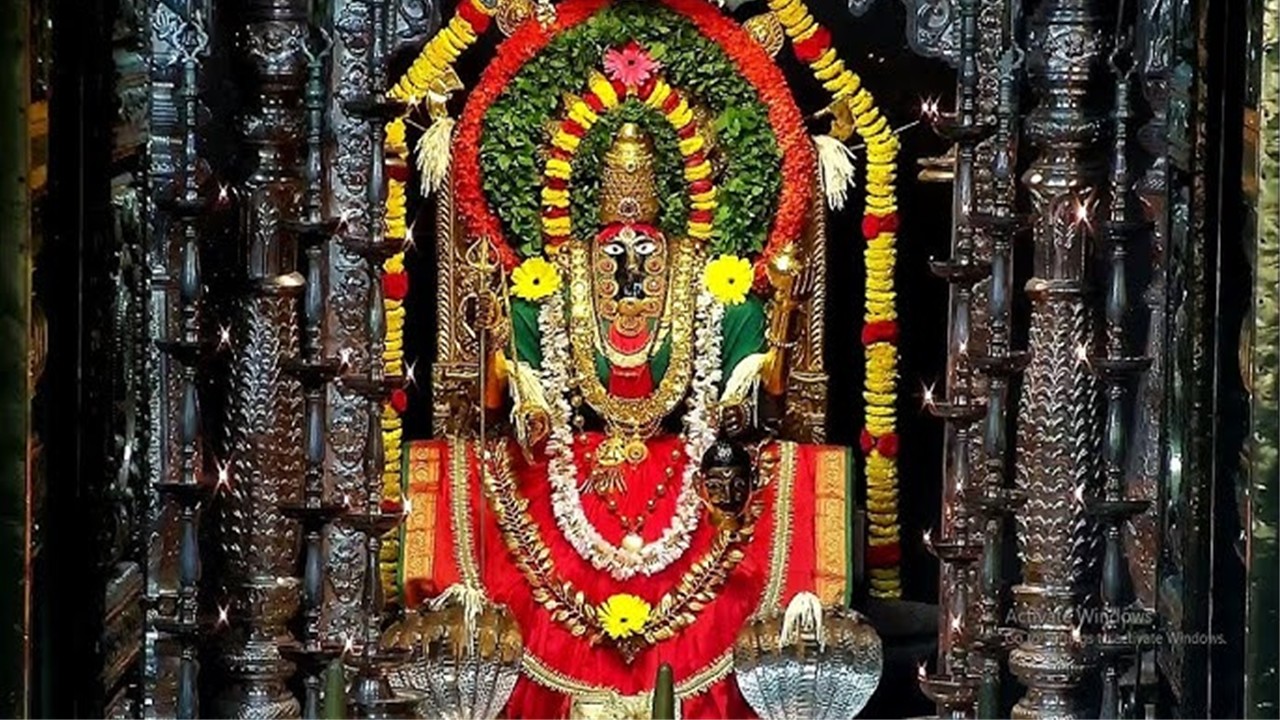
Sthala Purana of Sri Mahalasa Narayani Temple
One of the traditional stories associated with her appearance tells of a shepherd named Sahastrapal, who encountered the divine Goddess near a natural spring. Mahalasa Narayani struck the ground with her anklet, causing water to emerge and creating what came to be known as Nupur Lake.
Sri Mahalasa Narayani subsequently instructed Mhal Pai to establish a temple dedicated to her at the sacred site. Thus began the worship of Mahalasa Narayani in the Verna region.
Mahalasa is traditionally identified with Mohini, the enchanting female form of Lord Vishnu. Vishnu manifested as Mohini during the episode of the churning of the cosmic ocean, when the divine nectar of immortality was distributed among the devas. The worship of Mahalasa therefore represents a distinctive tradition in which the divine feminine form of Vishnu is revered as the principal deity.
During the Portuguese period in Goa, the original deity was moved from Verna to Mardol for safekeeping. The deity was ceremonially re-established at the present temple, allowing the ancient tradition of worship to continue.
Architecture of Sri Mahalasa Narayani Temple
The temple has a spacious courtyard surrounded by traditional structures. Its exterior is predominantly white, giving the complex a serene and graceful appearance. Wooden pillars and intricately carved elements add warmth and character to the temple’s interiors, while the silver-framed doorway adds to the sanctity and beauty of the main shrine.
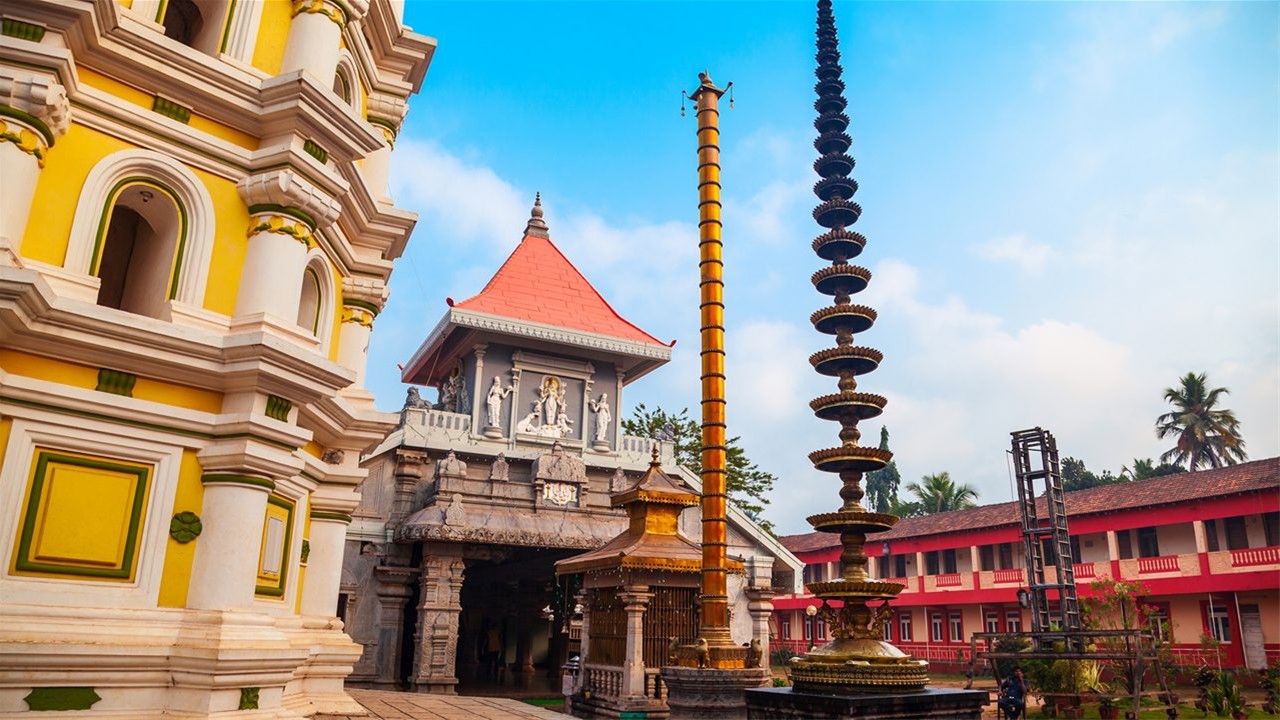
One of the most striking features of the temple is its magnificent brass Deepastambha, also known locally as the Samai. Rising approximately 40 feet, this impressive lamp tower has 21 rings of lamps. When the lamps are illuminated during special occasions and festivals, the Deepastambha becomes a spectacular sight and forms one of the defining visual features of the temple.
The lighting of the Deepastambha is deeply connected with devotional worship. The radiance of hundreds of lamps creates a spiritual atmosphere within the temple courtyard, particularly during major celebrations and special lamp-lighting ceremonies.
The temple complex also contains other important deities, including Shantadurga and Lakshmi Narayan. Together, these sacred spaces reflect the rich and diverse religious traditions preserved within Goan temple culture.
Festivals Celebrated at the Temple
One of the most beautiful features of the celebrations is the illumination of the magnificent brass Deepastambha. As the numerous lamps are lit, the temple courtyard takes on a radiant appearance, attracting devotees for darshan and prayer.
Special lamp-lighting evenings and other religious observances provide visitors with an opportunity to experience the temple’s living traditions and devotional atmosphere.
Timings of Sri Mahalasa Narayani Temple
- Morning: 6:00 AM to 12:00 PM
- Evening: 4:00 PM to 9:00 PM
Best Time to Visit
Those wishing to experience the temple during its major celebrations may plan their visit around the annual Jatra or special lamp-lighting ceremonies.
Nearby Places to Visit
- Sri Manguesh Temple: It is a renowned historic temple dedicated to Bhagvan Shiva and one of Goa’s prominent pilgrimage sites.
- Shantadurga Temple: It is a beautiful and important temple dedicated to Sri Shantadurga Devi, located in Kavlem, close to Mardol.
- Nageshi Temple: It is a peaceful and historic temple known for its traditional Goan temple architecture and spiritual atmosphere.
- Dudhsagar Falls: It is one of Goa’s most spectacular natural attractions. Located farther from Mardol, it can be included as part of a longer day trip.
How to Reach Sri Mahalasa Narayani Temple
By Air: The temple can be reached from both Dabolim Airport and Manohar International Airport. You can hire taxis or use other road transportation from the airport to reach Mardol.
By Rail: The nearest major railway stations include Madgaon Junction and Karmali. From either station, Mardol can be reached by road.
By Road: Mardol is well connected by road with major Goan cities and towns, including Panaji and Margao. Taxis, private vehicles, and local transportation can be used to reach the temple.






Leave a Reply