
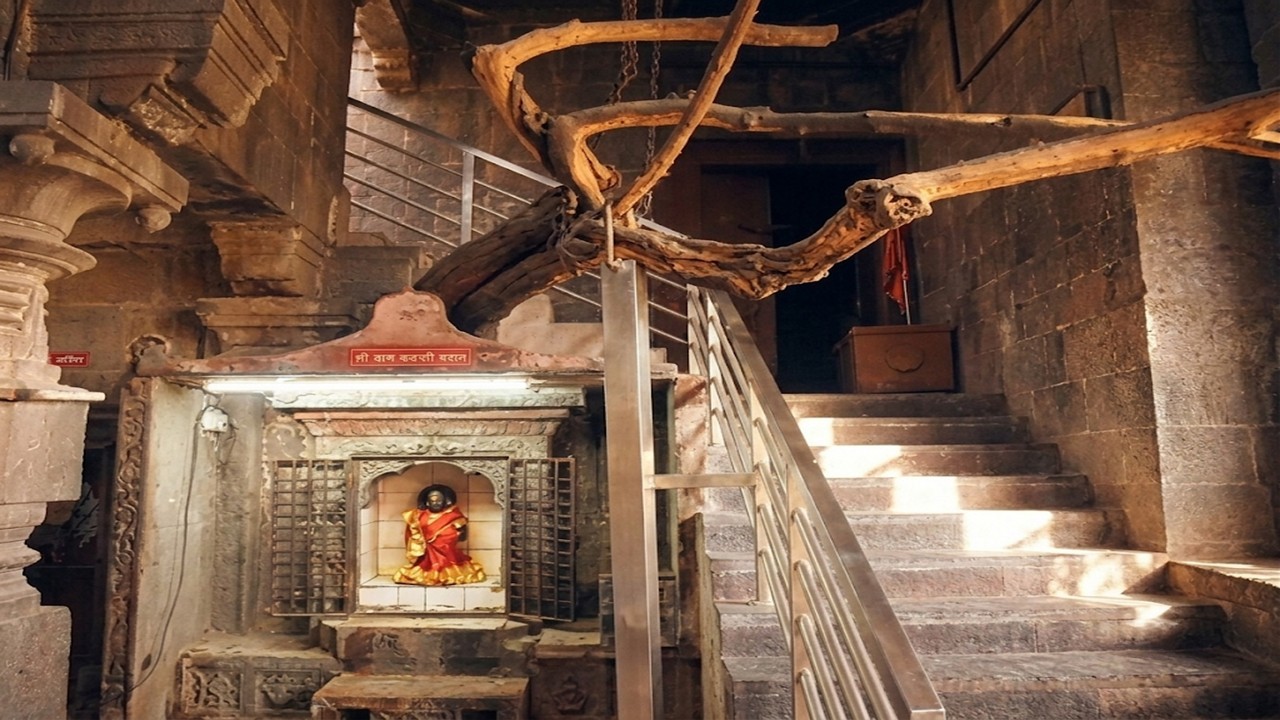
Kanhopatra Vriksha is one among the many sacred spots within the divine kshetra of the Pandharpur temple. Standing within the precincts of the Sri Vitthala Rukmini Temple, this revered tree is associated with one of the most heart whelming episodes in the Bhakti movement, of the saint-poetess Sant Kanhopatra’s love, devotion, and surrender to Sri Vitthala.
Pandharpur, situated on the banks of the sacred Chandrabhaga or Bhima River in Maharashtra, has for centuries been the spiritual heart of the Varkari Sampradaya. Here Sri Vitthala, regarded as a form of Sri Krishna, stands upon a brick awaiting His devotees. The greatness of Pandharpur is celebrated in numerous Puranic traditions. The foremost history concerns the devotee Pundalika, whose selfless service to his devoted parents brought Sri Krishna Himself to Pandharpur. Sri Krishna remained standing on the brick offered by Pundalika and became known as Vitthala or Vithoba.
Sthala Purana of Kanhopatra Vriksha
Kanhopatra Vriksha is a sacred tree within the campus of the Sri Vitthala Rukmini Temple, and its history is traced back in the fifteenth century. Tradition states that it is a samadhi sthan of a great devotee and saint-poetess Kanhopatra who was born in Mangalvedha, near Pandharpur. Her mother, Shyama, was a renowned courtesan and dancer in a royal palace.
Blessed with extraordinary beauty, intelligence, and artistic talent, Kanhopatra mastered music and dance from a youthful age. Her fame spread across the region, attracting the attention of rulers and wealthy patrons. Yet amid worldly success, Kanhopatra felt an inner emptiness and quest for eternal truth. She realized that physical beauty and external admirations were temporary. Her heart longed for a deeper and permanent relationship with the Supreme Lord.
As Kanhopatra heard stories of Sri Vitthala and the saints of Pandharpur, her mind became absorbed in devotion. She began singing the praises of Vitthala rather than songs intended for entertaining royal kings. The Vitthala of Pandharpur gradually became the sole object of her life. She expressed her longing through abhangas with full surrender and humility. For her, Vitthala was not a just a deity but a compassionate protector, beloved friend, and eternal refuge.
According to the popular traditions, Sadashiva Malagujar, the local Patil, is sometimes mentioned as her alleged father. Renowned for Kanhopatra’s extraordinary beauty and devotion, he said to have become attracted to her and sought to possess her. Kanhopatra refused all these and desired only the service of Sri Vitthala.
However, Sadashiva Malagujar, offended by her refusal, is said to have approached the Badshah of Bidar and informed him of her exceptional beauty. Hearing these accounts, the Badshah desired to make Kanhopatra his mistress and ordered that she be brought before him. Kanhopatra refused the king’s demand and fled to Pandharpur, seeking refuge at the feet of Sri Vitthala.
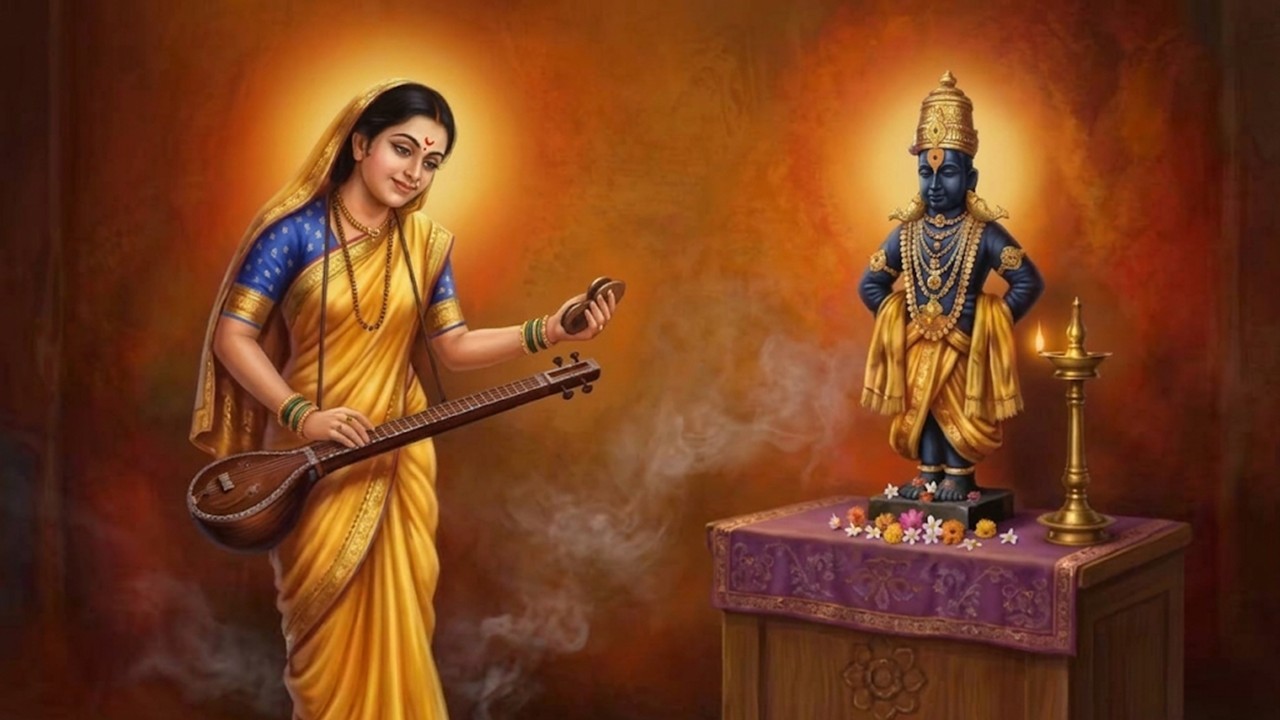
There she joined the community of devotees who spent their days singing Kirtanas, chanting the Lord’s names, and participating in temple worship. Her melodious voice soon became known among pilgrims. Every day she stood before the deity and sung with complete absorption. The temple became her home, and Sri Vitthala became her entire world.
The Badshah’s soldiers pursued her and eventually surrounded the Vitthala temple, threatening to seize her by force and, according to some versions, even damage the temple if she was not surrendered. Before being taken away, Kanhopatra requested one final opportunity to offer her prayers to Sri Vitthala. Entering the Garbha Griha with complete faith, she prayed intensely to her beloved to accept her. She then gave up her body at the lotus feet of Vitthala, attaining divine union with her Lord in Vaikuntha.
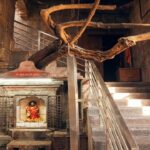
In accordance with Kanhopatra’s final wish, her body was buried within the campus of the Vitthala temple, without the notice of the Badshah. From the spot of her burial sprang a sacred Tarati tree, now revered as the Kanhopatra Vriksha. Her samadhi in the same tree located near the southern entrance of the temple. Witnessing this miracle, the soldiers were left astonished, and some accounts state that the Badshah himself became deeply moved and developed reverence for bhakti.
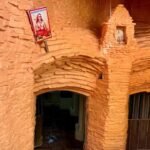
Though only a limited number of her compositions survive, Sant Kanhopatra is remembered for her deeply devotional abhangas dedicated to Sri Vitthala. Some of her well-known abhangas include “Patita Tu Pavana“, “Maze Maher Pandhari“, “Din Patit Anath“, “Nama Gheta Uthauthi“, and “Vitthala Vitthala Gajari“. Through these compositions, Kanhopatra portrays Vitthala as her sole refuge and protector. A small deity of her is also set upped near the tree to commemorate her devotion.
Festivals
Kanhopatra Vriksha receives special attention during the major festivals of Pandharpur such as Ashadhi Ekadashi and Kartiki Ekadashi, where lakhs of pilgrims arrive in Pandharpur singing Vitthala’s names, and many also visit the Kanhopatra Vriksha to honor the saint. A unique Sant Commemoration Programs are conducted which features melodious kirtanas, recitations of abhangas, and spiritual discourses that recount the story of Kanhopatra’s surrender and divine union. Her compositions continue to be sung by devotees across Maharashtra.
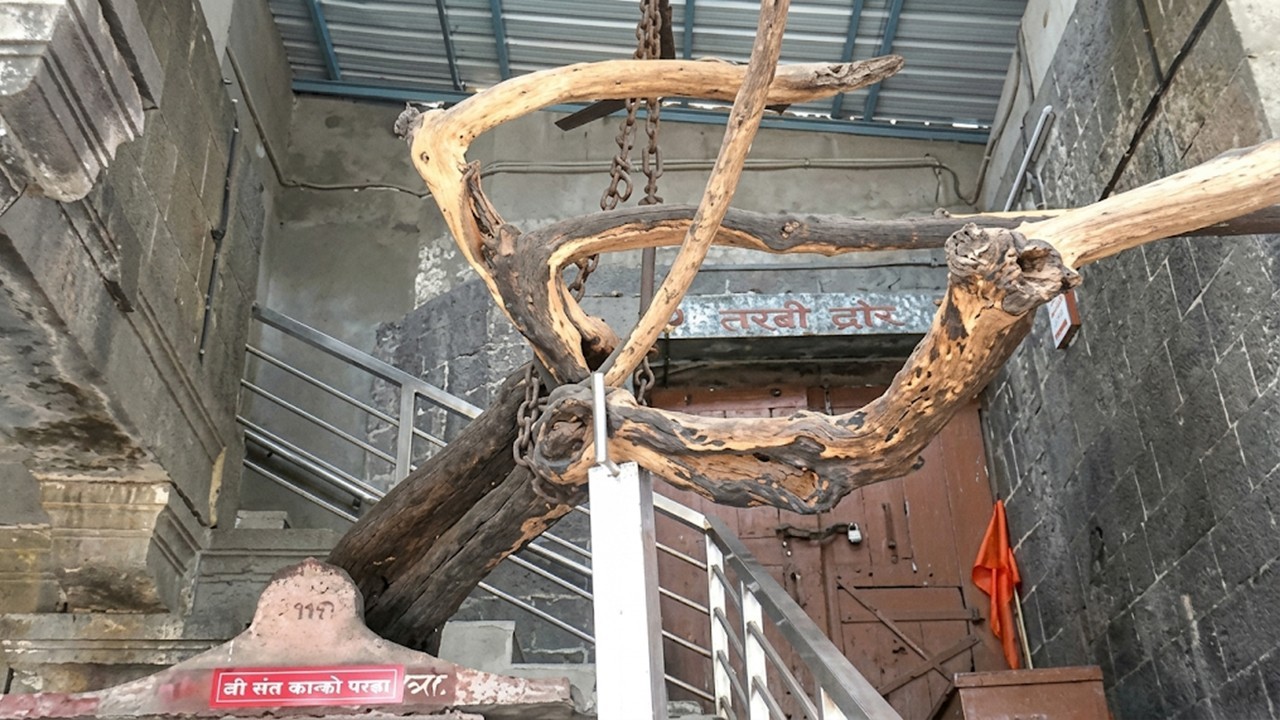
Darshan Timings of Kanhopatra Vriksha
Kanhopatra Vriksha can be visited during the temple darshan timings. Usually, devotees can pay respects to Sant Kanhopatra Vriksha while entering the temple from 4:00 AM to 11:00 PM.
Best Time to Visit Kanhopatra Vriksha
The best time to visit Kanhopatra Vriksha in Pandharpur is during the Ashadhi Ekadashi (June-July) and Kartiki Ekadashi (October-November) pilgrimages, when the town comes alive with the devotion of lakhs of Warkaris, devotional singing and kirtans. However, visitors seeking a peaceful and less crowded experience may prefer the cooler months from November to February, when the weather is pleasant and darshan is more comfortable.
Nearby Places to Visit
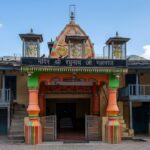
Sri Vitthal Rukmini Temple: The most important pilgrimage site in Pandharpur and the spiritual heart of the Warkari tradition. The temple houses the revered deities of Sri Vitthala and Mata Rukmini, attracting millions of devotees every year.
Namdev Payari – The sacred first step of the temple associated with Sant Namdev, who is believed to have attained eternal association with Sri Vitthala here. Pilgrims bow to this step before entering the temple.
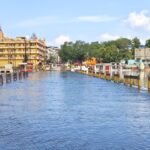
Chandrabhaga River: Flowing in a crescent-shaped bend around Pandharpur, this river is considered as sacred as the Ganga by many devotees. Pilgrims take a ritual bath in its waters before entering the Vitthal Temple.
Pundalik Temple: Dedicated to the great devotee Pundalika, whose selfless service to his parents is believed to have brought Vitthala to Pandharpur. The temple is one of the oldest and most revered temples in the town.
Sant Chokhamela Samadhi: This is the sacred resting place of Sant Chokhamela, one of Maharashtra’s most beloved bhakti saints.
Vishnupad Temple: An old temple believed to contain the sacred footprints of Sri Vishnu, when he descended on the earth as Vitthala.
How to Reach Kanhopatra Vriksha?
The easiest way to plan your visit is through Tirtha Yatra’s Pandharpur Yatra package, which takes care of all the arrangements so that devotees can focus solely on the spiritual experience.
By Air: The nearest major airport is Pune International Airport, located about 210 km from Pandharpur. From the airport, visitors can hire a taxi or take a bus to reach the temple.
By Train: Pandharpur Railway Station is well connected to cities such as Pune, Solapur, Miraj, and Kolhapur. From the railway station, the temple is just a short auto rickshaw ride away.
By Road: Pandharpur has an excellent road connectivity with major cities in Maharashtra, including Pune, Solapur, Kolhapur, Sangli, and Mumbai. Regular state transport and private buses operate to the town throughout the year.
0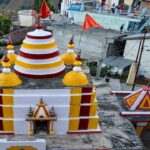

Leave a Reply