
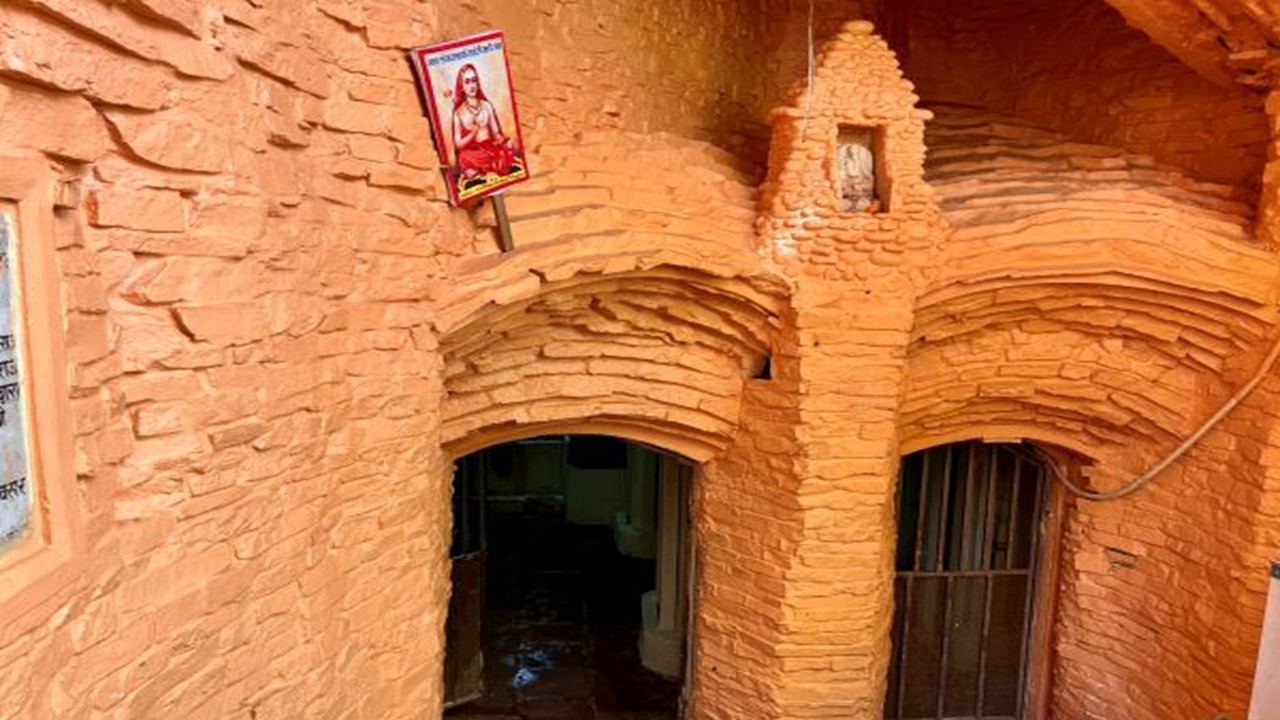
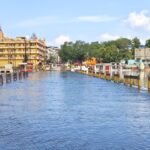
Located on the banks of the River Narmada, Shankaracharya Gufa, also known as Sri Govinda Bhagavatpaada Cave or Govindeshwara, is a beautiful place one must visit to experience the spiritual bliss.
It is located in Mandhata Island, also called Shivapuri, in the Khandwa district of Omkareshwar, Madhya Pradesh, Bharat.
Sthala Purana of Shankaracharya Gufa, Omkareshwar
Adi Shankara was born to a Nambudiri Brahmin couple, Shiva guru and Aryamba, in Kaladi, Kerala, Bharat. As a small boy, he was extraordinarily intelligent. He began learning Sanskrit at a very small age of two. By the age of four, he had learned and mastered all the four Vedas. By the age of eight, he had given up his worldly life and embraced Sannyasa, driven by a deep spiritual calling. Then he left his village and travelled thousands of kilometres towards the north on foot in search of Bonafide Guru.
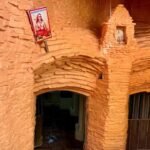
Around 800 CE, Adi Shankara reached sacred banks of the river Narmada in the town of Omkareshwar in Madhya Pradesh. He found his guru deep inside the riverfront rock-cut cave.
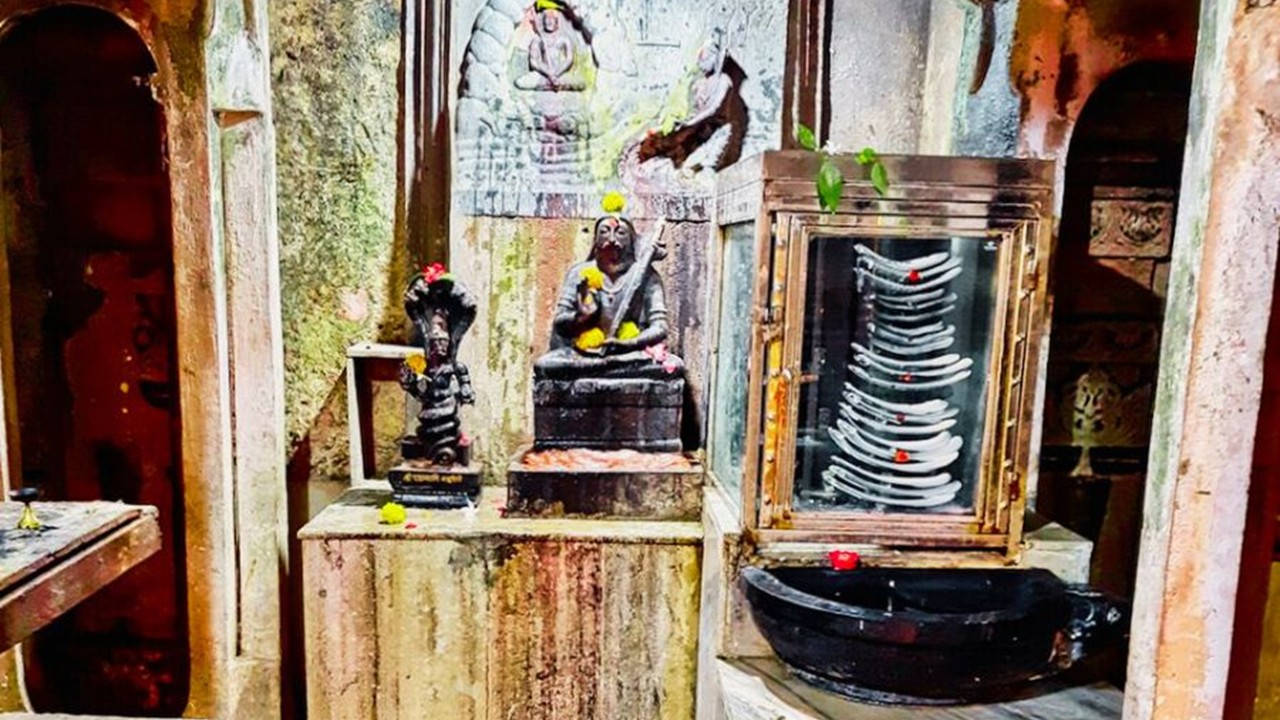
When Shankara arrived at the cave, Govind Bhagavatpada asked him, “Who are you?” Shankara replied with Nirvana Shatakam. His guru was very much impressed by his realization and hearing about his aapata-sannyasa, immediate renunciation after his fatal encounter with a crocodile.
He lived with his Guru for four years and left his ashram at the age of twelve to preach and uphold Sanatana Dharma.
During his time with his Guru, Sri Shankaracharya performed a remarkable miracle. When the region was struck by heavy rain and was on the verge of flooding, he did not want to disturb his Guru, who was in deep meditation, or Samadhi. Using his spiritual power, or siddhi, he placed the Kamandalu at the entrance of the cave. As a result, all the water flowed into the Kamandalu, leaving it dry and undisturbed.
When his Guru awoke from Samadhi and learned about this event, he recognized the boy’s divine purpose. He blessed him and asked him to go all over India and write commentaries on Upanishads, the Bhagavad Gita, and Brahma Sutras. Thus began Shankara’s historic mission to revive Sanatana Dharma.
Architecture of Shankaracharya Gufa, Omkareshwar
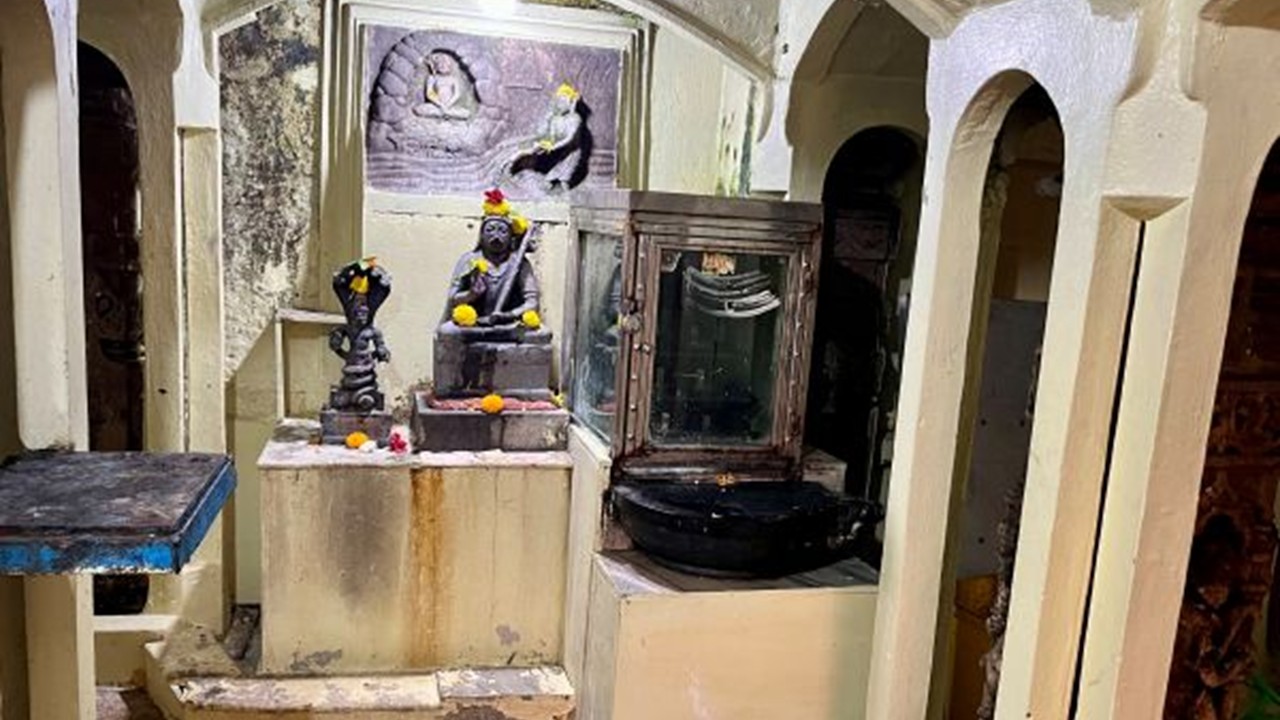
The cave has a mandapa with beautifully carved pillars and interiors. Inside the cave, there are many deities of Shiva, Vishnu, Shakti, and Advaita philosophers.
Inside the cave is a sacred Shiva Linga that is worshiped. There is also a marble sculpture of a young Adi Shankaracharya with his guru, Govinda Bhagavatpada.
Darshan Timings of Shankaracharya Gufa, Omkareshwar
Morning: 6:00 AM to 12:00 PM
Best Time to Visit Shankaracharya Gufa, Omkareshwar
Nearby Places to Visit Around Shankaracharya Gufa, Omkareshwar
Omkareshwar Temple: It is the main attraction of the place and is considered as one of the Dwadasha Jyotirlinga.
Sri Mamleshwar Jyotirlinga: It is another Shiva temple located on the southern side of the Narmada River. In this temple, Mamleshwar or Amleshwar Mahadev is worshiped.
Kedareshwar Temple: It is an ancient 11th-century Shiva temple located at the Saina village in Ratlam city.
Siddhanath Temple: It is a 13th-century Shiva temple located on the path of the Omkar Parvat Parikrama route.
Gauri Somnath Temple: It is an 11th-century Shiva temple located along the Omkar Hill pilgrimage route.
Omkar Ghat: It is a famous ghat located on the banks of the River Narmada, near Omkareshwar Jyotirlinga.
How to Reach Shankaracharya Gufa, Omkareshwar

By Air: The nearest airport is Devi Ahilya Bai Holkar International Airport in Indore. From here, you can hire a taxi or board a bus to reach the cave.
By Railway: The nearest railway stations are Khandwa Junction (72 km) or Indore Junction (77 km). From either of the stations, taxi or bus facilities are readily available.
By Road: The city of Omkareshwar is well connected by state highways. Many state-run and private buses ply between nearby major cities like Indore, Ujjain, Khandwa, and many more such places. The Omkareshwar bus stand is located near the Omkareshwar Jyotirlinga. You can reach the island by walking across Jhula Pul or ferrying across the river.
Leave a Reply