
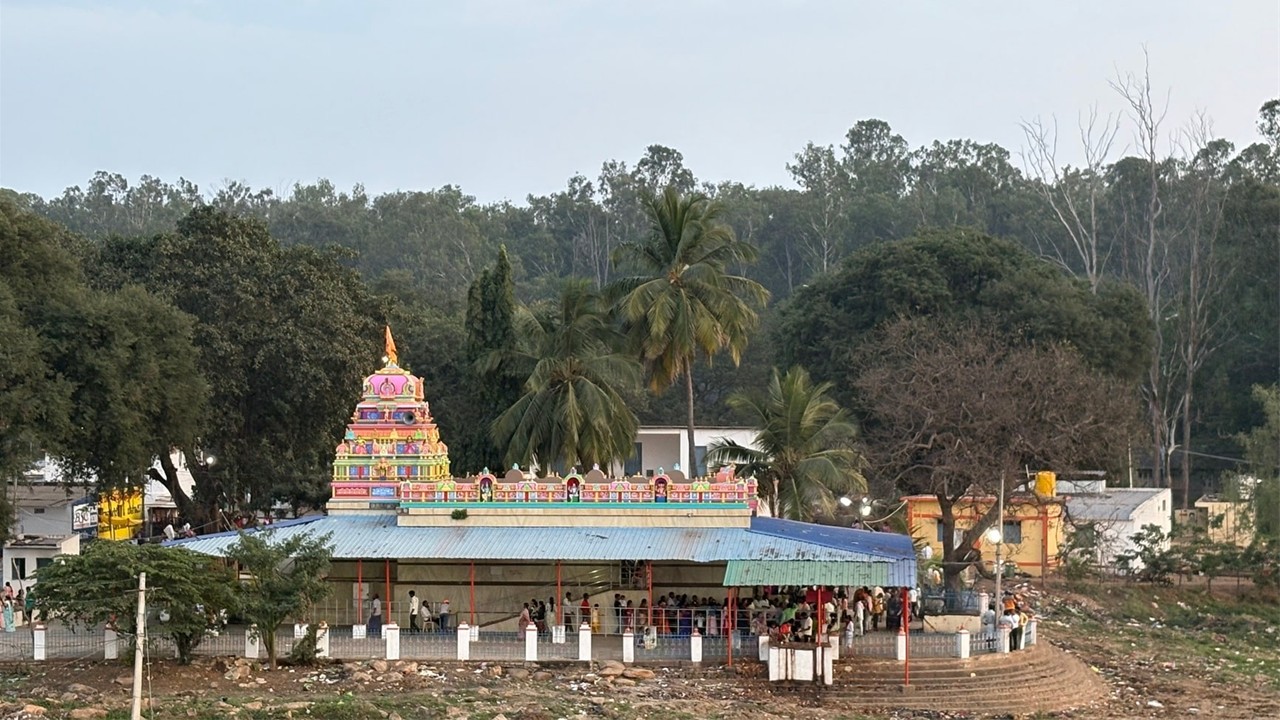
The deity of Lord Hanuman is famously known as Vyasaraja Prathishta Hanuman, meaning the Lord who was installed by Vyasaraja.
The divine energy and sacred aura of the temple attract large influx of devotees from nearby places as well as far by places.
Tuesdays and Saturdays, as well as the holy month of Shravana, are considered highly auspicious for worshipping the Swamy.
This sacred place of Lord Hanuman is located in Madalagatti village, Huvina Hadagali Taluk, near Kombli, in Vijayanagara district, Karnataka.
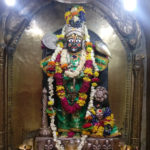
Deity of Madalagatti Sri Anjaneya Swamy
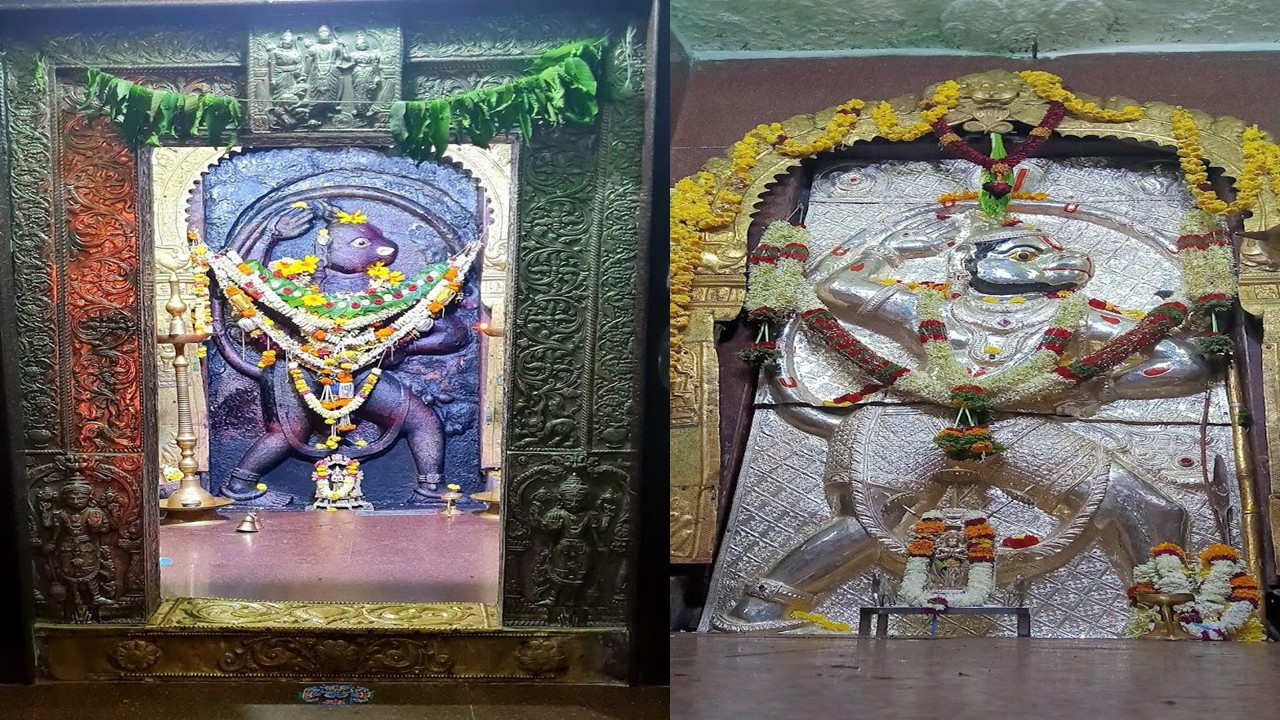
Spiritual Significance of Sri Anjaneya Swamy Temple
- Overcome fear and negative energies
- Seek courage and confidence
- Pray for career and educational success
- Receive blessings for good health
- Find mental peace and spiritual strength
Sthala Purana of Sri Anjaneya Swamy Temple
During the glorious Vijayanagara era, Lord Anjaneya Swamy appeared in the dream of Vyasa Raja and instructed him to collect the broken pieces of the deity, join them together, and reinstall the deity. However, Vyasa Raja Swamy wondered how he would locate the five scattered pieces of the deity. Lord Hanuman then replied that fireballs would appear at five different places, and the deity fragments could be found there.
As instructed, Vyasa Raja Swamy discovered the five pieces of the deity at the locations where the fireballs had appeared. He carefully joined the fragments together to restore the sacred vigraha and reinstalled it at Madalagatti.
After the reinstallation, Vyasa Raja Swamy offered prayers and performed special pujas at the temple for 48 days. Vyasa Raja had instructed the temple pujari not to open the seal of the vigraha for 48 days. But Pujari unable to bear the curiosity, opened the seal two days before. As a result, the deity’s fingers did not reattach completely. Even today, the unattached fingers of the deity can still be seen.
Following this, the temple was opened for devotees to have the divine darshan of the Lord.
Have you ever wondered why this place is called Madalagatti?
The name “Modala Beti” is derived from a Kannada phrase meaning “first meeting.” It is the sacred place on the banks of the Tungabhadra River where Lord Hanuman met Lord Rama and Lord Lakshmana for the very first time while they were searching for Sita Devi.
Architecture of Sri Anjaneya Swamy Temple
The temple features a small garbhagriha, mantapa, ardha mantapa, gopura, and pradakshina patha.
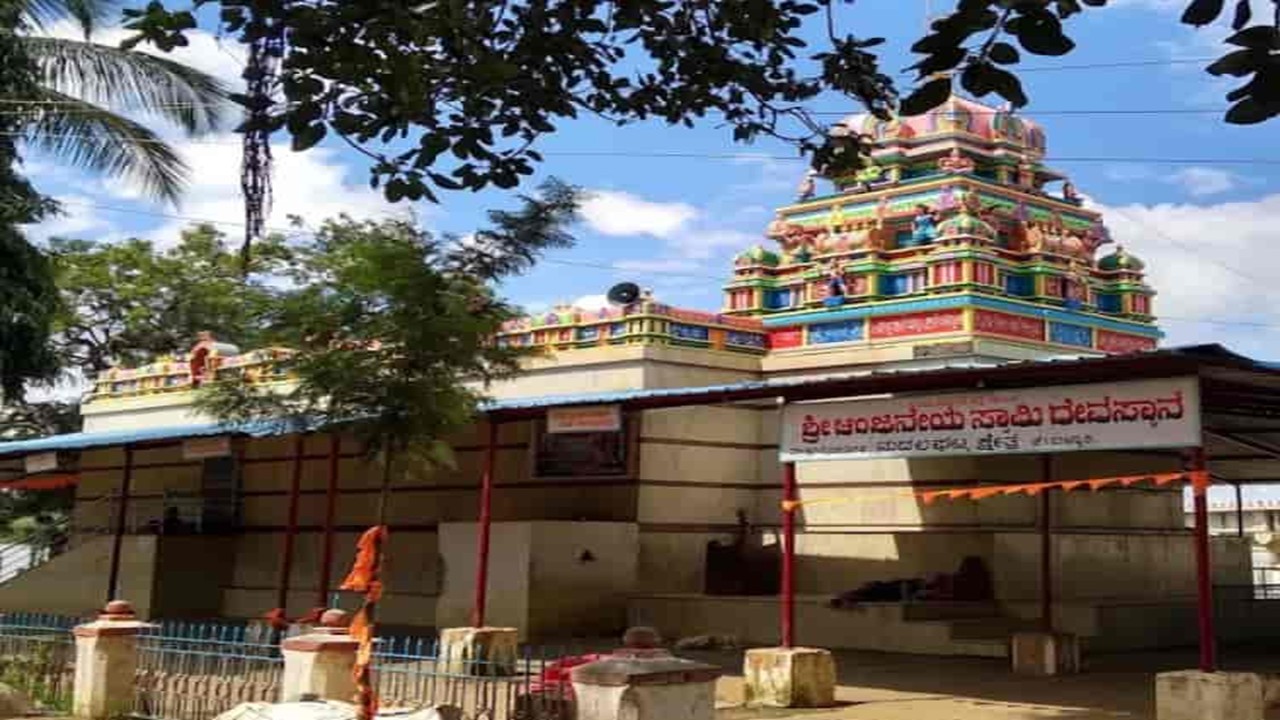
Festivals celebrated at Sri Anjaneya Swamy Temple
Hanuman Jayanti: It is celebrated as the birth anniversary of Lord Hanuman, when devotees flock in huge numbers with sincere devotion and faith to seek the darshan of the Lord.
Kartika Masa: It is a highly auspicious month for worshipping Lord Hanuman. Grand celebrations and a festive atmosphere enhance the spiritual aura of the place. Deepams are lit all around the temple, creating a divine ambience.
Darshan Timings of Sri Anjaneya Swamy Temple
Morning:
6:00 AM to 1:30 PMBest Time to Visit
Nearby Places to Visit
Singatalur Veerabhadreshwara Temple: It is a revered shrine dedicated to Lord Veerabhadra, attracting devotees from nearby districts throughout the year. Known for its traditional architecture and spiritual significance, the temple is especially vibrant during annual festivals and jathres.
Huvina Hadagali and Koppal: The historic regions around Huvina Hadagali and Koppal are known for their rich cultural heritage, ancient temples, and connections to the Vijayanagara Empire. These areas preserve the traditional essence of Karnataka through their folklore, architecture, and religious practices.
How to Reach Sri Anjaneya Swamy Temple, Madalagatti

By Air: The closest major airports are Hubli Airport (approx 120 km away) and Jindal Vijaynagar Airport (approx 145 km away). From either airport, you can hire a private taxi or take a state transport bus to Huvina Hadagali.
By Railway: The nearest major railway hubs are Hospet Junction 80 km and Gadag Junction approx 70 km. Both stations are well-connected to major cities. Taxis and buses are readily available from these stations to reach the temple.
By Road: Madalagatti is just 15 km from Huvina Hadagali. State-run buses and private vehicles regularly ply from Hubli, Hospet, and Bengaluru to Huvinahadagali bus stand. From there, take Mundargi Road (Arabhavi-Challakere Road) directly to the Madalagatti Bridge.

Leave a Reply