
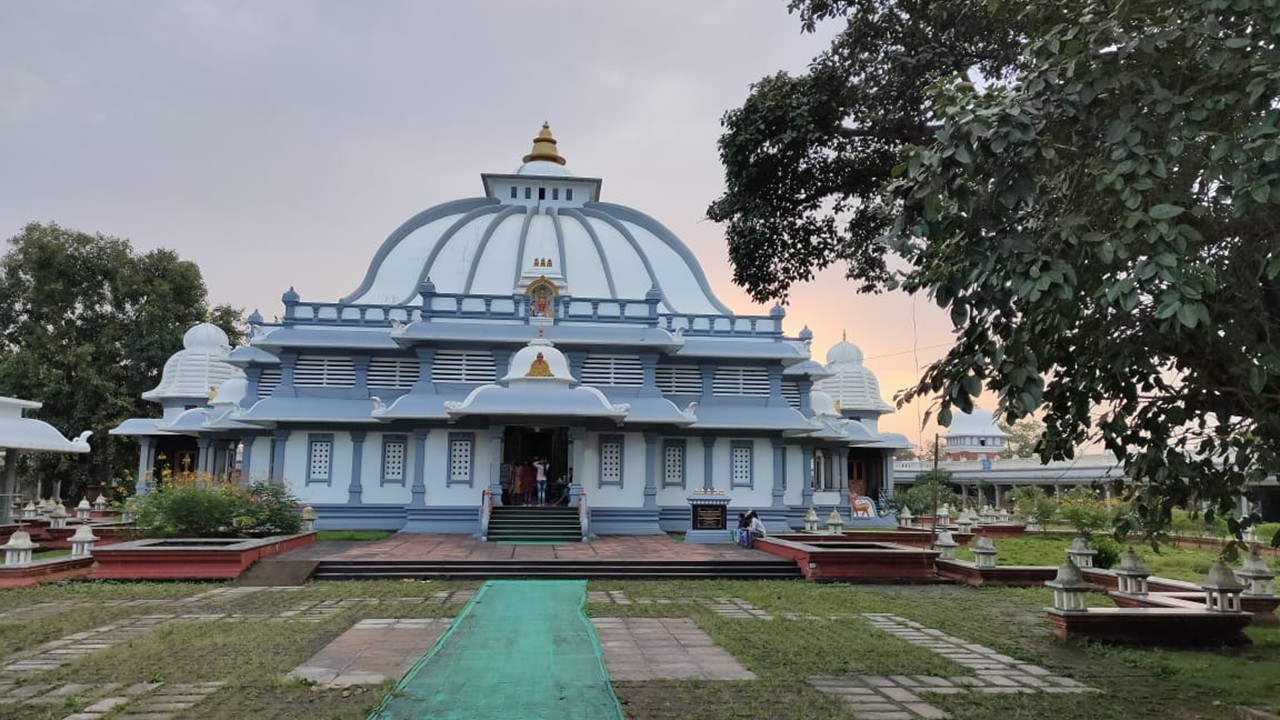
The temple at Verna holds special significance as the original place where Goddess Mahalasa Narayani was traditionally worshipped before the deity was later moved to Mardol.
Thus, Verna continues to hold an important place in the religious history and worship tradition of Goddess Mahalasa.
Mahalasa, also known as Mhalasa or Mhalshi, is particularly revered in Goa, Maharashtra and among various communities of devotees. In the traditions of Newasa and Goa, She is identified with the Mohini form of Lord Vishnu and is therefore worshipped as Mahalasa Narayani.
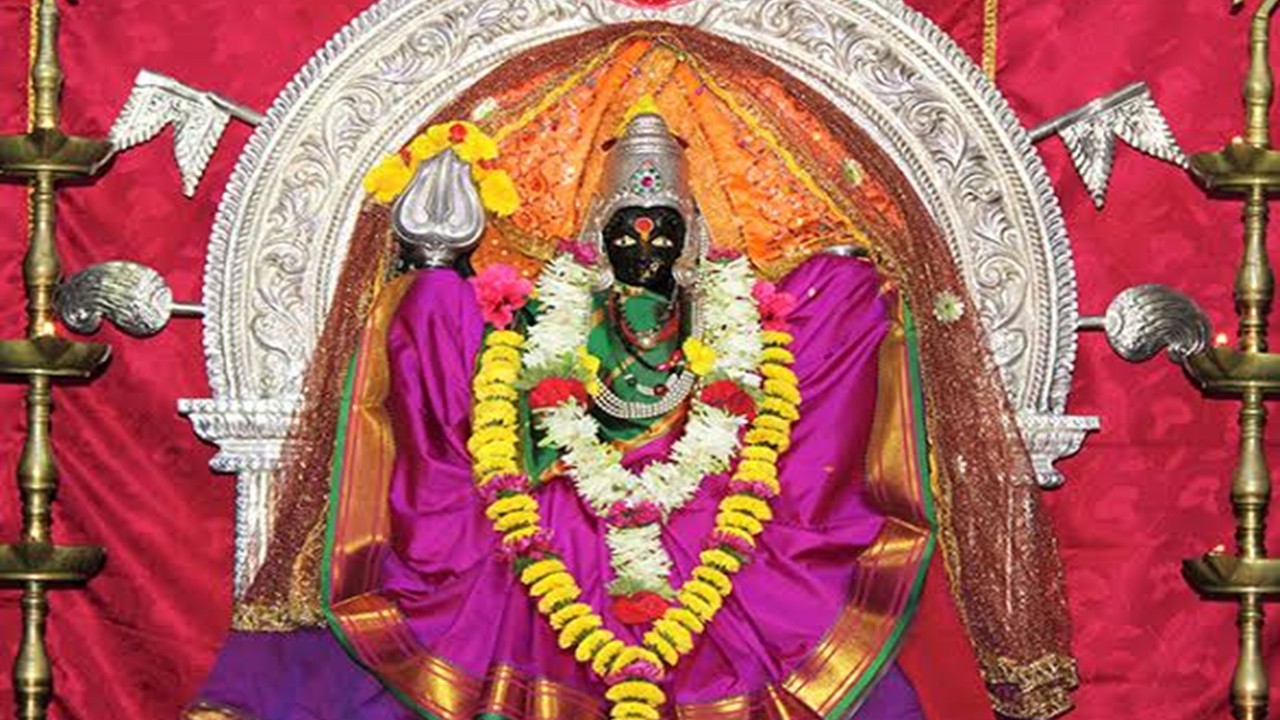
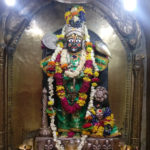
One of the distinctive features of the deity is the sacred thread (Yajnopavita) worn by the Sri Mahalasa Narayani. This is considered an unusual and significant feature, as the sacred thread is traditionally associated with Brahmin men and male deities. Goddess Mahalasa is particularly revered for this distinctive iconographic representation.
Mahalasa is also worshipped as a Kuladevi (family deity) by numerous families belonging to communities such as the 96K Kshatriyas (Dessais), Konkani Saraswat Brahmins, Karhade Brahmins, Daivajna Brahmins, Arya Vaishyas (Shettis) and Bhandaris, among others. Her worship continues to form an important part of the religious and cultural traditions of many families across Goa, Maharashtra and beyond.
Sthala Purana of Sri Mahalasa Narayani Temple
Moved by compassion, Devi Mahalasa Narayani used Her toe to dig into the earth, causing fresh water to emerge. The resulting pond came to be known as Nupur Tirtha, named after the sacred nupur (anklet) associated with the Devi. The sacred water body is thus traditionally regarded as a manifestation of the Goddess’s grace and Her compassion towards the people of the region.
There is another Vedic reference associated with the establishment of the temple. During the Samudra Manthana, Maha Vishnu assumed the enchanting form of Mohini to distribute the Amritha obtained from the cosmic ocean among the Devas. At that time, an Asura named Swarbhanu secretly took his place among the Devas and received Amritha from Mohini.
However, Surya Deva and Chandra Deva recognised Swarbhanu and informed Maha Vishnu. Realising the deception, Vishnu immediately severed Swarbhanu’s head with the Sudarshana Chakra. As Swarbhanu had already consumed the Amritha, he became immortal. His head came to be known as Rahu, while his body became Ketu.
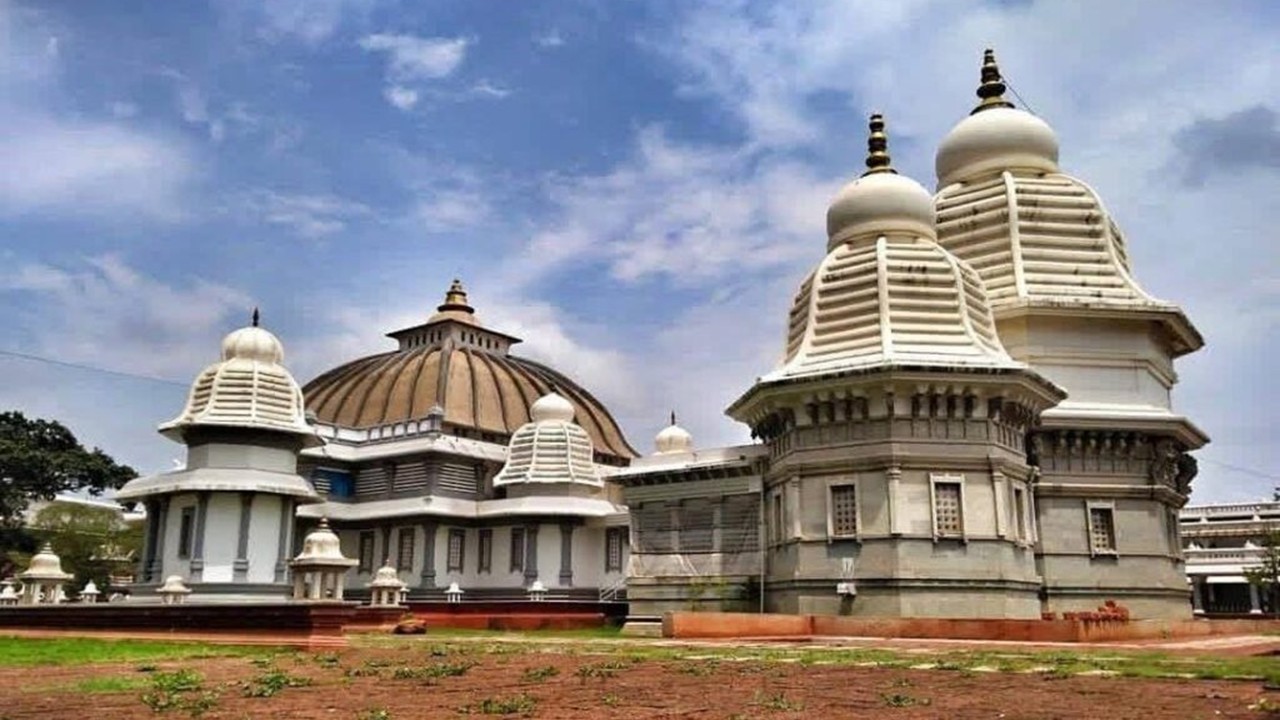
Architecture of Sri Mahalasa Narayani Temple, Verna
- Sloping tiled roofs reflect the traditional Konkan style and suit Goa’s monsoon climate.
- Spacious halls and the sanctum feature high ceilings and traditional design elements.
- Carved wooden pillars and decorative artwork highlight the region’s craftsmanship.
- Nupur Tirtha and the ancient Tali water reservoir add to the temple’s sacred character.
- Mahalasa Narayani Vidyalaya within the complex follows an architectural style complementary to the temple.
Festivals Celebrated at Sri Mahalasa Narayani Temple, Verna
Navaratri: It is a significant festival dedicated to the Sri Mahalasa Narayani, marked by special worship and celebrations.
Shigmo: It is Goa’s traditional spring festival, celebrated with religious rituals and cultural festivities.
Mahalasa Jayanti: It is observed with special pujas and offerings to Mahalasa Narayani.
Chaitra Purnima: It is celebrated with devotional rituals and prayers.
Deepavali: The temple is beautifully illuminated, with special worship offered to the Goddess.
Annual Jatra/Utsav: The temple’s annual celebration features special rituals and traditional festivities, drawing devotees from different parts of Goa.
Darshan Timings of Sri Mahalasa Narayani Temple
Best Time to Visit
Also, can visit the temple during the festival seasons like Navaratri, Diwali, Ganesh Chaturti, and Shivaratri for experiencing special rituals, prayers, decorations, and cultural celebrations.
Visiting the temple during summer and monsoon are not advisable. During these seasons, scorching heat and heavy monsoon makes your travel experience less comfortable.
Nearby Places to Visit
Zuari River: It is a largest tidal river in Goa to enjoy natural beauty, bird watching, spot marsh crocodiles.
Ponda: It is one of the major cultural and spiritual centres of Goa, home to several famous temples.
Shantadurga Temple: It is a prominent temple dedicated to Goddess Shantadurga, located in Kavlem, Goa, and one of the most revered temples in the state.
Mangueshi Temple: It is one of Goa’s most revered temples dedicated to Lord Shiva, worshiped as Bhagwan Mangueshi.
How to Reach Sri Mahalasa Narayani Temple, Verna
By Air: The nearest airport is Dabolim Airport or Goa International Airport, approximately 15 km from Verna. From here, you can hire a taxi or cab to reach Sri Mahalasa Narayani Temple.
By Railway: The closest railway station to the temple is Verna Railway Station. Madgaon Railway Station is another major railway station nearby and has good connectivity with several cities across India. From either station, taxis or local transport are available to reach the temple.
By Road: Sri Mahalasa Narayani Temple is well connected by road and can be easily reached from Panaji, Margao, Vasco da Gama and other parts of Goa. You can travel by car, or taxi can take roads leading towards Verna. Local buses and taxis are also available for convenient travel to the temple.




Leave a Reply