
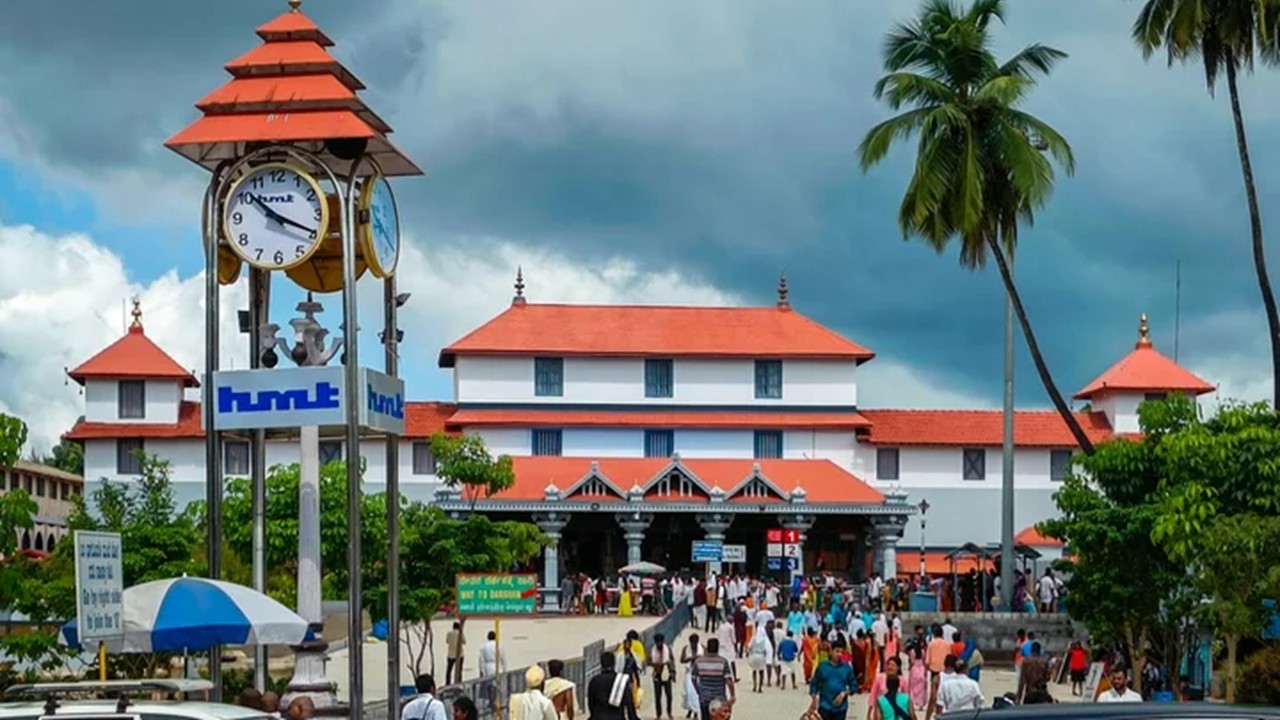
Dharmasthala Manjunatha Temple, officially known as Sri Kshetra Dharmasthala Manjunatheshwara Temple, is one of the most revered pilgrimage centers in Bharat. Located in Dharmasthala town in the Dakshina Kannada district of Karnataka, the temple is dedicated to Sri Manjunatha, a form of Sri Shiva. What makes this temple truly unique is the harmonious coexistence of different religious traditions. The temple is administered by a Jain family, while Hindu priests conduct the daily rituals, making it a remarkable symbol of religious unity and tolerance.
Dharmasthala translates to “The Place of Dharma (Righteousness)”, and the temple has lived up to this name for centuries through its emphasis on spirituality, charity, social service, and hospitality. Every year, millions of devotees visit the temple seeking blessings, peace, and spiritual fulfilment.
Vedic history of Dharmasthala Manjunatha Temple
More than eight centuries ago, the sacred town of Dharmasthala, then known as Kuduma, was home to the noble Jain chieftain Birmanna Pergade and his wife Ammu Ballalthi. Renowned for their generosity, compassion, and unwavering commitment to righteous living, the couple welcomed every traveller, pilgrim, and stranger into their home, Nelliadi Beedu, with warmth and hospitality. Their selfless service embodied the very essence of dharma, earning them deep respect within the community.
According to local tradition, the Dharma Daivas (guardian spirits of righteousness) once visited the couple disguised as ordinary travellers to test them. As always, Birmanna Pergade and Ammu Ballalthi received them with utmost reverence and care. And served the Daivas who were in disguise of human, impressed by their sincerity and generosity of service, the guardian spirits appeared in Pergade’s dream and revealed their true form. They instructed him to dedicate his home to the service of dharma and establish a sacred center devoted to spiritual welfare and the upliftment of society. Obeying the command without hesitation, Pergade built a new residence for his family and converted his original home into a place of worship. The Dharma Daivas further directed him to establish temples for the guardian deities Kalarahu, Kalarkayi, Kumaraswamy, and Kanyakumari, while entrusting his family with the responsibility of preserving and administering the sacred institution for generations to come.
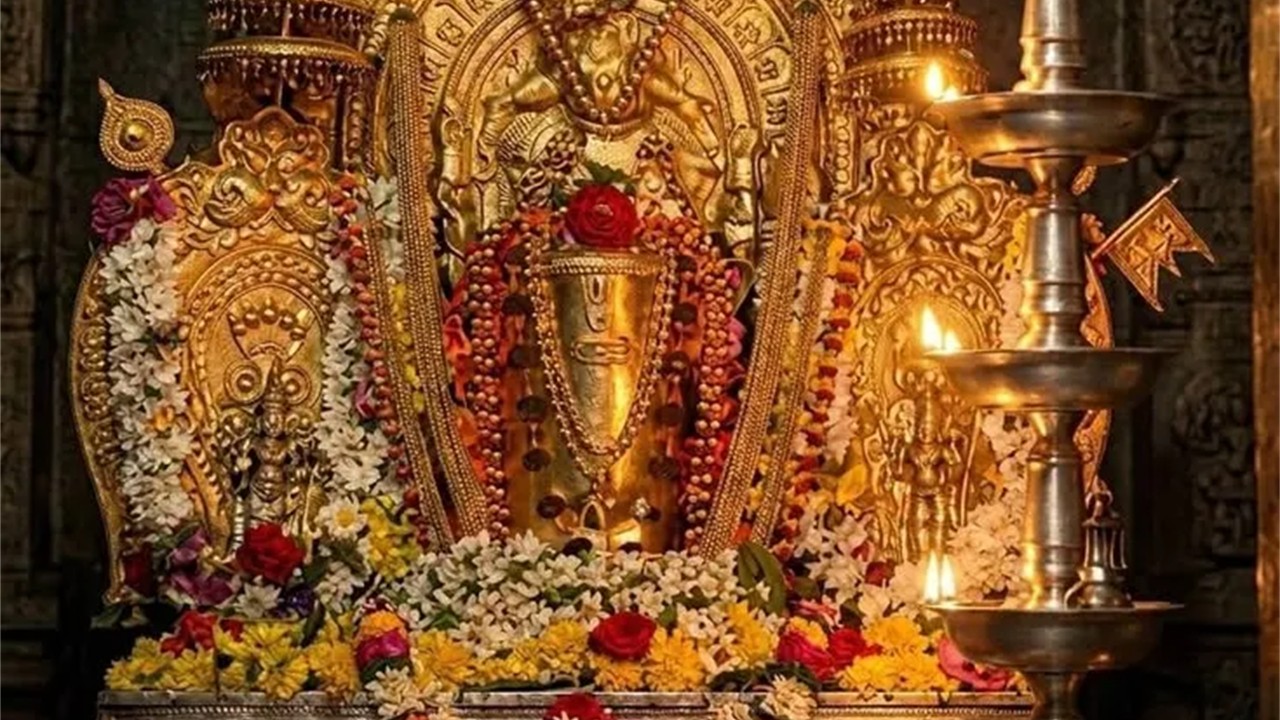
As the temple at Kuduma grew in spiritual importance, the Dharma Daivas instructed Birmanna Pergade to establish the worship of Sri Manjunatha, a revered form of Shiva. A sacred Shiva Linga was consequently installed, transforming the settlement into a prominent center of Shaivite worship. Despite the temple’s Sanatana identity, its administration remained with the Jain Heggade family, descendants of Birmanna Pergade, while religious rituals continued to be performed by Sanatana priests.
A significant milestone in the temple’s history occurred during the 16th century when the renowned Madhva saint Sri Vadiraja Tirtha visited the temple at the invitation of Devaraja Heggade. Recognizing the need for formal consecration in accordance with Vedic and Agamic traditions, he reconsecrated the sacred Shiva Linga and regularized the temple’s worship practices. According to Madhva tradition, Sri Vadiraja also placed a sacred Hayagriva Shaligrama upon the Linga, symbolizing the harmonious union of Shaivite and Vaishnava traditions. He is further credited with naming the deity Sri Manjunatha, renaming the village Dharmasthala meaning “Abode of Dharma,” and appointing Madhva Brahmin priests to conduct the daily worship while retaining the temple’s administration under the Jain Heggade family.
Architecture of Dharmasthala Manjunatha Temple
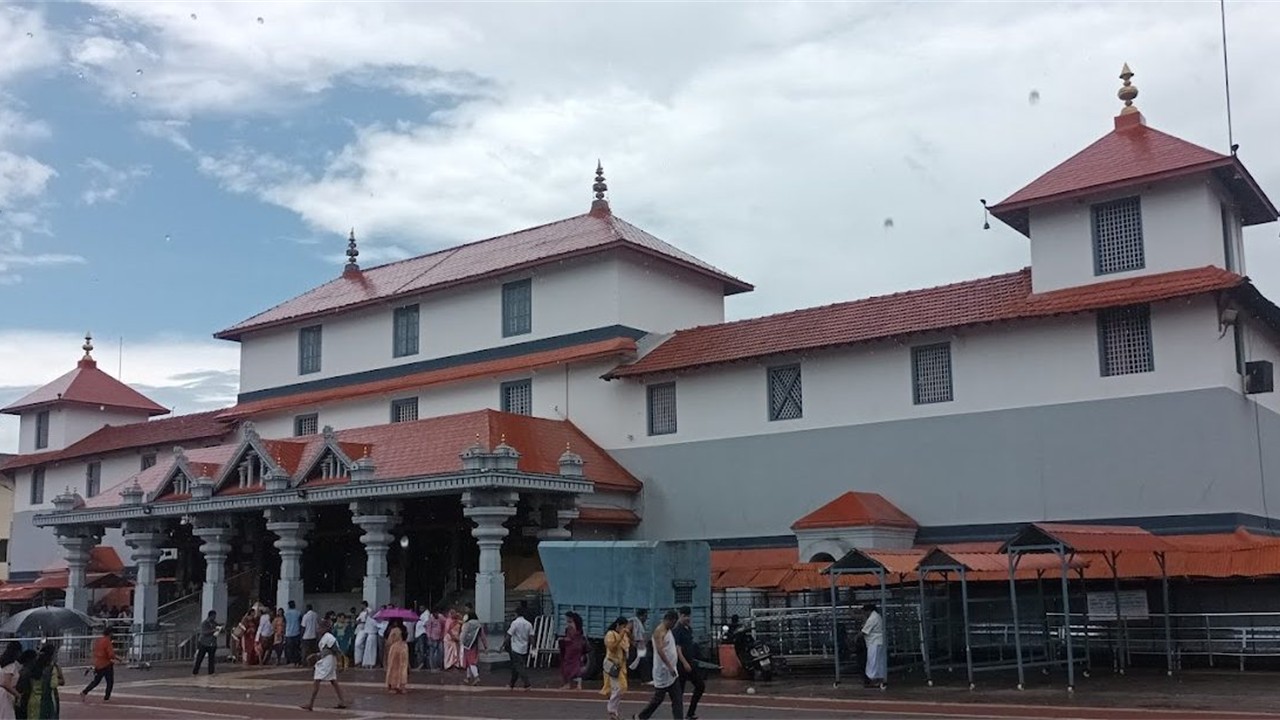
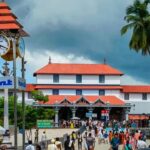
The Dharmasthala Manjunatha Temple showcases a distinctive blend of Karnataka and Kerala architectural styles, characterized by sloping tiled roofs, beautifully crafted wooden structures, intricately carved pillars, and spacious courtyards. Unlike many South Indian temples known for their towering gopurams, Dharmasthala emphasizes simplicity, elegance, and spiritual serenity. Its architecture reflects the rich artistic traditions of coastal Karnataka while incorporating practical design elements suited to the region’s heavy monsoon climate, creating a sacred and welcoming environment for devotees.
Located nearby, the majestic Bahubali (Gommateshwara) Statue is one of India’s tallest monolithic statues and a prominent symbol of Jain heritage. Carved from a single block of stone, the statue represents renunciation, non-violence, self-discipline, and spiritual enlightenment.
Festivals Celebrated at Dharmasthala Manjunatha Temple
Maha Shivaratri is one of the most important festivals celebrated at Dharmasthala, drawing thousands of devotees who gather to worship Sri Manjunatha, a revered form of Sri Shiva. The occasion is marked by special rituals, sacred abhishekas, fasting, devotional chanting, and night-long vigils, creating an atmosphere of profound spirituality and devotion throughout the temple complex. Another major celebration is Laksha Deepotsava, when the entire temple premises are illuminated with thousands of oil lamps. The breathtaking display of lights symbolizes the victory of knowledge, faith, and righteousness over darkness, transforming Dharmasthala into a radiant center of devotion and celebration.
The temple’s annual Mahotsava is celebrated with great grandeur and enthusiasm, featuring elaborate religious ceremonies, colourful processions, cultural performances, devotional music, and community gatherings that showcase the rich spiritual and cultural heritage of the region. Dharmasthala is also renowned for the Mahamastakabhisheka of the majestic Bahubali (Gommateshwara) statue nearby, a grand ceremonial event during which the monolithic statue is anointed with sacred offerings such as milk, sandalwood paste, saffron, turmeric, and sacred water. This spectacular ritual attracts devotees and pilgrims from across Bharat and stands as a powerful symbol of faith, reverence, and religious harmony.
Best time to visit Dharmasthala Manjunatha Temple
The best time to visit the Sri Manjunatheshwara Temple, Dharmasthala is October to March, when the weather is pleasant and comfortable for darshan and sightseeing. Temperatures are generally moderate, and the post-monsoon greenery of the Western Ghats makes the surroundings especially beautiful.
Darshan timings of Dharmasthala Manjunatha Temple
The temple is open in Morning from 6:30 AM to 11 AM, then Afternoon from 12:15 PM to 2:30 PM and in Evening at 5 PM till 8:30 PM and closes at 8:45 PM.
Temple Timings may vary on festival and special occasions.
Nearby places to visit
Bahubali Basadi, Ratnagiri Hill – Sacred Jain temple featuring the majestic monolithic deity of Bahubali.
Southadka Sri Mahaganapathi Temple – Unique open-air temple dedicated to Bhagwan Ganapathi.
Kukke Sri Subrahmanya Temple – Revered temple of Bhagwan Subrahmanya, one of Karnataka’s most important pilgrimage centers.
Ujire Sri Janardhana Temple – Ancient temple dedicated to Bhagwan Janardhana.
Kadri Manjunatha Temple, Mangaluru – Historic temple dedicated to Bhagwan Manjunatha.
Kateel Sri Durgaparameshwari Temple – Renowned temple of Mata Durgaparameshwari.
Sringeri Sharada Peetham – Revered temple dedicated to Mata Sharadamba and an important Advaita center.
How to Reach Dharmasthala Manjunatha Temple
Best way to plan to Dharmasthala Manjunatha Temple tour is through Tirtha Yatra’s Udupi Yatra. All the arrangements for your Yatra will be taken care of while you focus only on the spiritual experience of the journey.

By Air: The nearest airport is Mangaluru International Airport, approximately 65-75 km from Dharmasthala.
By Rail: The nearest major railway stations are Mangalore Junction, Mangalore Central, and Subrahmanya Road Railway Station, all of which offer convenient road connectivity to Dharmasthala.
By Road: Dharmasthala is well connected from major cities such as Bengaluru (300 km), Mysuru (220 km), Mangaluru (75 km), and Udupi (110 km).
0
Leave a Reply