
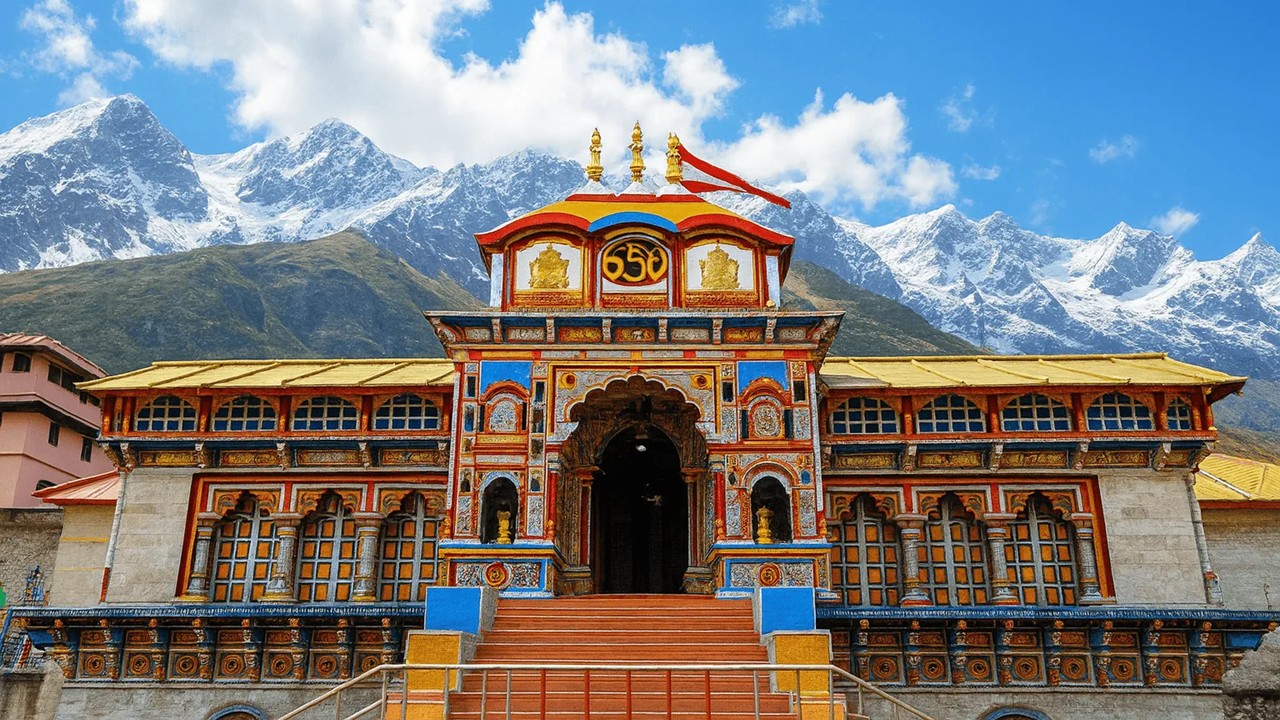
Badrinath Temple, one of the divine pilgrimage destinations in Sanatana Dharma, stands majestically amid the snow-covered Garhwal Himalayas along the sacred Alaknanda River in Uttarakhand. Revered as the northern jewel of the Char Dham and one of the 108 Divya Desams, celebrated in the Pasurams of the Alvar saints, particularly Periyalvar and Thirumangai Alvar, this pilgrimage center has drawn sages, saints, kings, and devotees for countless generations.
Another name of Badrinath is Badarikashrama, a term found in several Puranic traditions. According to tradition, this Himalayan valley served as the hermitage of the twin sages Nara and Narayana, who are regarded as manifestations of Sri Vishnu. Here, amidst the rugged mountains, they performed severe penance for the welfare of the whole universe.
Badrinath’s main deity is traditionally regarded by many devotees as a Swayam Vyakta (self-manifested) form of Sri Vishnu, meaning the divine presence manifested on its own rather than being originally fashioned by a human sculptor. The temple is often counted among the eight Swayam Vyakta Kshetras of Sri Mahavishnu.
Badrinath Temple finds mention in revered texts such as the Bhagavata Purana, Skanda Purana, Padma Purana, and Mahabharata, all of which glorify the sanctity of Badarikashrama. Known in Tamil literature as Tiruvatariyaacciraamam, Badrinath has remained one of the most revered Vaishnava pilgrimage centres for centuries.
Sthala Purana of Badrinath Temple
Badrinath Temple stands on the sacred land of Badarikashrama, where, according to the Bhagavata Purana, the divine sages Nara and Narayana – incarnations of Sri Mahavishnu and sons of Dharma, the mind-born son of Brahma, and Murti, the daughter of Daksha Prajapati – performed eternal tapasya for the welfare of the universe.
Immersed in profound meditation amidst the majestic Himalayas, they remained undisturbed by the icy winds, heavy snowfall, and severe climate, sanctifying the place. Seeing her divine consort exposed to the severe climate, Devi Lakshmi took the form of a Badri tree, often identified with the Himalayan berry, and spread herself above him like a protective canopy. Shielding Sri Vishnu from snow, rain, and storms, she stood in silent service throughout his meditation.
When Sri Vishnu finally opened his eyes, he was deeply moved by her devotion. In gratitude, he declared that the place would forever bear her name and became known as Badrinath, the Lord of Badri. Since then, Lakshmi and Narayana have been inseparable within the spiritual identity of the temple.
Another history associates the temple with Sage Narada Muni. Tradition says that once Narada Muni performed severe penance here and received divine wisdom from Sri Mahavishnu. Nearby sites such as Narad Kund preserve the memory of this association. The region is equally sacred because of Nara and Narayana. The twin peaks overlooking the temple are identified with these divine sages.
The Mahabharata also links this region with the Pandavas. During their final journey toward heaven, known as the Mahaprasthana, they are believed to have passed through this sacred Himalayan landscape. Nearby Mana village preserves traditions connected with Vyasa, Ganesha, and the composition of the Mahabharata.
History of Badrinath Temple
Badrinath Temple, according to local tradition, was once home to the sacred deity of Sri Badrinarayana, who is believed to have been worshipped by Narada Muni. According to local tradition, during a period of Buddhist influence, the deity of Badrinarayana was removed from its original place and taken to Toling Monastery in Tibet. Unwilling to remain there, Sri Badrinarayana broke through the monastery ceiling and returned to Badrinath on horseback. When the monastery custodians pursued him, he took refuge in the tail of a Himalayan yak.
Pleased by the help, Sri Badrinarayana then blessed the yak, allowing its tail hair to be used in camaras for fanning the deity. Centuries later, Adi Shankaracharya is said to have recovered the sacred deity from the waters of Tapt Kund and revived worship at Badrinath with the support of King Kanak Pal of the Parmar dynasty, restoring the temple’s status.
The Parmar rulers subsequently became patrons of the temple, endowing villages for its maintenance and for the care of pilgrims visiting the sacred Himalayan tirtha. They adopted the title “Bolanda Badrinath” or “Speaking Badrinath,” reflecting their role as earthly representatives of the deity. They had other titles, including Sri 108 Basdrishcharyaparayan Garharaj Mahimahendra, Dharmabibhab, and Dharamarakshak Sigamani.
In later centuries, the temple received significant patronage from the Kings of Garhwal, who expanded the temple during the 17th century. After suffering severe damage from the 1803 Garhwal earthquake and natural calamities, the temple underwent major reconstruction, including restoration supported by the King of Jaipur. During the British period, Badrinath came under colonial administration, though the Garhwal royal family continued to play an important role in its management and traditions.
Architecture of the Temple
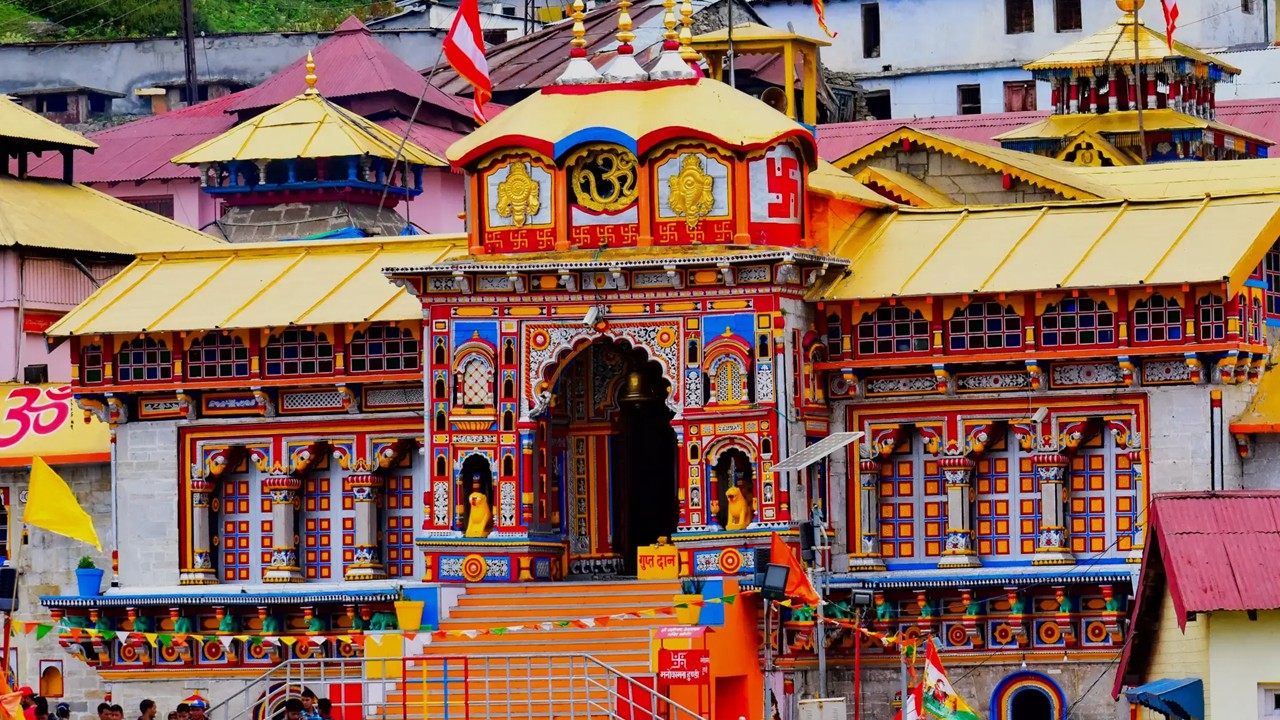
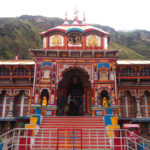
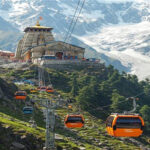
The present temple displays a unique Himalayan architectural style distinct from the massive stone temples of South India and the Nagara temples of the plains. The colourful facade, arched windows, and vibrant entrance create an appearance that resembles a mountain Buddhist monastery. The temple stands approximately 50 feet high and is crowned by a gilded roof that gleams against the backdrop of snow-covered peaks.
The structure consists primarily of three sections: the Garbha Griha, the Darshan Mandap for worship, and the Sabha Mandap where pilgrims gather. Despite centuries of repairs and renovations, the temple retains a profound aura of antiquity. The setting itself forms an inseparable part of its architecture. Towering mountains, the rushing Alaknanda, and the dramatic Himalayan landscape combine to create one of the most majestic temple environments in India.
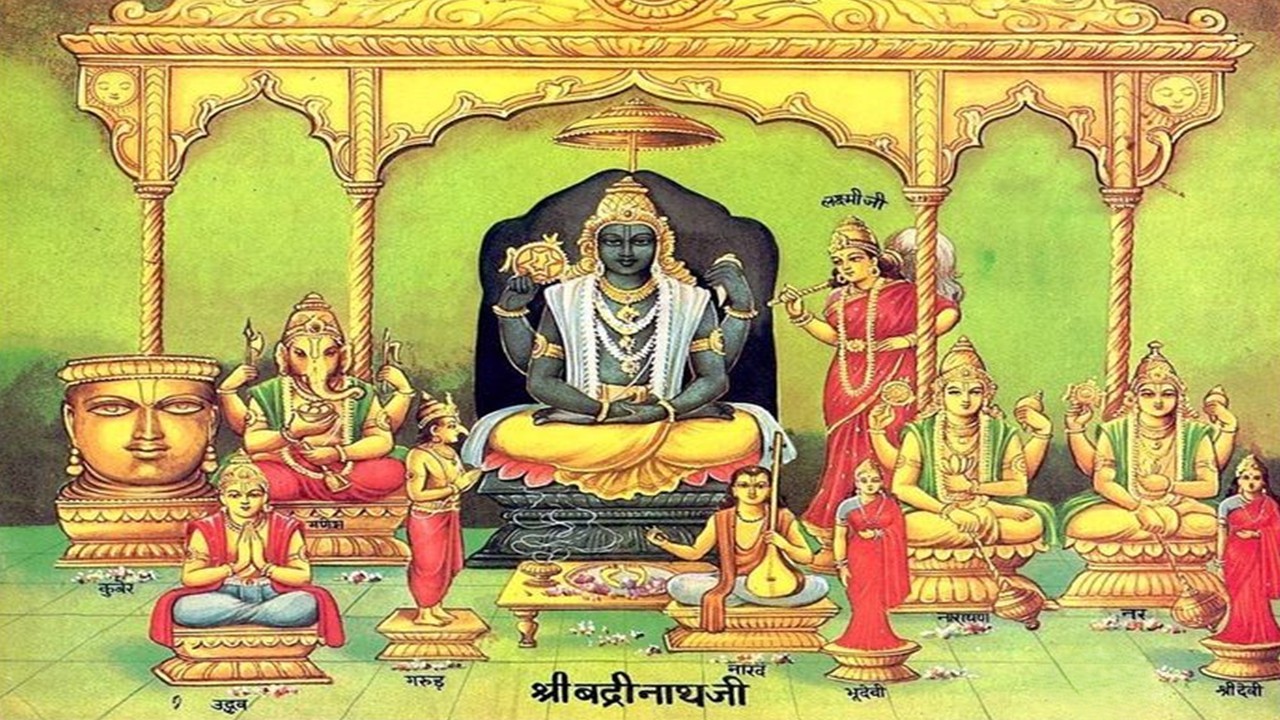
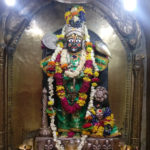
In Sri Vadiraja Tirtha’s Tirtha Prabandha, the deity of Badrinath is praised as Sri Badarinarayana, depicted with four arms: the two raised hands hold the Shankha (conch) and Sudarshana Chakra (discus), while the other two rest on his lap in Yogamudra (Padmasana). The Garbha Griha also contains deities of Kubera, Sage Narada, Uddhava, Nara and Narayana. Fifteen additional black-stone deities are worshipped in the temple, including Sri Mahalakshmi, Ganesha, Garuda and Hanuman.
Festivals
Badrinath Temple remains open to devotees for nearly six months each year, as heavy snowfall renders the region inaccessible during winter. The temple traditionally opens in late April or early May, with the auspicious date determined on Basant Panchami. At the onset of winter, the temple closes around October-November, and the worship continues at the Narasimha Temple in Joshimath until the temple reopens the following year.
Other major festivals observed at Badrinath include Badri-Kedar Utsav, as well as Janmashtami, Rama Navami, Narasimha Jayanti, and various Vaishnava celebrations dedicated to Sri Mahavishnu. The annual reopening of the temple after winter is particularly special, symbolizing the return of Sri Badri Narayana’s darshan to devotees and the commencement of the sacred Char Dham Yatra season.
Darshan Timings of Badrinath Temple
Badrinath Temple is open to devotees during the annual pilgrimage season, generally from 4:30 AM to 9:00 PM, with a short afternoon break between 1:00 PM and 4:00 PM.
Best Time to Visit Badrinath Temple
The best time to visit Badrinath Temple is from May to June and September to October, when the weather is pleasant and the pilgrimage routes are generally accessible. Summer offers comfortable temperatures and ideal conditions for darshan and sightseeing, while the post-monsoon season brings clear skies and stunning Himalayan views.
The temple remains open from April/May to October/November, depending on the Vedic calendar. During the monsoon months of July and August, heavy rainfall may cause travel disruptions. In winter, from November to April, the temple is closed due to snowfall, and worship of Sri Badri Narayan is shifted to Joshimath.
Nearby Places to Visit
Mata Murti Temple: Dedicated to Mata Murti, the mother of Sri Nara and Narayana. The temple commemorates her penance and divine connection to Badrinath.
Narad Kund: A sacred pond near the temple where Adi Shankaracharya is believed to have recovered the deity of Sri Badrinarayana.
Charan Paduka: A sacred rock believed to bear the footprints of Sri Mahavishnu. The site is reached by a short trek and offers stunning Himalayan views.
Vyas Gufa: This cave in Mana Village is traditionally believed to be the place where Sage Vyasa composed the Mahabharata.
How to Reach Badrinath Temple?
The easiest way to plan your visit is through Tirtha Yatra’s Char Dham Yatra and Pancha Badri Yatra packages, which takes care of all the arrangements so that devotees can focus solely on the spiritual experience.

By Air: The nearest airport to Badrinath is Jolly Grant Airport, Dehradun, located about 310 km away. From the airport, taxis and buses are available to reach Badrinath via Rishikesh and Joshimath.
By Rail: The nearest major railway station is Rishikesh, about 295 km from Badrinath. Regular buses and private taxis connect Rishikesh, Haridwar, and Dehradun to the temple town.
By Road: Badrinath is well connected by road to Haridwar, Rishikesh, Dehradun, Srinagar, Rudraprayag, Karnaprayag, and Joshimath. State-run and private buses operate during the pilgrimage seasons.
0

Leave a Reply