
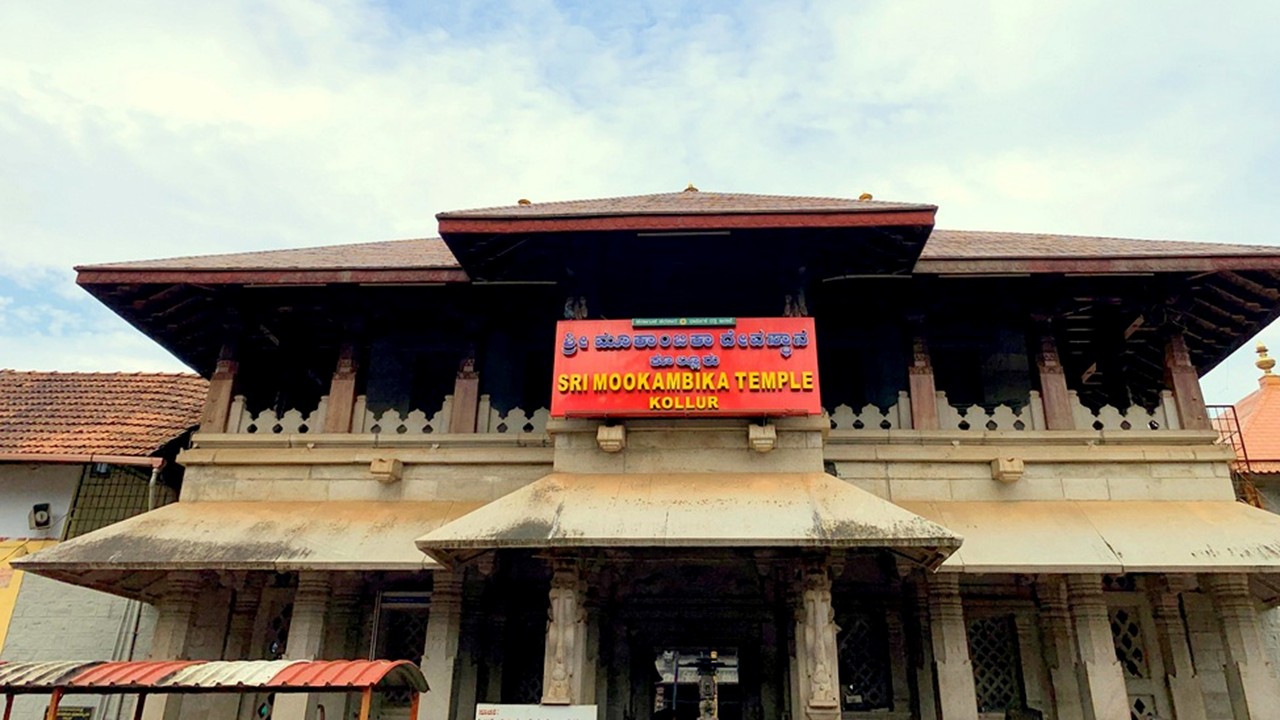
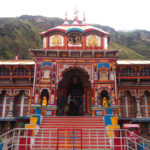
Kollur Mookambika Temple stands as one of the most revered pilgrimage centers in India. Dedicated to Mata Mookambika, this ancient temple attracts millions of devotees seeking blessings for knowledge, prosperity, courage, and spiritual enlightenment. The temple is located on the banks of the sacred Souparnika River and at the foothills of the majestic Kodachadri Hills, creating a unique atmosphere of natural beauty and divine serenity situated amidst the lush greenery of the Western Ghats in Kollur, Karnataka.
The tradition of Mata Mookambika
The name “Mookambika” originates from the demon Mookasura. According to temple tradition, Mookasura performed severe penance and obtained powerful boons that made him a threat to the Devas and Rishi Muni’s. Mata rendered him speechless, or “mooka,” thereby weakening his powers. Eventually, she defeated and destroyed him, restoring peace and harmony to the universe. Following this victory, Mata became known as Mookambika.
Devotees revere Mata Mookambika as the divine manifestation of the three principal forms of Shakti: Maha Kali, the embodiment of strength and protection; Maha Lakshmi, the bestower of prosperity and abundance; and Maha Saraswati, the Mata of wisdom, learning, and creativity. This unique synthesis of power, wealth, and knowledge makes the temple a highly significant spiritual destination for people seeking success in education, professional endeavors, good health, personal growth, and overall well-being.
Historical Background of Kollur Mookambika Temple
The origins of the temple date back over a thousand years. Tradition associates the temple with the great philosopher and saint Adi Shankaracharya, who is believed to have consecrated the deity of the Mata and established the temple as a major center of Shakti worship. According to temple lore, Mata manifested here to protect sages and devotees from evil forces and to restore righteousness.
The temple’s architecture reflects a blend of Dravidian, Vijayanagara, and Hoysala styles, showcasing centuries of cultural and religious evolution. The temple has been patronized by various kings, rulers, and devotees who contributed to its growth and preservation.
Architecture of Kollur Mookambika Temple
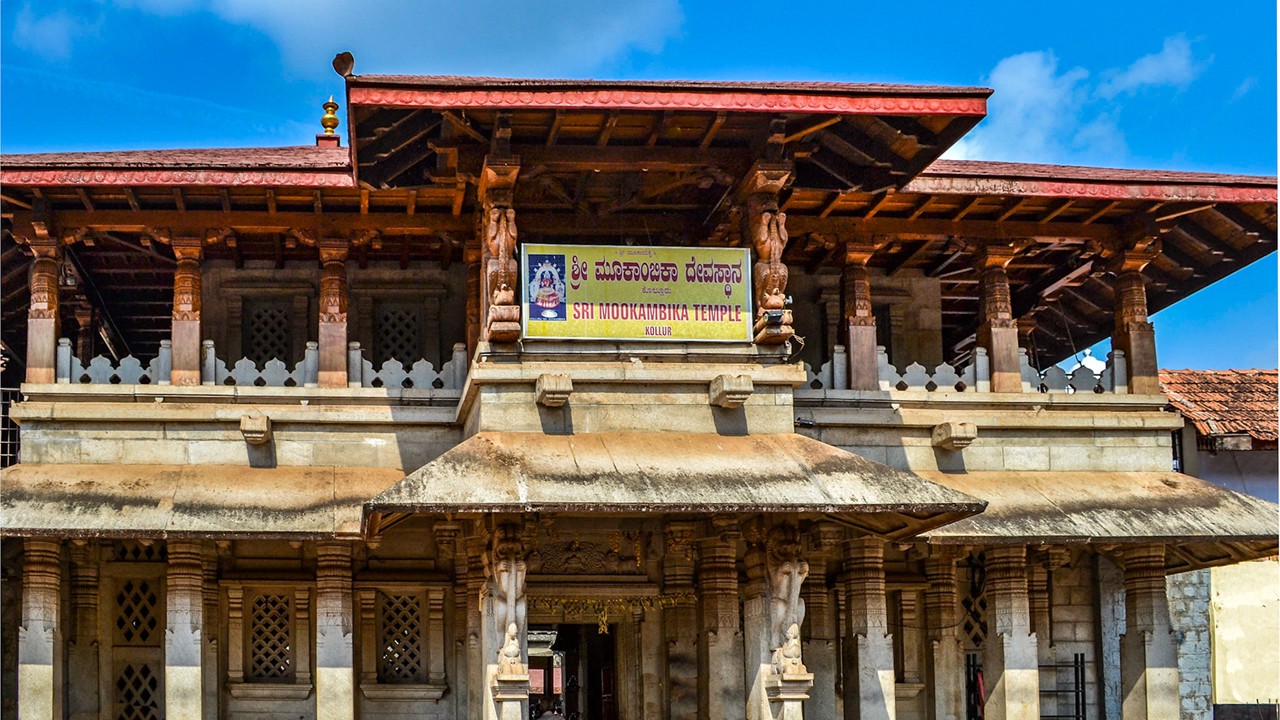
The Kollur Mookambika Temple showcases a graceful blend of Dravidian, Vijayanagara, and Hoysala architectural styles. Its design reflects the traditional temple architecture of coastal Karnataka, characterized by simplicity, elegance, and deep spiritual symbolism.
The temple’s sanctum houses a unique self-manifested Jyotirlinga marked by a golden line, symbolizing the divine union of Shiva and Shakti. The structure features copper-clad sloping roofs, a distinctive adaptation to the heavy monsoon climate of the Western Ghats.
Within the temple complex, visitors can admire intricately carved wooden structures, stone pillars, the sacred Dwajasthambha (flagstaff), and the Deepasthambha (lamp pillar), all of which contribute to the temple’s spiritual grandeur.
The complex also contains several secondary/ small temples dedicated to deities such as Bhagwan Ganesha, Bhagwan Shiva, Bhagwan Vishnu, Bhagwan Subrahmanya, Sri Hanuman, Veerabhadra ji, and the revered Naga Devathas (serpent deities).
Temple Deity
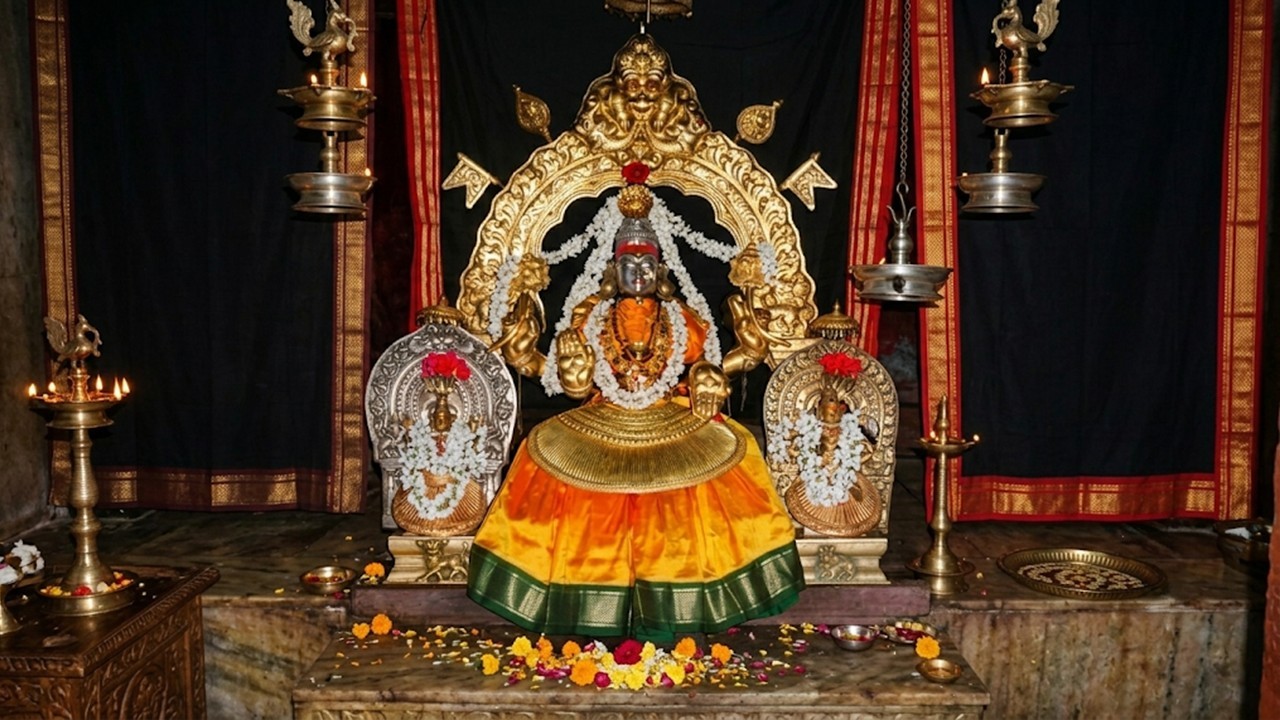
One of the most remarkable features of the temple is the presence of a self-manifested (Swayambhu) Jyotirlinga. This sacred linga is distinguished by a golden line that divides it into two symbolic halves. The left side represents Mata and her aspects as Maha Kali, Maha Lakshmi, and Maha Saraswati, while the right side symbolizes the male divine principles associated with the Trimurti.
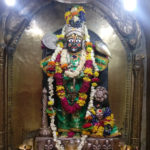
Alongside the Jyotirlinga is a beautifully crafted Panchaloha deity of Mata Mookambika, which is worshipped during daily rituals and festivals. The image depicts Mata seated in Padmasana, holding a conch and discus while blessing devotees with protection and fulfilment of desires.
The temple is regarded as one of the most important Shakti temples in southern India. It is considered part of the sacred group of 108 Durgalayas and 108 Shivalayas, enhancing its religious importance among devotees. The temple is also recognized as one of the major Mukti Sthalas of Karnataka, places believed to grant spiritual liberation.
Festivals Celebrated at Kollur Mookambika Temple
Navaratri – Navaratri is the grandest festival celebrated at the temple. Devotees from across India gather to participate in elaborate rituals, cultural performances, and special worship ceremonies dedicated to the Divine Mother.
Vijaya Dashami – The final day of Navaratri, Vijaya Dashami, is particularly significant for Vidyarambham ceremonies. Thousands of children begin their educational journey on this auspicious day.
Rathotsava – The annual chariot festival, known as Rathotsava, is another major celebration. The deity is taken in procession on a beautifully decorated chariot while devotees chant hymns and offer prayers.
Best Time to Visit Kollur Mookambika Temple
The best time to visit the Kollur Mookambika Temple is between October and March, when the weather is pleasant and ideal for temple darshan, September-October during Navaratri is considered the most auspicious period. The temple is beautifully decorated, special rituals are performed, and thousands of devotees gather to seek the blessings of Mata Mookambika.
The monsoon season (June to September) transforms Kollur into a lush green paradise, making it attractive for nature lovers; however, heavy rainfall may affect travel and outdoor activities.
Darshan Timings of Kollur Mookambika Temple
The temple remains open according to the following schedule from morning to evening:
Morning: 5:00 AM to 1:30 PM
Evening: 3:00 PM to 9:00 PM
Visitors are advised to check for changes during festivals and special occasions.
Nearby places to visit
Anegudde Vinayaka Temple – A renowned shrine dedicated to Bhagwan Ganesha, believed to remove obstacles and grant success to devotees.
Maranakatte Brahmalingeshwara Temple – An ancient temple of Bhagwan Shiva set amidst the serene surroundings of the Varahi River.
Sigandur Chowdeshwari Temple – A famous temple dedicated to Mata Chowdeshwari, revered as a powerful protector and dispenser of justice.
Udupi Sri Krishna Matha – One of India’s most celebrated Vaishnavite shrines, dedicated to Bhagwan Krishna and founded by
Kundeshwara Temple – A historic temple dedicated to Bhagwan Shiva, known for its spiritual significance and peaceful atmosphere.
How to Reach Kollur Mookambika Temple
The best way to plan is through Tirtha Yatra’s Udupi Yatra package. Which takes care of all the arrangements so that devotees can focus solely on the spiritual experience of the journey.
By Air – The nearest airport is Mangaluru International Airport, from where taxis and buses are readily available to Kollur.
By Rail – The nearest railway stations are Byndoor Mookambika Road and Kundapura, which are well connected to major cities in southern India.
By Road – Kollur is accessible via a good network of roads connecting it to Bengaluru, Mangaluru, Udupi, and other major towns of Karnataka and neighbouring states.
0
Leave a Reply