

The pilgrimage centred on the holy Sindhu River (Indus River), one of the most revered rivers mentioned in the Rig Veda. Devotees performed Sindhu Darshan and took a holy dip in the sacred river, which is regarded as a symbol of India’s ancient civilisation and cultural heritage. The name “India” is believed to have originated from the word Sindhu.

During the journey, pilgrims also visited Sri Parvata Shakti Peetha, one of the sacred 51 Shakti Peethas, where it is believed that the right anklet of Goddess Sati fell. The yatra offered devotees an opportunity to seek divine blessings while exploring the spiritual significance of the region.
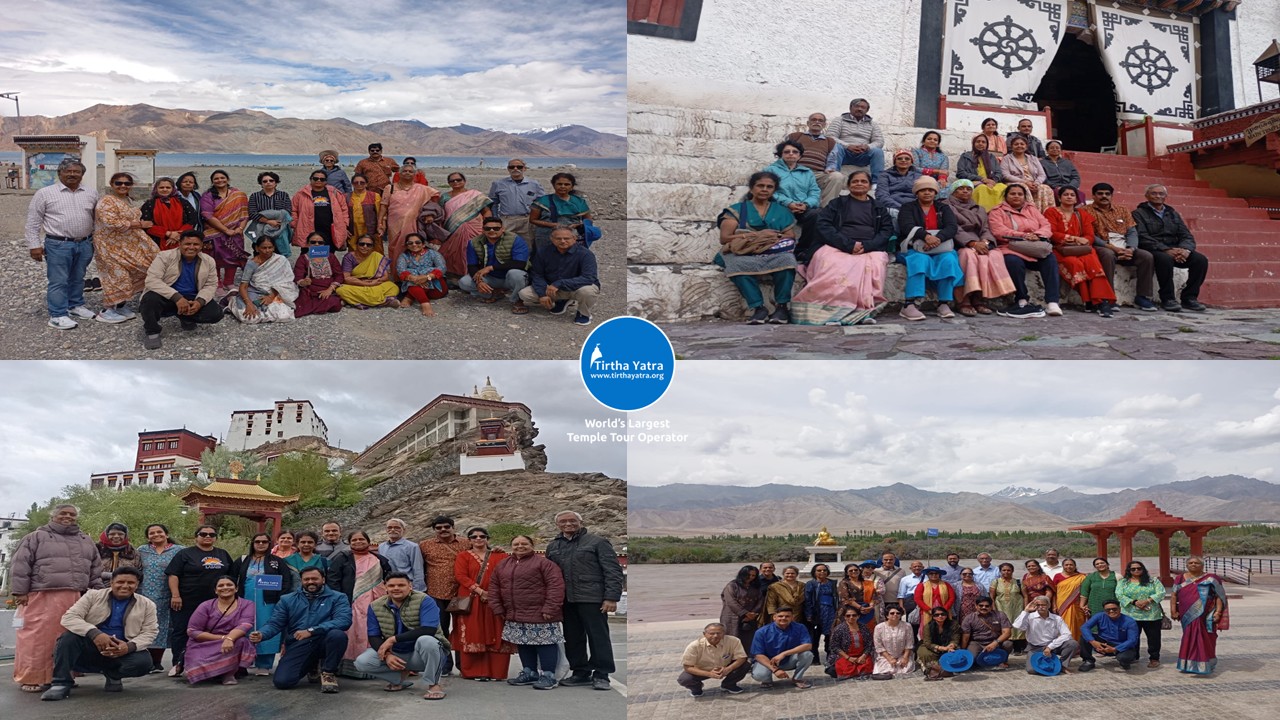
The itinerary included visits to the scenic Sindhu-Zanskar Sangam, the mysterious Magnetic Hill, the historic Leh Palace, the Hall of Fame Museum, Khardung La Pass, one of the world’s highest motorable passes, and the breathtaking Pangong Lake near the Actual Line of Control (LOC). Pilgrims also explored Shanti Stupa, Hemis Monastery, Spituk Monastery, and the vibrant Leh Market.
The group travelled to Leh by flight and stayed in comfortable 3-star twin-sharing accommodation, with local sightseeing arranged in AC Tempo Travellers. The itinerary was carefully planned to include adequate acclimatisation, ensuring a safe and enjoyable experience for all participants.
The successful completion of the Leh Ladakh Yatra 2026 offered pilgrims a memorable journey that combined spirituality, Himalayan natural beauty, and the cultural heritage of the sacred Sindhu region, making it one of Tirtha Yatra’s most enriching pilgrimage experiences.
Download the Temples of Bharat mobile app to explore temple news, history, Sthala Purana, and Hindu festivals, all in one place. Discover India’s rich spiritual and cultural heritage with authentic information.


Leave a Reply