
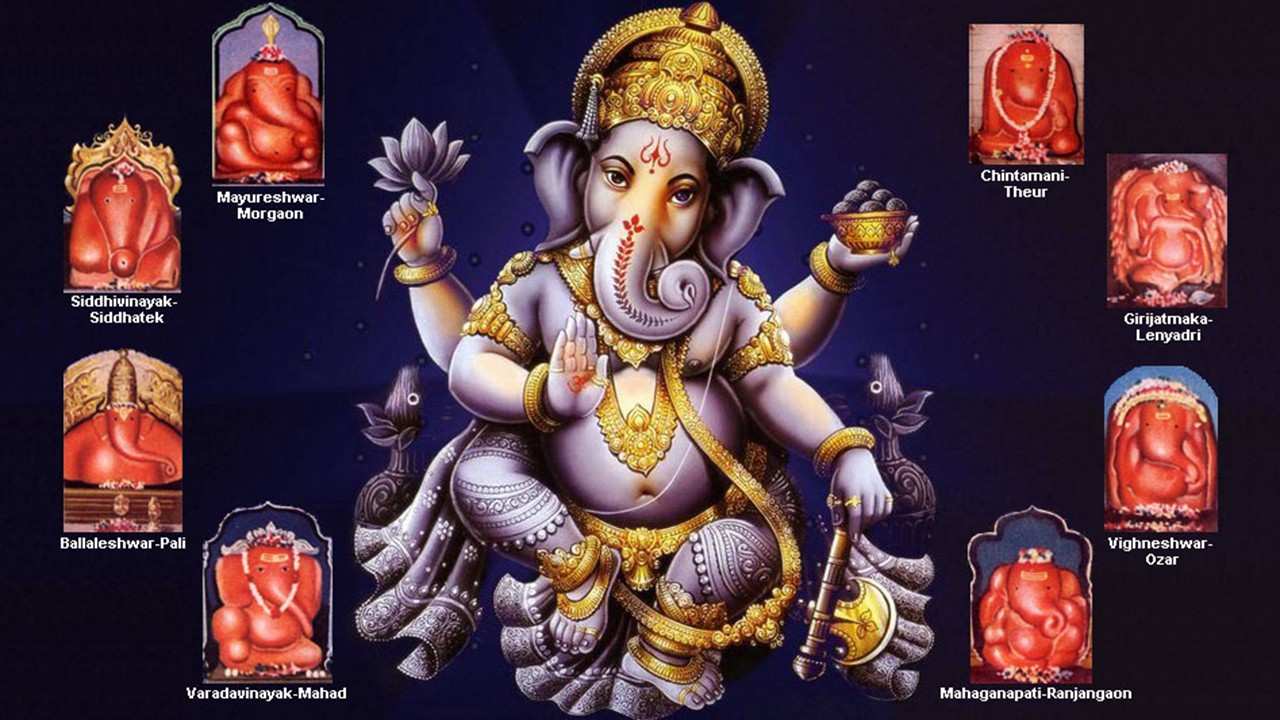
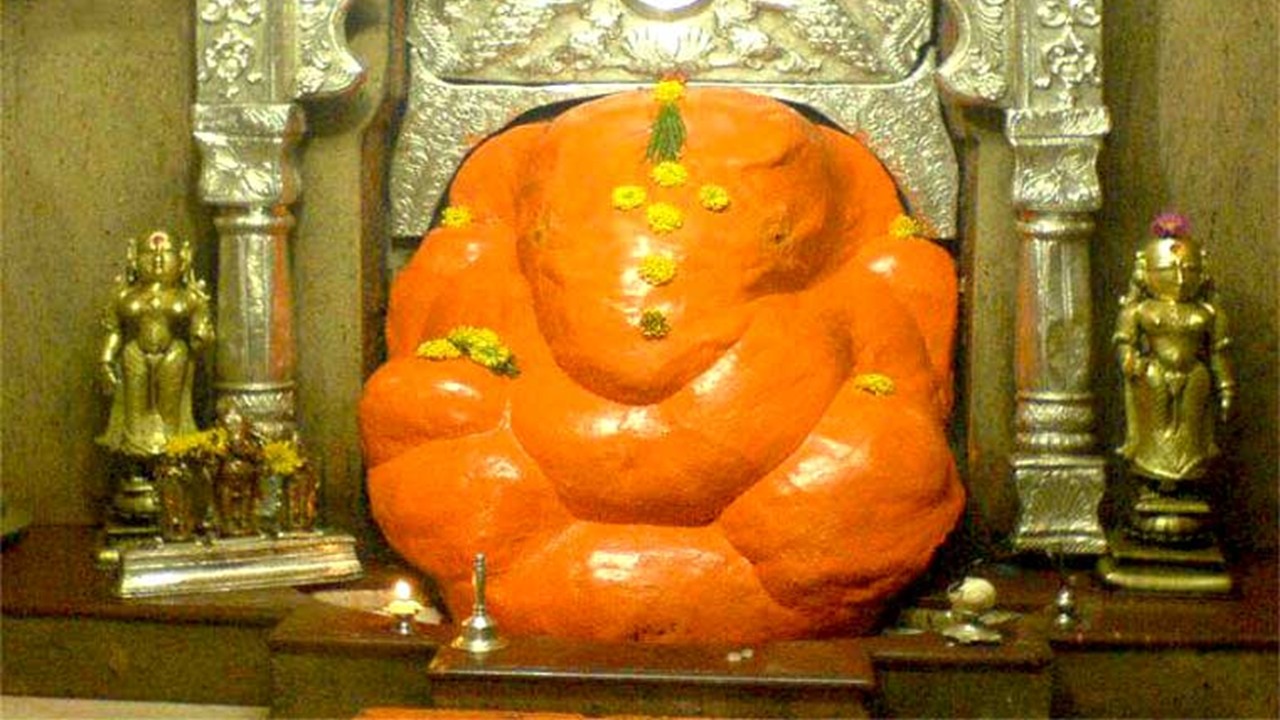
The Ashtavinayaka Temples are one of the most revered pilgrimage circuits in India, dedicated to Sri Ganesha, the remover of obstacles and the presiding deity of wisdom, prosperity, and auspicious beginnings. The word Ashtavinayaka literally means “Eight Ganesha’s” and refers to eight ancient self-manifested (Swayambhu) temples of Sri Ganesha located across Maharashtra, primarily in the Pune region.
Unlike other Ganesha temples, each Ashtavinayaka shrine has a unique tradition, form of the deity, and spiritual significance. Tradition prescribes visiting the temples in a specific sequence and concluding the pilgrimage by returning to the first temple, Mayureshwar at Morgaon, to complete the sacred cycle.
1. Mayureshwara Ganapati Temple, Morgaon
The pilgrimage traditionally begins at Morgaon, located on the banks of the Karha River.
According to tradition, the demon Sindhu became invincible through a divine boon from Suryadev and terrorized the heavenly gods. Sri Ganeshji incarnated as Mayureshwar, riding on a peacock (mayura), and defeated the demon. Hence, the deity came to be known as Mayureshwara. The place where the demon’s head exactly fell is where the temple stands today.
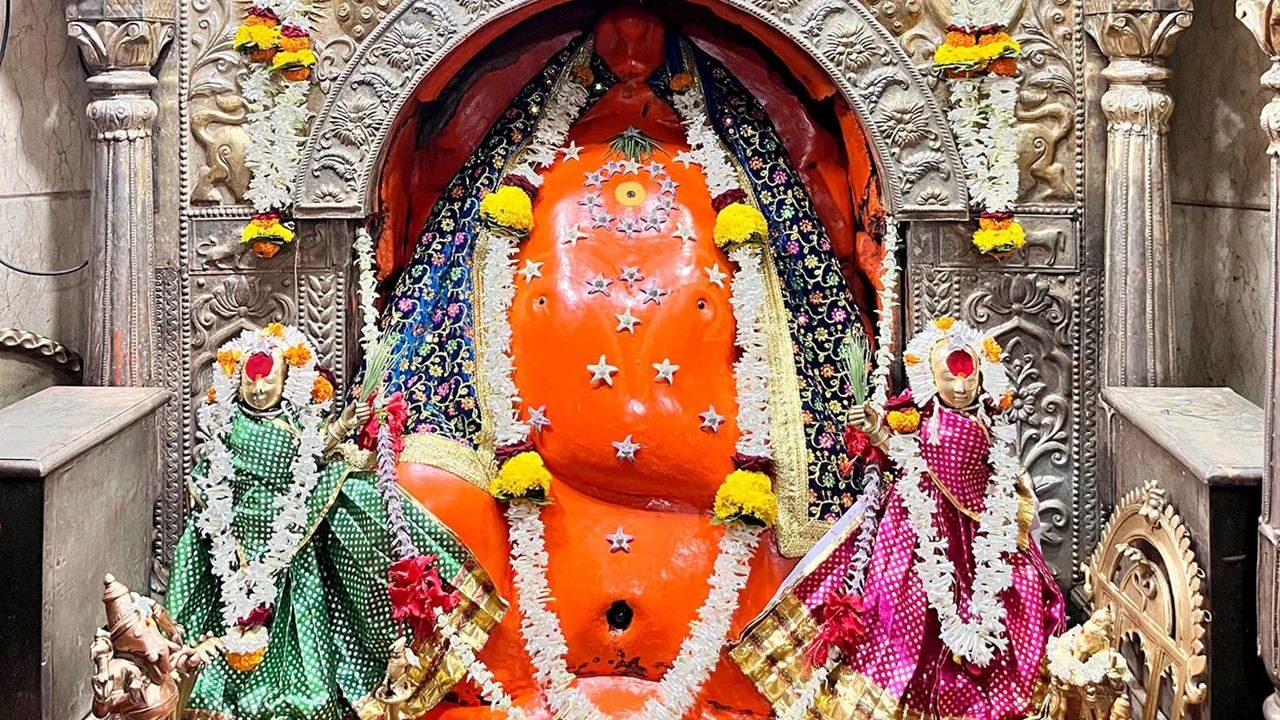
2. Siddhivinayaka Temple, Siddhatek
Situated on the banks of the Bhima River, Siddhatek houses Siddhivinayaka, the giver of mystic accomplishments (siddhis).
The temple is associated with a tradition where Sri Vishnu performed intense penance to worship Ganesha before defeating the demons Madhu and Kaitabha. Pleased with Vishnu’s devotion, Ganesha granted him the power needed to accomplish his mission.
A unique aspect of this shrine is that the trunk of the deity bends to the right, a form considered highly powerful and spiritually significant.
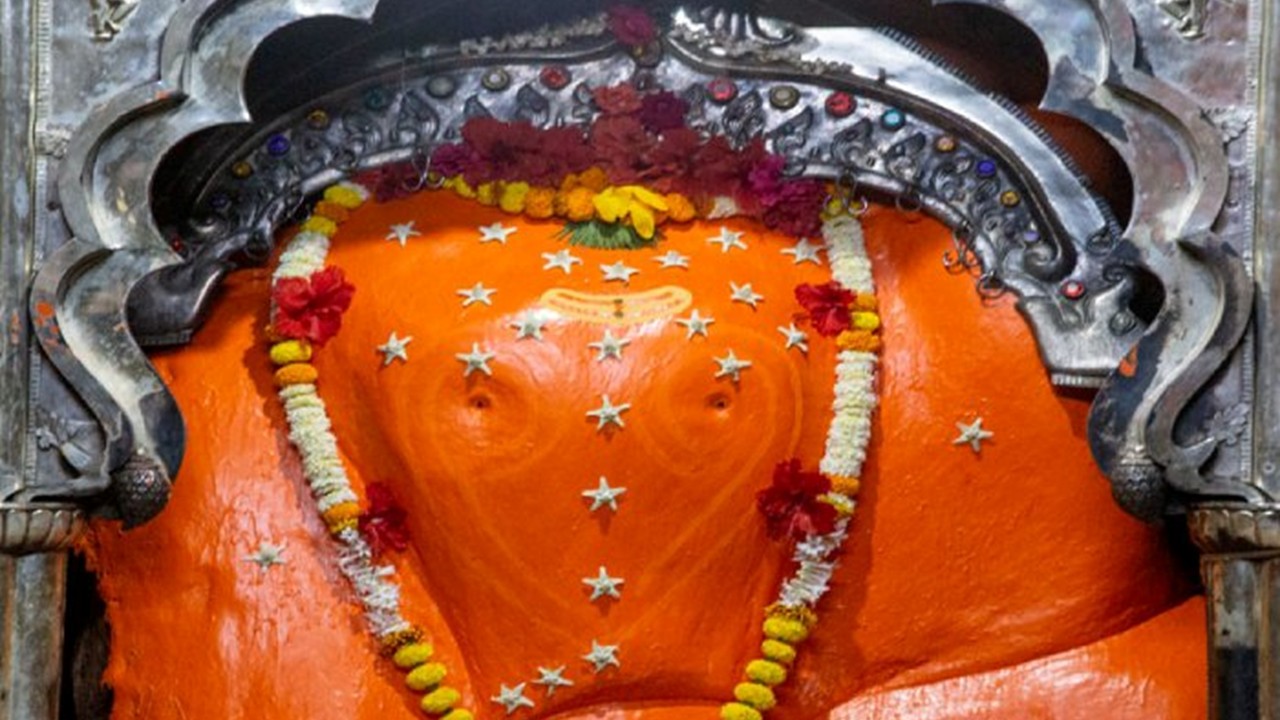
3. Ballaleshwara Temple, Pali
Located in Raigad district, Ballaleshwara is perhaps the only Ganesha temple named after a devotee rather than the deity himself.
The story centres on a young boy named Ballal, whose devotion to Sri Ganesha was unwavering. Irritated by his son’s obsession, Ballal’s father punished him severely. Deeply moved by the child’s faith, Ganesha appeared before him and granted his wish to remain forever in that place as Ballaleshwara.
The temple’s architecture is remarkable because it has been designed so that the rising sun’s rays fall directly on the deity during certain times of the year. The deity is adorned with diamonds in its eyes and a jewel embedded in the navel.
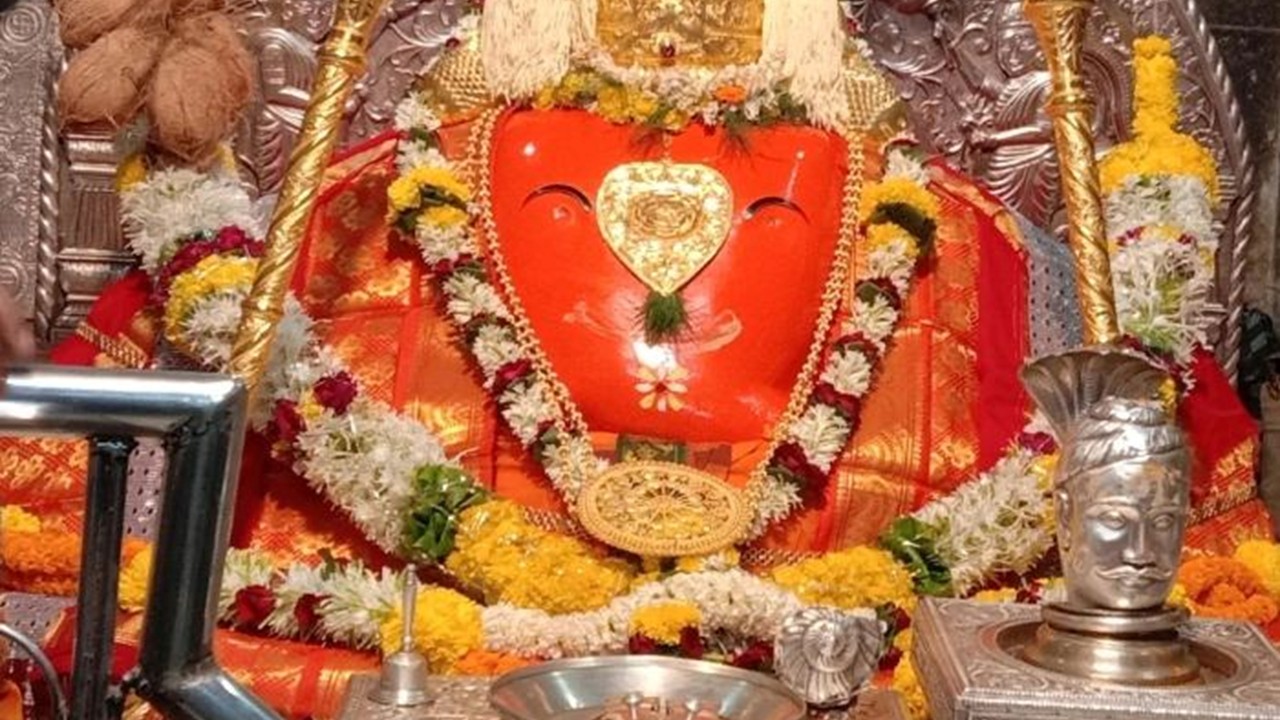
4. Varadvinayaka Temple, Mahad
The fourth temple lies in the village of Mahad near Khopoli. Here, Sri Ganeshji is worshipped as Varadvinayaka, the bestower of boons.
One day, Prince Rukmaganda visited Sage Vachaknavi’s ashram, where his wife Mukunda desired him. When he rejected her proposal, Indra disguised himself as Rukmaganda and deceived her, resulting in Grutsamad’s birth. Discovering the truth, Grutsamad cursed Mukunda, for being unchaste, to become a berry bush, while she in turn cursed him to father a rakshasa. Later, Grutsamad did penance for Sri Ganesha to save him from the catastrophe. Pleased with him, Ganeshji revealed Indra’s deceit and blessed Grutsamad here at the present-day temple location.
One unique feature of the shrine is its ever-burning lamp, said to have remained continuously lit for more than a century.
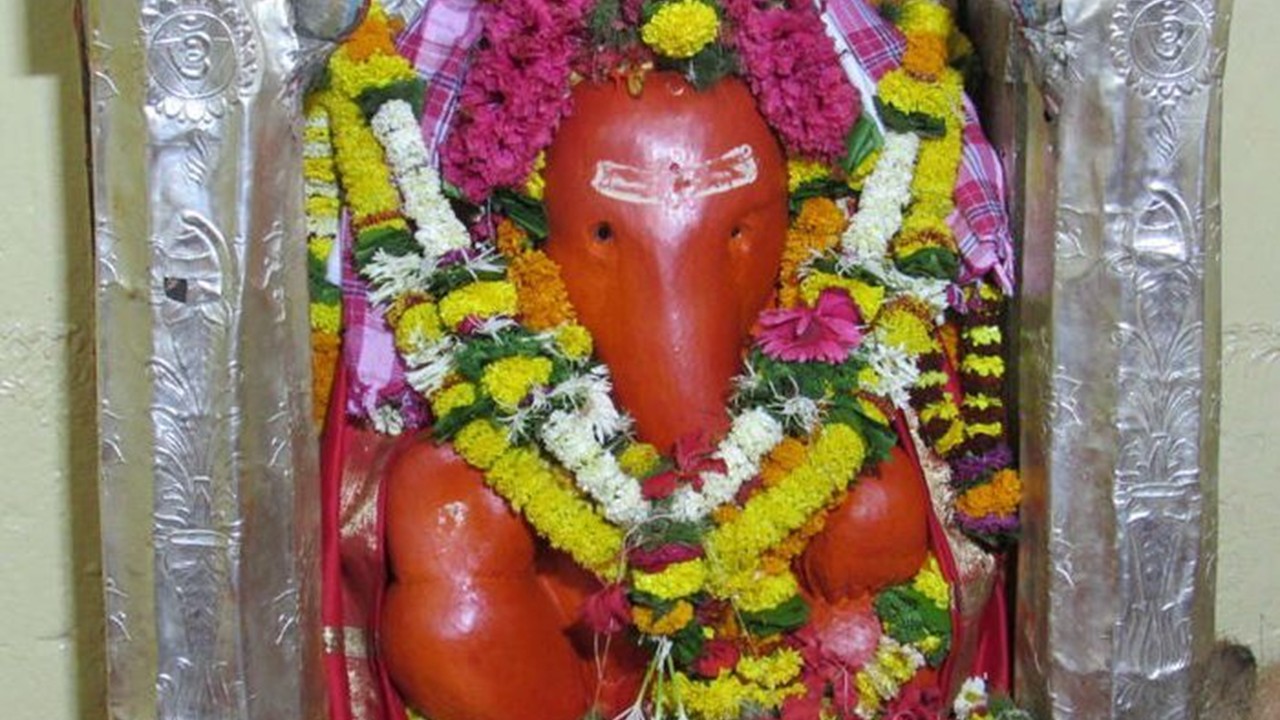
5. Chintamani Vinayaka Temple, Theur
Located near Pune, Theur is home to Chintamani Ganapati, the reliever of worries and anxieties.
The temple’s tradition revolves around Sage Kapila, who possessed a precious gem called Chintamani that could grant wishes. A greedy prince named Guna (or Gana) stole the gem. Sage Kapila prayed to Ganesha, who recovered it and restored peace. When the sage requested that Ganeshji to keep the gem by tying it around his neck, the deity became to be known as Chintamani.
This temple was particularly revered by the Peshwa rulers, and many historical structures surrounding it reflect Maratha architectural influence.
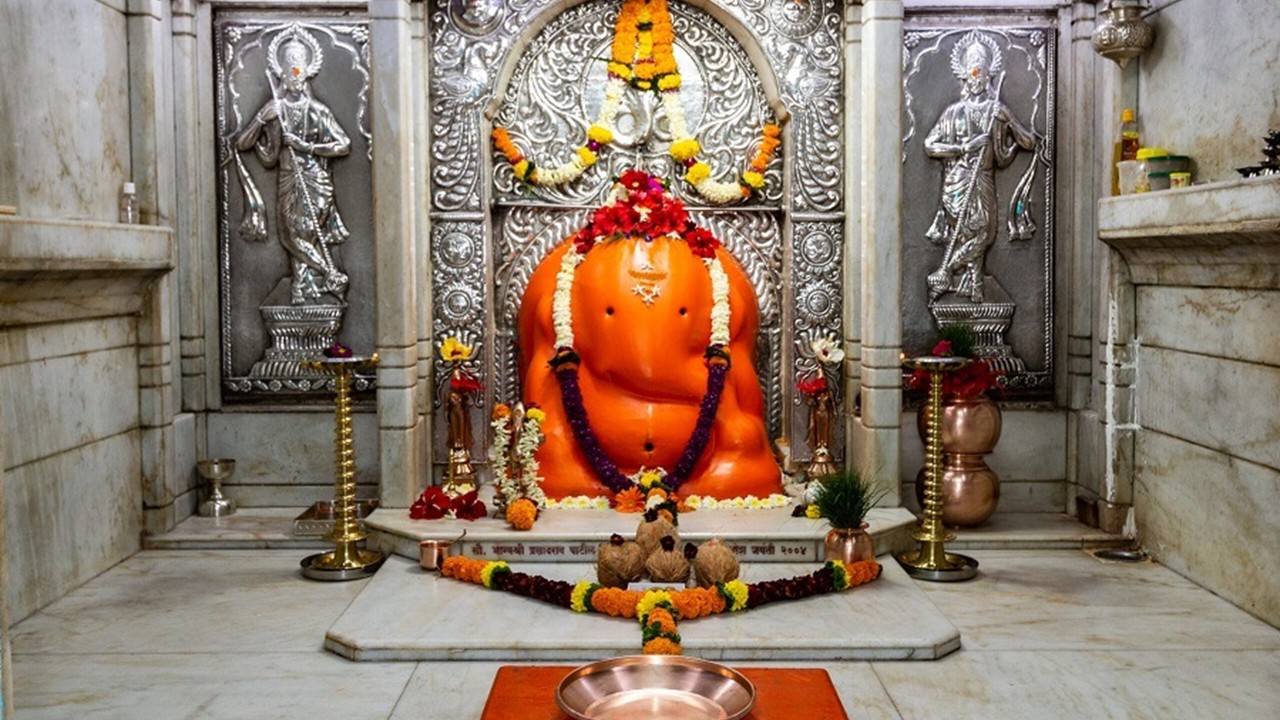
6. Girijatmaj Ganapati Temple, Lenyadri
Lenyadri, near Junnar, is perhaps the most unique of all the Ashtavinayaka temples. The shrine is situated inside an ancient rock-cut Buddhist cave and requires devotees to climb approximately 300 stone steps.
The name Girijatmaj means “son of Girija,” another name for Mata Parvati. According to tradition, Parvati performed severe penance at this location to obtain Ganesha as her son. Her prayers were fulfilled, and Ganesha is believed to have spent his childhood days here.
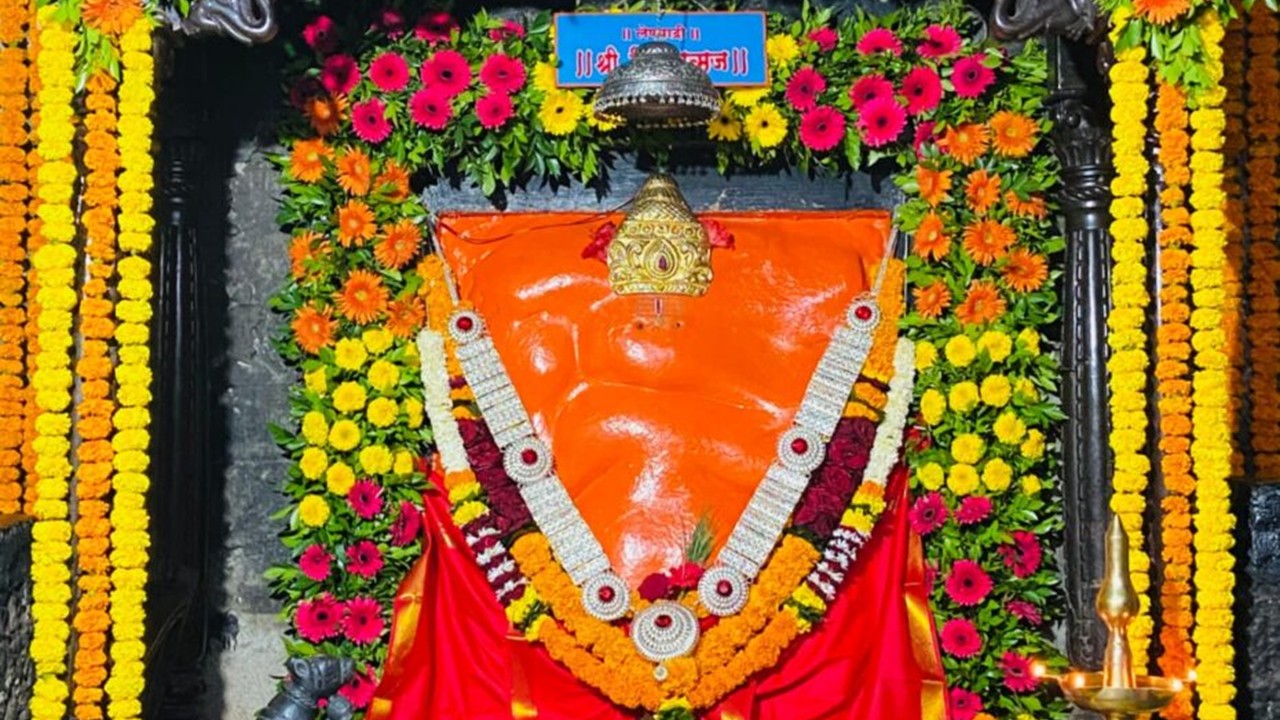
7. Vigneshwara Temple, Ozar
The temple at Ozar is dedicated to Vigneshwara, the destroyer of obstacles.
There was once a king called Abhinandana, who performed a sacrifice for the devatas but failed to offer anything to Indra. Furious at his actions, Indra ordered Kala to create hurdles for the king. Kala took the form of the evil Vignasura to disrupt the sacrifice. All the sages requested Shiva for help, but in turn, he pointed them towards Sri Ganesha. Ganeshji helped the sages by defeating Vignasura in a fierce battle.
Vignasura thus agreed to dwell only in the areas of Vigna (obstacles), the places where Ganesha is not worshipped. Thus, Ganeshji came to be known as Vigneshwara here.
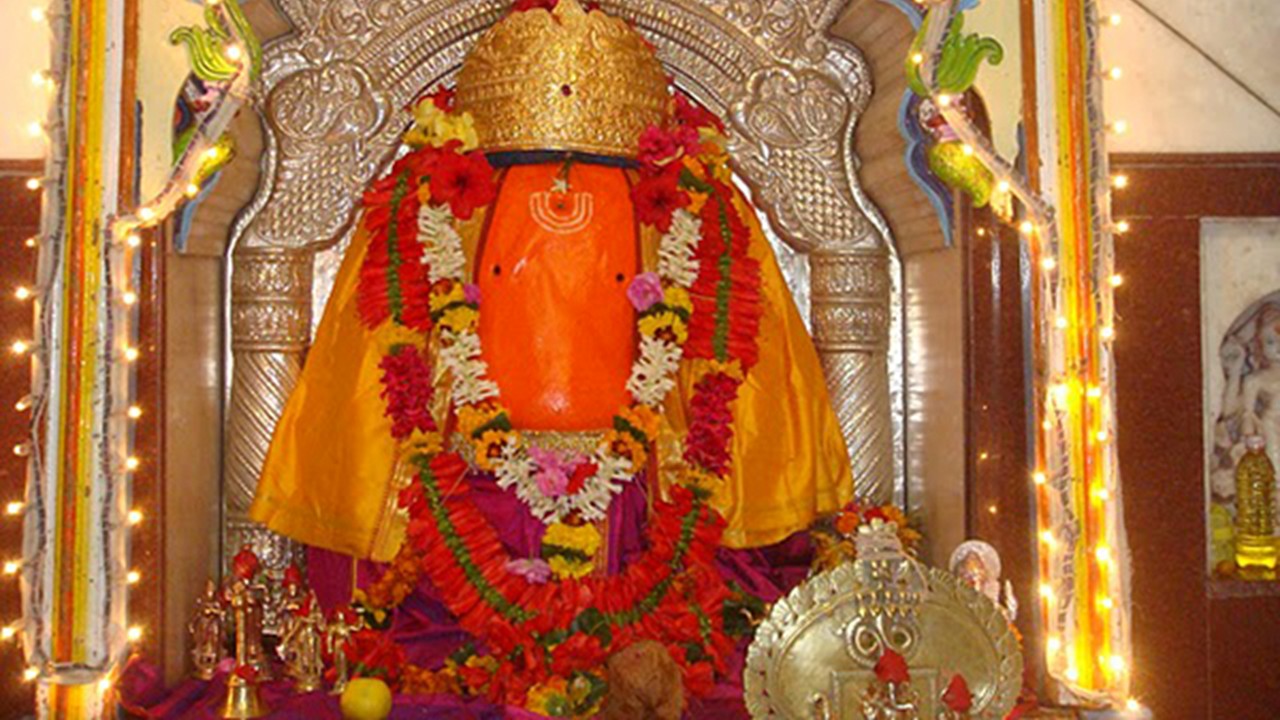
8. Mahaganapati Temple, Ranjangaon
The final temple in the traditional sequence is Mahaganapati at Ranjangaon. Ancient scriptures describe how Shiva worshipped Ganesha at this location before battling the formidable demon Tripurasura, born from the sneeze of Grutsamad due to his own Mother’s curse. Ganesha blessed Shiva and ensured victory.
According to local tradition, a larger and more elaborate image of Mahaganapati lies hidden beneath the visible deity and is revealed only during special occasions.
Major Festivals
The Ashtavinayaka temples celebrate several important festivals throughout the year, with Ganesh Chaturthi being the grandest. Maghi Ganesh Jayanti, marking the birth of Sri Ganesha, is observed with great devotion in the month of Magh Shukla Chaturthi. Sankashti Chaturthi, especially Angaraki Sankashti, attracts large numbers of devotees, while Vinayaki Chaturthi is celebrated monthly with special prayers and rituals.
Darshan Timings of the Ashtavinayaka Temples
All the Ashtavinayaka temples are open on all the days of the year between 5:00 AM to 9:00 PM.
How to Travel to Ashtavinayaka Temples?
The best way to plan the Ashtavinayaka Yatra is through Tirtha Yatra’s Ashtavinayaka Yatra package. All the arrangements for your Yatra will be taken care of which you focus only on the spiritual experience of the journey.
By Road: Starting the Ashtavinayaka Yatra from Pune through Bus or cab is very convenient. The route given below is planned in a way that saves time and makes your journey smooth and comfortable, completing the circuit in 2-3 days:
Pune → Morgaon → Siddhatek → Pali → Mahad → Theur → Lenyadri → Ozar → Ranjangaon → Pune.
By Rail: Pune Junction is the main railhead for the full Ashtavinayaka Yatra; other useful stations are Jejuri (near Morgaon), Daund Junction (near Siddhatek), Lonavala (for Pali and Mahad access), and Karjat station.
By Air: Pune International Airport is the nearest airport. Take a cab or bus to the temples from there onwards.
0
Leave a Reply