
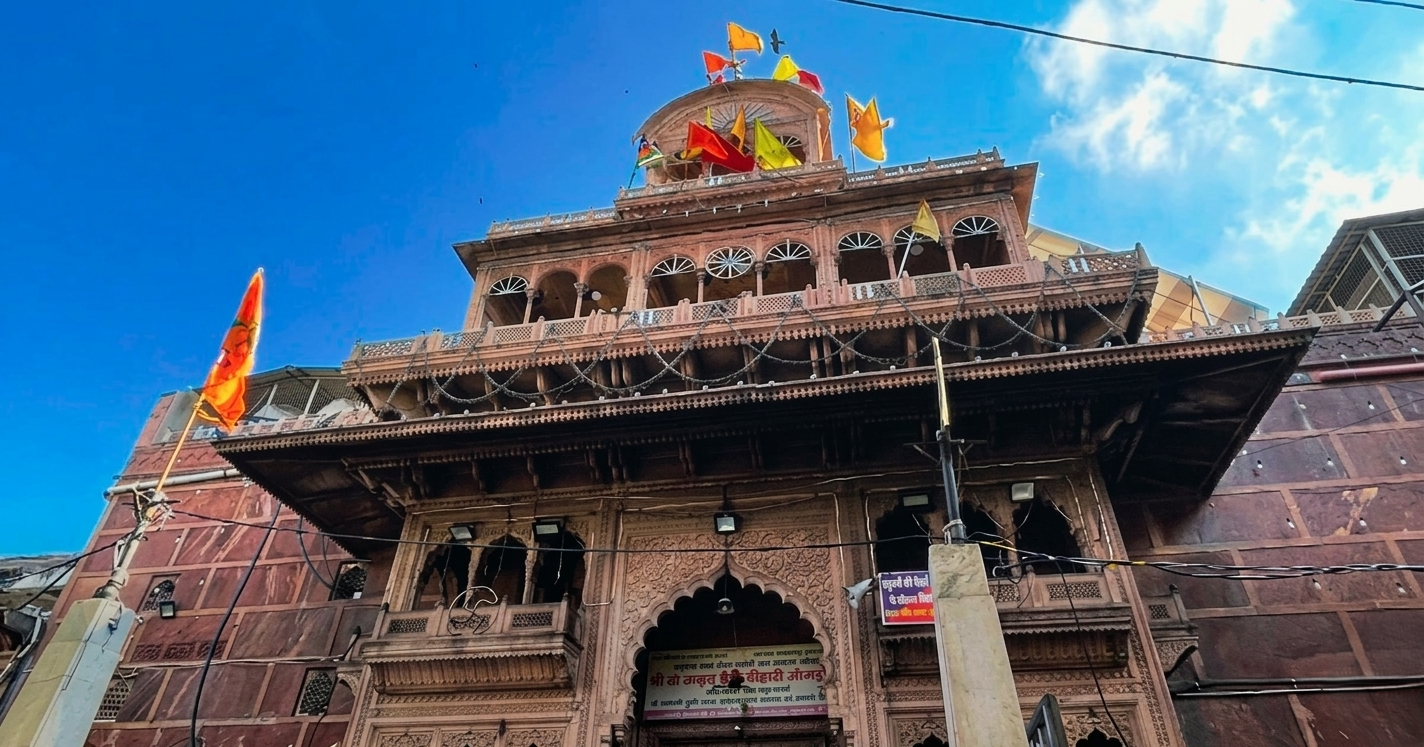
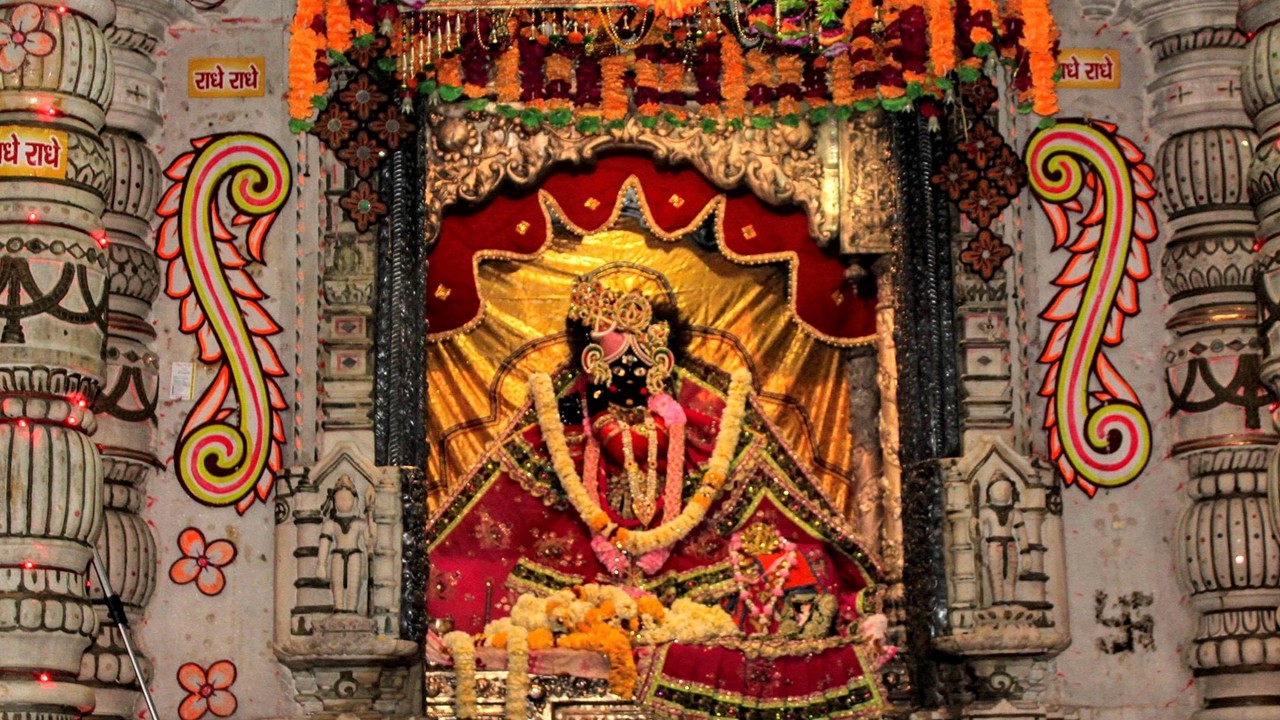
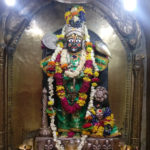
Lord Banke Bihari, the presiding Deity of the temple, is considered a divine combined form of Radha and Krishna. The Deity was originally worshipped at Nidhivan, a sacred grove associated with the divine pastimes of Radha and Krishna.
The charming Deity of Banke Bihari was discovered and worshipped by Swami Haridas in Nidhivan, where he adored the Lord as Kunj Vihari. Here, “Kunj” refers to the sacred groves of Nidhivan, and “Vihari” signifies ‘the one who delights or enjoys,’ reflecting the Lord’s blissful presence amidst the divine surroundings.
In this temple, the Lord is adored in the form of an eight-year-old child. Due to this belief, no early morning mangal aarti is performed, as it is considered inappropriate to disturb the divine child while He rests. Devotees are therefore allowed darshan only after 9:00 AM.
Why is Lord Krishna called Banke Biharji?
Banke Bihari Temple is a mesmerizing spiritual destination where devotees gather to experience His divine presence. Banke Bihari Ji is a beloved form of Lord Krishna and is also worshipped as Kunj Vihari—‘the one who enjoys in the sacred groves’—associated with Nidhivan.
Why is the curtain drawn so frequently?
According to another belief, if a devotee continues to look at the Lord for a long time, they may become completely absorbed in divine bliss or enter a trance-like state. Therefore, the curtain is periodically closed to regulate darshan and maintain balance.
Sthala Purana of Banke Bihari Temple
Pleased with his pure devotion, Lord Krishna and Radha appeared before him in Their divine form. Swami Haridas, overwhelmed by Their dazzling beauty, prayed that the Lord remain in Vrindavana in a form accessible to devotees.
Responding to his prayer, Radha and Krishna merged into a single enchanting Deity form known as “Banke Bihari.” The word “Banke” means bent in three places (tribhanga posture), while “Bihari” means the supreme enjoyer who wanders in divine bliss.
The Deity was originally manifested at Nidhivan and later enshrined in the present temple. Devotees believe that Banke Bihari is so compassionate and charming that prolonged eye contact with the deity can spiritually overwhelm devotees. Because of this belief, the temple priests traditionally open and close the curtain repeatedly during darshan.
Architecture of Banke Bihari Temple
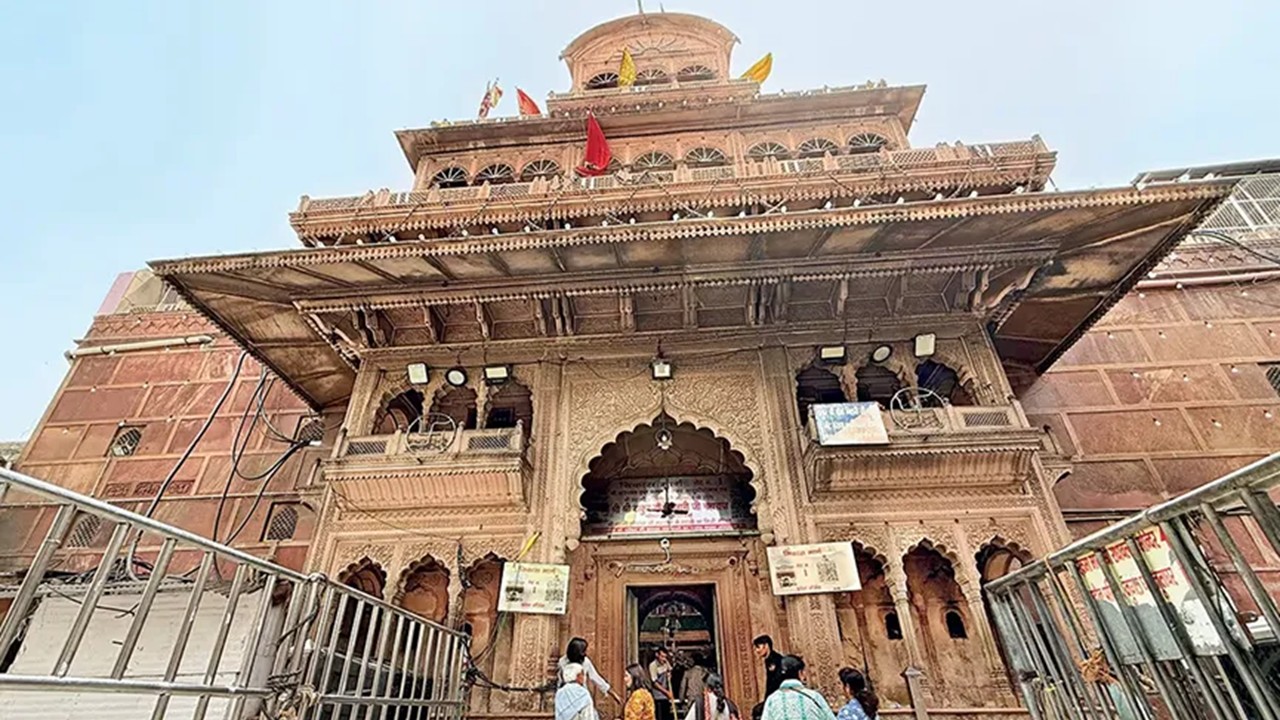
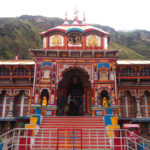
The temple contains beautifully carved arches, large gateways, and ornamental windows reflecting Rajasthani craftsmanship. A large open courtyard allows thousands of devotees to gather during daily darshan and major festivals. The interiors feature polished marble flooring that enhances the temple’s serene atmosphere. The prayer halls are supported by intricately designed pillars with floral and geometric carvings.
The temple architecture emphasizes intimacy and devotion rather than monumental grandeur, perfectly matching the loving bhakti tradition of Vrindavana.
Festivals Celebrated at Sri Banke Biharji Temple
Nandotsav: It is celebrated on the day following Janmashtami to mark the joyous celebrations held by Nanda Maharaj after the birth of Lord Krishna. The festival is observed Bhadrapada Krishna Navami with immense enthusiasm at Banke Bihari Temple in Vrindavana.
Kamada Ekadashi: It is an auspicious day observed on Chaitra Shukla Ekadashi. On this day, Phool bangla of Banke Biharji begins. And Phool bangla continues till Shravana Krishna Amavasya or Haryali Amavasya.
Bihar Panchami: This festival marks the appearance of Banke Bihari Temple Deity from Nidhivan through the devotion of Swami Haridas. It is celebrated with special pujas, bhajans, and devotional festivities.
Akshaya Tritiya: It is observed on Vaishakha Shukla Tritiya. On this auspicious day, the lotus feet of Banke Bihari Temple Deity are revealed for darshan to devotees, which is considered highly sacred and spiritually rewarding.
Radha Ashtami: It is observed on Bhadrapada Shukla Ashtami and is celebrated as the appearance day of Radha and Swami Haridas.
Darshan Timings of Sri Banke Biharji Temple
Best Time to Visit
Nearby Places to Visit Around Banke Biharji Temple
- Nidhivan: It is a sacred grove associated with the divine pastimes of Radha and Krishna.
- Prem Mandir: It is a magnificent white marble temple known for its stunning illumination and carvings.
- ISKCON Vrindavana: It is also called Krishna Balarama Mandir, famous for kirtans and spiritual activities.
- Radha Raman Temple: It is an ancient temple housing a self-manifested Deity of Krishna.
- Seva Kunj: It is a sacred garden linked with the rasa lilas of Radha and Krishna.
- Keshi Ghat: It is a beautiful ghat on the Yamuna River known for evening aarti.
- Govind Dev Ji Temple: It is an ancient temple, which reveals the original face of Lord Sri Krishna, created by Vajranabha, the great grandson of Lord Sri Krishna.
How to Visit Sri Banke Biharji Temple
Register now and be a part of this nostalgic spiritual journey to Vrindavana.

By Air: Kheria Airport in Agra and Indira Gandhi International Airport are the nearest airports to reach Banke Bihari Temple. From there, taxis and buses are easily available to reach the temple.
By Railway: Mathura Junction railway station is the nearest railway station to reach Banke Bihari Temple. From here, taxis, auto-rickshaws, and buses are easily available to reach the temple.
By Road: Vrindavana is well connected by road networks. NH-44 provides convenient access to Vrindavana.
Leave a Reply