
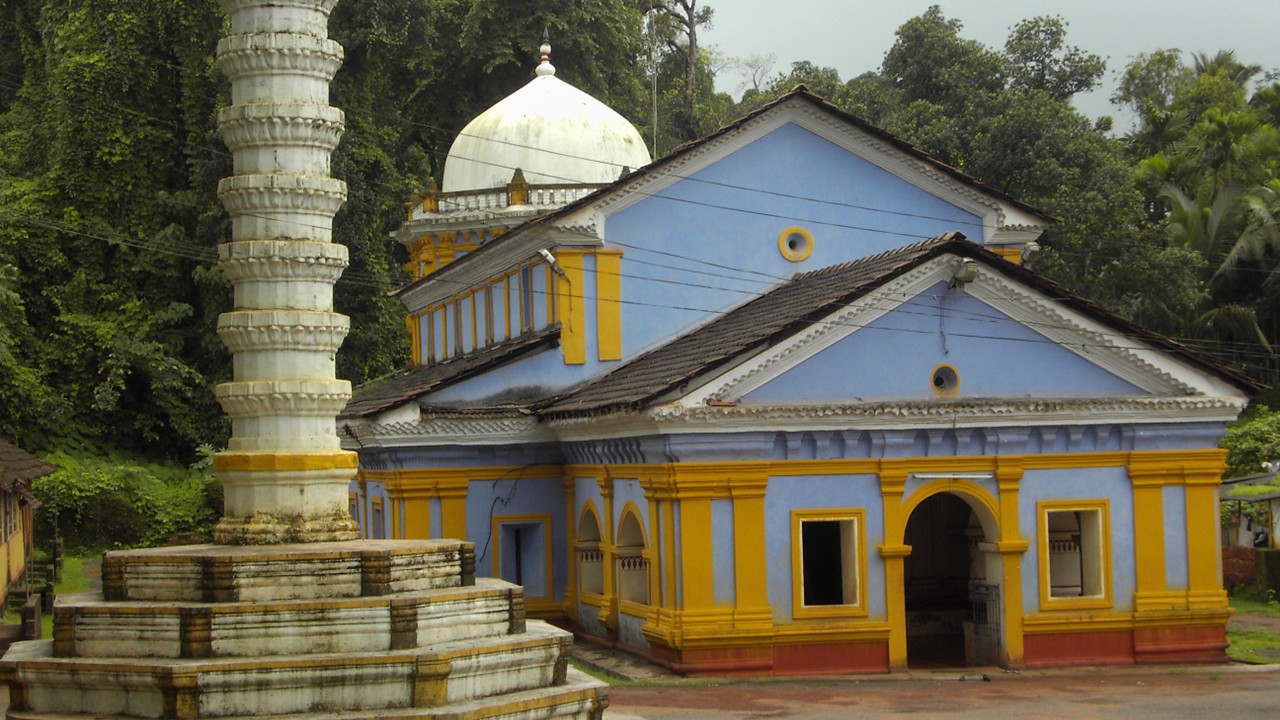
The temple beautifully highlights the harmonious blend of Shaivism and Vaishnavism, warmly welcoming devotees of both Lord Shiva and Lord Vishnu with the same honour. It stands as a living testament to the fundamental principle of Sanatana Dharma that, in the path of bhakti, sincere devotion alone matters, not the path through which one worships.
The elegant temple is situated in historic and serene village Narve, also known as Naroa in Bicholim Taluk, North Goa, set amidst the backdrop of lush green forest and gently flowing crystal-clear streams. It is located 35 km away from the Panaji, capital of Goa.
Saptakoteshwar Temple is the pride of Goa’s vibrant cultural and spiritual heritage. This temple has withstood attacks of Bahamani Sultan’s and Portugese and stands as a strong symbol of resilience. Though it is unknown to the world, it holds profound spiritual, historical and cultural significance.
Sthala Purana of Saptakoteshwar Temple
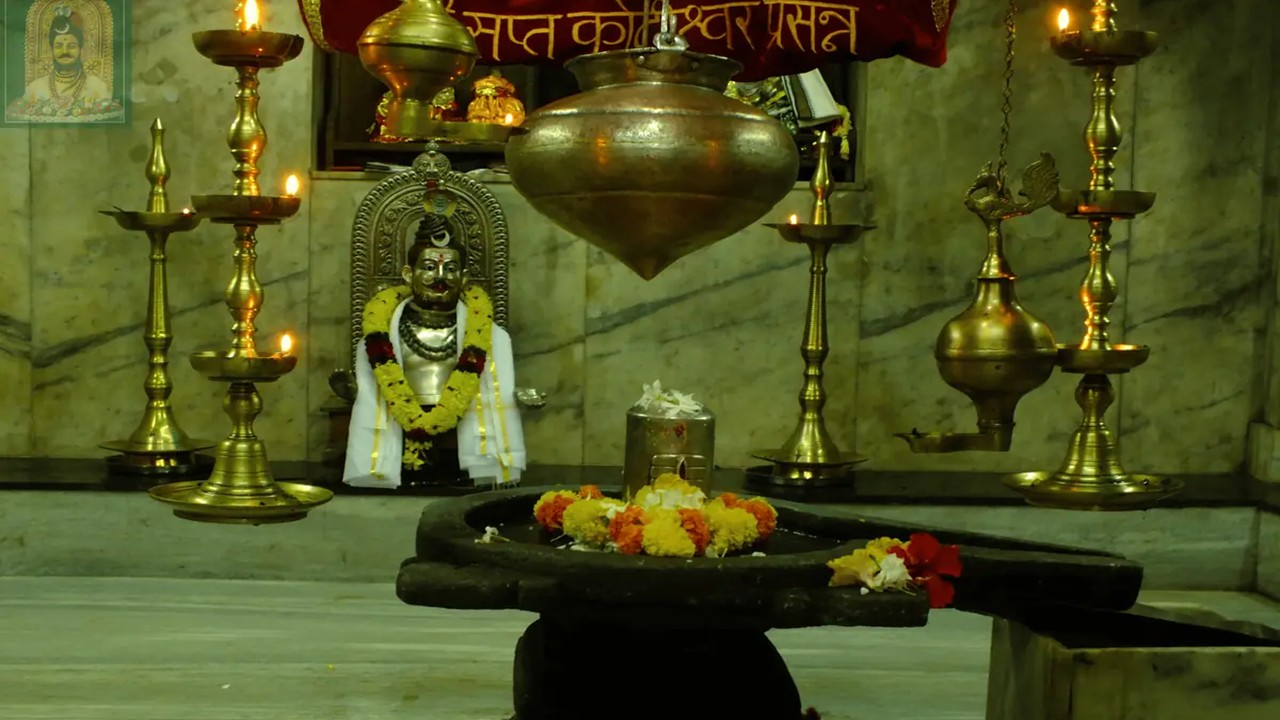
According to the Skanda Purana, in ancient times, the Saptarishis performed intense tapsya to please Lord Shiva, at the sacred site where five sacred rivers merge or confluence. They performed tapas not just for few hundred years, they did penance for seven crore years.
Lord Shiva was pleased by their steadfast devotion and unwavering faith, appeard before them and granted boon. The Saptarishis requested Lord Shiva to manifest at this exact location and bless the devotees who come here to have the darsahn.
Historical Background
In 1352 CE, the temple was attacked during the invasion of Goa by the Bahamani Sultanate Alauddin Hasan Gangu. It was later restored in 1391 CE by Madhava Mantri, the minister of the Vijayanagara ruler Harihara I.
Following the Portuguese conquest of Goa, the temple was destroyed in 1560 CE as part of the colonial administration’s campaign against Hindu places of worship. Devotees rescued the sacred Shiva Linga and preserved it in a safe location.
In the 17th century, Chhatrapati Shivaji Maharaj rebuilt the temple at its present location in Narve (Naroa), Bicholim Taluka, restoring the ancient shrine to its former glory. An inscription at the temple commemorates his contribution to its reconstruction.
Architecture of Saptakoteshwar Temple
One of the temple’s most remarkable features is its rock-cut Garbhagriha (sanctum sanctorum), a rare architectural element among Goa’s temples. The Shiva Linga is enshrined within this cave-like sanctum, creating a serene and spiritually uplifting atmosphere.
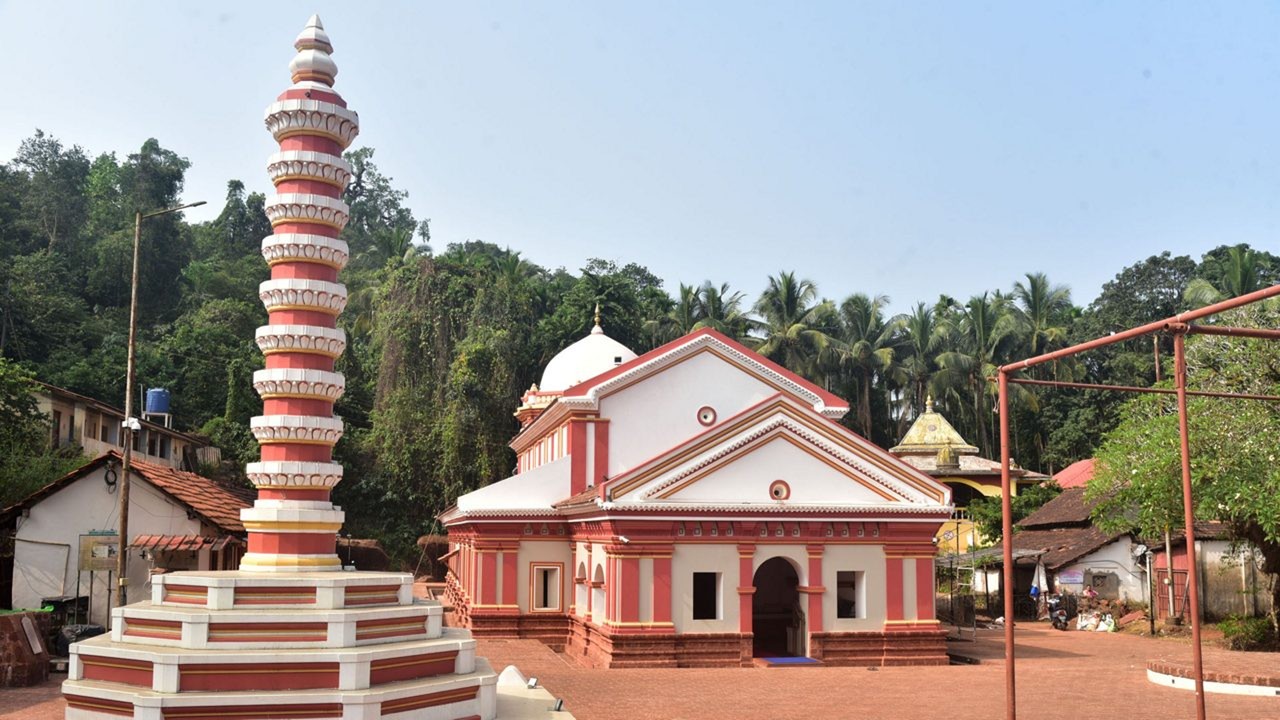
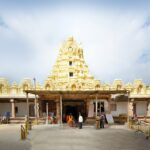
The temple also features a deepastambha (lamp tower) at the entrance, a spacious mandapa (prayer hall), and a shikhara (temple tower) that reflects traditional temple architecture. The whitewashed exterior, elegant arches, and simple yet graceful design exhibit subtle European influences that were incorporated during later renovations.
Surrounded by lush greenery and a peaceful environment, the Saptakoteshwar Temple stands as a fine example of Goa’s unique architectural heritage, where ancient traditions harmoniously blend with later Maratha and European design elements.
Festivals Celebrated at Saptakoteshwar Temple
Mahashivaratri: It is one of the major festival celebrations, observed on Magha or Phalguna. Devotees observe night long vigil by singing bhajans, kirtans in praise of Lord Shiva. The temple witness’s huge influx of devotees from Goa as well as neighbouring states.
Gokulashtami: It is also known as Krishna Janmashtami. This is the temple’s biggest annual festival, attracting thousands of devotees from Goa and Konkan region. Devotees gather in huge numbers and take bath in Panchaganga Tirtha that cleanses all the past sins and diseases.
Timings of Saptakoteshwar Temple
Best Time to Visit
Nearby Places to Visit
Divar Island: It is one of the scenic islands located across the Mandovi river. This place is known for lush greenery, traditional Goan villages, and serene ambience. You can reach this island by ferry and explore its natural beauty.
Panchaganga Tirtha: This is located near the Saptakoteshwar Temple. Devotees visit this place to have the holy bath before offering prayers to Lord Saptakoteshwar. This water possesses spiritual and healing benefits.
Arvalem Caves: This is one of the ancient caves in the region, associated with Pandavas. It is located 10 km away from this place.
Arvalem Waterfall: It is located at the short distance of Arvalem caves. It is known for its most scenic beauty, surrounded by lush greenery.
Rudreshwar Temple: It is located near the Arvalem Waterfall, dedicated to worship of Lord Shiva. Situated near the Arvalem Waterfall, the Rudreshwar Temple is a serene shrine dedicated to Lord Shiva. Its peaceful setting amidst nature makes it a popular stop for both pilgrims and tourists.
Sri Kalika Temple: It is located 15 km from Saptakoteshwar Temple and is dedicated to Goddess Kalika.
How to Reach Saptakoteshwar Temple
By Railway: The nearest major railway stations are Thivim Railway Station (approximately 28 km) and Karmali Railway Station (approximately 20 km). Madgaon (Margao) Junction, around 55 km away, is another major railhead with excellent connectivity to cities across India.
By Road: Saptakoteshwar Temple is located at Narve (Naroa) in the Bicholim taluka of North Goa. It is well connected by road from Panaji (about 35 km), Mapusa (about 30 km), Bicholim (about 15 km), and Ponda (about 25 km). Visitors can reach the temple by private vehicle, taxi, or local buses operating from major towns in Goa.
Saptakoteshwar Temple is not just an ancient Shiva temple, but also a living testament to Goa’s enduring Sanatana heritage. Having survived centuries of upheaval and been restored through the devotion of devotees and the patronage of Chhatrapati Shivaji Maharaj, it continues to inspire pilgrims seeking Lord Shiva’s blessings and a deeper connection to Goa’s rich spiritual history.






Leave a Reply