
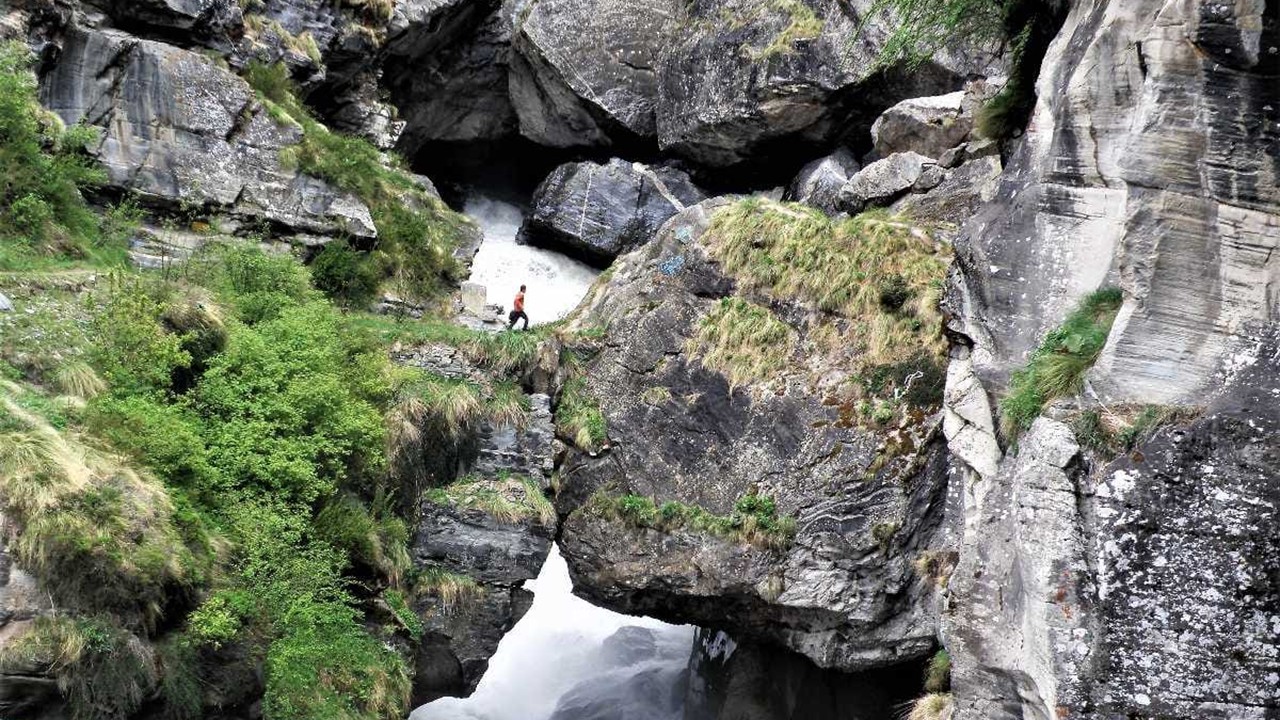
Bheem Pul is a natural rock bridge over the roaring Saraswati River in Mana Village, located 3 kilometres from the Badrinath Temple in Chamoli District. Uttarakhand
Bheem Pul (Bheema’s Bridge) is in Mana, the last inhabited village on the Indian side of the Indo-Tibetan border, although recent tourism initiatives have also promoted Mana as India’s First Village. Situated at an altitude of approximately 3,219 metres, Bheem Pul shares the elevation of Mana Village itself rather than having a separately recognized elevation. Also, this separation is important when comparing the altitude figures of across multiple sources including pilgrimage sites.
Bheem Pul is a natural rock bridge spanning the Saraswati River near Mana Village, close to Badrinath. The Mahabharata recount that the bridge was created by Bhima, one of the five Pandavas brothers, who placed a massive rock across the roaring river to help Draupadi cross during the Pandavas’ final journey to the Himalayas on their way to Swargarohana, the path to heaven. Also, this revered as a place, Bheema Pul continues to attract pilgrims who marvel at both its scriptural significance and natural magnificence.
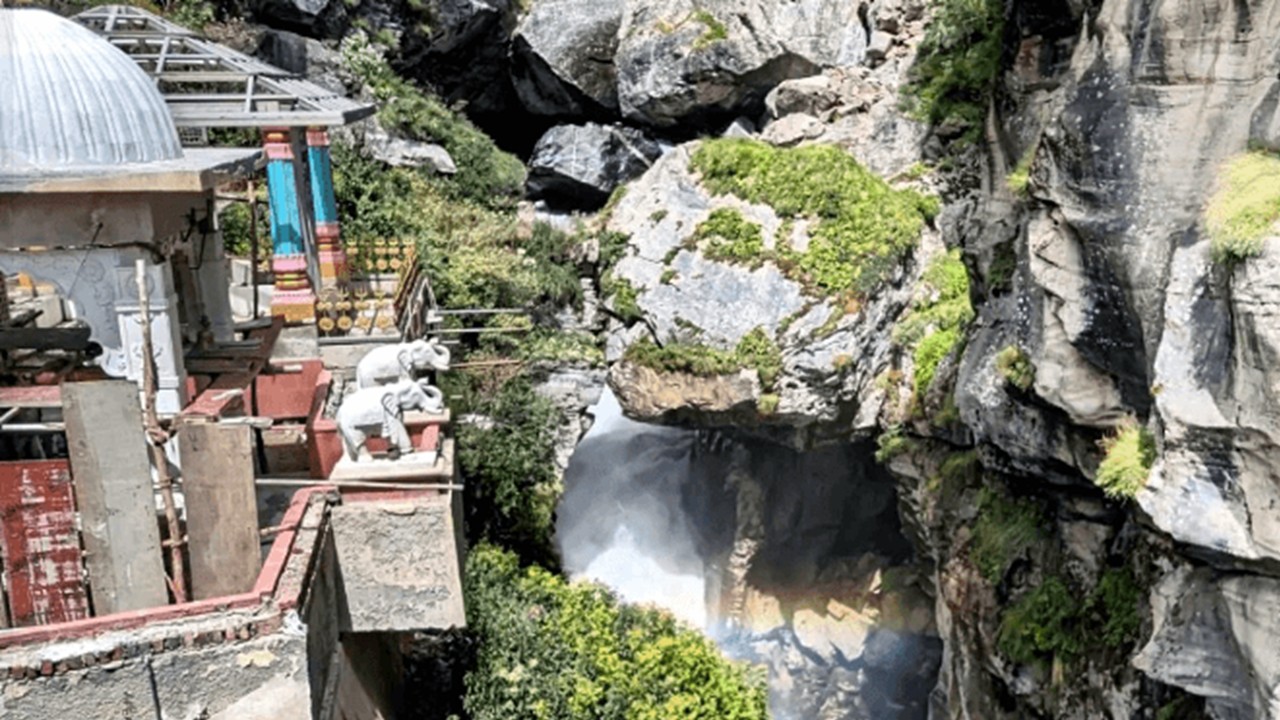
Sthala Purana of Bheem Pul, Mana
The Mahabharata describes that, after ruling the kingdom of Hastinapura for many years following their victory in the Kurukshetra War, the Pandavas gradually became detached from worldly life. The departure of Bhagavan Sri Krishna from the earthly realm and the destruction of the Yadava dynasty deeply affected them. Realizing that the age of Kali had begun and that their earthly duties were complete, Yudhishthira entrusted the kingdom to Parikshit, the grandson of Arjuna.
Thereafter, the five Pandavas brothers (Yudhishthira, Bhima, Arjuna, Nakula, Sahadeva) and Draupadi renounced their royal wealth and comforts and embarked on the Mahaprasthana, the Great Departure, undertaking a sacred pilgrimage toward the Himalayas in pursuit of their final ascent to heaven. It was during this journey they reached the roaring Saraswati River near Mana village, Draupadi found it impossible to cross the fierce waters. Witnessing Draupadi difficulty, Bhima, the second Pandavas renowned for his highly strength, lifted a heavy sized rock and placed it across the river, creating a natural bridge.
Draupadi and the other Pandavas crossed safely and continued their journey toward Swargarohana. Since then, this bridge has been known as Bheema Pul, meaning Bhima’s Bridge. Local tradition also associates the surrounding region with Maharshi Veda Vyasa, who is believed to have composed the Mahabharata in nearby Vyasa Gufa. Also, massive handprints of Bhima are visible. At end of bridge is Saraswati temple
Architecture
Bheem Pul in Mana is an exceptional natural rock bridge formed by an enormous geological boulder, rather than a man-made structure. The spanning a narrow valley above the roaring Saraswati River in near Badrinath, Uttarakhand’s Chamoli district, the bridge stands as both a natural wonder and a revered landmark associated with the Pandavas’ historical journey to the Himalayas nature.
Dissimilar conventional bridges, Bheema Bridge consists of an enormous stone slab that naturally rests across a narrow valley through which the Saraswati River flows with force. Also, it’s creating a natural crossing between the rugged Himalayan landscape. Its natural unique formation, coupled with its association with the Pandavas, makes Bheema Pul is one of the most fascinating landmarks in the Badrinath region.
Surrounded by the breathtaking Himalayan mountain landscape, Bheem Pul serves as a gateway to several sacred and historical places in the Badrinath region. Remarkable attractions nearby include the Mata Saraswati Temple, Mata Tripura Bala Sundari Devi Mandir, Maharshi Vyasa Gufa, Ganesh Gufa, the statues of the Pandavas, and the trekking route leading to the magnificent Vasudhara Falls. Because it offers a rare convergence of raw Himalayan beauty, active geographical mysteries, and deep epic history Bheem Pul remains an important destination for pilgrims and visitors.
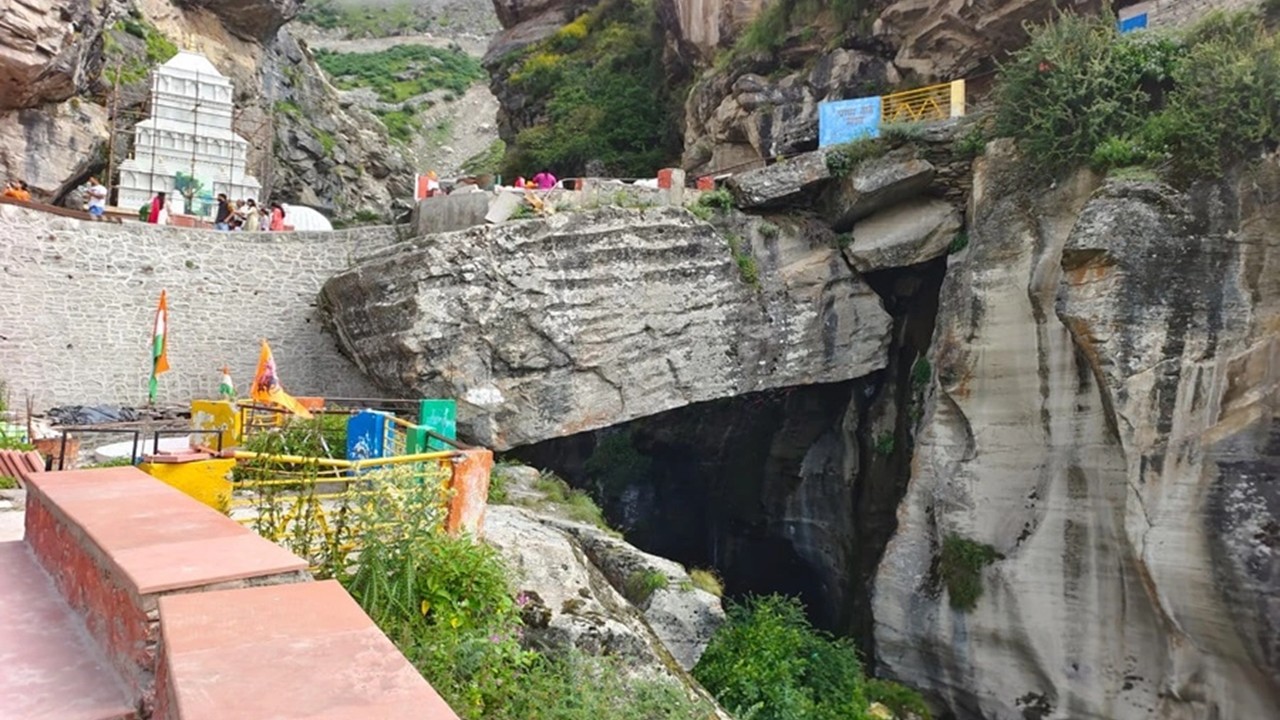
Darshan Timings of Bheem Pul, Mana
Pilgrims can visit between 6:00 AM and 6:00 PM.
Best Time to Visit Bheem Pul, Mana
This place is accessible from May to early November. The summer months (May to June) offer the most pleasant weather for walking around, while September to October provides crisp alpine air and clear skies right after the monsoon.
This place is located right next to the Indo-Tibetan (China) border Mana Village is a natural rock formation and outdoor landmark, meaning it is technically open 24 hours a day with no entry fee.
Nearby Places to Visit
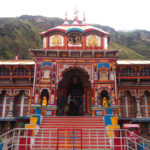
Shri Badarinath Dham (Badri Vishal Temple): One of the divine Char Dham pilgrimage sites in India and one of the 108 Divya Desams dedicated to Sri Mahavishnu, located 3 km distance from the Bheem Pul. Sri Mahavishnu meditated here while Sri Mata Lakshmi sheltered him by turning into a Badri (berry) tree. Also, Sri Badrinath Temple is built directly on the right bank of this sacred, fast flowing river, framed by the magnificent Nar and Narayan mountain ranges.
Vyas Gufa: An historical rock cave where the Maharshi Veda Vyas is said to have composed the Mahabharata and the with the help of Sri Ganesha.
Ganesh Gufa: This place is a small, naturally formed rock cave located in Mana Village, roughly 3 km from the Badrinath Temple and Ganesh Gufa is the exact historical site where Bhagavan Ganesha sat and transcribed the Mahabharata.
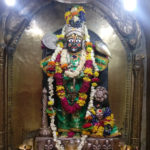
Saraswati River & Mata Saraswati Devi Temple: Saraswati River originates from the glaciers near the Mana Pass. Mata Saraswati Temple also available here and This is the only place on Earth where the Saraswati River can be seen flowing with the naked eye.
Keshav Prayag: Alakananda river, before meeting other tributaries in Panch Prayag’s, down below meets Saraswathi river, at Keshav Prayag, in Mana and flows in front of the Sri Badrinath temple.
How to Reach Bheem Pul, Mana…?
The best way to plan is through Tirtha Yatra’s Char Dham Yatra packages. All the arrangements for your Yatra will be taken care of while you can focus only on the spiritual experience of the journey.

By Air: Mana is located at the northern terminus of National Highway 7 (NH 7). and approximant 3 km from Badrinath It is roughly 300 km from the nearest airport (Jolly Grant Airport) in Dehradun. From Dehradun, typically hire private taxis or take state transport buses up to Badrinath,
By Rail: Yog Nagari Rishikesh railway station is the nearest Railway station, Mana Village located approximately 290 to 300 kilometres away from Rishikesh. Yatri’s typically hire private taxis or take state transport buses up to Badrinath. Mana is approximant 3 km from Badrinath.
By Road: Mana is located at the northern terminus of National Highway 7 (NH 7) and approximant 3 km from Badrinath, visitors typically hire private taxis or take state transport buses up to Badrinath, from Haridwar, Rishikesh and Dehradun. From Badrinath, pilgrims can reach Mana by hiring local taxis, which are readily available in the area.
0
Leave a Reply