
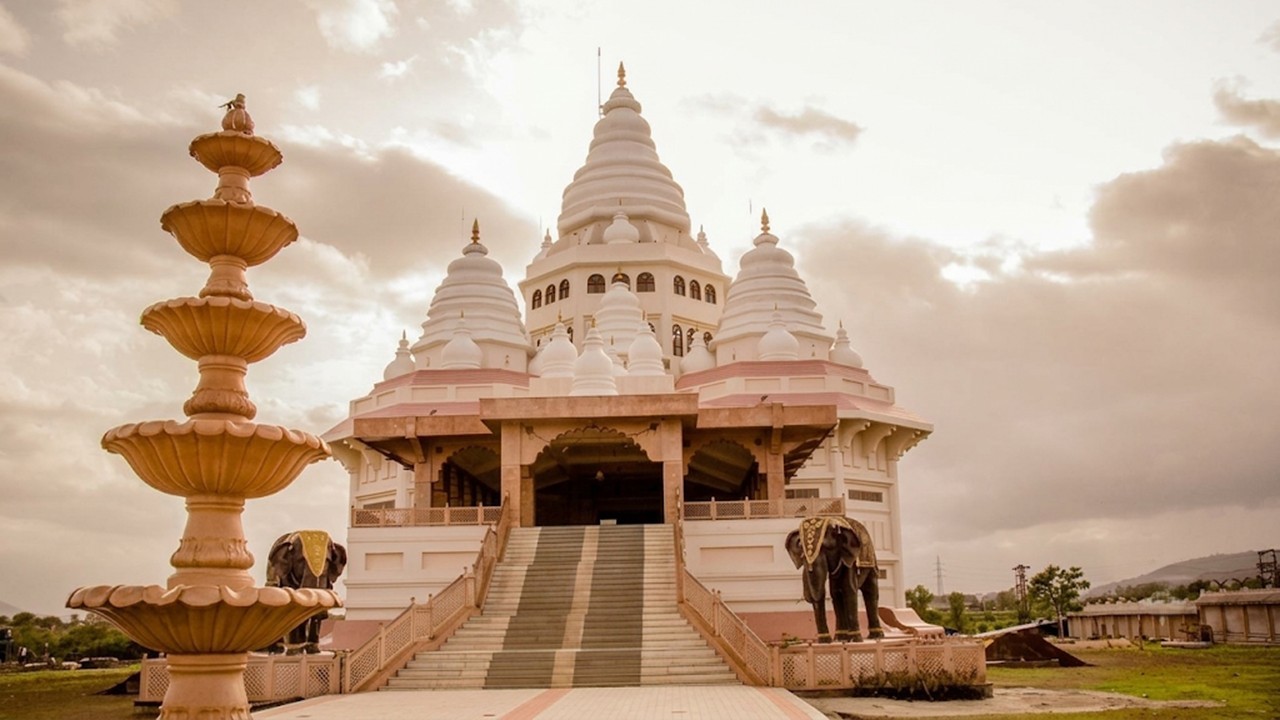
Gatha Mandir in Dehu, Maharashtra is situated on the sacred banks of the Indrayani River, dedicated to Sant Tukaram Maharaj, the great Varkari saint whose abhangas transformed the spiritual landscape of Maharashtra and brought countless souls to the lotus feet of Sri Vitthala. Every wall of this grand structure echoes with the devotional poetry of his abhangas, sanctifying the region by traditionally connecting with devotion to Sri Vitthala.
Dehu is situated on the banks of the Indrayani River near Pune. The region became one of the most important centers of the Varkari tradition because it was the birthplace and home of Sant Tukaram Maharaj. Along with nearby Alandi, associated with Sant Dnyaneshwar Maharaj, Dehu forms one of the two principal starting points of the annual Pandharpur Wari.
This historic temple was built in 1723 by Sant Tukaram’s younger son, Narayanbaba, and within the temple complex is the sacred pashan (stone) where the saint is believed to have performed intense fasting and devotional practices. The Indrayani River, which later flows through Alandi, holds special significance in the saint’s life, as it was here that Sri Vitthala is believed to have bestowed His blessings upon Tukaram Maharaj.
Sthala Purana of Gatha Mandir in Dehu
Gatha Mandir in Dehu is the birthplace of Sant Tukaram Maharaj during the early seventeenth century. Being born into the Ambile family, a respected family of traders and devotees of Sri Vitthala, his father, Bolhoba, and mother, Kanakai, maintained a hereditary tradition of worship at the family Vitthala temple.
From childhood Sant Tukaram displayed unusual devotion and compassion. However, his early life was marked by severe suffering. A devastating famine struck the region, causing tremendous hardship. He lost close family members and suffered financial crisis. These tragedies transformed him from a village merchant into a spiritual seeker. Turning away from worldly ambitions, he devoted himself entirely to the lotus feet of Sri Vitthala.
He spent long hours in prayer, meditation, kirtan, and scriptural contemplation. It was during this period that divine inspiration began flowing through him in the form of abhangas, devotional verses expressing the deepest emotions of love, surrender, humility, and longing for God. Over the years, Sant Tukaram composed thousands of abhangas dedicated to Sri Vitthala. Instead of using complicated philosophical language, he expressed profound spiritual truths through simple Marathi verses that farmers, merchants, labourers, and householders could understand.
These compositions were eventually compiled into what became known as the Tukaram Gatha. The Gatha remains a foundational text of the Varkari tradition and continues to be sung daily across Maharashtra. One of the most celebrated episodes in Sant Tukaram’s life relates to the sacred Indrayani River. As Tukaram’s popularity grew, some orthodox scholars and critics became jealous of his influence. They questioned how a common householder without formal scholarly status could compose sacred spiritual literatures.
According to tradition, his opponents demanded that he destroy his writings and prove their authenticity. Obeying their command with complete humility, Tukaram collected his precious manuscripts and immersed them in the waters of the Indrayani. After this sacrifice, he fasted and prayed intensely, surrendering everything to Sri Vitthala.
The miracle occurred thirteen days later. The manuscripts are said to have risen from the river, floating upon the water completely dry and unharmed. This event was widely accepted as divine confirmation that Tukaram’s words were inspired by Vitthala Himself. For devotees, the Indrayani is therefore not merely a river but the sacred guardian of the Tukaram Gatha.
According to the Varkari tradition, after completing his divine mission, Sant Tukaram did not experience ordinary death. Instead, Sri Vitthala sent a celestial chariot to bring His devotee to Vaikuntha. Before assembled devotees, Tukaram is believed to have ascended into Vaikuntha with the same body. The site associated with this event is revered as the Vaikuntha Gaman Sthal and remains one of the most sacred locations in Dehu.
Centuries after Sant Tukaram’s worldly pastimes, devotees desired a monument that would preserve his literary legacy. The result was the majestic Gatha Mandir, a temple dedicated not only to the saint but also to the sacred verses that emerged from his divine realization. Important sacred sites near Gatha Mandir include a temple linked to Sant Tukaram’s family deity and daily worship, the Indrayani River Ghats, associated with the manuscript miracle and Bhandara Dongar, where he meditated and practised devotion.
Architecture of the Temple
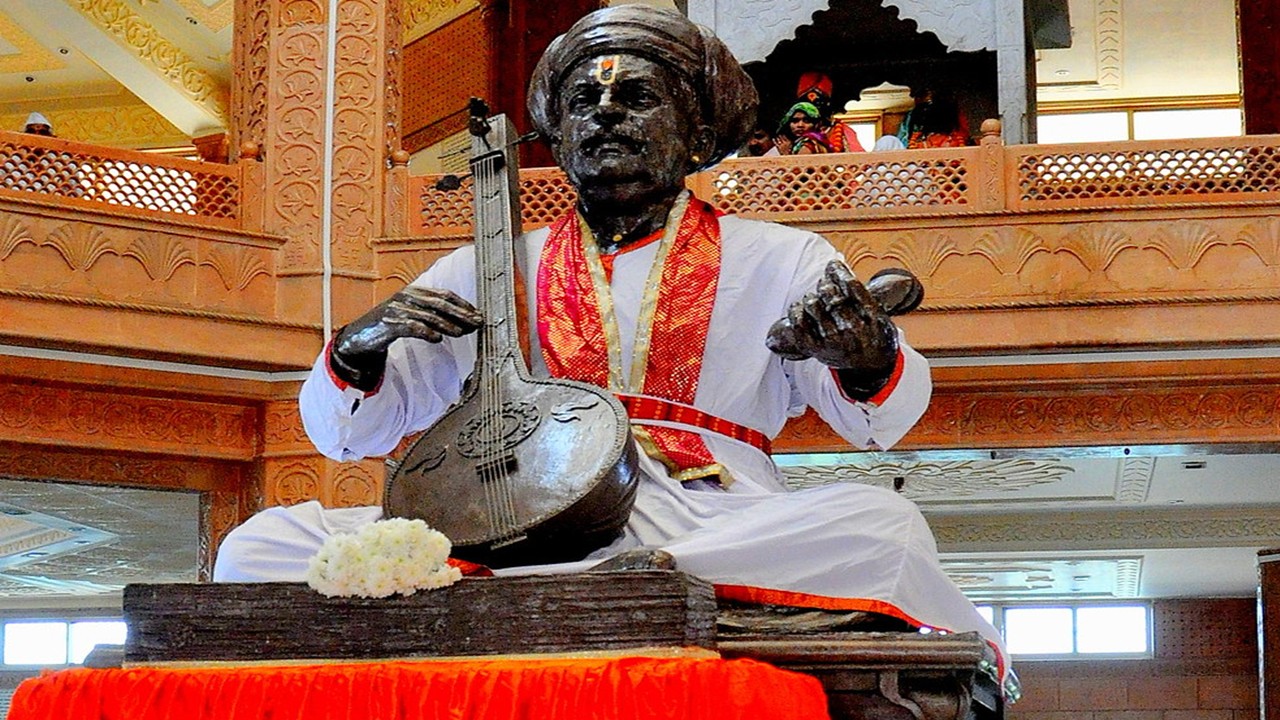
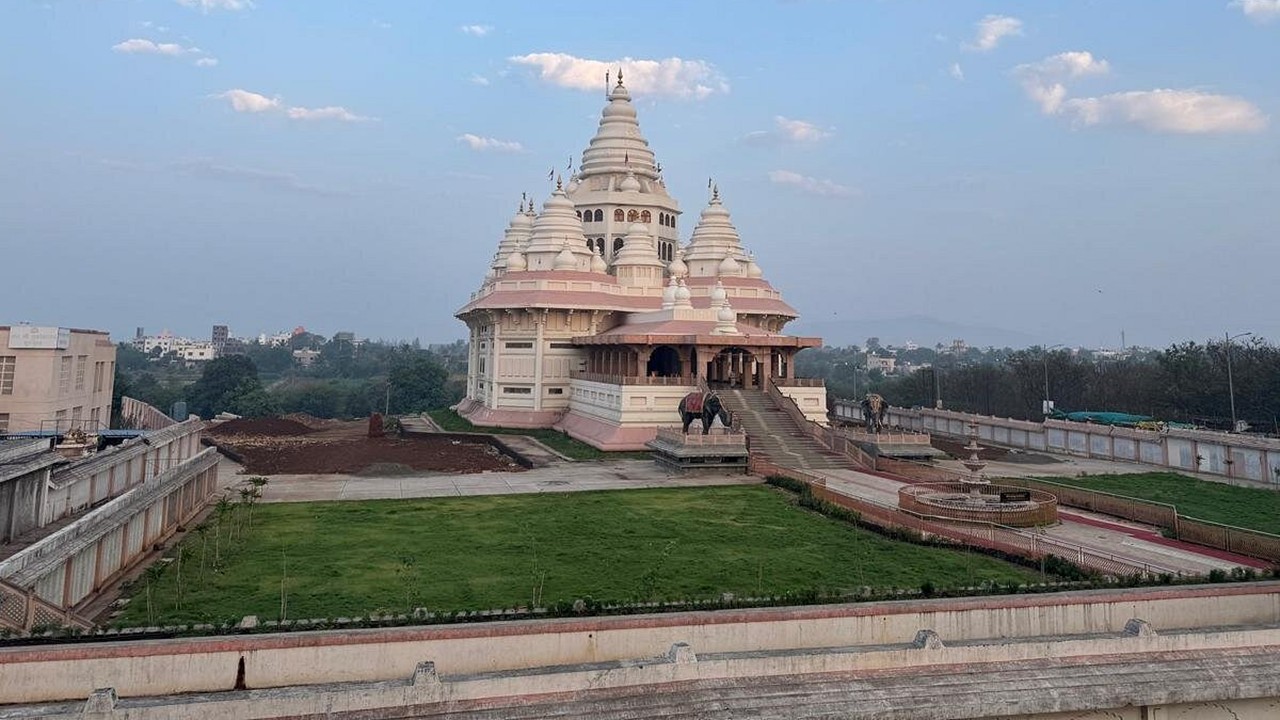
Gatha Mandir in Dehu is constructed with white stone featuring multiple domes, elegant shikharas, spacious halls, and beautifully designed entrances adorned with sculptural elements. Two elephant figures stand prominently near the entrance. The principal attraction is the magnificent marble deity of Sant Tukaram Maharaj. He is depicted seated with a veena in his hand, immersed in divine remembrance and singing the glories of Sri Vitthala.
The most unique feature of Gatha Mandir is that thousands of Tukaram’s abhangas are engraved directly onto the temple walls. Pilgrims can walk through the saint’s literary contribution while contemplating his teachings.
Festivals
Gatha Mandir in Dehu’s most important festival celebration is the Ashadhi Wari, when the revered palkhi of Sant Tukaram Maharaj departs from Dehu for Pandharpur, accompanied by hundreds of thousands of Varkari devotees singing abhangas and chanting the names of Sri Vitthala. Another major observance is Kartika Wari, marked by devotional processions, kirtans, and recitations of the Tukaram Gatha. Equally significant festival is the Tukaram Beej, which commemorates the saint’s divine ascent to Vaikuntha and is celebrated with continuous chanting, spiritual discourses, bhajans, and special worship.
Various Ekadashi festivals, particularly Maghi and Chaitra Ekadashi, are also observed with great devotion through nama sankirtana and scriptural recitations. Throughout the year, devotees gather at Gatha Mandir for Gatha Parayana, the ceremonial reading of Sant Tukaram’s abhangas, ensuring that the saint’s teachings continue to inspire pilgrims who visit this sacred place of the Varkari tradition.
Darshan Timings of Gatha Mandir in Dehu
Gatha Mandir in Dehu is open for darshan throughout the year from 6:00 AM to 9:00 PM.
Best Time to Visit Gatha Mandir in Dehu
The ideal time to visit Gatha Mandir is from October to February, when the weather is pleasant and comfortable for pilgrimage, sightseeing, and exploring the sacred sites along the Indrayani River. Yatris seeking to experience the vibrant spiritual atmosphere of Dehu should visit during the Ashadhi Wari and Tukaram Beej festivals, when the town comes alive with kirtans, abhangas recitations, palkhi processions, and celebrations honoring Sant Tukaram Maharaj ji.
Nearby Places to Visit
Indrayani River Ghats: These sacred ghats are associated with the famous miracle of Tukaram Maharaj’s abhangas, which were returned unharmed after being immersed in the river.
Vaikuntha Gaman Sthal: This revered site marks the place where Sant Tukaram Maharaj is believed to have ascended bodily to Vaikuntha in a celestial vimana.
Bhandara Dongar: A peaceful hill near Dehu where Sant Tukaram performed meditation and composed many of his devotional verses.
Gatha Shila: This sacred stone is traditionally associated with the recitation and composition of Tukaram Maharaj’s abhangas. Devotees visit the site to remember the saint’s literary and devotional contributions.
Alandi: Located about 20km from Dehu, Alandi is the sacred samadhi place of Sant Dnyaneshwar Maharaj ji.
Ashwatha Tree of Sant Tukaram: This sacred peepal tree is traditionally believed to have been a sitting place for prayer and composition for Sant Tukaram Maharaj.
How to Reach Gatha Mandir in Dehu?
The easiest way to plan your visit is through Tirtha Yatra’s Pandharpur Yatra package, which takes care of all the arrangements so that devotees can focus solely on the spiritual experience.
By Air: The nearest airport is the Pune International Airport, located about 35 km from Dehu. From the airport, pilgrims can hire taxis or take cab services to reach Gatha Mandir directly.
By Rail: The nearest railway station is Dehu Road Railway Station, approximately 8 km from Gatha Mandir. The station is well connected from Pune, Mumbai, and other major cities. Autorickshaws and taxis are available from the station to the temple.
By Road: Dehu has an excellent road connectivity from Pune, Mumbai, Alandi, and other towns of Maharashtra. From Pune, yatris the temple can be reached via Pune-Nashik Highway. Regular MSRTC buses, private buses and taxis operate frequently to Dehu.
0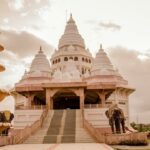

Leave a Reply