
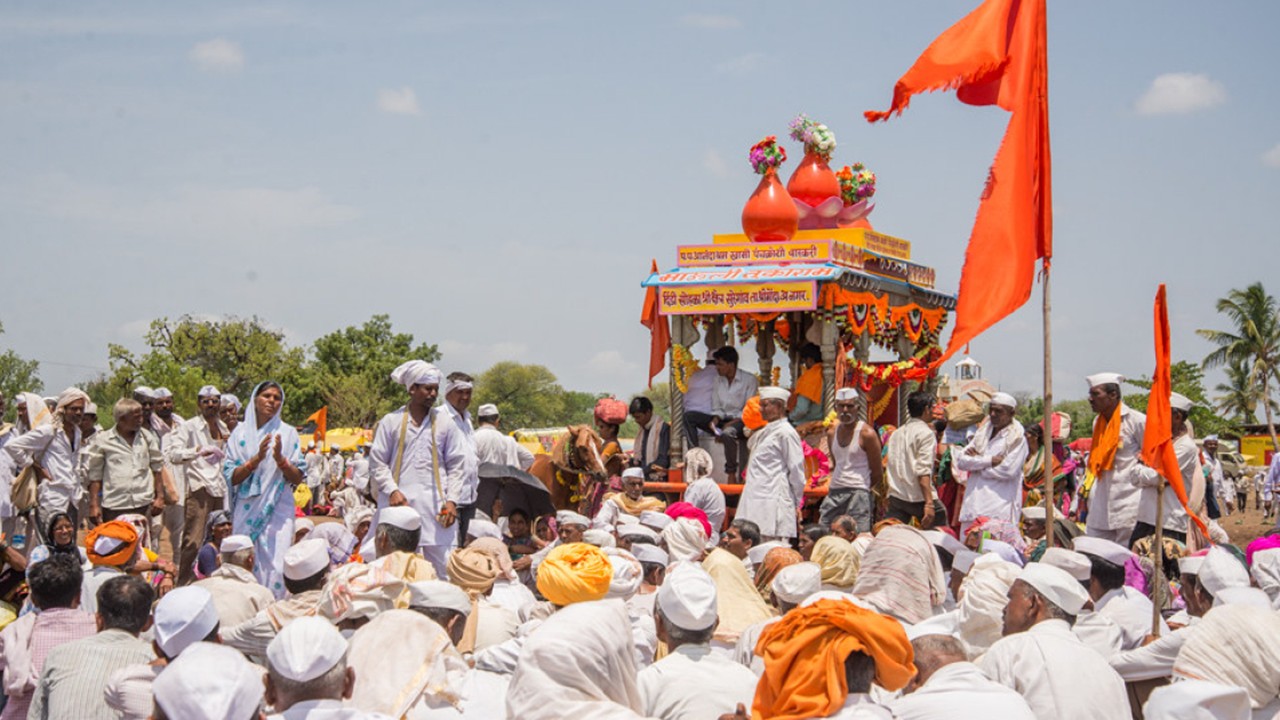
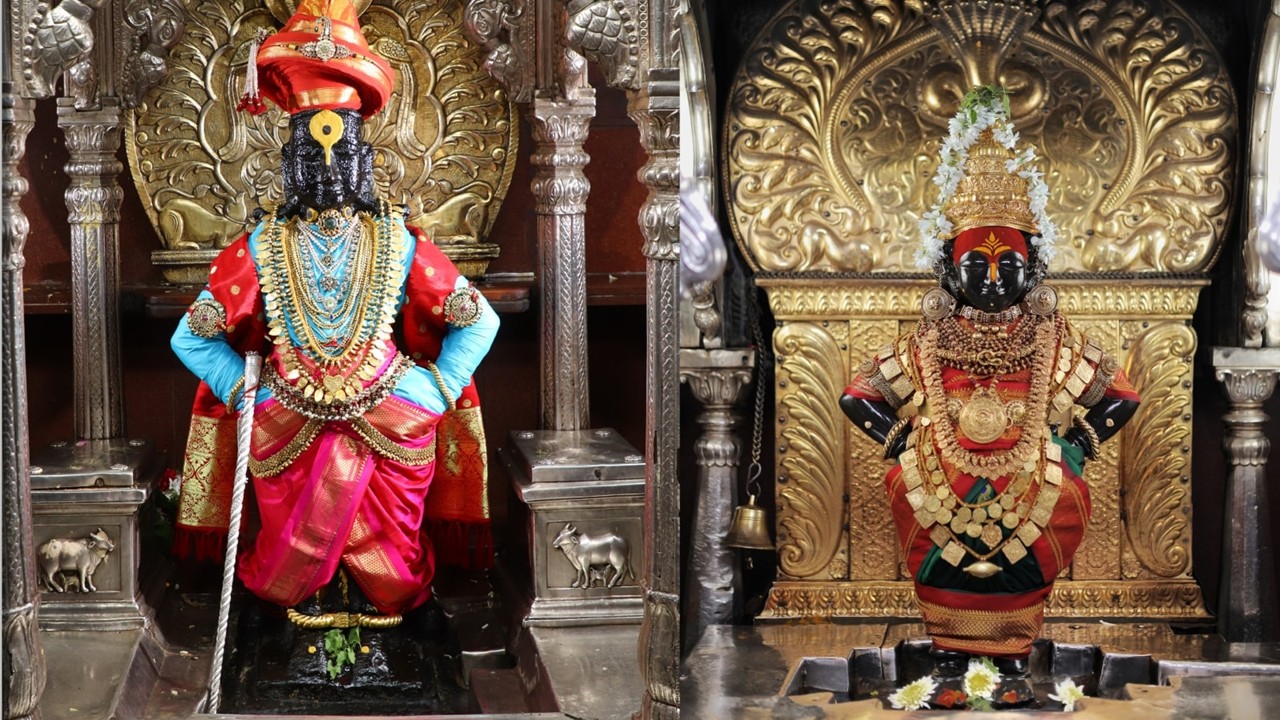
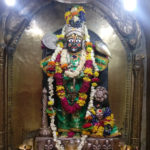
Lord Vithoba, known by different names such as Vitthala, Panduranga, Vithumauli, Vithuraya, Pandhari Raya, Pandarinatha is the focal point of the devotion, where Warkaris travel miles apart for days just to have the darshan of dear Lord. Tears fill their eyes, and their heart filled with devotion, whose only ultimate goal is to surrender at the lotus feet of Lord Vitthala.
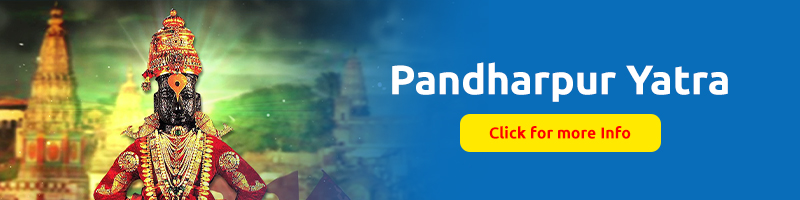
In the Marathi language, the word Warkari means one who performs the Wari, or a sacred pilgrimage. Devotees of Lord Vithoba, known as Warkaris walk barefoot miles apart from their hometown carrying Padukas of their revered saints in a Palkhi, for a period of approximately 20-30 days. They walk chanting the names of “Vitthala, Vitthala”, singing bhajans, abhangs and kirtans, increasing the spiritual ambience of every village they visit. The vibrant abhangs touches every fallen soul and uplift their spirit.
All the Wari processions reach Wakhari one day before Ashadi Ekadashi. On Ashadi Ekadashi, the devotees take a holy dip in the Chandrabhaga River before proceeding for the darshan of Lord Vitthala in Pandharpur.
The Pandharpur Wari is one of India’s most sacred pilgrimages, bringing together people from different castes, creeds, and communities in a spirit of bhakti, unity, cultural harmony, social equality.
Devotees Who Could Not Have the Darshan of Lord Vitthala
Warkaris are so much devoted to Lord Vitthala, they expect nothing not even darshan of Lord Vitthala nor any material desire. They always carry Lord Vitthala in their heart and experience His presence by chanting and singing Abhangs and serving fellow devotees throughout the pilgrimage. They see Lord Vitthala in every living being, and in all creations.
For these Warkaris, even touching the sacred soil of Pandharpur is regarded as one of the greatest blessings of their lives.
What is Palkhi?
The Longest Palkhi of Pandharpur Wari
After accompanying the Sant Dnyaneshwar Maharaj Palkhi to Pandharpur, the Gangukaka Shirodhakar Maharaj Palkhi remains there until their return. It then travels with the Sant Dnyaneshwar Maharaj Palkhi back to Alandi. After completing this spiritual Wari, the Gangukaka Shirodhakar Maharaj Palkhi undertakes its final return journey to Pandharpur, completing its unique annual Wari cycle.
Sant Dnyaneshwar and Sant Tukaram Palkhis: The Pillars of Pandharpur Wari
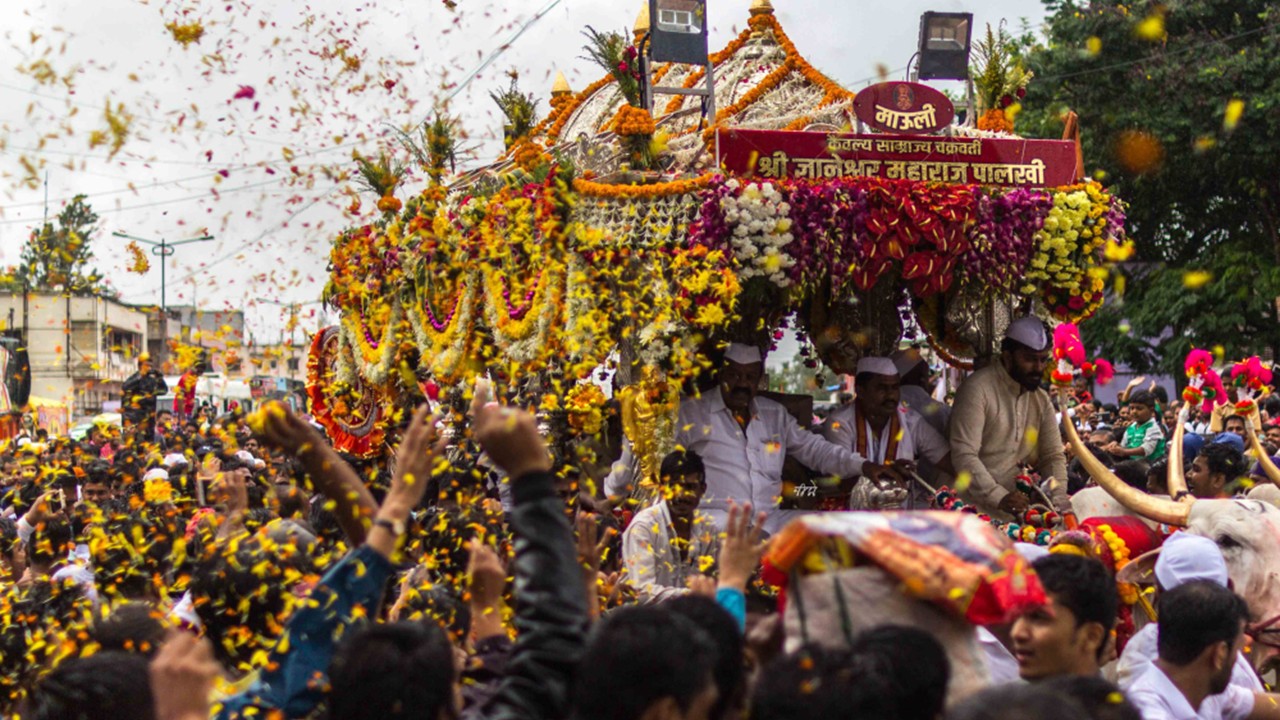
Sant Dnyaneshwar Maharaj Palkhi
The Palkhi carries the sacred Padukas of Sant Dnyaneshwar Maharaj, embodying devotion, humility, and the rich Bhakti tradition cantered on the worship of Lord Vitthala.
Every Warkari respectfully addresses fellow devotees as “Mauli,” a term of affection and reverence that means “mother.”
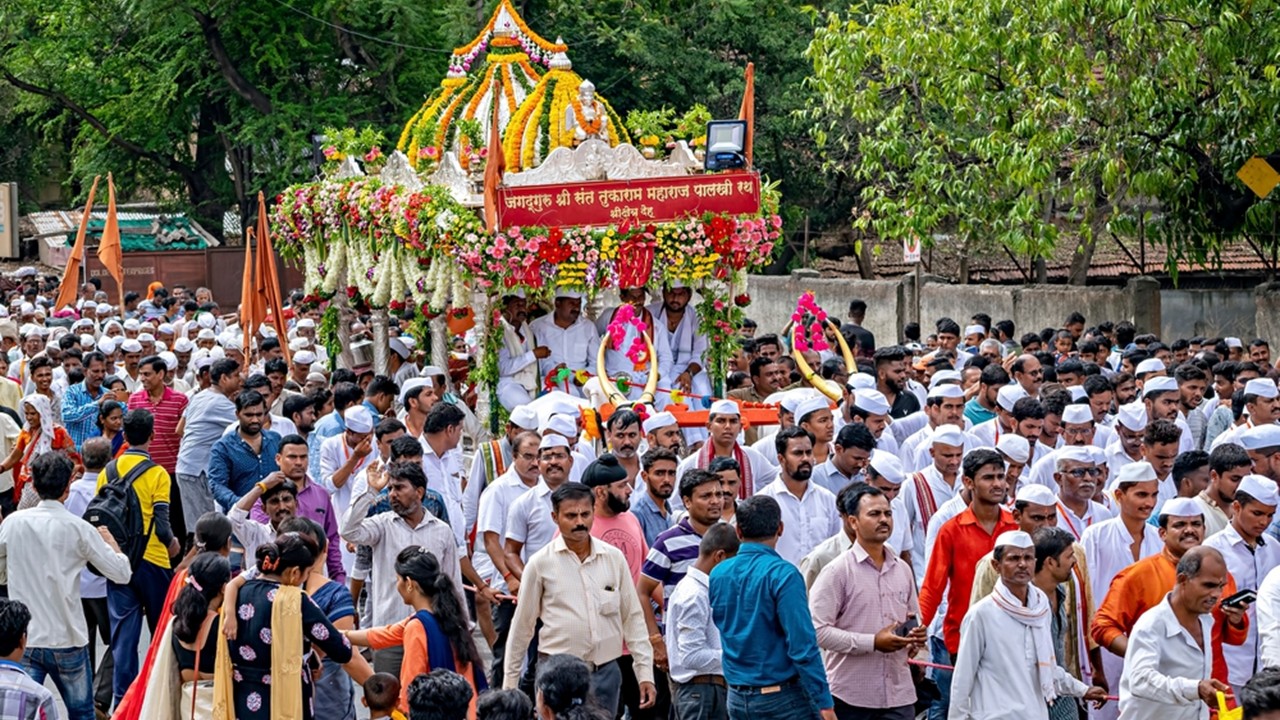
Sant Tukaram Maharaj Palkhi
The Warkaris express their love and devotion for Lord Vitthala through Namasankirtana.
This Palkhi was started by Narayan Baba in 1685, who is the youngest son of Sant Tukaram Maharaj.
Both the Palkhis meet each other and camp at Wakhri – this is the final halt before reaching Pandharpur to have the darshan of Lord Vitthala.
What Are Dindi Processions? Understanding the Backbone of the Pandharpur Wari
The Dindi system is one of the most distinctive and well-organized features of the Pandharpur Wari. Each Dindi, functioning under a common banner, consists of a registered group of Warkaris led by a Dindi Pramukh (group leader). Every Dindi follows a disciplined daily schedule, observes the traditions and code of conduct of the Warkari Sampradaya, and participates in the pilgrimage in an orderly manner as part of the larger Palkhi procession.
Warkaris traditionally dress in simple and modest attire that reflects the values of humility and devotion. Men typically wear a white kurta or shirt, dhoti, and the traditional cap, while women wear simple, traditionally draped sarees.
Both men and women wear a Tulsi mala (a sacred basil-bead necklace) as a symbol of their devotion to Lord Vitthal. During the pilgrimage, men often carry saffron flags (Bhagwa Dhwaj), representing faith and the Warkari tradition, while many women carry a Tulsi Vrindavan (a decorated Tulsi plant or sacred Tulsi pot) on their heads as an expression of devotion and service.
What is Ringan?
During the Pandharpur Wari, the sacred Ringan ceremony is held at several locations along the pilgrimage route. During this ritual, the ceremonial horse performs Ubhe Ringan (straight or standing Ringan) and Gol Ringan (circular Ringan), symbolizing the divine presence and spirit of Sant Tukaram Maharaj or Sant Dnyaneshwar Maharaj.
Major Ringan Ceremonies (Traditional Route)
- Chandobacha Limb (the first Ringan)
- Purandavade
- Velapur (near Thakurbuwa Samadhi)
- Bhandishegaon
- Wakhri (the final Ringan before entering Pandharpur)
- Akluj
- Wakhri, before the palkhi’s arrival in Pandharpur.
Sant Namdev Palkhi Welcomes Other Palkhis at Warkhari
Pandharpur Welcomes Lakhs of Devotees as Sacred Palkhis Arrive
Key Rituals of Ashadi Ekadashi
- Chandrabhaga Snana: Devotees take a holy dip in the Chandrabhaga River before visiting the Sri Vitthala Rukmini Temple.
- Darshan: Lakhs of devotees patiently wait in long queues for the divine darshan of Lord Vitthal.
- Abhangs and Kirtans: Devotional singing and kirtans in praise of Lord Vitthala continue throughout the day and night.
- Naam Jap: Continuous chanting of “Vitthala Vitthala” and “Jai Jai Ram Krishna Hari” fills the temple and the town with devotion.
- Pradakshina: Many pilgrims perform circumambulation of the temple as an act of faith and surrender.
- Ekadashi Upavasa: Devotees of Lord Vitthala observe a strict grain-free fast and also chant the holy names of Lord Vitthala and break it the following day during the prescribed Parana time.
- Mahaprasad: After completing the rituals and darshan, devotees receive the sacred prasadam offered to Lord Vitthala on Ashadi Dwadashi.
Other Prominent Palkhis Participating in the Wari
Sant Eknath Maharaj Palkhi
Sant Nivruttinath Maharaj Palkhi
Sant Muktabai Palkhi
Sant Sopankaka Palkhi
Sant Chokhamela Palkhi
Sant Janabai Palkhi
Sant Goroba Kaka Palkhi
Sant Nilobaraya Palkhi
Sant Gajanan Maharaj Palkhi
Sant Jaganade Maharaj Palkhi
Sant Changdev Maharaj Palkhi
Sant Kanhopatra Palkhi
Born into a socially marginalized community, Sant Kanhopatra sought refuge at the lotus feet of Lord Vitthala in Pandharpur after being threatened by a local ruler. According to tradition, she merged with Lord Vitthala, and her mortal remains were interred near the temple. In remembrance of her unwavering devotion, an annual Palkhi is taken from her birthplace to Pandharpur. A sacred Tarati tree stands near her Samadhi on the southern side of the Vitthala Temple and is revered by devotees.
Palkhis from Karnataka
Sant Kanakadasa Palkhi
Purandara Dasa Palkhi
Lord Vitthala’s Palkhi
Sant Savata Mali was a farmer who loved his profession so deeply that he saw Lord Vitthala in his crops and vegetables, including onions and radishes. He therefore chose not to join the Pandharpur Wari. Pleased with his devotion, Lord Vitthala is believed to visit His devotee every year. After the celebrations of Ashadi Ekadashi, the sacred Padukas of Lord Vitthala are taken to Aran village.
Don’t miss the spiritual grandeur of Ashadi Wari. Visit Pandharpur, join millions of devotees in the divine celebrations, and experience the faith, music, and devotion that transform the holy town into the spiritual heart of Maharashtra.

Leave a Reply