
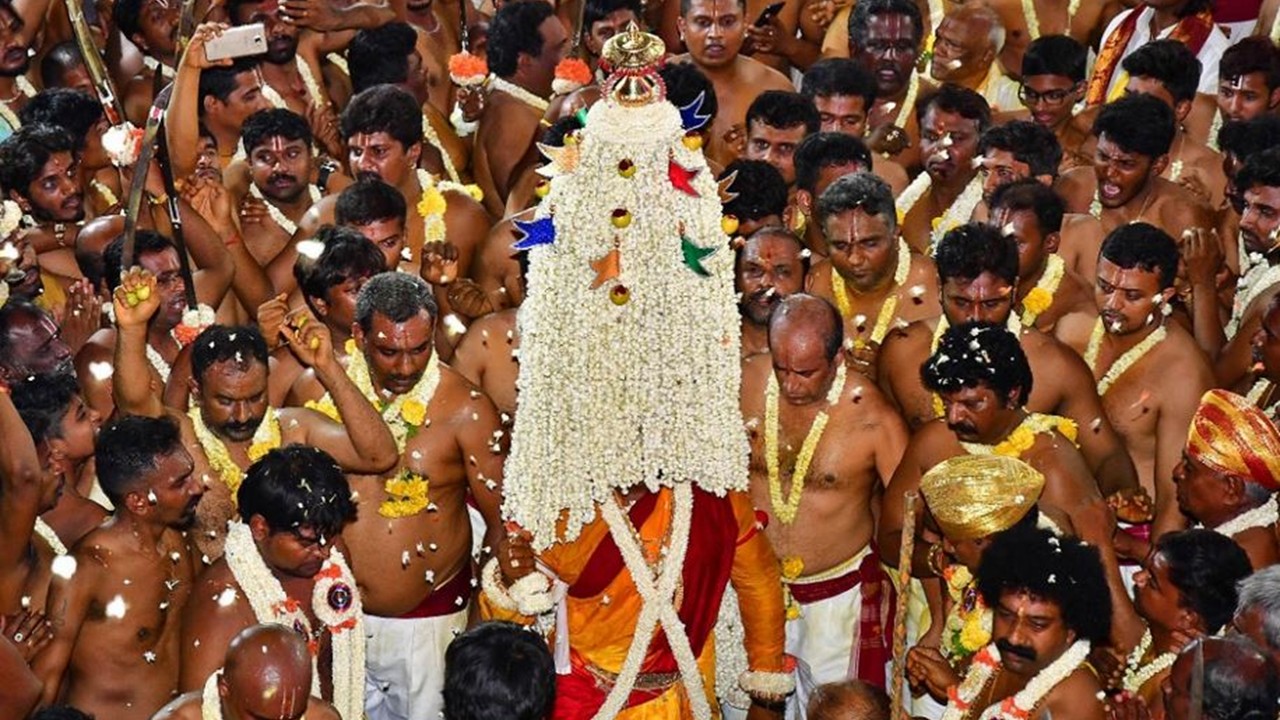
The city of Bangalore becomes lively with deeply rooted rich tradition and culture, symbolizing unity, faith, devotion, courage and spiritual strength.
When Does Karaga Takes Places?
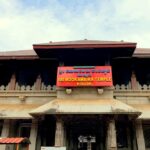
In Bangalore, this festival takes place in Dharmaraya Swamy Temple, also known as Dodda Dharmaraja devastana, in Tigalarapete, attracting lakhs of devotees from Karnataka, neighbouring states and also abroad. This temple is dedicated to Yudhisthira, the eldest of the Pandavas.
Karaga Pot
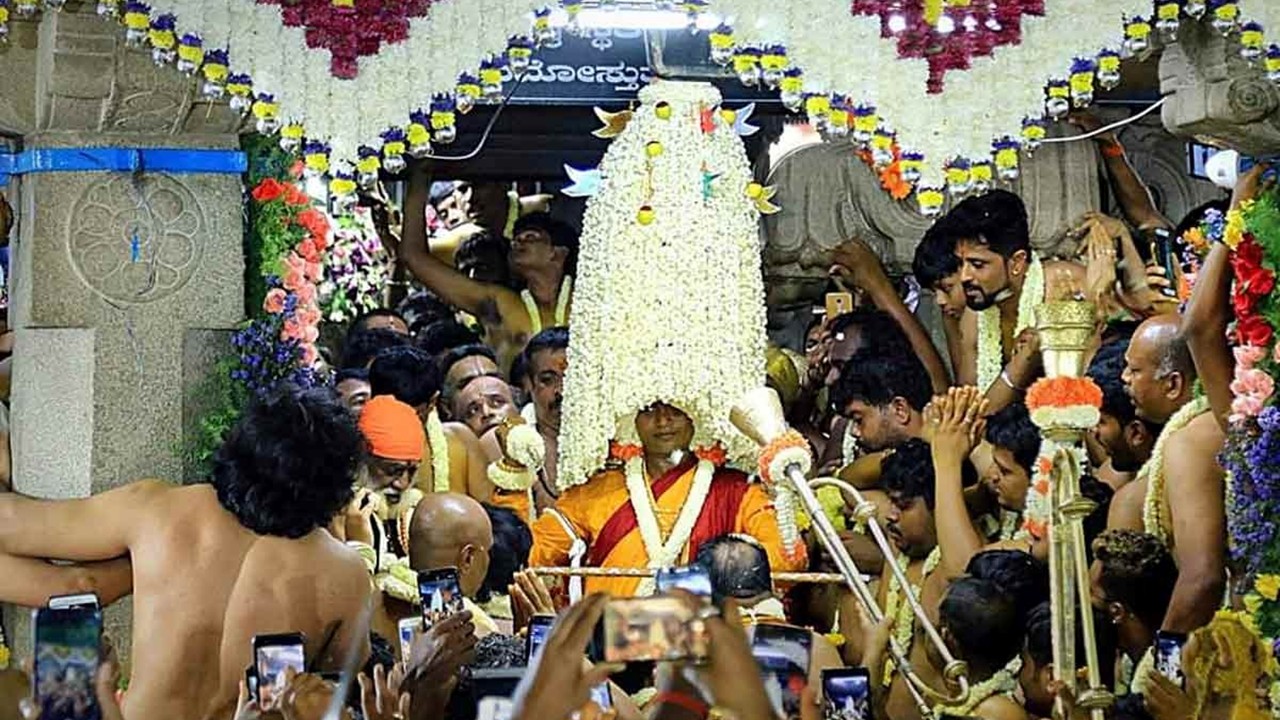
Karaga Pujari balances it on his head without using his hands and enters a trance-like state, believed to indicate divine possession by Goddess Draupadi.
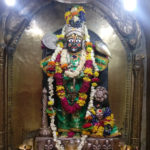
Karaga pot represents Goddess Draupadi in her powerful form, symbolizing divine energy (Shakti), protection of the community, and the victory of good over evil.
What is the Karaga Pot Made Of?
The inner contents of the Karaga remain secret, known only to the priest and temple authorities, adding to its spiritual mystery.
Tigala Community – Guardians of the Karaga
Vahnikula Kshatriyas are the tamil-speaking group that are traditionally linked to the Vanniyar (Vanniyan) lineage. They follow the lunar calendar and hence Karaga takes place after moonrise and ends before sunrise.
Shambukula Kshatriyas, a Tamil-speaking group, are traditionally linked to the sage Shambu who is believed to have come from neighbouring areas. In contrast, Agnikula Kshatriyas are Kannada-speaking and trace their lineage to Agni Banniraya, a folk hero native to Karnataka. They follow solar calendar and celebrate Karaga during daytime.
Why Karaga Festival is Celebrated in Bengaluru?
Pandavas and Draupadi were traveling toward the Himalayas in the final days of their lives. During the journey, Draupadi became separated from the Pandavas and was left far behind. At that moment, she was attacked by the demon Timarasu. To protect her honor, she created a small army known as the Veera Kumaras. They fought bravely against the rakshasa and defeated him.
After the battle, Draupadi resumed her journey toward Swarga. However, the Veera Kumaras pleaded with her not to leave them alone. She consoled them and promised that she would return on the day of Chaitra Pournami. Thus, Karaga is celebrated as the day of welcoming of Draupadi.
What is Hasi Karaga?
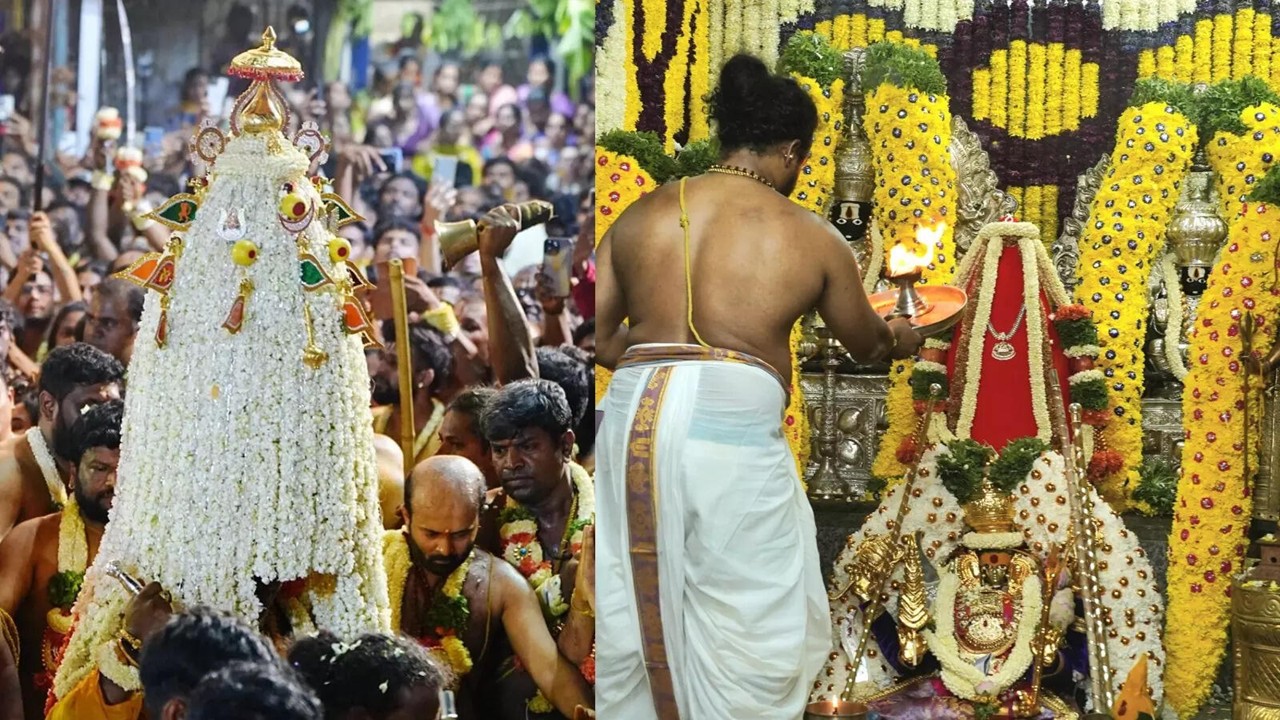
During the ceremony, traditional groups such as Veerakumaras, Ganacharis, Gantepoojaris, Poojaris, and the Kula Purohitha gather at the tank. The Karaga bearer is given a ritual bath, and sacred threads (Kankana) are tied to the Veerakumaras by the Kula Purohitha. The Veerakumaras dress in white pyjamas, wear a red cloth around their waist, and tie a gold-threaded turban on their heads. They apply a sacred nama on their foreheads and carry swords as part of their traditional role.
The Hasi Karaga is then placed on a peetha (altar) inside a mantapa and decorated with red cloth, jewellery, and flowers. Ritual objects such as a sacred stick and knife are placed alongside it. The Karaga bearer performs puja, and it is believed that divine energy descends upon them during this moment. Once possessed by the goddess, the bearer lifts the Hasi Karaga and begins the procession, visiting places like Elu Suttina Kotai and nearby temples.
As the rituals continue, the Veerakumaras light camphor while devotees chant the name of Lord Govinda. They recite “Govindo, Dhik Dhee,” seeking divine guidance, and perform the intense ritual of Alagu Sevai, striking their chests with swords as an act of devotion. Meanwhile, priests and attendants circle the altar in procession, chanting and offering prayers, creating a powerful and spiritually charged atmosphere.
Rituals of Bengaluru Karaga
Dwajarohanam (Flag Hoisting)
The festival begins with Dwajarohanam at the Dharmaraya Swamy Temple. This ritual marks the official start of the celebrations and invites devotees to participate in the sacred festivities.
Vrata (Sacred Vows)
Priests, especially the Karaga bearer, observe strict vows during the festival. These include fasting, maintaining purity, and following disciplined spiritual practices, which are essential for performing the rituals.
Hasi Karaga
Hasi Karaga is the initial stage where the sacred pot remains in its raw and undecorated form. This ritual symbolizes purity and the invocation of divine energy before the grand procession.
Alankara (Decoration of Karaga)
After the initial rituals, the Karaga is beautifully decorated with flowers. It is then transformed into a divine representation of Goddess Draupadi, signifying power, devotion, and protection.
Midnight Karaga Procession
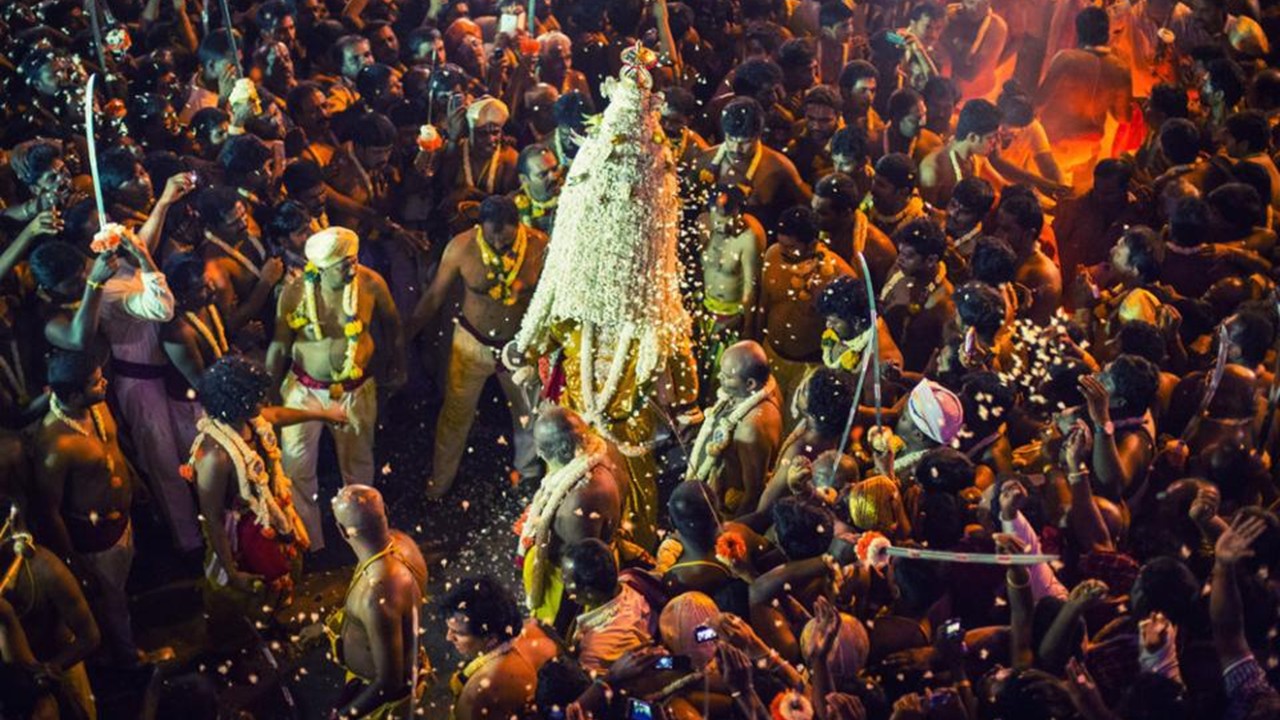
The highlight of the festival is the grand midnight procession. The priest carries the Karaga on his head without holding it, believed to be supported by divine power. The procession moves through the streets of Bengaluru, accompanied by Veerakumaras, traditional music, and thousands of devotees.
Visits to Temples and Mosque
A unique aspect of the Karaga procession is its visit to multiple temples and even a mosque, symbolizing unity, harmony, and communal coexistence.
Return to the Temple
The Karaga returns to the Dharmaraya Swamy Temple before dawn, marking the successful completion of the sacred procession.
Theertha and Prasada Distribution
Devotees receive holy water (Theertha) and Prasada, considered highly auspicious and spiritually uplifting.
The festival concludes with the completion of the priests’ vows and final rituals at the temple, bringing the celebrations to a sacred close.
The rituals of Bengaluru Karaga beautifully reflect devotion, discipline, and cultural unity. This grand festival continues to attract thousands of devotees every year, making it one of the most spiritually enriching experiences in Karnataka.
Leave a Reply