
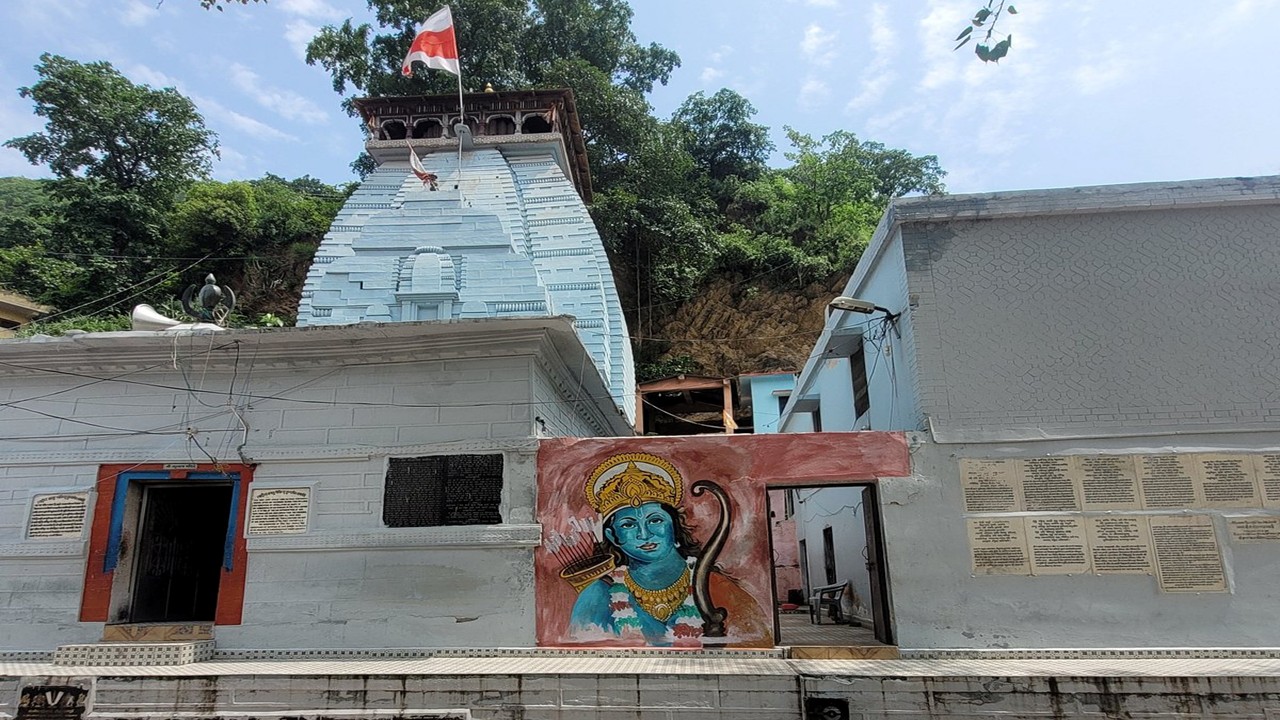
Raghunath Temple of Devprayag, also called as Sri Neelamega Perumal Temple stands above the sacred confluence of the Bhagirathi and Alaknanda rivers, as one of the divine temples dedicated to Sri Rama in the Himalayas. Revered both as a foremost Rama kshetra and as one of the 108 Divya Desams glorified in the Nalayira Divya Prabandham by Periyalvar and Thirumangaialvar, the temple occupies a unique place where Ramayana traditions and the Sri Vaishnava tradition beautifully converge in the Tehri Garhwal district of Uttarakhand.
Known in the Divya Desam tradition as Tirukantamenum Kadi Nagar or Thirukandam, the temple is dedicated to Sri Vishnu in the form of Sri Raghunathji, identified with Sri Rama, who is believed to have performed penance here after the Lanka war. For centuries, sages, kings, ascetics, and pilgrims have climbed the steep pathways of Devprayag to seek blessings at this temple.
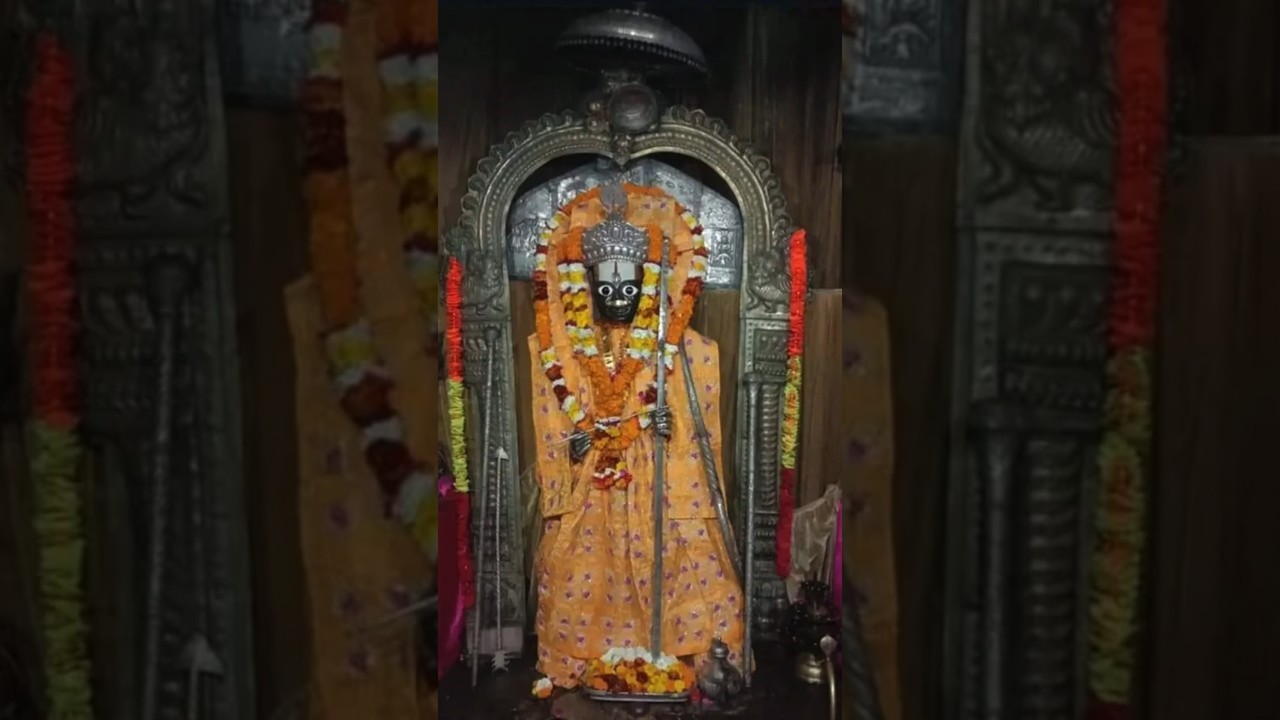
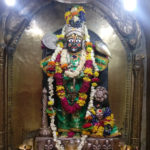
The presiding deity is Sri Raghunathji, worshipped as Sri Rama, also called as Neelamega Perumal, with His divine consort Pundarikavalli or Sita Devi and brother Lakshmana. The deity stands majestically facing east in a standing posture, reflecting the royal dignity of the ruler of Ayodhya.
Sthala Purana of Raghunath Temple, Devprayag
Raghunath Temple’s history begins with Devprayag itself, one of the most sacred tirthas of Bharata Varsha. Devprayag is the fifth and most important of the Panch Prayags of Garhwal. It is here that the Bhagirathi descending from Gangotri and the Alaknanda flowing from the Badrinath region merge to become the sacred Ganga for the first time, gaining its name Prayaga.
According to the 151st chapter of Kedar Khanda of the Skanda Purana, Brahma performed intense penance at Brahma Kunda for 11,000 years to please Sri Vishnu and seek His blessings for the creation of the universe. Pleased with Brahma’s devotion, Sriman Narayana granted His blessings here. It is also believed that Sriman Narayana foretold that Devprayag would attain even greater glory in the 28th cycle of the Yugas, when King Bhagiratha would bring the sacred River Ganga down to Earth.
Inspired by the greatness of Devprayag as described by Brahma, Sage Vasishta chose this sacred place as his abode and undertook penance beside Brahma Kunda. The sacred pool associated with him came to be known as Vasishta Kunda. Tradition holds that bathing in this kunda with helps cleanse the accumulated sins of the past one year.
Once, a virtuous Brahmin named Deva Sharma performed intense penance at the sacred confluence of Devprayag for thousands of years. Pleased by his unwavering devotion, Sriman Narayana appeared before him and granted him divine darshan. Overwhelmed by the Lord’s beauty and grace, Deva Sharma offered heartfelt prayers in praise of the Supreme Lord.
Delighted by these prayers, Sriman Narayana asked the Deva Sharma to seek a boon. Deva Sharma requested that he reside forever at this spot and bless all devotees who worship there. Granting the wish, Sriman Narayana declared that the sacred place would be known as Devprayag in honor of the Brahmin and bestowed liberation upon him. He later appeared there as Sri Rama and sanctified Devprayag as His eternal abode. Before this, the site was known as Sudarshan Kshetra and Brahma Tirtha.
Vedic texts such as the Padma Purana, Matsya Purana, Kurma Purana, and Agni Purana affirm Devprayag’s sanctity. At the request of the rishis, Sri Rama is believed to have performed Shraddha here for his father, Maharaja Dasharatha, before his Pattabhishekam. He also undertook severe tapasya and worshipped Sri Vishnu. Many traditions hold that Sri Rama worshipped or installed the murti now enshrined in the temple during this period of penance. The nearby Brahmakund is believed to mark the site of these sacred rites.
A lesser-known incident recounts that while Sri Rama was performing rituals in the waters of Devprayag, an Apsara named Pushpamala sought his protection from a fearsome crocodile. Rama slew the creature and rescued her. Following the act of divine protection, his sword is said to have ascended to heaven, symbolizing the completion of his sacred mission and divine approval of his atonement.
History of Raghunath Temple, Devprayag
Raghunath Temple traditions attribute a major role in the temple’s revival and reinstallation to Adi Shankaracharya during the eighth century. It is said that performing Annadanam at the temple brings good fortune. The king of this place is said to have worshipped Sri Purushothaman (Raghunathji), who appeared in his dream and instructed him to bring Periyalvar. Periyalvar came and praised Raghunathji through his songs and Mangalashasanam, after which rain is said to have blessed the region.
Once there was a king named Shwetakethu who performed many good deeds, but after his death, he was afflicted by insatiable hunger. Brahma told him that this was because he had not performed any Annadanam in his whole lifespan. On Brahma’s advice, Shwetakethu approached Agasthya Muni, who instructed him to offer his punya in the form of a gold ring. Agasthya Muni sold the ring and performed Annadanam at Devprayag, thereby relieving Shwetakethu of his suffering.
The present structure of the Raghunath Temple reflects successive phases of renovation and patronage, particularly under the rulers of the Garhwal Kingdom. The name Garhwal, referring both to the Himalayan region and its ruling dynasty, appears for the first time in a copper-plate inscription preserved at the temple dating to the reign of Raja Man Shah in 1610 CE. An inscription records that Raja Sahaj Pal donated a bell to the temple in 1551 CE.
Man Shah also made significant contributions, which are commemorated in inscriptions dated 1610 CE. Later, inscriptions on the temple’s doors and gateways indicate that the region was under the rule of Raja Prithvi Pat Shah in 1664 CE. An important episode in the temple’s history is associated with King Jai Kirti Shah, who ruled Garhwal during the eighteenth century. Tradition holds that, after being betrayed by his courtiers, he ended his life within the sacred complex of Raghunath Temple.
Architecture of the Temple
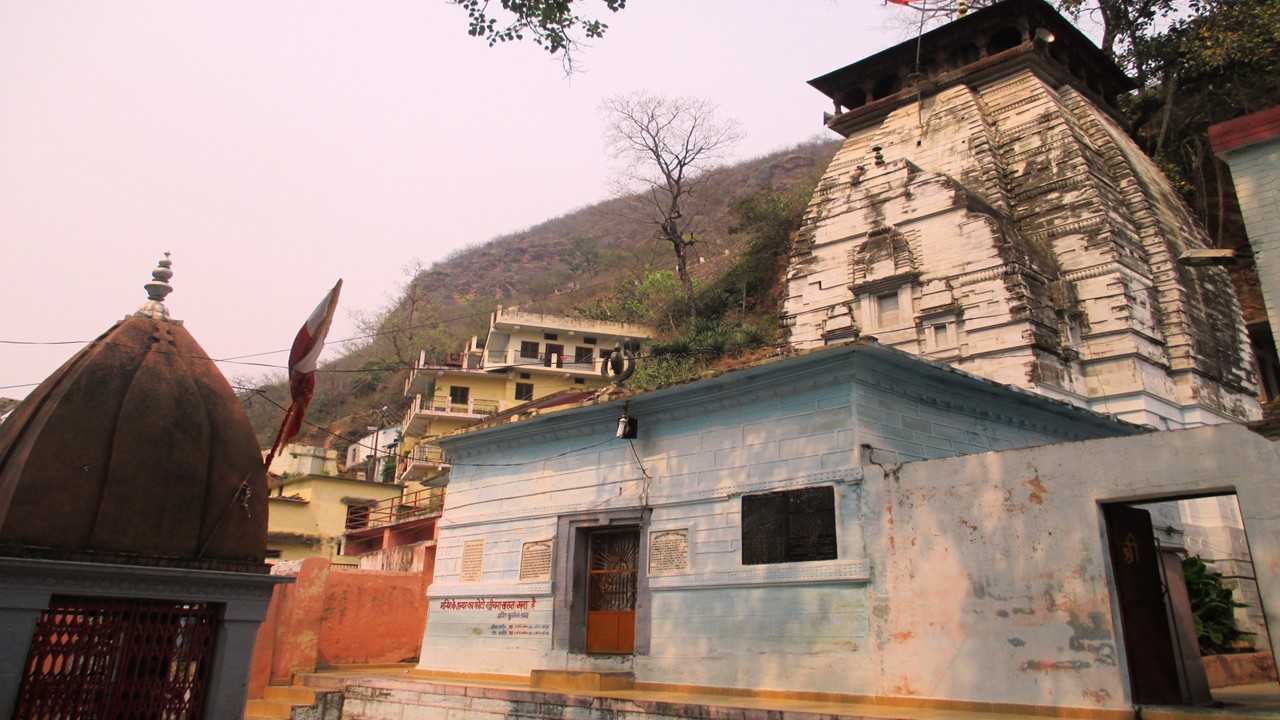
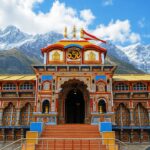
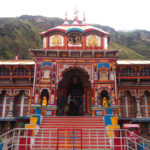
Raghunath temple is a fine example of Himalayan temple architecture adapted to mountainous terrain. Constructed in the traditional Deula style, the temple stands dramatically above the confluence, appearing almost suspended between the rivers and the sky. Its tall shikhara rises prominently against the backdrop of the Garhwal hills.
Built with massive stone blocks, the temple rises about 80 feet high and is renowned for its imposing iron gateway known as the “Dhoka,” attributed to the Gorkhas. Smaller shrines within the complex are dedicated to Ganesha, Hanuman, Vamana, Bali, and the self-manifested Bhuvaneshwari Devi. The temple complex also contains several important altars, where pilgrims can worship Badrinatha, Adi Shankaracharya, Bhagavan Shiva as well as visit sacred kundas including Brahmakund and Vashishta Kund.
Among the most intriguing local beliefs is that crows are rarely seen around Devprayag due to a boon associated with Sri Rama. The temple is also believed to preserve the sacred footprint impressions associated with Sri Rama, making it especially revered among devotees.
Festivals
Raghunath temple is vibrant throughout the year, but several festivals draw particularly large congregations. Ram Navami is the most important celebration, commemorating the birth of Sri Rama with elaborate worship, recitation of the Ramayana, and special processions. Other major observances include Basant Panchami, Maha Shivaratri, Chaitra Navaratri, Hanuman Jayanti, Deepavali, Holi, and Nava Samvatsara celebrations. Festivals become even more magnificent when combined with ritual bathing at the sacred Devprayag Sangam.
Darshan Timings of Raghunath Temple
The temple is open on all the days of the year between 6:00 AM to 6:00 PM.
Best Time to Visit Raghunath Temple
The best time to visit Raghunath Temple in Devprayag is from October to March, when the weather is pleasant and ideal for temple visits, sightseeing, and enjoying the scenic beauty of the Garhwal Himalayas. The post-monsoon months offer clear mountain views, while winter adds a serene spiritual atmosphere to the pilgrimage town.
Pilgrims also frequently visit the temple between April and June, when temperatures remain comfortable and the Char Dham Yatra season begins. It is advisable to avoid the peak monsoon months of July and August, as heavy rainfall in the region can occasionally affect travel conditions.
Nearby Places to Visit
Chandrabadani Temple: A revered Shakti temple situated atop a hill overlooking the Garhwal Himalayas.
Dashrathshila: A sacred rock associated with King Dasharatha, father of Sri Rama. Tradition holds that he performed penance here seeking atonement for his actions.
Dhari Devi Temple: One of Uttarakhand’s most revered Shakti Peethas, dedicated to Dhari Devi. Devotees believe her to be the protector of the region from natural calamities.
Adi Vishweshwar Mahadev Temple: Just below the Raghunath Temple stands the Adi Vishweshwar Mahadev Temple dedicated to Bhagavan Shiva. The temple is also mentioned in the Kedar Khanda and forms an important part of Devprayag’s sacred pilgrimage landscape.
How to Reach Raghunath Temple?
The easiest way to plan your visit is through Tirtha Yatra’s Char Dham Yatra package, which takes care of all the arrangements so that devotees can focus solely on the spiritual experience.

By Air: The nearest airport is Jolly Grant Airport, Dehradun, located about 90 km from Devprayag. Taxis and buses are available from the airport to reach the temple.
By Train: The nearest railway stations are Rishikesh Railway Station (74 km) and Haridwar Railway Station (94 km). From there, regular taxis, buses, and shared cabs operate to Devprayag.
By Road: Devprayag is well connected by road to Rishikesh, Haridwar, and Dehradun. Regular buses and private taxis make it easy to reach the town, followed by a short walk to the temple.
0
Leave a Reply