
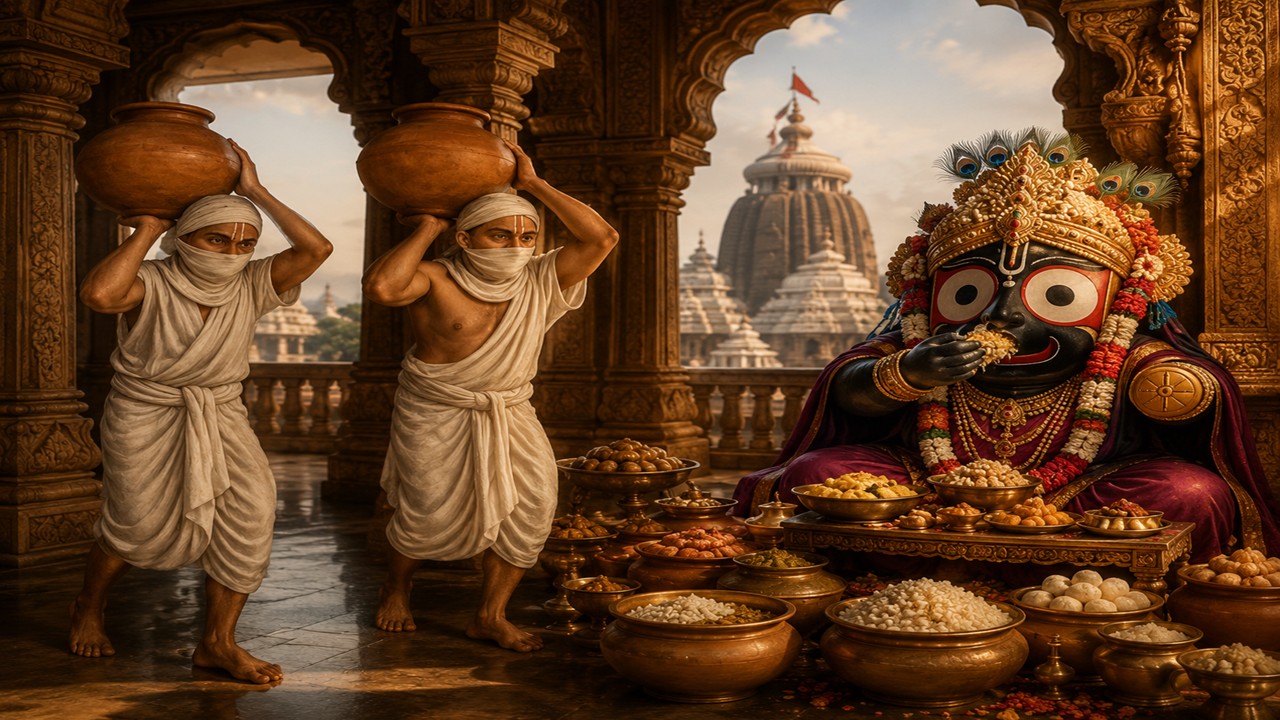
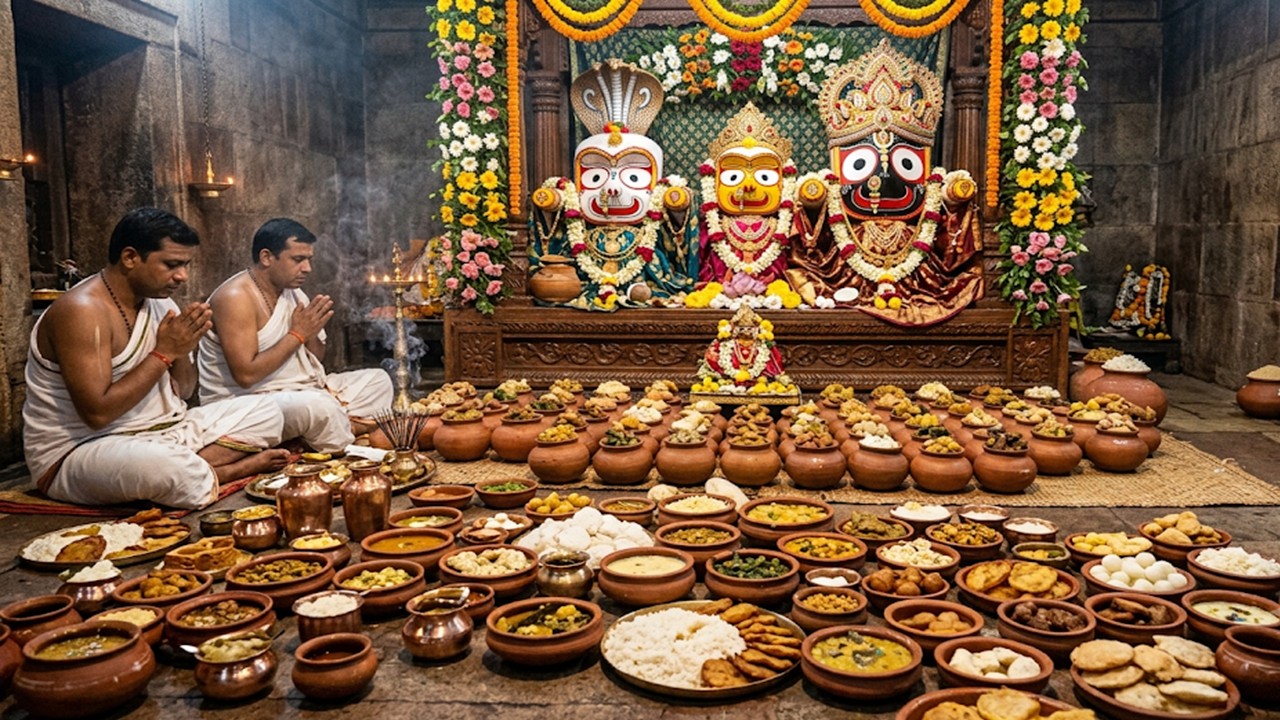
The term Chhappan Bhog comes from the Odia language, where “Chhappan” means 56 and “Bhog” means offering or food presented to the Deity. Thus, Chhappan Bhog refers to the sacred offering of 56 varieties of food prepared for Lord Jagannath.
Chhappan Bhog is a timeless and delicious culinary tradition, with recipes passed down through generations. The offerings are prepared using traditional earthen pots over wood-fired stoves, and no modern cooking appliances or electronic gadgets are used in the process.
The 56 bhog items include a wide variety of rice preparations, lentils, vegetable curries, sweets, fruits, cakes (pithas), and other traditional delicacies, all lovingly offered to Lord Jagannath.
The offering attains the status of Mahaprasad only after it is ceremonially offered to Lord Jagannath and then to Goddess Bimala, in accordance with the temple’s sacred tradition.
Chhappan Bhog is prepared in the world’s largest temple kitchen, where around 600 hereditary cooks known as Suaras work with the help of 240 traditional wood-fired stoves to prepare the sacred offerings and Mahaprasad every day.
Vegetables Not Used in Lord Jagannath’s Temple Kitchen
The vegetables traditionally prohibited in the preparation of Mahaprasad include tomato, potato, cauliflower, cabbage, radish, ladies’ finger (okra), drumstick, garlic, onion, ginger, capsicum, red chilli, green chilli, coriander, beans, carrot, turnip, corn (maize), green peas, beetroot, mushroom, and certain gourds such as snake gourd, bottle gourd, and bitter gourd.
Why Purity of Mind Matters in Preparing Jagannath Mahaprasad
Eight Daily Bhoga Offered to Lord Jagannath
Sakala Dhupa (9:00 to 10:00 AM): Sakala Dhupa, also known as Kotha Bhoga, is the first major cooked meal offered to Lord Jagannath during the day. The Supakaras prepare the meal in the temple kitchen and carry it in earthen pots (Kudua) to the sanctum (Garbhagriha), where the Pujapandas perform the rituals and offer it to the Deities. Pujapandas perform the puja and arati.
Prepared in the temple’s traditional earthen pots over wood-fired stoves, the offering includes rice, dal, vegetables, curries, khichdi, and a variety of traditional delicacies. After being offered to the three Deities and Vimala Devi, the bhoga is revered as Mahaprasad and distributed among devotees.
Bhoga Mandapa Bhoga (11:30 AM): A grand mid-morning offering with numerous varieties of rice, curries, sweets, and other delicacies.
Madhyanna Dhupa (12:30 PM to 1:00 PM): The main midday offering, comprising an elaborate spread of rice, dal, vegetables, and desserts.
Bhanda Bhoga (2:00 PM to 3:00 PM): During this time, Lord Jagannath is offered different varieties of rice, dal, vegetables, sweets, and other traditional preparations. After the offering is completed, the sacred Mahaprasad is made available to devotees.
Bhanda Bhoga (4:00 PM to 5:00 PM): A second Bhanda Bhoga is offered to Lord Jagannath during the day. This offering also includes various traditional food items prepared in the temple kitchen. After being offered to the Lord, the Mahaprasad is distributed among devotees.
Sandhya Dhupa (6:30 PM to 8:00 PM): Evening offering with a variety of cooked dishes and sweets.
Bada Singhara Bhoga (10:30 PM to 11:00 PM): The final offering of the day, made before the Deities retire for the night. It typically includes sweet preparations, milk-based delicacies, and fragrant offerings.
These six daily bhogas are prepared according to centuries-old traditions at the Sri Jagannath Temple and later distributed to devotees as Mahaprasad after the prescribed rituals are completed.
What Are the Stages of Jagannath Mahaprasad?
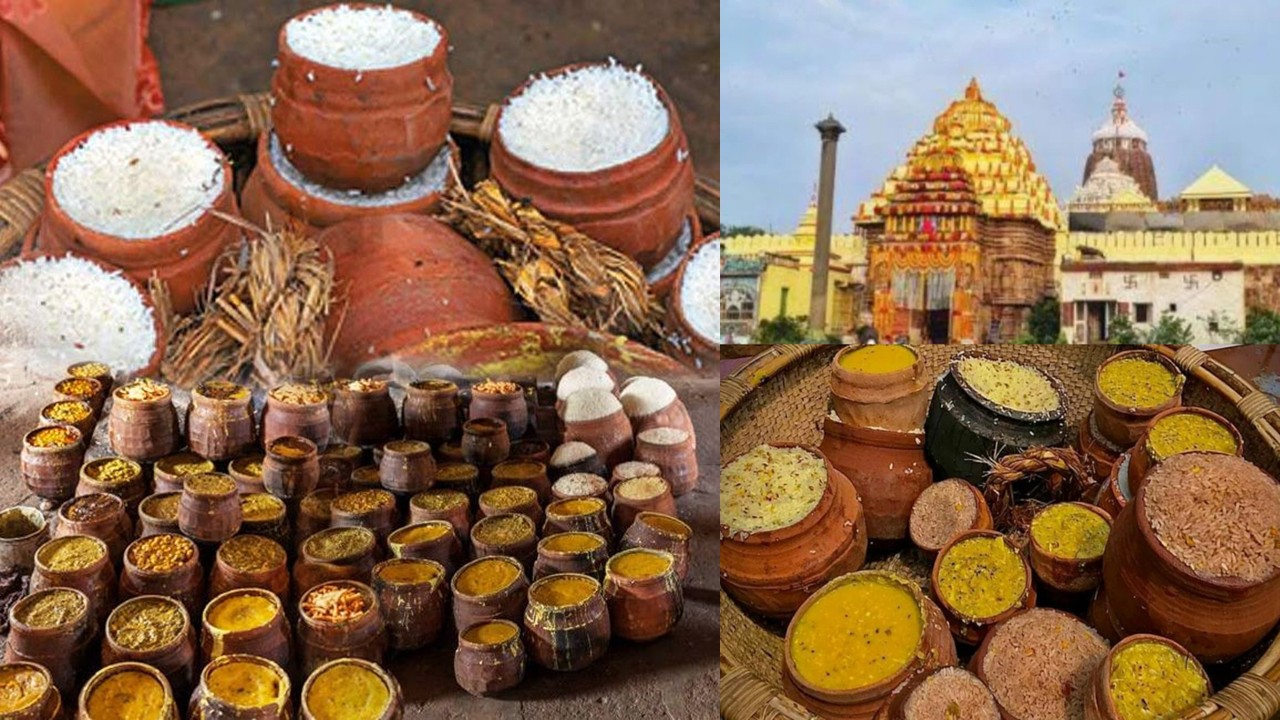
- The first stage in preparing the sacred offering for Lord Jagannath begins with selecting the rice. The unwashed, uncooked raw rice used in the temple kitchen is known as Amunia.
- Once the rice is cooked in earthen pots, it is called Anna.
- When the cooked rice is taken out of the temple kitchen for offering, it is known as Bhoga.
- When the Bhoga is offered with devotion to the three presiding deities—Lord Jagannath, Lord Balabhadra, and Goddess Subhadra—it becomes Naibedya.
- After being offered to Lord Jagannath and subsequently to Bimala Temple (Vimala Devi), the Naibedya attains the sacred status of Mahaprasad.
- When the Mahaprasad is ceremonially placed before Panch Parameshwar, it is known as Kaibalya.
- After Kaibalya is distributed and consumed by the devotees of Lord Jagannath, it is called Abadha.
- Finally, the dried remnants of Abadha are known as Nirmalya, which are regarded as highly sacred and are revered by devotees as a divine blessing.
Interesting Facts About the Jagannath Temple Kitchen (Rasaghara)
- The temple kitchen has 752 traditional wood-fired hearths, with around 240 used daily.
- Earthen pots (Kudua) are used only once and are never reused for cooking.
- Cooking water is drawn from the sacred Ganga and Yamuna wells.
- The bhoga is never tasted before being offered to the Deities.
- Mouth and hairs of cooks are covered during cooking.
- Fresh ingredients are procured every day for preparing Mahaprasad.
- Mahaprasad is sold at Ananda Bazaar, the temple’s sacred food market.
- The recipes and cooking traditions have been preserved for over 800 years.
- Mahaprasad is considered Anna Brahma and is shared by devotees without any distinction of caste or community.
- During major festivals, the kitchen prepares significantly larger quantities of Mahaprasad to serve lakhs of devotees.
- Every step of cooking follows strict hereditary temple traditions and prescribed rituals.
- No artificial colours, preservatives, or processed ingredients are used in the preparation of Mahaprasad.


Leave a Reply