
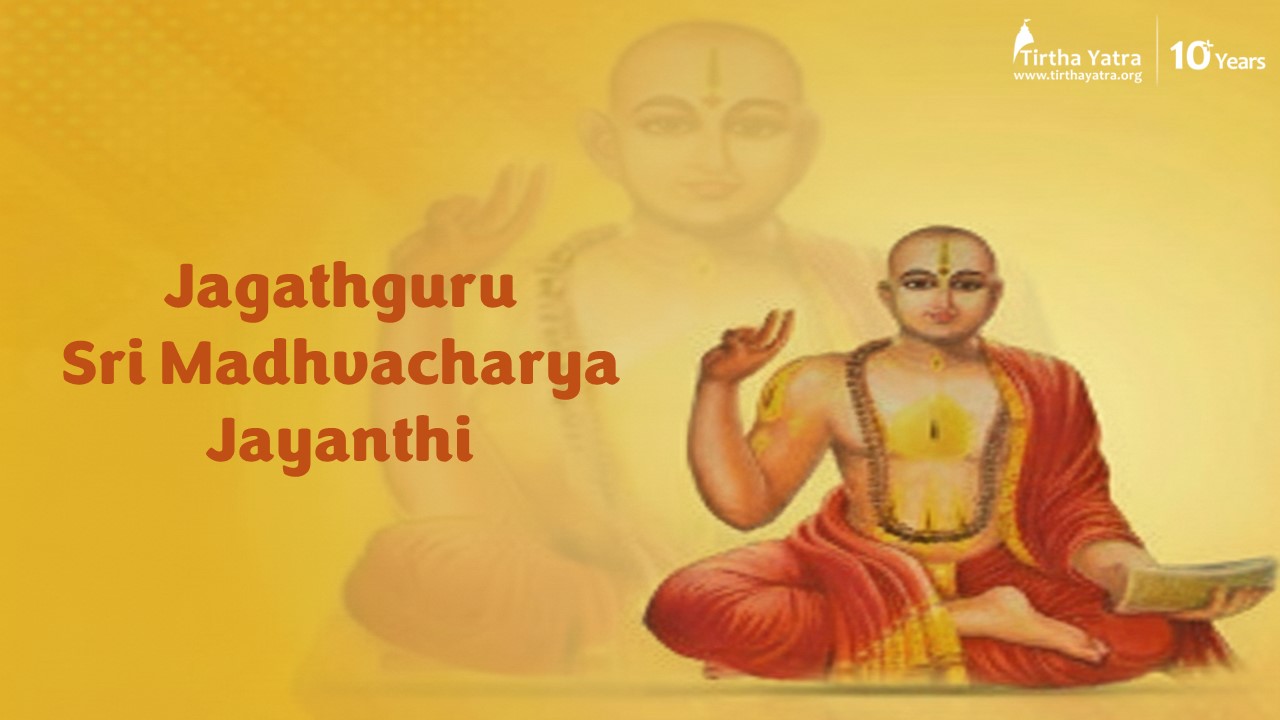
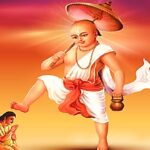
The followers of Sri Madhvacharya are called Madhvas, and the philosophy he taught is known as Tattvavada, which emphasizes realism.
The great Sri Madhvacharya composed numerous stotras (devotional hymns) and wrote profound commentaries on the Vedas, Upanishads, Bhagavad Gita, Brahma sutras, Mahabharata, Srimad Bhagavatham, puranas, and other sacred texts. He is regarded as the greatest spiritual guide who leads seekers on the path to salvation.
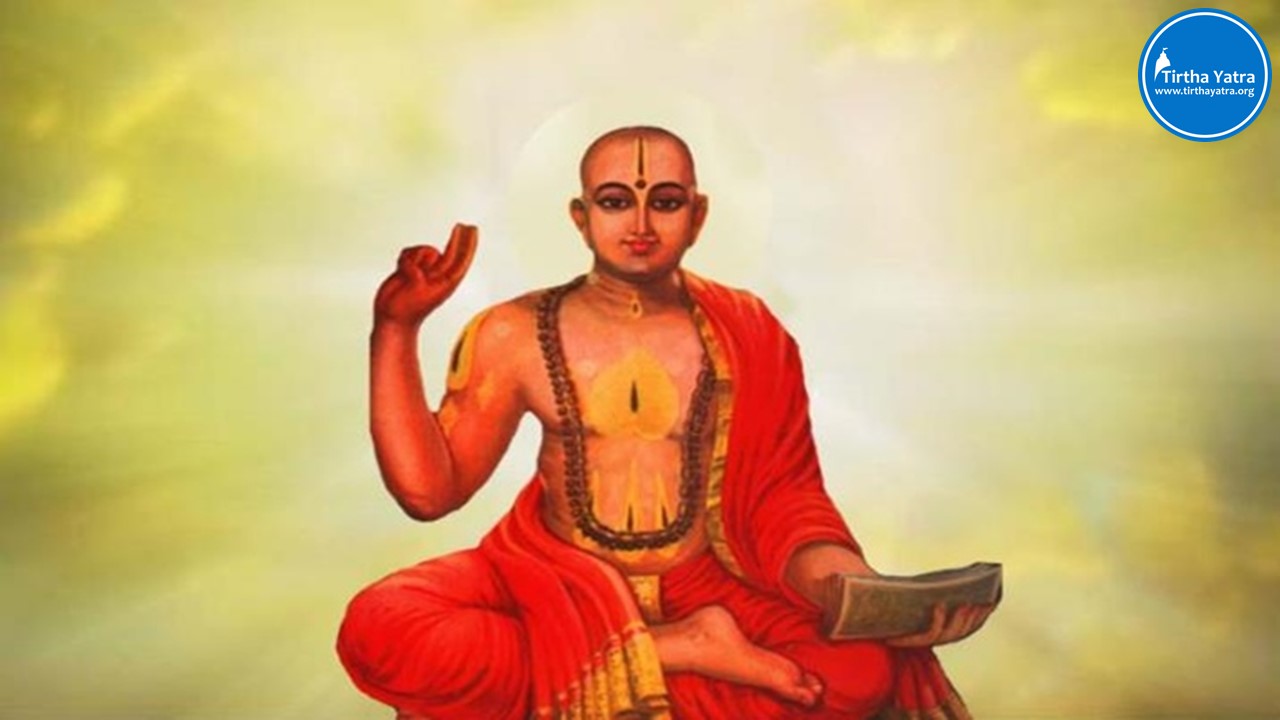 He embraced sannyasa (renunciation) at the young age of ten and propagated the philosophy of:
- Hari Sarvottama – Lord Hari (Vishnu) is supreme above all gods and goddesses.
- Vayu Jeevottama – Mukhya Prana is the most powerful among all living beings (jivas).
- In the Treta-yuga, Hanuman served Lord Rama.
- In the Dwapara-yuga, Bhima, one of the Pandavas, served Lord Krishna.
- In Kali-yuga, Vayu Deva was incarnated as Madhvacharya to serve Veda Vyasa.
Birth and Early Life
Madhvacharya was born in the small village of Pajaka, near Udupi, on the west coast of Karnataka. He was blessed with an unusually strong physique and exceptional intellectual brilliance from birth.

He was born as Vasudeva in 1238 AD, on the auspicious day of Vijayadashami (the 10th day of the lunar month of Ashwayuja, typically falling between September and October). He belonged to a Tulu-speaking Brahmin family of the Bhagavata Sampradaya. His father, Madhyageha Bhatta, and mother, Vedavati, were devout and pious individuals.
Miracles Performed by Sri Madhvacharya
Being a divine avatara of Vayu, Sri Madhvacharya performed several miracles throughout his life, demonstrating spiritual power and eternal grace.
Turning Tamarind Seeds into Gold Coins
Vasudeva’s father had taken a debt from Karkashetti to purchase an ox. When Karkashetti arrived at Vasudevas’s house demanding money, since his father was unable to pay the debt. Unable to see the plight of his father, young Vasudeva went to a tamarind tree and gathered some seeds from there and offered them to the creditor.
Struck by the divine aura of the child, Karkashetti accepted them and left the place. The next day, there was a surprise waiting for him. All the tamarind seeds were transformed into gold coins.
Walking on the Surface of the River Ganga
Guru Madhvacharya and his disciples were returning from Badri and had to cross the river Ganga. They could not find the boat to cross the river. To the astonishment of his devotees, Guru Madhvacharya, without hesitation, started walking onto the river and reached the other side of the river. This incident not only astonished the disciples but also the Muslim king. The awe-struck king arranged the boat to help his devotees cross the river.
Saving the Boat from the Storm
Once, when Madhvacharya was meditating near the seashore, he happened to sight a ship that was struck in a violent storm. Recognizing the danger ahead, he took off his shati (upper cloth), waved towards the struggling boat. To the astonishment of all, the violent storm of the sea was pacified and reached the shore safely.
The captain of the ship expressed his gratitude to Sri Madhvachaya, requesting him to accept gold, diamond, and other precious stones as a token of respect. But Madhvacharya politely declined and took only two heavy lumps of mud from the boat, which travelled all the way from Dwaraka.
- The first lump revealed a deity of Lord Balarama, which was installed at Vadabhandeshwara near Malpe.
- The second lump contained a deity of Lord Krishna in his child form, holding a butter churn. This was installed at the Udupi Sri Krishna Matha, which later became a major pilgrimage center. This very deity of Lord Sri Krishna was worshiped by Rukmini Devi, the consort of Lord Sri Krishna.
Sri Madhvacharya, the greatest theologian of all time, composed thirty-seven works in Sanskrit that form the foundation of his teachings. His famous work is Anuvyakhyana, a criticism of the Advaita of Adi Shankara and the Vishistadvaita of Ramanuja.
His major contributions include commentaries on the Prasthanatraya—the Bhagavad Gita, Brahmasutras, and Upanishads—where he emphasized dualism between the soul and God.
He also wrote interpretations of the Vedas, Mahabharata, Ramayana, and Puranas, along with ten independent treatises known as the Dasha Prakaranas. These works clarify core principles of Dvaita philosophy.
Later scholars like Jayatirtha and Vyasatirtha expanded on his ideas through detailed commentaries, preserving and enriching Madhvacharya’s intellectual and spiritual legacy.
Madhvacharya, a profound social and theological reformer, taught that salvation is open to everyone, not determined by one’s birth. His doctrines revived the Bhakti tradition in Karnataka and drew many followers who embraced his vision.
On this sacred occasion of Madhva Jayanthi, Tirtha Yatra warmly wishes all its yatris and well-wishers a joyful and peaceful 787th celebration of the birth of Sri Madhvacharya. May his teachings continue to guide us on the path of devotion, wisdom, and service.




Leave a Reply