
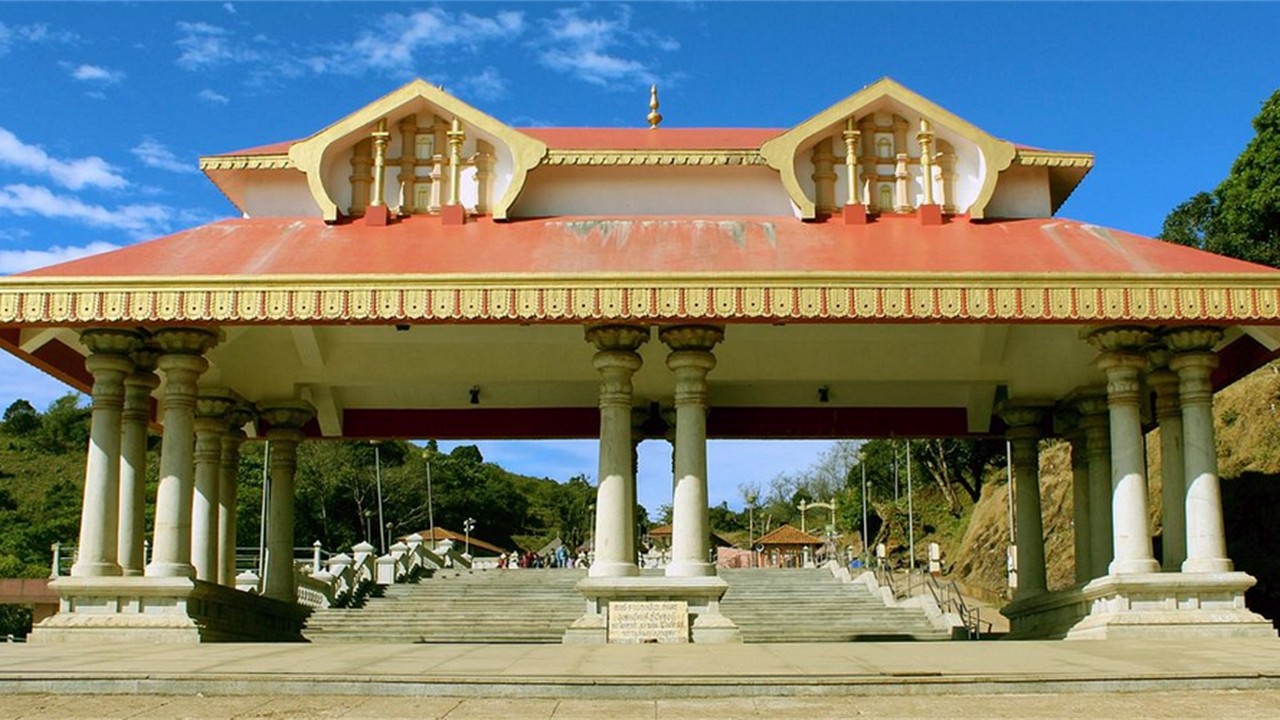
The Talakaveri Temple stands as one of the South India’s most sacred and soul-stirring pilgrimage destinations, situated in the Brahmagiri Hills of Kodagu in Karnataka. At an elevation of approximately 1,276 meters above sea level, Talakaveri is traditionally honoured as the birthplace of the sacred River Kaveri, a river that has nourished kingdoms, farmlands, temples, communities, and civilizations across Karnataka and Tamil Nadu (known as Ponni in Tamil) for centuries.
Over its total course of roughly 800 km before merging into the Bay of Bengal at Kaveri Sangama near Poompuhar, Mayiladuthurai district, its major tributaries include Harangi, Hemavati, Lakshmana Tirtha, Kabini, Shimsha, Arkavati, Bhavani, Noyyal, and Amaravati. One little-known fact is that the visible spring at Talakaveri does not flow continuously as an open river. Instead, the waters move underground before reappearing downstream near Bhagamandala.
Kaveri is revered as one of the seven sacred rivers (Sapta Sindhu) and is personified as Devi Kaveriamma. It is praised in Samskrita literatures including the Mahabharata and various Puranas, as well as throughout classical Sangam literatures. It is also known as Daksina Ganga (Ganga of the South), and Ardha Ganga (Half Ganga) due to its association with the celestial Ganges. Some scholars also identify it with the Rigvedic river name Marudvrdha (rejoicing with the Maruts). For the Kodava community, Kaveramma is not merely a river but their kula devata, the ancestral guardian deity.
The exact beginnings of Talakaveri Temple are veiled in the sacred silence of antiquity, much like the hidden flow of the river that is believed to arise here. Historical traditions indicate that the rulers of Kodagu extended patronage to the shrine and supported its upkeep and renovation across different periods, thereby strengthening its position in the religious and cultural life of the region.
Among the remembered phases of restoration, one significant renovation is associated with the Kodagu ruler Veera Rajendra in the late eighteenth century. The temple complex visible today is the result of many such layers of reverence, reconstruction, and conservation, including more recent restoration efforts undertaken with the support of the Karnataka government.
Sthala Purana of Talakaveri
Talakaveri is closely associated with Sage Agastya, one of the Sapta Rishis, as well as with Sage Kavera. Traditions say that Bhagavan Shiva appeared before Agastya at this sacred site, permanently sanctifying it. For this reason, the Shiva shrine within the temple complex is known as Agastheeshwara. The place is also linked with the belief that the Trimurtis – Brahma, Vishnu, and Shiva – granted divine darshana to Agastya at Talakaveri. Local tradition further regards the surrounding Brahmagiri Hills as a sacred region where great sages performed yagnas and penance, filling the landscape with spiritual energy.
According to tradition, Kaveri was not merely a river, but a divine goddess identified with Lopamudra, the celestial daughter of Sage Kavera. It is said that Sage Kavera performed intense penance to receive a child who would uplift humanity, and Brahma blessed him with a divine daughter who came to be known as Kaveri. Another traditional account narrates that after the Samudra Manthana, or churning of the Ocean of Milk, Mohini and Lopamudra helped retrieve the nectar of immortality for the devatas. Lopamudra was then raised by Brahma and later given to Rajarishi Kavera, who named her Kaveri. She eventually prayed to Brahma for the blessing of becoming a purifying river for the welfare of the world.
The story continues with Sage Agastya, one of the most celebrated rishis in Vedic and Puranic literature. Kaveri married Sage Agastya and he carried her in his kamandalu. When the sage entered deep meditation near Brahmagiri hills, Sri Ganesha assumed the form of a crow and sat upon the sacred vessel. As Agastya attempted to drive the crow away, the kamandalu overturned and the divine waters flowed out, emerging as the sacred River Kaveri. Talakaveri is believed to mark this miraculous beginning.
Kodava folklore explains the river’s origin through Kaveri’s deep compassion. Seeing humanity suffer from drought, hardship, and spiritual decline, the Goddess was moved to tears. Her tears fell on the sacred slopes of the Brahmagiri Hills and became life-giving waters that flowed out to nourish the land. For this reason, the river is poetically said to have been born from the tears of the Goddess.
In classical Tamil literature Manimekalai, it is said that Agastya swallowed the Ganges when the floodwaters disturbed his penance, later releasing it in southern India as Kaveri. Cilapathikaram literature also mentions Kaveri as the daughter of Kavera. In Sri Lankan historical records of Theravada Buddhism, the name Kaveri is mentioned as one of the twenty canals linked to 12th-century Parakrama Samudra reservoir built by Parakramabahu-I in Polonnaruwa.
Architecture and the Deities in Talakaveri
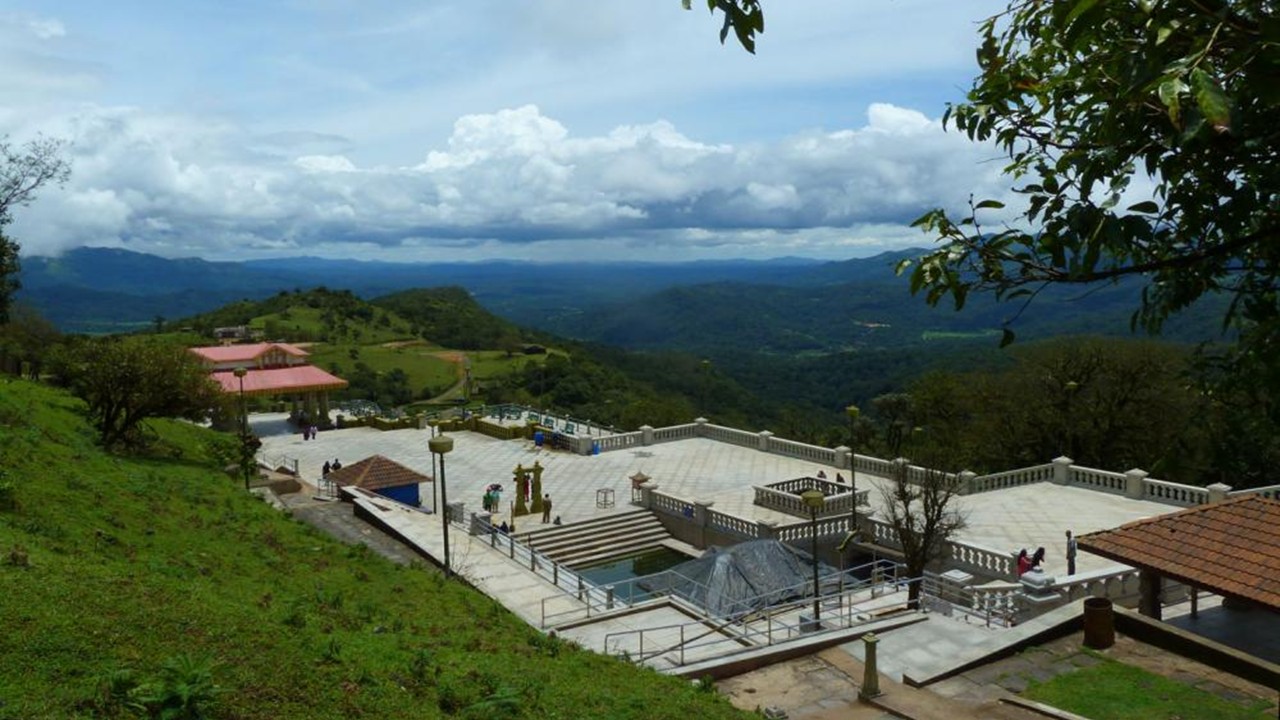
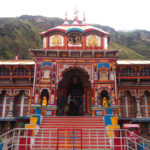
The architecture of Talakaveri Temple reflects the distinctive style of Kodagu hill temples rather than the towering Dravidian temple complexes of the plains. The structures exhibit sloping tiled roofs designed to withstand the region’s heavy monsoon rains. White pillars, graceful archways, stone courtyards, and elegant shrines blend harmoniously with the surrounding mountain scenery.
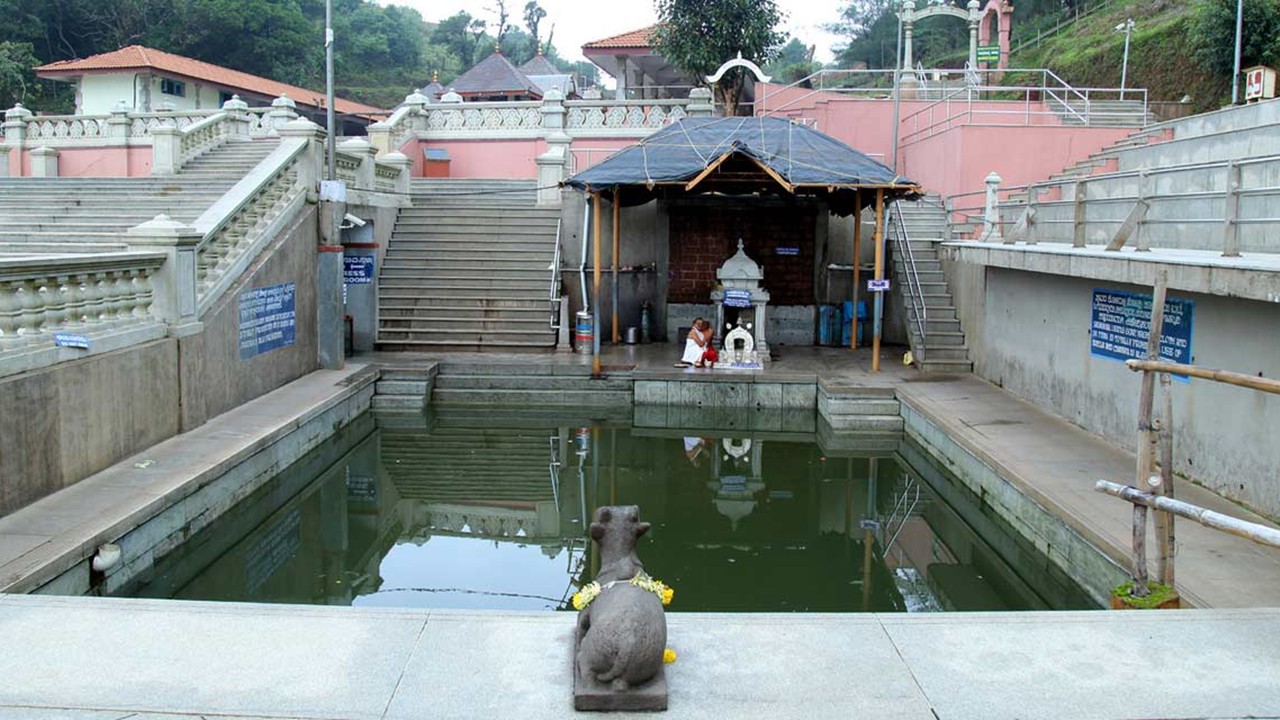
The temple complex is built around the sacred Brahma Kundike, a rectangular tank considered the source point of the Kaveri. The river first appears here as a perennial spring within a small tank before disappearing underground and resurfacing downstream. A sacred spring emerges near the Brahma Kundike, which devotees regard as the visible manifestation of the Goddess herself.
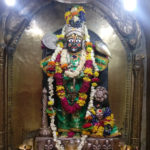
The presiding deity is Devi Kaveramma, the divine personification of River Kaveri. Within the temple complex are also shrines dedicated to Sri Agastheeshwara, a form of Shiva associated with Sage Agastya and Sri Ganesha, who is remembered for his role in releasing the sacred waters.
Festivals at Talakaveri
The most important celebration is Tula Sankramana, observed annually in mid-October when the Sun enters the zodiac sign of Libra, Tula Rashi. On this auspicious day, thousands of devotees gather at the sacred Brahma Kundike to witness Theerthodbhava, the miraculous and symbolic emergence of the river. At the ordained sacred moment, the waters in the spring are believed to surge upward, signifying the annual rebirth of River Kaveri. Pilgrims take a sacred dip, offer prayers, perform ancestral rites, and seek blessings for prosperity, health, and spiritual upliftment. The entire region comes alive with traditional attire, folk music, community gatherings, and sacred rituals.
The celebrations continue with the vibrant Kaveri Jatre, during which devotees participate in special pujas, cultural programs, and devotional processions dedicated to the river. Traditional Kodava customs such as Kanni Puje are also observed, wherein married women worship Kaveramma in their homes using symbolic representations of the Goddess and pray for the welfare of their families.
The sacred month of Tula is further marked by the worship of Surya Deva, with devotees offering prayers at sunrise and performing ritual ablutions believed to confer special spiritual merit. Throughout the year, the temple also celebrates Maha Shivaratri with elaborate worship of Sri Agastheeshwara, while Navaratri is observed with special prayers to Devi Kaveramma as an embodiment of the Divine Mother.
Darshan Timings of the Talakaveri Temple
The temple is open on all the days of the year between 6:00 AM to 6:00 PM.
Nearby Places to Visit
Bhagandeshwara Temple: Located at Bhagamandala, about 8 km from Talakaveri, this ancient temple is dedicated to Sri Bhagandeshwara, a form of Shiva.
Triveni Sangama: Situated beside the Bhagandeshwara Temple, this sacred confluence marks the meeting of the rivers Kaveri, Kannike, and the mystical underground river Sujyoti.
Nagathirtha: According to local tradition, the waters of the Kaveri that originate at Talakaveri flow underground and reappear at Nagathirtha before continuing their journey downstream.
Igguthappa Temple, Kakkabe: Revered as the spiritual abode of Sri Igguthappa, the guardian deity of Kodagu, this temple is among the sacred shrines for the Kodava community.
How to Reach Talakaveri Temple?
Devotees willing to take the sacred dip in the Kaveri River during the Tula Sankramana period can join us through Tirtha Yatra’s Kaveri Tula Snana Yatra package. All the arrangements for your Yatra will be taken care of which you focus only on the spiritual experience of the journey.
By Road: Talakaveri is located about 48 km from Madikeri and 8 km from Bhagamandala, with excellent road connectivity. Regular KSRTC buses, private buses, taxis, and self-drive vehicles operate from Bengaluru, Mysuru, and Mangalore.
By Rail: The nearest major railway stations are Mysuru, Mangalore, and Hassan. Pilgrims can hire taxis or board buses to Madikeri and proceed onward to Talakaveri.
By Air: The nearest airports are Kannur International Airport (about 120 km) and Mangalore International Airport (approx. 165 km). From the airport, taxis and buses are available to Madikeri and Bhagamandala, from where Talakaveri can be reached by road.
0
Leave a Reply