
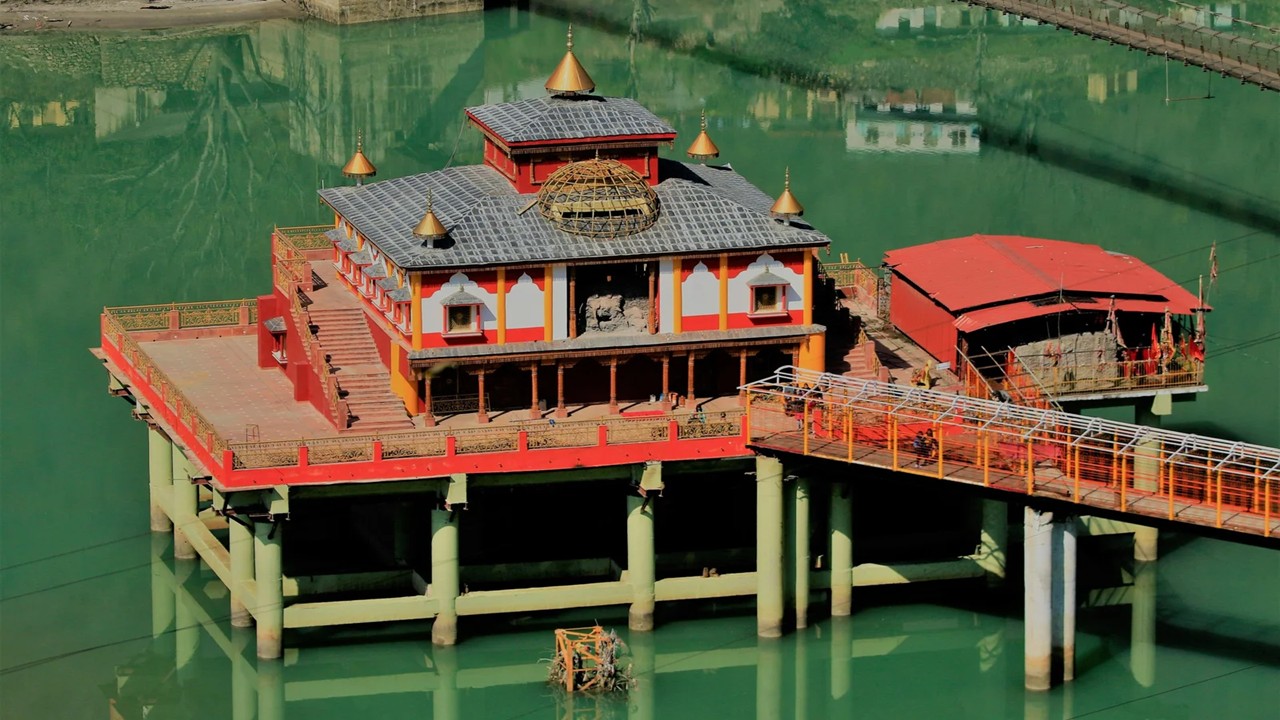
Dhari Devi Temple stands at Kalyasaur on the banks of the Alaknanda River, between Srinagar Garhwal and Rudraprayag. Set amid Uttarakhand’s majestic Himalayan valleys, this mandir draws its sanctity not from grand architecture or royal patronage, but from faith, folklore, and the enduring belief that the Devi herself watches over the mountains. She is revered as the protector of Uttarakhand and guardian deity of the Himalayan pilgrimage routes.
In the Shakta tradition, Dhari Devi is identified with Mahakali, one of the most powerful manifestations of the Parvati Devi. Local religious traditions associate her temple with the sacred network of Shakti worship described in the Devi Bhagavata Purana. The temple is also revered as one of the 108 Shakti Peethas mentioned in regional traditions connected with the Goddess.
For centuries, pilgrims traveling toward Kedarnath and Badrinath have paused here to seek the blessings of Dhari Devi before continuing their Himalayan yatra. She is traditionally regarded as the divine protector of the Char Dham and the presiding guardian deity of the Garhwal region.
Sthala Purana of Dhari Devi Temple
Dhari Devi’s most popular sthala purana is both moving and mysterious. According to local tradition, the Devi appeared on Earth as a young maiden who had seven brothers. The siblings cared deeply for her after the passing of their parents. However, an astrologer warned the brothers that misfortune would befall their household because of the girl.
Influenced by fear and ignorance, the brothers committed a terrible act. They killed their divine sister and cast her body into the river. The body separated into two parts during its journey through the Himalayan waters. The upper half floated downstream and came to rest near present-day Kalyasaur, while the lower half reached Kalimath. Thus, the upper half became worshipped as Dhari Devi, while the lower half became the object of worship at Kalimath.
A washerman living near the river is said to have heard a celestial voice emerging from the waters. The divine command instructed him to place the sacred form upon a rock and worship it. The villagers obeyed the command, and a temple gradually arose around the miraculous manifestation. This event marks the beginning of the temple’s sacred history.
Another local tradition holds that after a great flood, the deity of the Goddess drifted down the Alaknanda River and lodged against a rock near Dhari village. Hearing mysterious cries, villagers discovered it and received a divine instruction to establish worship at that exact spot. The story reflects a recurring Himalayan belief: deities manifest by their own will and cannot be moved at human convenience.
History of Dhari Devi Temple
Dhari Devi temple’s exact origin remains uncertain. Unlike temples founded by major dynasties, Dhari Devi evolved through local devotion and regional pilgrimage traditions. For centuries it served as an important spiritual halt for travellers moving between the central Garhwal valleys and the higher Himalayan temples of Kedarnath and Badrinath.
The difficult Himalayan terrain largely insulated the temple from the political upheavals that affected temples in the plains. Similarly, there are few documented interactions between the temple and British colonial administration, allowing local traditions to remain largely undisturbed. The temple’s history is therefore preserved more through oral tradition than through royal inscriptions.
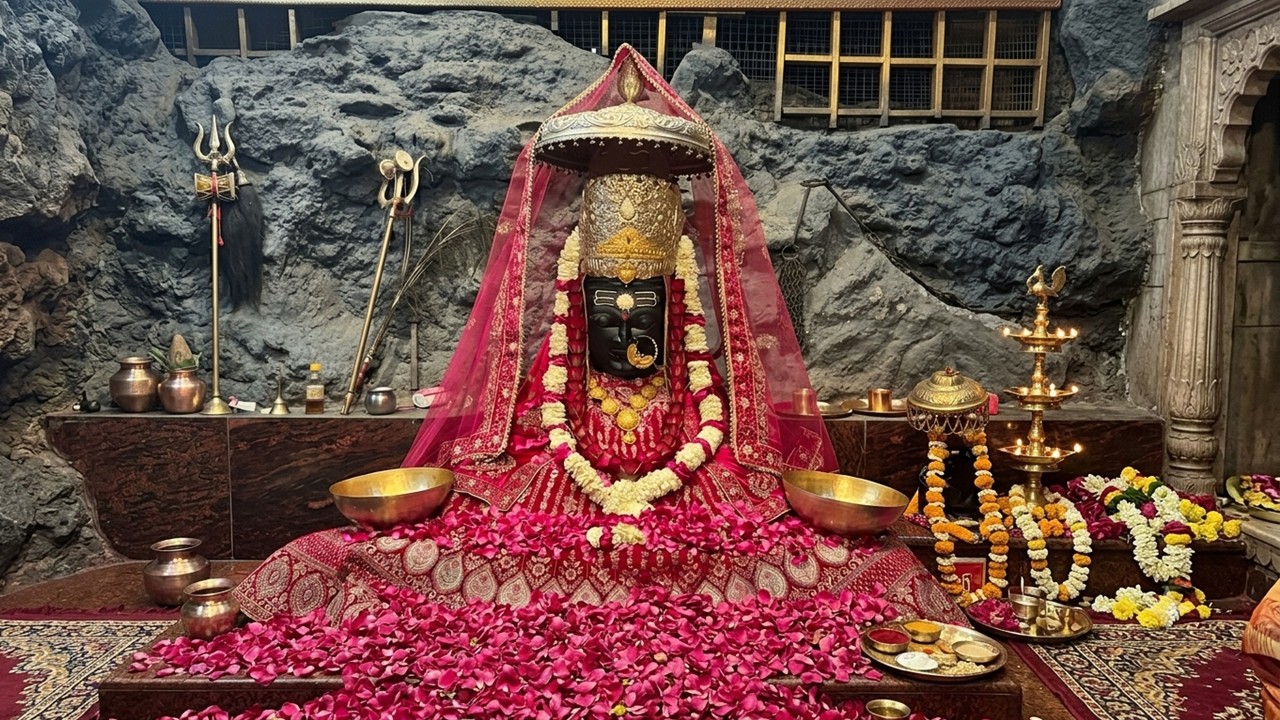
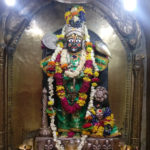
The temple enshrines the upper half of Mata, while the lower half is traditionally worshipped at Kalimath. One of the temple’s most fascinating beliefs concerns the changing appearance of the deity. Devotees maintain that Dhari Devi manifests in three forms during the day: as a young girl in the morning, a mature woman at noon, and an elderly mother in the evening. Pilgrims often spend several hours at the temple hoping to witness these subtle changes.
During the construction of the Srinagar Hydroelectric Project, authorities relocated the deity from its original position on the bed of River Alakananda on June 16, 2013. Many local devotees opposed the move, believing that the deity should never be displaced from her original abode. According to local belief, only hours after the deity was moved, devastating floods and landslides struck Uttarakhand, resulting in one of the worst natural disasters in modern Indian history.
While historians and scientists attribute the tragedy to extreme weather conditions, many devotees regard the sequence of events as evidence of Dhari Devi’s displeasure. The story quickly became part of the temple’s living folklore and remains one of the most frequently recounted episodes associated with the temple.
Architecture of Dhari Devi Temple
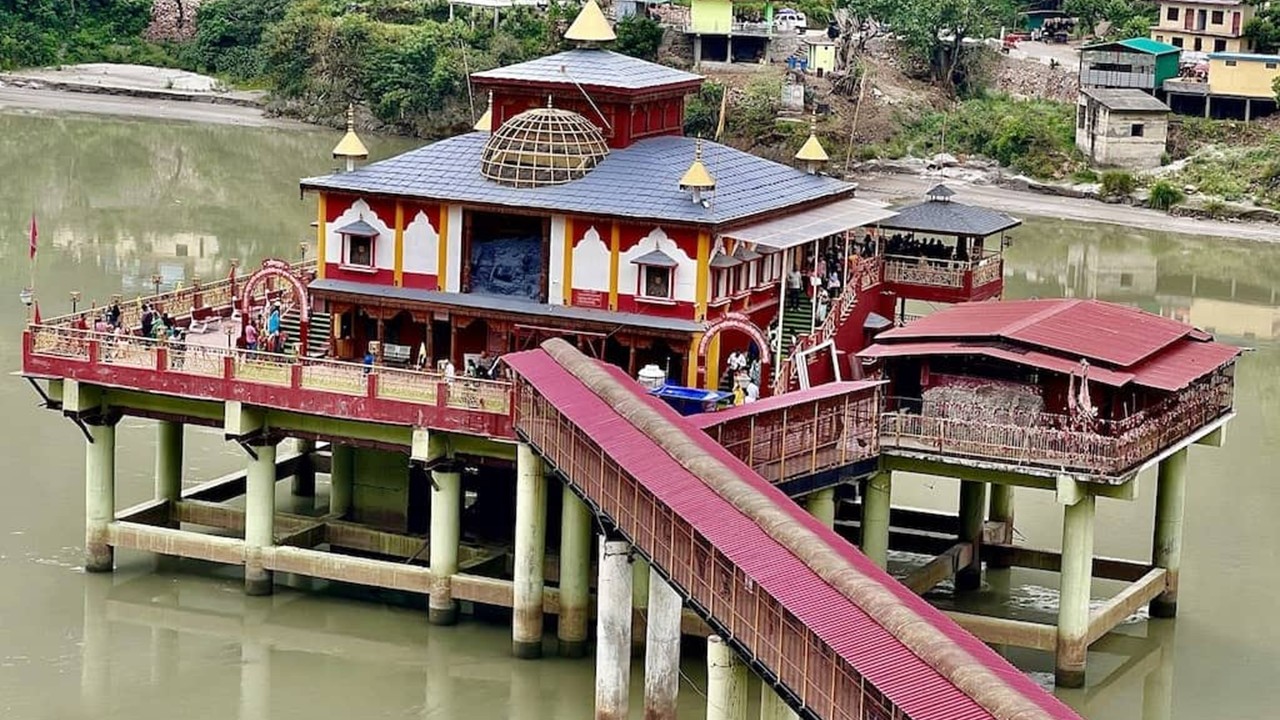
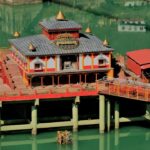
Dhari Devi Temple has a simple yet symbolic design that blends with the rugged Himalayan landscape. Built on a rocky platform in the Alaknanda River at Kalyasaur, the temple is reached by a bridge overlooking the surrounding mountains and valleys. Unlike many North Indian temples with towering shikharas and elaborate carvings, the deity traditionally remains under the open sky, reflecting the belief that the Devi should stay directly connected to nature.
The temple houses the upper half of the deity of Maa Dhari Devi, worshipped as a form of Mata Kali and the guardian deity of Uttarakhand. The present temple stands on an elevated structure above the river, designed to withstand changing water levels while preserving the sanctity of the site.
Unlike many famous temples founded by kings or dynasties, the original Dhari Devi Temple has no known royal patron. Historical records do not identify any specific ruler or dynasty as its builder, suggesting that the temple evolved gradually through the devotion of local communities and pilgrims traveling to the Himalayan temples of Kedarnath and Badrinath.
Festivals
Dhari Devi Temple is a vibrant centre of worship where devotees offer prayers to Maa Dhari Devi, seeking protection, prosperity, and spiritual well-being. The main offerings include flowers, coconuts, red chunari, incense, sweets, and sacred lamps, which are presented to Maa during daily worship.
Dhari Devi Temple celebrates several festivals with great devotion, the most important being Chaitra Navratri and Sharad Navratri, when thousands of devotees gather to worship Dhari Devi through special pujas, devotional singing, and sacred rituals. Other major festivals include Dussehra and Diwali, during which the temple is beautifully illuminated with lamps and decorations. Makar Sankranti is also observed with enthusiasm, as pilgrims take a sacred dip in the Alaknanda River before offering prayers to Maa Dhari Devi.
Darshan Timings of Dhari Devi Temple
The temple is open on all the days of the year between 6:00 AM to 8:00 PM.
Best Time to Visit Dhari Devi Temple
The ideal time to visit Dhari Devi Temple is from March to June and September to November, when the weather is pleasant and travel conditions are favourable. For a vibrant spiritual experience, plan your visit during Chaitra Navratri or Sharad Navratri, when the temple is beautifully decorated and special pujas are held.
It is advisable to avoid the monsoon months (July to September), as heavy rains can cause landslides, road disruptions, and rising water levels in the Alaknanda River.
Nearby Places to Visit
Kalimath Temple: One of the sacred Shakti Peethas of Uttarakhand, revered as the place where Mata Kali disappeared into the earth after slaying demons.
Omkareshwar Temple, Ukhimath: The winter seat of Kedarnath and Madhyamaheshwar, where the deities are worshipped when the high-altitude temples remain closed.
Rudraprayag: The sacred confluence of the Alaknanda and Mandakini rivers, associated with Bhagavan Shiva and an important stop on the Himalayan pilgrimage route.
Kartik Swami Temple: A scenic hilltop temple dedicated to Sri Kartikeya, offering breathtaking panoramic views of the Garhwal Himalayas.
Devprayag: The sacred meeting point of the Alaknanda and Bhagirathi rivers, where the sacred Ganga is believed to begin its journey.
How to Reach Dhari Devi Temple?
The easiest way to plan your visit is through Tirtha Yatra’s Char Dham Yatra package, which takes care of all the arrangements so that devotees can focus solely on the spiritual experience.
By Air: The nearest airport is Jolly Grant Airport, Dehradun, about 135 km from Dhari Devi Temple. From the airport, taxis and buses are available to reach the temple.
By Rail: The nearest major railway station is Rishikesh, while Haridwar Junction offers better connectivity to major Indian cities. From either station, visitors can hire a taxi or board a bus towards Srinagar and Rudraprayag.
By Road: Dhari Devi Temple is located on the Rishikesh-Badrinath Highway (NH 7), about 15 km from Srinagar (Garhwal) and 20 km from Rudraprayag. Regular buses and shared taxis operate from Rishikesh, Haridwar, Srinagar, and Rudraprayag, making the temple easily accessible by road.
0
Leave a Reply