
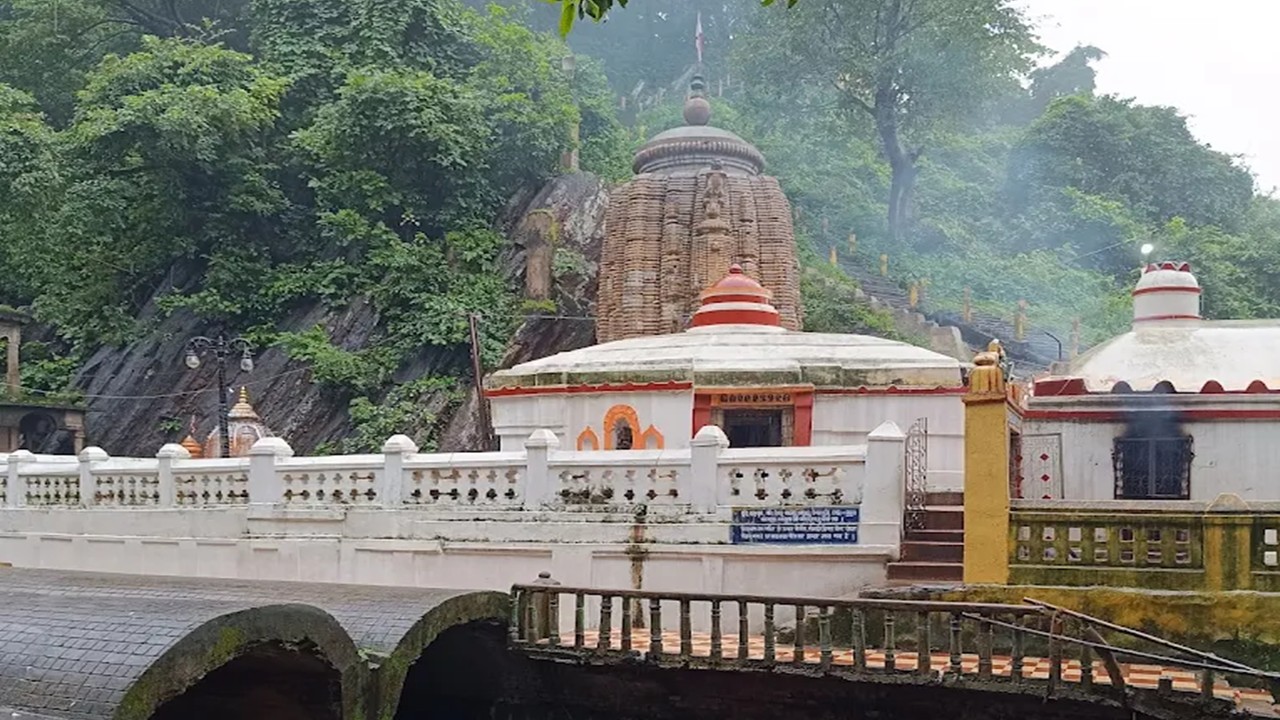
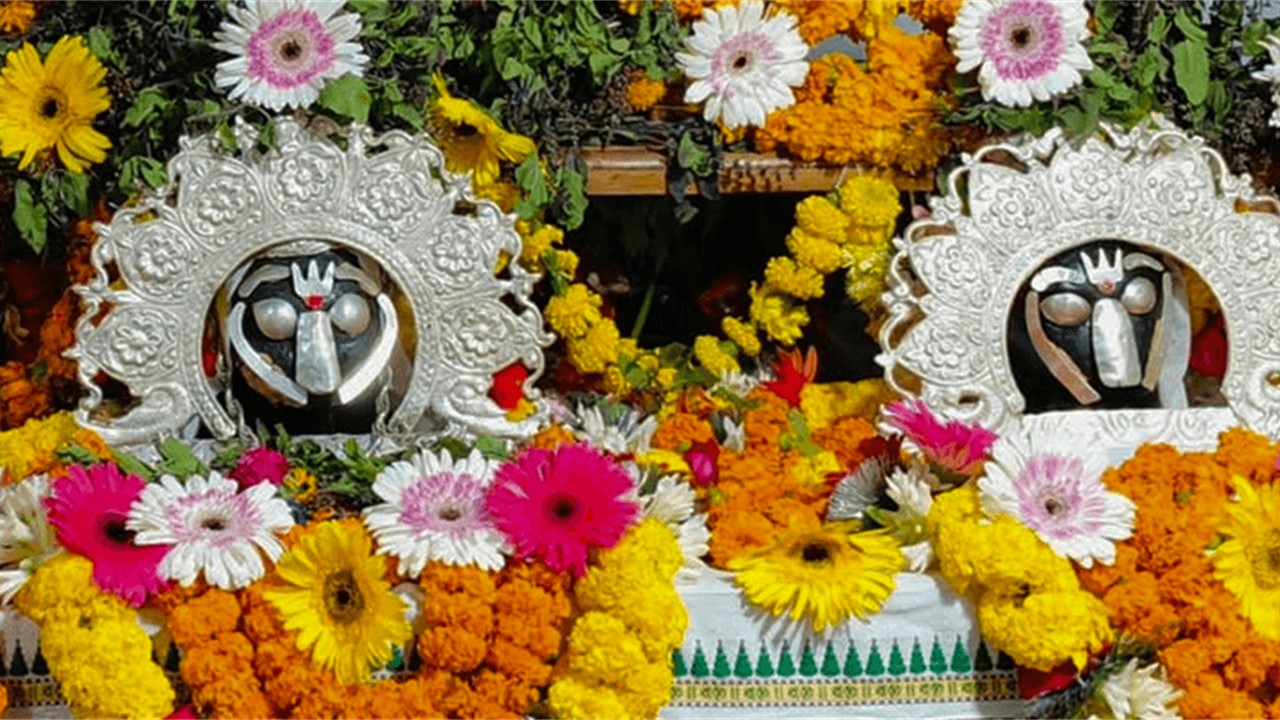
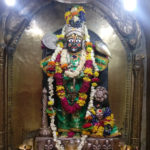
The presiding Deity of the temple is Lord Nrusingha with cat-like head, an avatar of Lord Vishnu. The deity is made of black-chlorite stone.
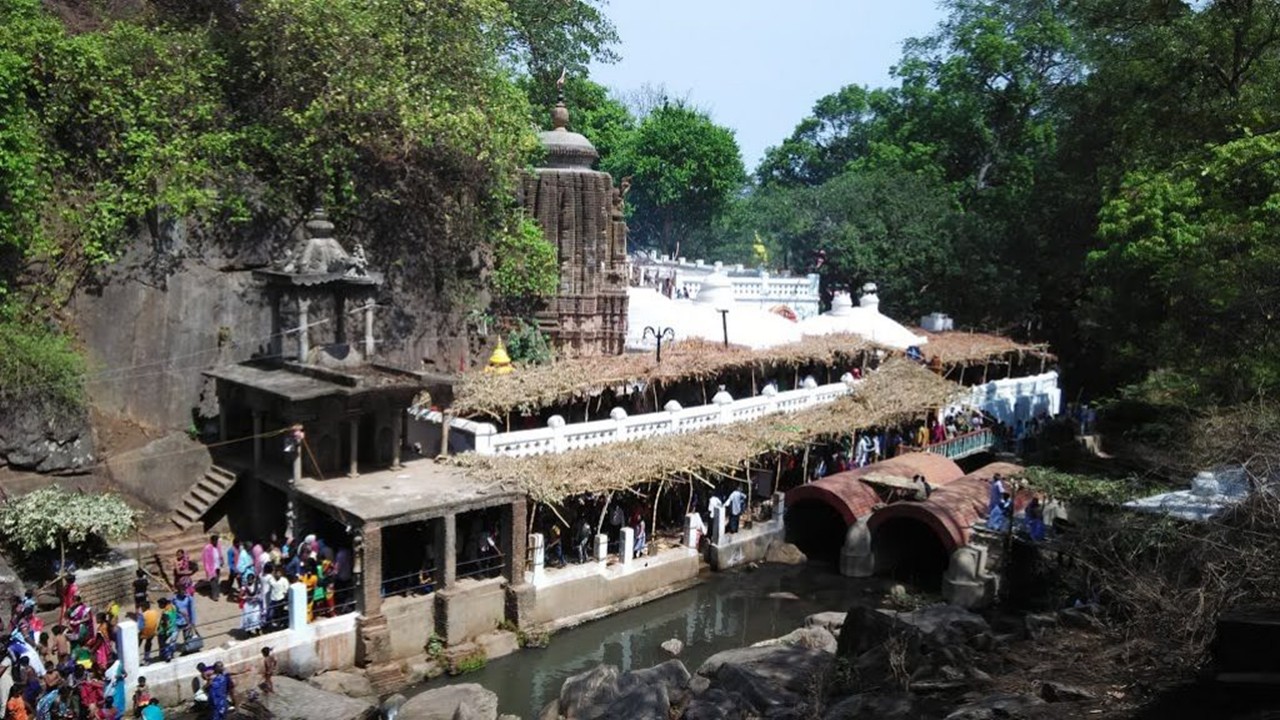
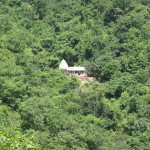
Known for its unparalleled legacy, splendid Kalinga-style architecture, caves, lush green forest, perennial streams, pristine surroundings, and scenic waterfalls, it is nestled in Paikamal village in the Bargarh district, in the heart of western Odisha, Bharat.
Sthala Purana of Sri Nrusinghanath Temple
Musika had performed intense tapasya to Lord Shiva and obtained a boon that he could be killed only by Lord Narasimha. To defeat him, Lord Rama assumed the form of Narasimha and attacked the demon. In fear, Musika transformed into a mouse and hid within the caves of Gandhamadhana Parvata.
To capture him, the Lord then took the form of a cat. This unique manifestation, combining the features of a cat and a lion, came to be known as Marjara Kesari.
As the demon, in the form of a mouse, sought refuge in Gandhamardana Parvata, he pleaded for mercy. Granting his request, the Lord spared him. It is believed that, to this day, the Lord continues to guard and protect the sacred hill from the demon.
Architecture of Sri Nrusinghanath Temple
Built in the 14th century, this Vaishnav temple in the Kalinga architectural style is dedicated to Lord Vishnu. Its foundation was laid in 1313 CE by King Baijal Singh Dev, a ruler of the Chauhan Rajput clan from the Patnagarh Kingdom.
Festivals Celebrated at Sri Nrusinghanath Temple
Mesha Sankranti: It is celebrated annually in mid-April, marking the Sun’s transition into the zodiac sign of Aries (Mesha Rashi). The festival is observed with special pujas, rituals, and large gatherings of devotees seeking the blessings of Lord Nrusinghanath.
Baisakha Shukla Tritiya: It is celebrated with special pujas, abhishekams, devotional bhajans, and religious gatherings by devotees. The temple witnesses a festive atmosphere as pilgrims visit to seek the blessings of Lord Nrusinghanath during the auspicious occasion.
Baisakha Shukla Chaturdashi: It is celebrated with great devotion through special rituals, sacred abhishekams, and devotional programs dedicated to Lord Nrusinghanath. A large number of devotees visit the temple on this auspicious day to participate in the festivities and seek divine blessings.
Jyestha Amavasya: It is considered as an auspicious day to perform Pitra Dosh Nivaran, Shraddha, and Tarpan rituals to provide peace to ancestors.
Darshan Timings of Nrusinghanath Temple
Morning: 5:00 AM to 12:00 PM
Evening: 2:00 PM to 8:00 PM
Early morning darshan is recommended for those who wish to have peaceful and less crowded darshan.
Best Time to Visit
Nearby Places to Visit
Bhimdhar: It is a scenic natural spot near the temple region, known for its rocky landscape, flowing water, and peaceful surroundings amidst nature.
Chal Dhar: It is a beautiful waterfall and trekking spot located in the lush forest area near Nrusinghanath Temple, attracting both pilgrims and nature lovers.
Kapildhara Waterfall: This waterfall is a picturesque natural attraction surrounded by lush greenery and rocky hills. The waterfall is known for its serene atmosphere and is a popular spot for pilgrims and nature lovers visiting the region.
How to Reach Sri Nrusinghanath Temple
By Railway: The nearest railheads are Nuapada Railway Station and Bargarh Road Railway Station.
By Road: Sri Nrusinghanath Temple is well connected by road from Paikmal, Bargarh, Padampur, Raipur, and Bhubaneswar. Regular local transport and bus services are available from nearby towns to reach the temple conveniently.


Leave a Reply