
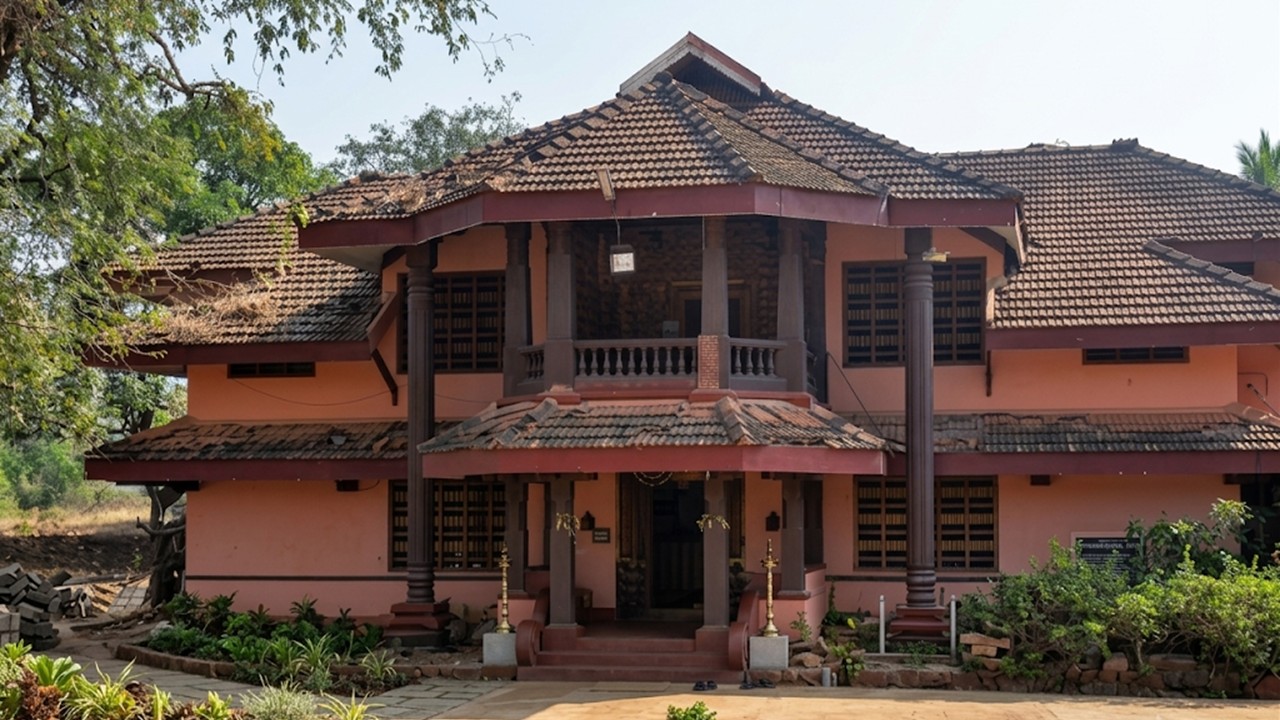
Amidst the green landscapes of coastal Karnataka, near the sacred hill of Kunjarugiri and a short distance from Udupi, lies Pajaka Kshetra, one of the sacred pilgrimage destinations in the Vaishnava tradition. It is the birthplace of Sri Madhvacharya, the founder of Tattvavada, whom devotees revere as the third incarnation of Vayu. Every pathway, stone, pond, and shrine in this sacred village preserves memories of his extraordinary childhood and the divine mission that would reshape the spiritual and philosophical history of Vedanta in the Indian subcontinent.
According to the tradition, Sri Madhvacharya was born in Pajaka as Vasudeva to Madhyageha Bhatta and Vedavathi in the 13th century. His birth is regarded as a divine descent rather than an ordinary human birth. Madhva sampradaya identifies him as the third manifestation of Vayu Deva, who had previously incarnated as Hanuman in the Ramayana and Bhima in the Mahabharata. He descended to restore the true meaning of the Vedas, establish devotion to Sri Vishnu, and refute philosophical doctrines that obscured the eternal distinction between Jivatma and Paramatma.
From childhood, Vasudeva displayed exceptional intelligence, extraordinary strength, and divine powers. The many miracles attributed to his early life made Pajaka one of South India’s important pilgrimage centres. Pajaka is also closely associated with Sri Parashurama, who is believed to have claimed India’s western coast from the sea. Coastal Karnataka is therefore revered as Parashurama Kshetra, and Pajaka holds a special place within this sacred landscape. Tradition says that the four sacred theerthas surrounding the village were created by Parashurama.
The principal literary source describing many of the miracles connected with Pajaka is the Sumadhva Vijaya, composed by Narayana Panditacharya. This revered biography records the divine nature, childhood exploits, and spiritual mission of Madhvacharya, making Pajaka an indispensable destination for those wishing to understand his life and teachings.
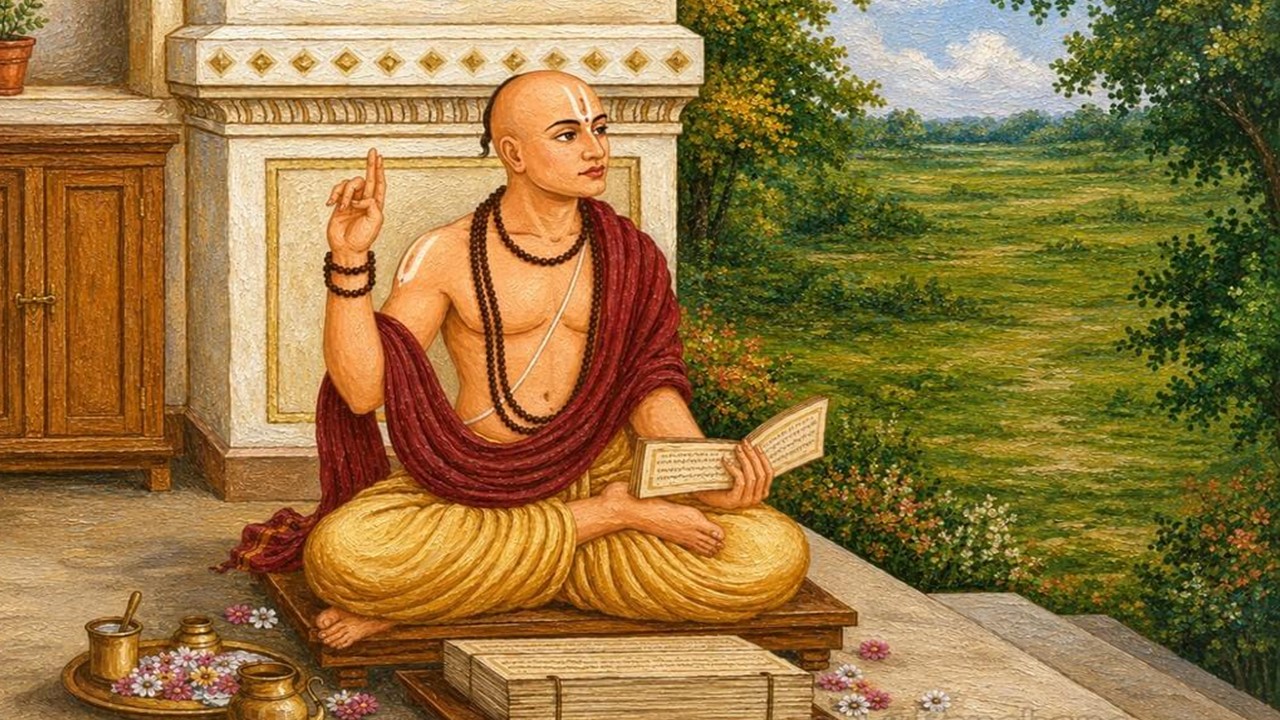
The Young Saint Who Revealed Divine Power
The traditions of Pajaka show that young Vasudeva was no ordinary child. In one well-known account, when his father, Madhyageha Bhatta, fell into debt and a moneylender demanded repayment, hence small Vasudeva offered tamarind seeds as payment. Moved by the boy’s presence, the moneylender accepted the seeds with faith. Tradition says they miraculously became valuable coins or brought wealth equal to the debt, revealing Vasudeva as a divine incarnation with extraordinary powers.
Another cherished tradition recalls how Vasudeva caused a dry stick to sprout and blossom. According to local belief, this miracle was performed to convince his father of his divine purpose and future mission to establish an authorised philosophical system rooted in Vedic truth.
Among the lesser known yet fascinating stories of Pajaka is the account of a demon Manimantha who had assumed the form of a serpent. The evil being sought to cause harm, but the young Vasudeva effortlessly subdued and destroyed it. Devotees consider this episode another manifestation of the strength and courage that had earlier characterized his incarnations as Hanuman and Bhima. The site associated with this miracle is traditionally known as the Manimantha Gopura. Just as the young saint defeated a physical demon, the future Madhvacharya would later challenge intellectual and spiritual misconceptions through his teachings, restoring clarity to the interpretation of Vedic scriptures.
There are two massive stone slabs at Pajaka which are still worshipped today. Tradition says the young Vasudeva used these heavy stones as lids for vessels of milk and curd, lifting with ease what ordinary adults struggled even to move. For pilgrims, the stones stand as a reminder of the extraordinary strength attributed to him as an incarnation of Vayu.
Equally important is the sacred Aksharabhyasa stone. Tradition says that it was here that young Vasudeva began his formal education. Even now, families bring their children to Pajaka to perform Aksharabhyasa, believing that the blessings of the great acharya will inspire wisdom, learning, and devotion.
Perhaps the most famous miracle associated with Pajaka is the story of Vasudeva’s leap from Kunjarugiri Hill. One day, while he was on the hill, he heard his mother calling him from home. Instead of descending normally, he is said to have leapt from the hill in a single bound. The rock on which he landed is believed to bear the imprint of his feet even today. These sacred footprints are among the most revered attractions in Pajaka. Recognizing the sanctity of the site, Sri Vadiraja Tirtha later installed a deity of Madhvacharya near the footprints, transforming the spot into a center of worship.
The story of Vasudeva Theertha beautifully reveals the acharya’s compassion toward his mother. The four sacred theerthas surrounding Kunjarugiri were considered highly meritorious for ritual bathing. However, Madhvacharya’s mother was unable to visit all of them. Moved by her difficulty, the young Vasudeva created a pond near their home and declared that bathing there would grant the merit of bathing in all four sacred theerthas. This sacred pond, known as Vasudeva Theertha, remains one of the most revered sites in the complex.
Danda Theertha, a sacred pond about 10 km from Udupi on the Udupi–Mangalore Highway, is traditionally linked to Acharya’s early life as Vasudeva. Before accepting sannyasa, he is believed to have studied the Vedas here under Totantillaya. Tradition says the pond had once dried up completely, so Vasudeva struck the south-western corner with his Danda and formed a small Kundike. Water then began to flow abundantly, filling the pond and overflowing into nearby fields, supporting cultivation.
Architecture and Structures
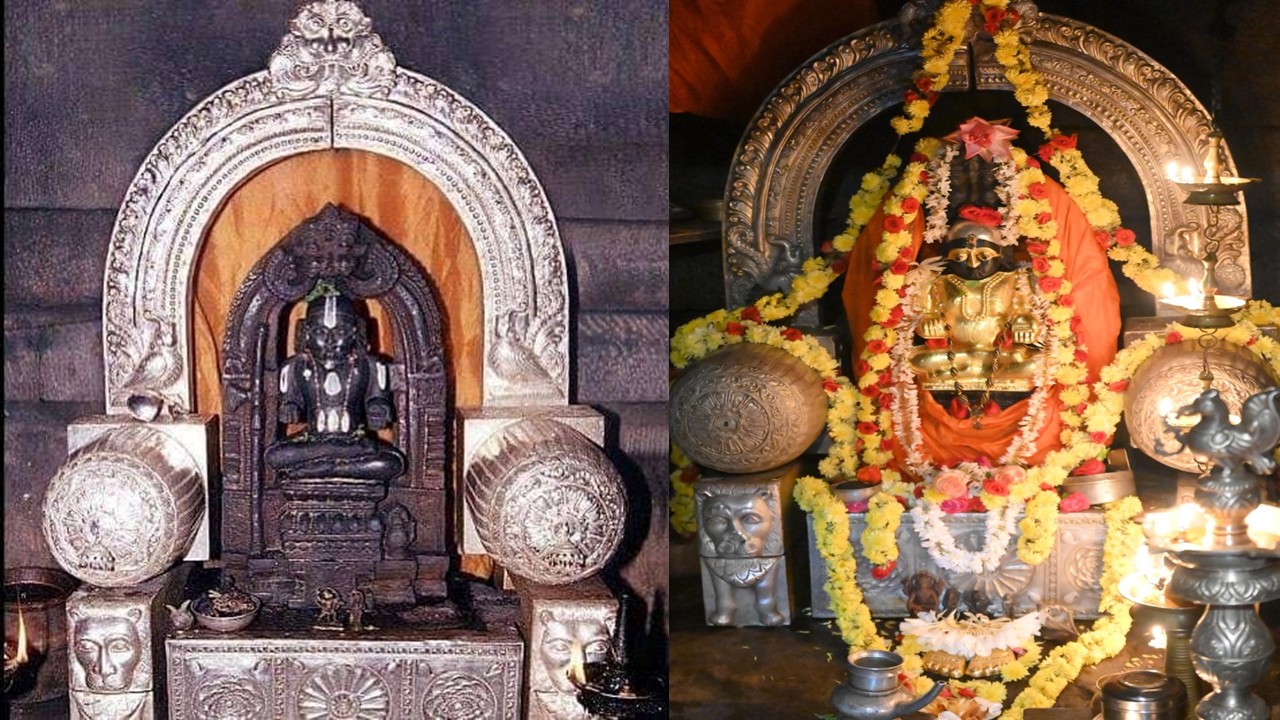
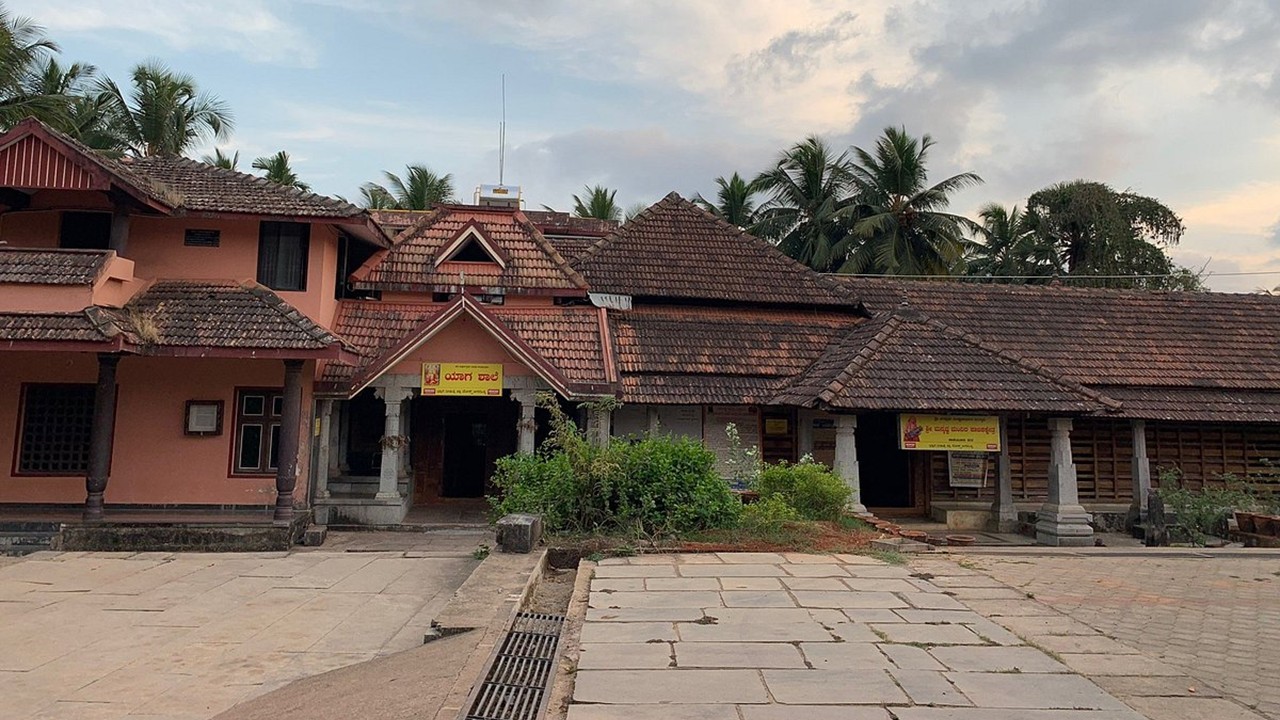
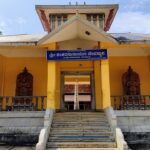
The heart of Pajaka Kshetra is the ancestral residence of Madhvacharya, known as Moodu Matha. Adjacent to it stands the ancient Sri Anantha Padmanabha Temple, worshipped by Madhvacharya’s forefathers long before his birth. The structures reflect traditional coastal Karnataka architecture, featuring sloping tiled roofs, wooden beams, stone foundations, and open courtyards suited to the heavy monsoon climate of the region. In the vicinity are also shrines dedicated to Sri Krishna, Sri Parashurama, and Mata Durga on nearby Kunjarugiri Hill, creating a sacred network of pilgrimage sites surrounding Pajaka. The temple dedicated to Madhvacharya enshrines a deity installed by Sri Vadiraja Tirtha.
A remarkable feature of Pajaka is the presence of four sacred theerthas encircling the village. Parashu Theertha, located to the east near a Krishna shrine, is associated with the axe of Sri Parashurama. Dhanush Theertha lies to the south and is linked to the divine bow, known for its perennial waters and scenic surroundings. Gada Theertha, situated to the west near a rare Parashurama temple, remains unusually cool even during intense summer heat. Bana Theertha, found near Kunjarugiri on the northern side, is associated with the divine arrow and is revered by pilgrims seeking purification. Together, these four theerthas form a sacred mandala around Pajaka, and tradition holds that bathing in them washes away accumulated sins and grants divine blessings.
Festivals
Major celebrations include Madhva Navami, Madhvacharya Jayanti, and festivals connected with the broader Udupi tradition. During these occasions, the village comes alive with Vedic chanting, philosophical discourses, devotional singing, special pujas, and pilgrim gatherings from across India.
A distinctive observance at Pajaka is the ceremonial recitation of Sumadhva Vijaya, the sacred biography composed by Narayana Panditacharya, which narrates the divine birth, miracles, debates, travels, and spiritual accomplishments of Madhvacharya. Since Pajaka is regarded as the spiritual birthplace of the Tattvavada tradition, commemorative celebrations of prominent Madhva saints such as Jayatirtha, Vadiraja Tirtha, Vyasa tirtha, and Raghavendra Swami are also observed, with scholars and pontiffs of various Mathas delivering discourses on their works and contributions to Tattvavada philosophy.
During the month of Kartika, the temple complex is illuminated with rows of traditional oil lamps across the shrines, sacred ponds, and pathways. Krishna Janmashtami is also celebrated with enthusiasm because of Pajaka’s close connection with the Udupi Krishna tradition established by Sri Madhvacharya. Although the famous Paryaya festival is held at Udupi Sri Krishna Temple, Pajaka receives many additional pilgrims during this period, as devotees often combine their Udupi pilgrimage with a visit to the birthplace of the acharya who established the Udupi Krishna Mata.
Darshan Timings of the Temple
The temple is open on all the days of the year between 6:00 AM to 8:00 PM.
Nearby Places to Visit
Kunjarugiri Durga Temple: An ancient hilltop shrine dedicated to Durga Devi, closely associated with the childhood pastimes of Sri Madhvacharya.
Udupi Sri Krishna Matha: Founded by Sri Madhvacharya, renowned for its unique darshana through Navagraha Kindi.
Parashurama Temple, Kunjarugiri: A rare shrine dedicated to Parashurama, situated near Gada Theertha.
Vadabhandeshwara Temple: A historic seaside temple dedicated to Balarama. The shrine is traditionally linked with the Udupi Krishna deity.
How to Reach Pajaka Kshetra Temple?
The easiest way to plan your visit is through Tirtha Yatra’s Udupi Yatra package, which takes care of all the arrangements so that devotees can focus solely on the spiritual experience.

By Road: Pajaka is about 12-15 km from Udupi, well connected with National Highway 66. You can easily hire an autorickshaw or a private taxi from Udupi city. Local buses also run frequently.
By Rail: The nearest major railway station is Udupi Railway Station. From there, hire a taxi or take a bus to Udupi and then proceed to Pajaka.
By Air: The nearest airport is Mangalore International Airport, located about 60 km from Udupi. From the airport, pilgrims can hire a taxi or take a bus to Udupi and then proceed to Pajaka Kshetra.
0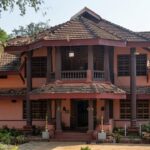

Leave a Reply