

Among the many traditional vegetables of India, Mattu Gulla occupies a unique place where agriculture, spirituality, cuisine, and history come together. Grown primarily in the coastal village of Mattu (Matti) near Udupi in Karnataka, this distinctive green brinjal has earned a reputation far beyond its place of origin. It is not merely a vegetable, but a cultural symbol deeply associated with Sri Vadiraja Tirtha, the Udupi Sri Krishna Temple, and centuries-old traditions that continue to this day. The vegetable received a Geographical Indication (GI) tag in 2011, recognizing its unique characteristics and heritage.
According to Puranic tradition, any breed of brinjal vegetable is considered nishiddha (forbidden) in many Vaishnava temple offerings. Mattu Gulla, however, is regarded as auspicious because its origin is associated with Sri Hayagriva and Sri Vadiraja Tirtha.

Origin: Sri Vadiraja Tirtha’s Devotion
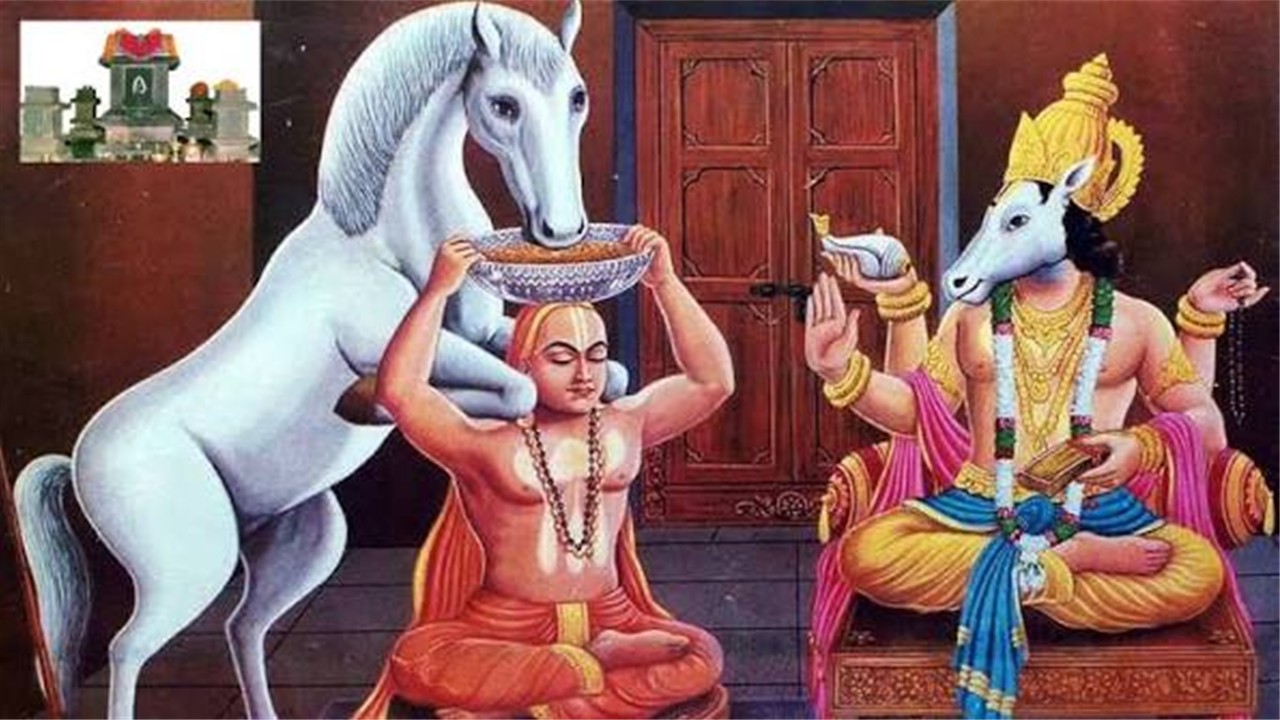
The most celebrated story of Mattu Gulla is linked to Sri Vadiraja Tirtha (1480-1600), the renowned Tattvavada saint, philosopher, and devotee of Sri Krishna. According to local tradition, Vadiraja used to offer a sweet preparation called Hayagriva Maddi, made from Bengal gram, jaggery, ghee, and coconut, to Sri Hayagriva deity every day. His devotion was so profound that the deity is believed to had personally accepting the offering from atop the saint’s head, resting on his shoulders and leaving a few remnants for him.
One day, jealous of Vadiraja’s devotion and renown, some individuals poisoned the Hayagriva Maddi. When he presented the Naivedya, Sri Hayagriva did not appear in his horse form to accept it. After Vadiraja prayed with deep devotion again, however, the deity appeared and consumed the entire poisoned offering, leaving no remnants and thereby protecting the saint. The poison turned the divine form of Sri Hayagriva blue.
Deeply distressed, Vadiraja prayed for a remedy. That night, Sri Hayagriva appeared in a dream, gave him brinjal seeds, and instructed him to plant them and offer the harvest to the deity. The brinjals were cultivated in Mattu village, then cooked and offered for forty-eight days, after which the effects of the poison disappeared. This miraculous event is regarded as the origin of Mattu Gulla. Even today, Mattu farmers offer the first harvest to Sri Krishna of Udupi before selling it in the market.
Connection with Chamundaraya
Another fascinating history connects the vegetable to Chamundaraya, the famous minister of the Western Ganga dynasty who commissioned the monumental statue of Bahubali at Shravanabelagola in 981 CE. During the first Mahamastakabhisheka ceremony, Chamundaraya attempted to pour large quantities of milk over the statue. However, according to the records, the milk would not flow below the navel despite repeated efforts.
At that moment, a devout elderly woman named Gullakayajji appeared, carrying a small amount of milk in a hollowed pale brinjal. When she humbly offered it, the milk flowed over the entire statue and formed a white pond below, demonstrating that sincere devotion surpasses wealth and power. Chamundaraya then realised that his pride in creating the magnificent statue had obstructed the abhisheka. Some traditions identify the woman as Yakshi Padmawati, a spirit or guardian deity, or the celestial nymph Kushmandini, and a statue of her holding a Gulla stands opposite the complex’s main entrance. Local historians also link her pale brinjal to an ancestral form of Mattu Gulla, adding to the vegetable’s sacred, unique and historical significance.
Characteristics
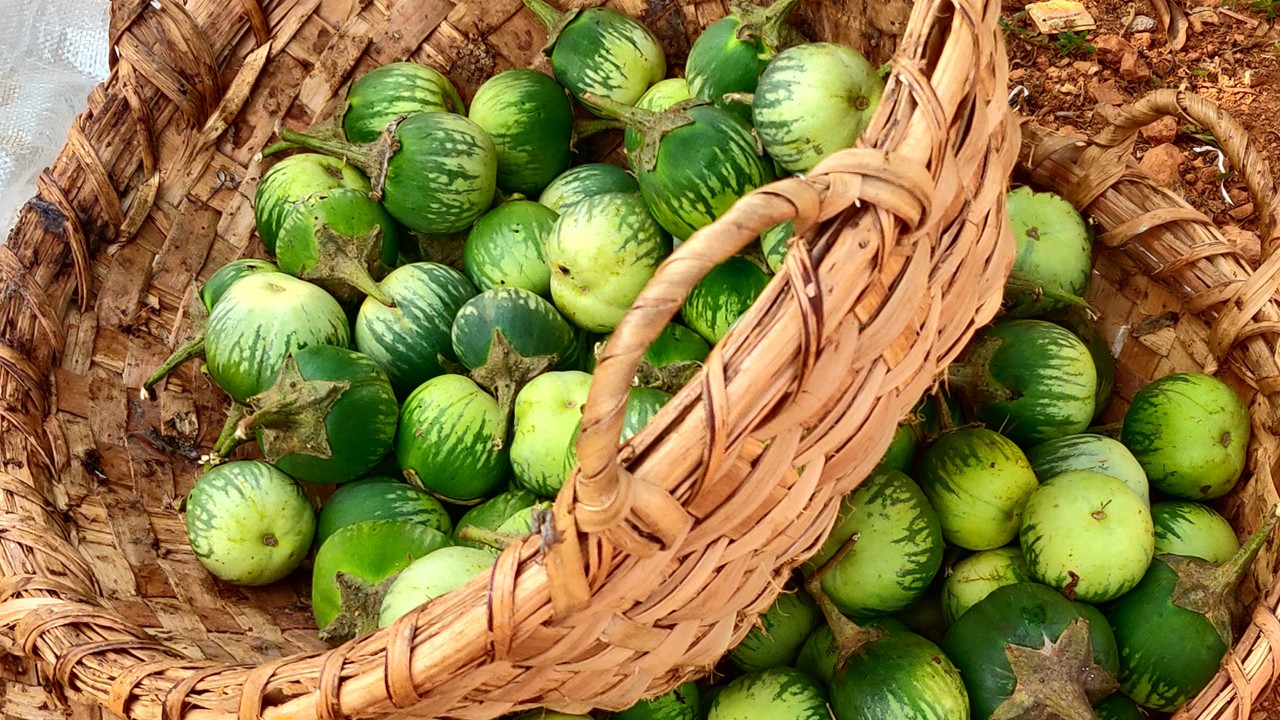
Mattu Gulla differs significantly from ordinary brinjals. It is generally round or slightly oval, which is reflected in the Tulu word “Gulla,” meaning round. The vegetable has a light green colour with pale green or whitish stripes, a thin skin, and a glossy appearance. Unlike many commercial varieties, it contains relatively few seeds and a thick, fleshy pulp. The stalk often bears small thorns, making it easy to identify.
The vegetable is cultivated mainly in the coastal belt between the Swarna and Udyavara rivers, where the unique soil conditions contribute to its characteristic flavour. Farmers traditionally enrich the fields with organic inputs, including cow dung-based manure, which is believed to enhance its quality and taste. One of the reasons Mattu Gulla is highly prized is its distinctive taste. Unlike many bitter or watery brinjals, it has a mild sweetness, low moisture content, tender flesh, and delicate flavour.
Local food experts often describe its flavour as rich and earthy, with a pleasant balance between sweetness and the subtle astringency characteristic of traditional brinjals. These qualities make it ideal for temple cuisine, where the use of onion and garlic is generally avoided and the natural flavour of vegetables is valued.
Nutritional Value
Like other brinjals, Mattu Gulla is a nutritious vegetable that is low in calories and rich in dietary fibre. It contains vitamins such as Vitamin C, Vitamin K, and certain B-complex vitamins, along with minerals including potassium and manganese. The vegetable also contains antioxidants, especially phenolic compounds, which help combat oxidative stress in the body. Its high fibre content supports digestion and promotes gut health. Because of its low-calorie density and nutrient-rich profile, Mattu Gulla is considered a healthy addition to traditional vegetarian diets in the coastal regions of Karnataka.
Mattu Gulla in Udupi Temple Offerings
The sacred association of the vegetable ensures a special role in the rituals of Sri Krishna Matha, Udupi. The first harvest is traditionally offered to Sri Krishna as part of the temple’s Naivedya. This practice has been followed for centuries and continues as an expression of gratitude and devotion. Within temple cuisine, Mattu Gulla is preferred because of its delicate flavour and purity. It is incorporated into various traditional preparations that are offered to the deity and later distributed as Prasadam.
Over the centuries, Udupi cooks have developed many dishes using Mattu Gulla. The best known is Mattu Gulla Sambar, in which the brinjal is cooked with lentils and a freshly ground spice blend to produce a fragrant, flavourful dish. Gulla Gojju is prepared by roasting and mashing the brinjal, then combining it with green chillies, tamarind, and coconut for a smoky, tangy accompaniment.
Other popular preparations include Gulla Bajji, a simple dish of chopped brinjal cooked with mild spices and coconut, and Puddi Sagle, in which the brinjal is stuffed with a roasted spice-and-coconut mixture and slowly cooked until tender. Gulla Palya is a dry curry seasoned with coconut, mustard, curry leaves, and spices.
Mattu Gulla also appears in Rasaayana, a traditional sweet-and-sour preparation served in some households and festive meals. In temple-style Huli, it is combined with lentils, tamarind, jaggery, and aromatic spices, while Mattu Gulla Saaru is a light, flavourful broth commonly served with rice during religious gatherings. Together, these dishes highlight the vegetable’s versatility and enduring importance in coastal Karnataka cuisine.

Unique Features of Mattu Gulla
A lesser-known fact is that Mattu Gulla was once popularly referred to as “Vadiraja Gulla.” Since the seeds of this vegetable were gifted by the saint-philosopher Sri Vadiraja Tirtha to the people of Mattu after Sri Hayagriva appeared to him in a dream. Because of this association, the vegetable came to be regarded as a divine gift and a blessing upon the village.
The history of Mattu Gulla stretches back nearly five centuries. In the Tulu language spoken across coastal Karnataka, the word “Gulla” means round. The name accurately describes the vegetable’s distinctive spherical shape, which immediately sets it apart from many other elongated or oval brinjals grown elsewhere in India.
Many people do not realize that authentic Mattu Gulla plants can be identified by their stalks. Unlike common commercial brinjals, the stalk often bears small thorns. Farmers and traditional vegetable vendors sometimes use this feature to distinguish genuine Mattu Gulla from imitations.
Traditional literature about Udupi cuisine mentions an unusual property attributed to the vegetable. Immersing this vegetable in water for some time causes the water to darken while reducing the vegetable’s astringency and enhancing its flavour. This curious characteristic has often been discussed in relation to the Saint Vadiraja’s pastime and the symbolic idea of removing poison. Also, many experienced Udupi cooks often refer to Mattu Gulla as the “King of brinjals” because of its exceptional culinary qualities.








Leave a Reply