
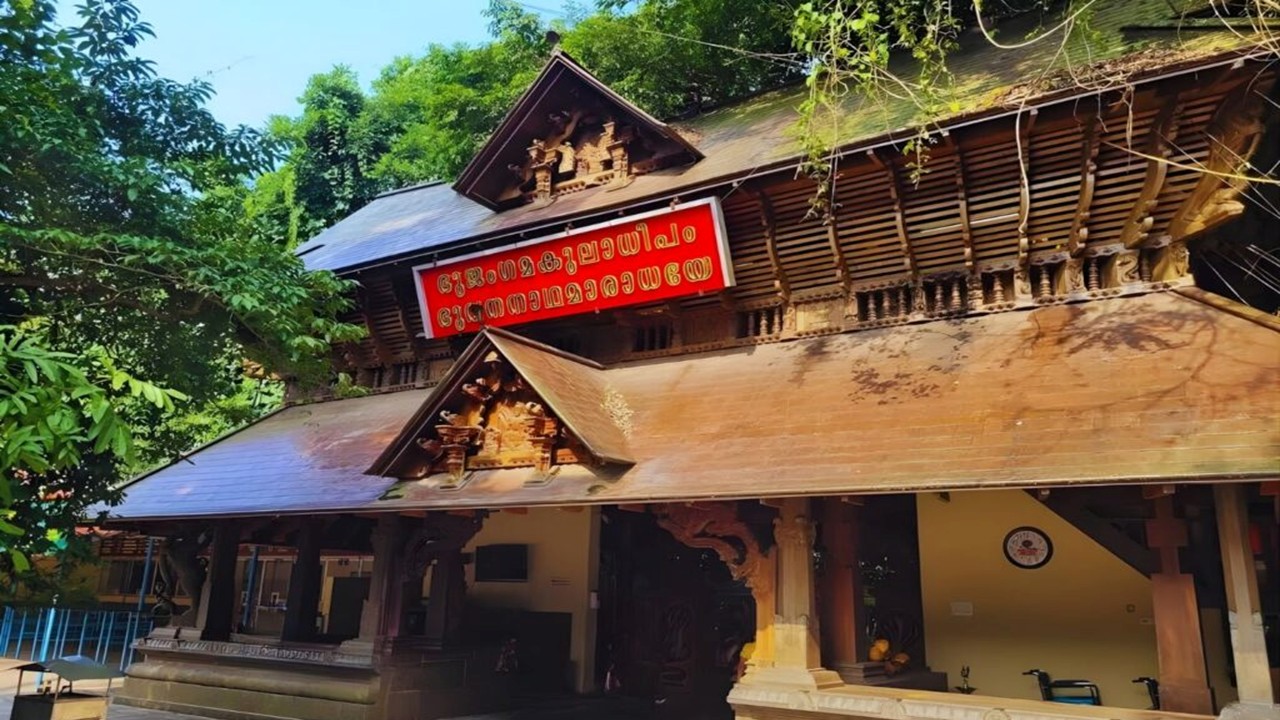
Surrounded by the lush greenery of Kerala’s Alappuzha district, Mannarasala Sri Nagaraja Temple is one of India’s largest and most famous serpent temples. Located near Haripad, the temple is dedicated to Sri Nagaraja, the Divine Serpent King. It is known for its sacred grove, thousands of serpent deities, and ancient rituals that attract devotees from all over India.
Unlike most Hindu temples where the chief priest is a man, Mannarasala follows a unique tradition in which the Main rituals are performed by the senior woman of the temple family, known as Sri Valiyamma. This rare custom, together with the temple’s deep-rooted association with serpent worship, makes Mannarasala one of Kerala’s most distinctive pilgrimage destinations.
History of Mannarasala Sri Nagaraja Temple
The exact date when Mannarasala Sri Nagaraja Temple was established is not known. However, temple records and traditional accounts indicate that it has existed for many centuries and is one of Kerala’s oldest centres of serpent worship. Historical references mention that the temple was established after the consecration of the famous Sri Nagaraja Temple at Vettikkottu in present-day Mavelikkara Taluk. Over time, Mannarasala grew into an important spiritual centre where the worship of serpent deities became deeply rooted in local culture.
Unlike many temples that developed around royal sponsorship, Mannarasala evolved through the devotion of a Brahmin family whose traditions have been carefully preserved across generations. The temple continues to be associated with the historic Mannarasala Illam, whose members have played an important role in maintaining its rituals and customs for centuries.
Today, the temple is administered by the Mannarasala Kshetra Trust, while the traditional customs of worship continue under the guidance of the temple family.
The Parasurama Tradition and the Origin of Sacred Serpent Groves
According to Kerala’s traditional belief, the origin of serpent worship is closely associated with Lord Parasurama, regarded as the legendary creator of Kerala.
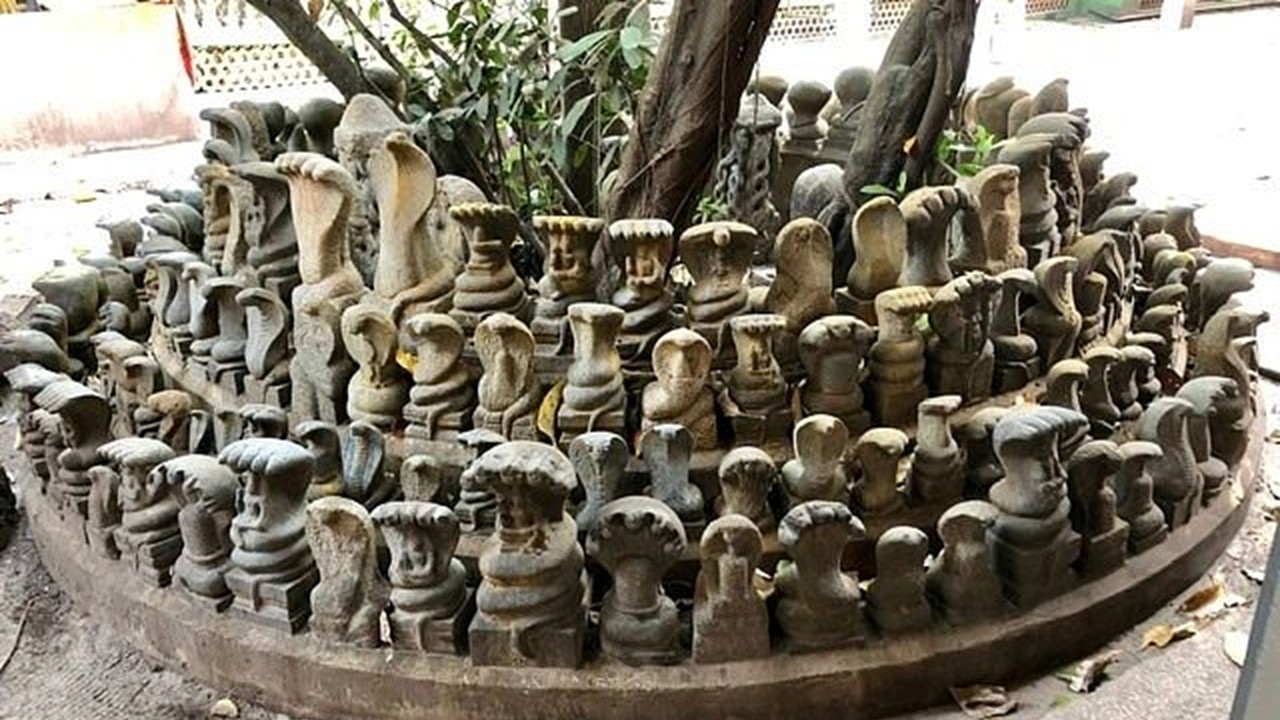
Temple tradition states that after reclaiming land from the sea, Parasurama invited Brahmin families to settle in the newly formed region. However, the land was already believed to be inhabited by the Nagas, the divine serpent beings. To restore harmony between the settlers and the serpent deities, Parasurama instructed every household to reserve a protected corner of its property as a sacred grove for the Nagas.
These protected spaces gradually became known as Sarpakavu. Trees were never cut, the soil was left undisturbed, and serpent deities were installed beneath the shade of ancient trees. Regular offerings and prayers were performed to honour the serpent deities and seek blessings for the family’s prosperity.
The Sacred Story of Vasudeva and Sridevi
According to temple tradition, Vasudeva and Sridevi remained childless for many years. They worshipped the serpent deities with complete devotion, praying for the blessing of a child.
One day, a fierce forest fire spread through the sacred grove where numerous serpents lived. The flames injured many snakes, leaving them unable to escape. Instead of fleeing, the couple rushed into the grove and cared for the wounded serpents with great compassion. They poured water over the burning ground, cooled the scorched earth, prepared a soothing mixture of ghee and honey for the injured snakes, applied sandalwood paste to their burns, and continuously prayed to the divine serpent kings, Ananta and Vasuki, seeking their protection.
Moved by their compassion, Sri Ananta appeared before the couple and blessed them, promising to be born as their son. Sridevi gave birth to two children on the auspicious Ayilyam star in the Malayalam month of Kumbham. One child was born as a human boy, while the other appeared as a magnificent five-hooded serpent, believed to be an incarnation of Lord Ananta.
Rather than leaving the family, the divine serpent chose to remain within the ancestral home. The sacred Nilavara, an underground chamber inside the Mannarasala Illam, became His permanent abode. Because of this divine presence, the members of the family lovingly refer to the Serpent King as Appooppan or Muttassan, affectionate Malayalam words used for a revered ancestor or great-grandfather.
The temple’s name is also linked to this tradition. while extinguishing the forest fire, the couple cooled the burning soil with water and medicinal preparations Temple tradition explains that the Malayalam words burning mannu (soil) eventually became ari (cooled), and the place came to be known as Mannu-Ari-Sala, which over time evolved into Mannarasala.
Why Is the Senior Priest a Woman?.
Temple tradition explains that the divine Serpent King Himself instructed that the worship should always be conducted by the senior woman of the family. Since then, this unique practice has continued uninterrupted for generations.
The position of Sri Valiyamma is not simply hereditary. it carries significant spiritual responsibility. Before taking the role the chosen woman observes a strict period of discipline and religious vows. Once she becomes Valiyamma, she dedicates her life to the service of the Serpent King and performs the temple’s most sacred rituals, especially those connected with the Nilavara, where only she is permitted to enter.
The Sacred & Secret Nilavara
One of the most mysterious and spiritually significant places associated with Mannarasala Temple is the Nilavara, an underground chamber located within the historic Mannarasala Illam.
Temple tradition states that after taking birth as the divine five-hooded serpent, Sri Ananta chose this sacred chamber as His permanent abode. Because of this belief, the Nilavara is regarded as one of the holiest places connected with the temple.
Only Sri Valiyamma is permitted to enter this sacred chamber to perform special rituals. Even other members of the temple family are not permitted to enter, this shows the exceptional sanctity attached to the Nilavara.
The Main Deities of Mannarasala Temple
The Main deity of the temple is Sri Nagaraja, the divine Serpent King, who is worshipped together with Sarpa Yakshi.
Apart from the main shrine, the temple complex also includes shrines dedicated to Naga Chamundi, Naga Yakshi Amma, Bhadrakali, Dharma Sastha (Lord Ayyappa), and the sacred Appooppan Kavu, associated with the divine serpent ancestor according to temple tradition.
Sacred Rituals and Offerings at Mannarasala Temple
Uruli Kamazhthal
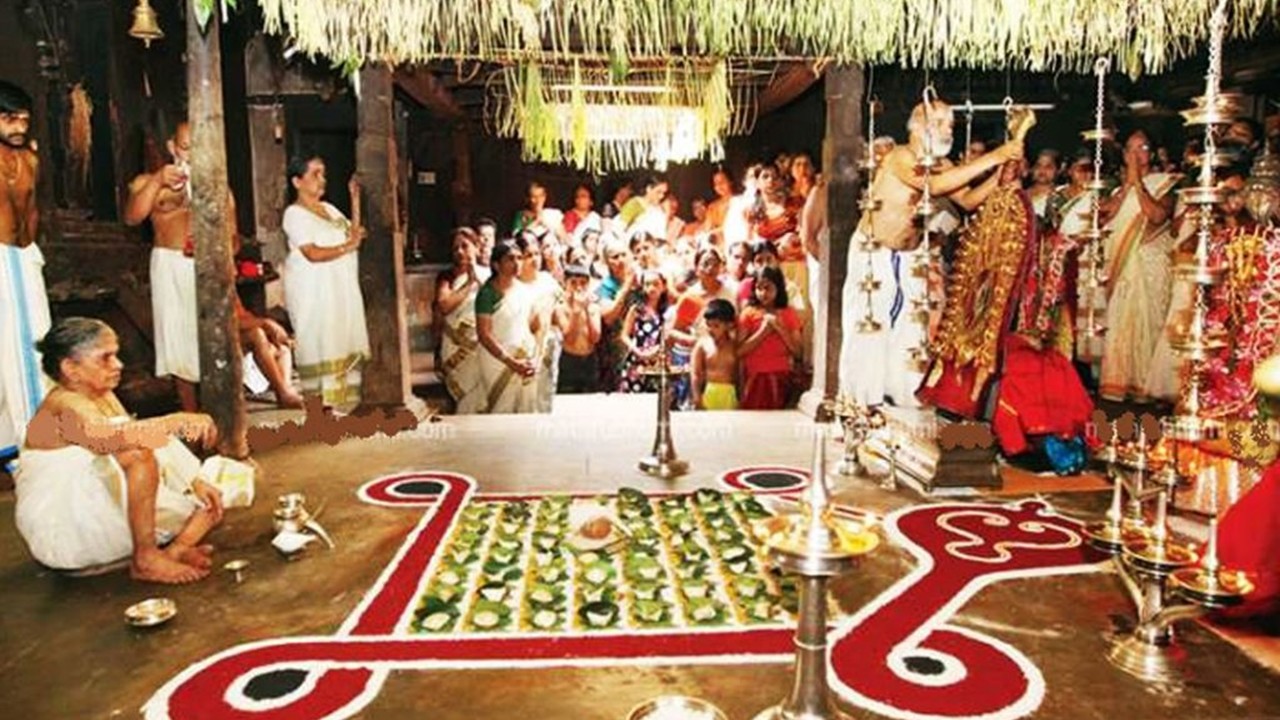
This is one of the temple’s most well-known rituals. Couples praying for children offer a traditional bronze vessel called an Uruli. According to temple custom, Sri Valiyamma places the vessel inside the sacred Nilavara. When the couple is later blessed with a child and returns after the child reaches six months of age, the vessel is ceremonially turned upright, symbolizing the fulfillment of their prayer.
Noorum Palum
Noorum Palum is among the most important offerings made to the serpent deities. It is traditionally prepared using rice flour, turmeric (or saffron powder), cow’s milk, tender coconut water and ghee. Devotees offer this sacred preparation while praying for peace, prosperity, and relief from difficulties associated with serpent-related beliefs.
Sarpa Bali
It is performed with deep devotion by those seeking divine blessings, family well-being, and spiritual harmony. This is not sacrificing a snake but a sacrifice or offering for the snake Deities.
Pulluvan Pattu
Traditional devotional songs sung by the Pulluvan community in praise of the serpent deities, also forms an important part of the temple’s religious heritage during special occasions.
Architecture and Temple Premises
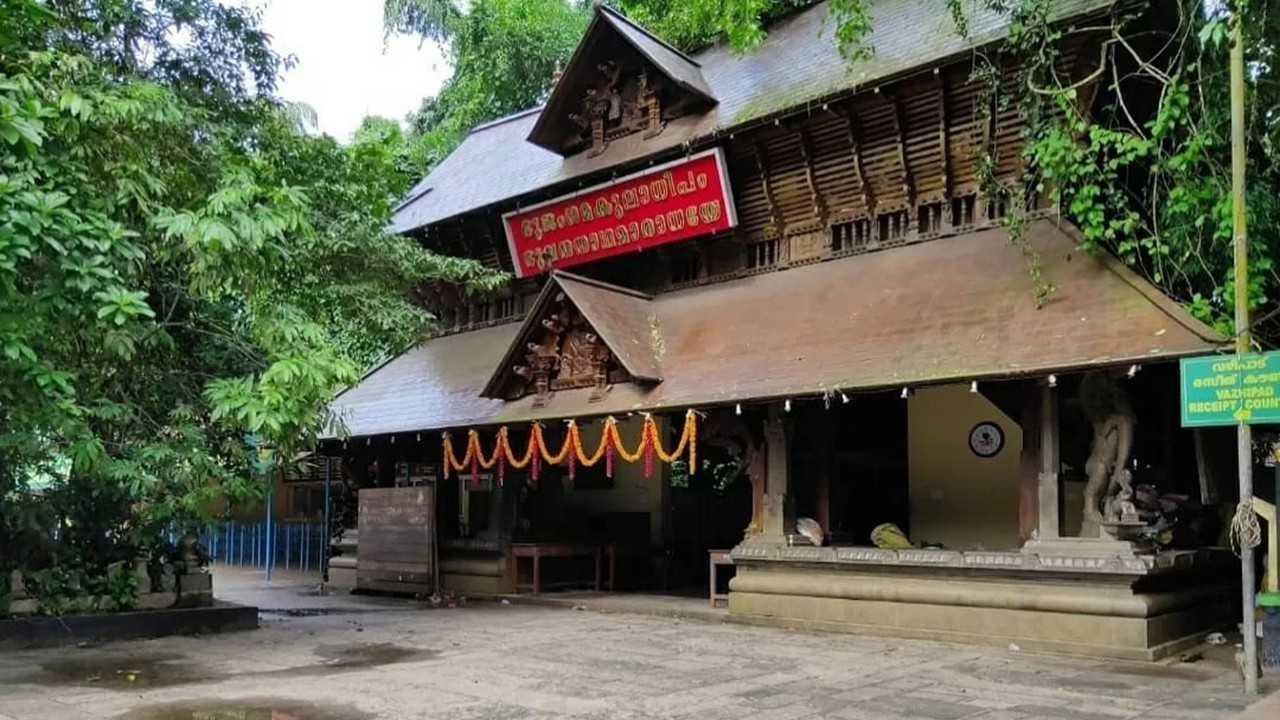
Mannarasala Sri Nagaraja Temple reflects the elegance of traditional Kerala architecture, where simplicity and nature blend seamlessly. Instead of towering gateways or massive stone structures, the temple is surrounded by a serene sacred grove that creates a peaceful atmosphere for worship.
Spread across nearly 15 acres, the temple complex includes the main shrines, sacred groves, temple ponds, pathways, the historic Mannarasala Illam, and the revered Appooppan Kavu. The dense greenery surrounding the temple has been carefully preserved for generations, making it both a place of worship and a symbol of Kerala’s ancient tradition of protecting sacred forests.
At the heart of the temple stand two Srikovils (sanctums) of equal importance. The southern shrine is dedicated to Sri Nagaraja, while the northern shrine houses Sri Sarpa Yakshi. Built in the traditional Kerala style with wooden walls, copper-plated roofs, and granite foundations, the sanctums beautifully represent the region’s architectural heritage.
The sanctums are enclosed within a Chuttambalam, the traditional covered courtyard found in Kerala temples. Around it are smaller shrines, a Deepasthambham (lamp pillar), ritual halls, and pathways leading through the sacred grove.
A short distance from the temple lies Appooppan Kavu, Ancient trees, medicinal plants, and countless serpent deities preserved beneath the forest canopy create a unique spiritual landscape rarely found elsewhere in India.
Beside the temple stands the historic Mannarasala Illam, the ancestral residence of the temple family. Within the Illam is the sacred Nilavara, an underground chamber regarded as one of the holiest places connected with the temple. According to temple tradition it is here that the divine serpent continues his spiritual presence,
Mannarasala Ayilyam – The Grand Festival of the Temple
The most important festival celebrated at Mannarasala is Mannarasala Ayilyam, observed on the Ayilyam star in the Malayalam month of Tulam.
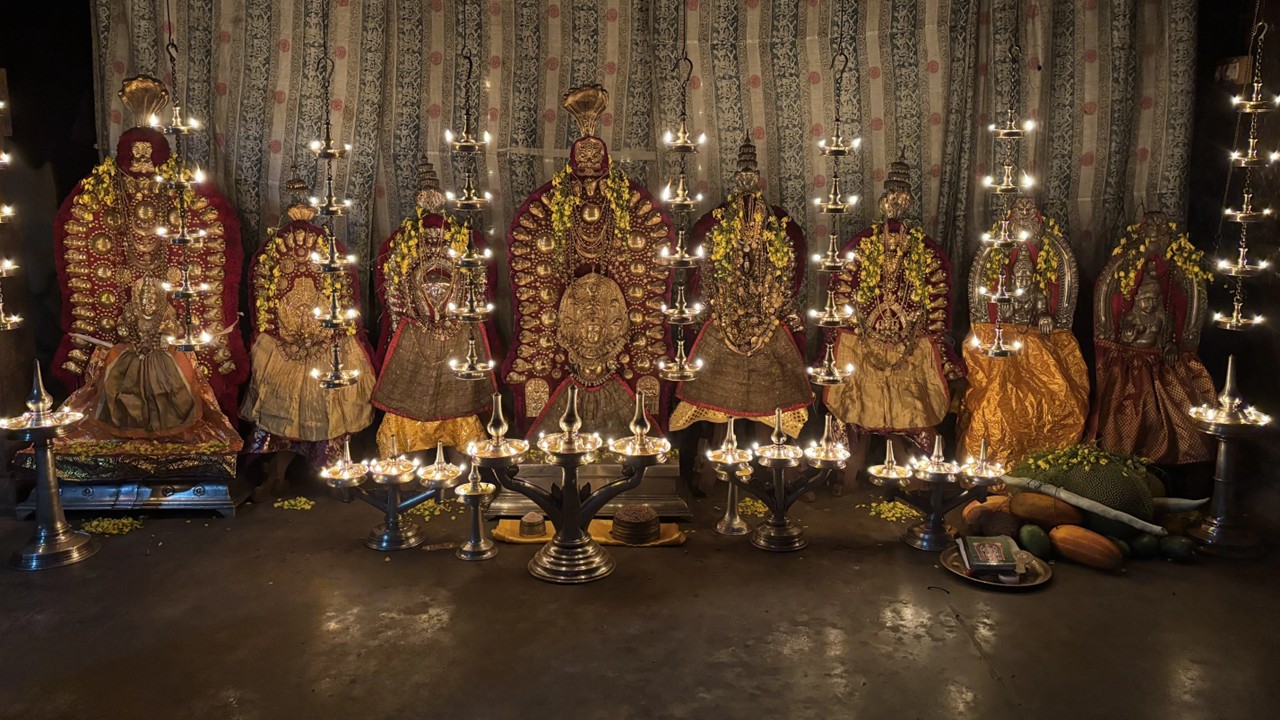
On this auspicious day, the important serpent deities from the sacred grove are ceremonially brought to the Illam. Special offerings of Noorum Palum, Guruthi, and cooked rice are made before the deities. The eldest male member of the temple family traditionally carries the deity of Sri Nagaraja during the procession.
The festival also features the traditional Pulluvan Pattu, devotional songs performed by the Pulluvan community in praise of the serpent deities. Their music forms an integral part of Kerala’s ancient serpent worship tradition.
Kanni Ayilyam (September–October): Observed with special poojas and offerings, this day is traditionally regarded as the birth anniversary of Sri Nagaraja.
Kumbham Ayilyam (February–March): Celebrated on the Ayilyam nakshatram during the Malayalam month of Kumbham, this occasion is marked by special rituals, prayers, and offerings dedicated to Sri Nagaraja.
Monthly Ayilyam: Ayilyam nakshatram that occurs every malayalam month is considered auspicious, and many devotees visit the temple on these days to perform serpent-related poojas and offer prayers.
Temple Timings
Morning: 5:00 AM – 11:00 AM (Sundays up to 1:00 PM)
Evening: 5:30 PM – 7:30 PM
Timings may change during festivals and special poojas.
Best Time to Visit Mannarasala
Mannarasala Sri Nagaraja Temple can be visited throughout the year. However from november to february offers pleasant weather for sightseeing and darshan. Those wishing to experience the temple’s vibrant spiritual atmosphere may plan their visit during the annual Mannarasala Ayilyam festival.
Nearby Attractions
Ambalapuzha Sri Krishna Temple – This revered Sri Krishna temple is best known for its traditional Pal Payasam prasadam, which has been offered to devotees for generations.
Haripad Subrahmanya Swamy Temple – Popularly known as Dakshina Palani, dedicated to Lord Subrahmanya.
How to Reach Mannarasala
Plan your pilgrimage to Mannarasala Sri Nagaraja Temple with Tirtha Yatra and experience one of India’s most sacred serpent shrines. Leave the travel arrangements to us while you immerse yourself in the temple’s peaceful atmosphere, offer prayers to Sri Nagaraja and witness its centuries-old spiritual traditions.
If you wish to visit the temple on your own, here are the way to visit it.
By Air
Cochin International Airport is approximately 120 km from the temple, while Trivandrum International Airport is about 140 km away.
By Train
Haripad Railway Station, located around 2–3 km from the temple, is the nearest railway station
By Road
The temple is situated about 2.5 km from Haripad KSRTC Bus Stand and is easily accessible via National Highway 66 (NH-66). Regular buses and taxis are available from Alappuzha, Kollam, Kochi, and nearby towns.
0
Leave a Reply