
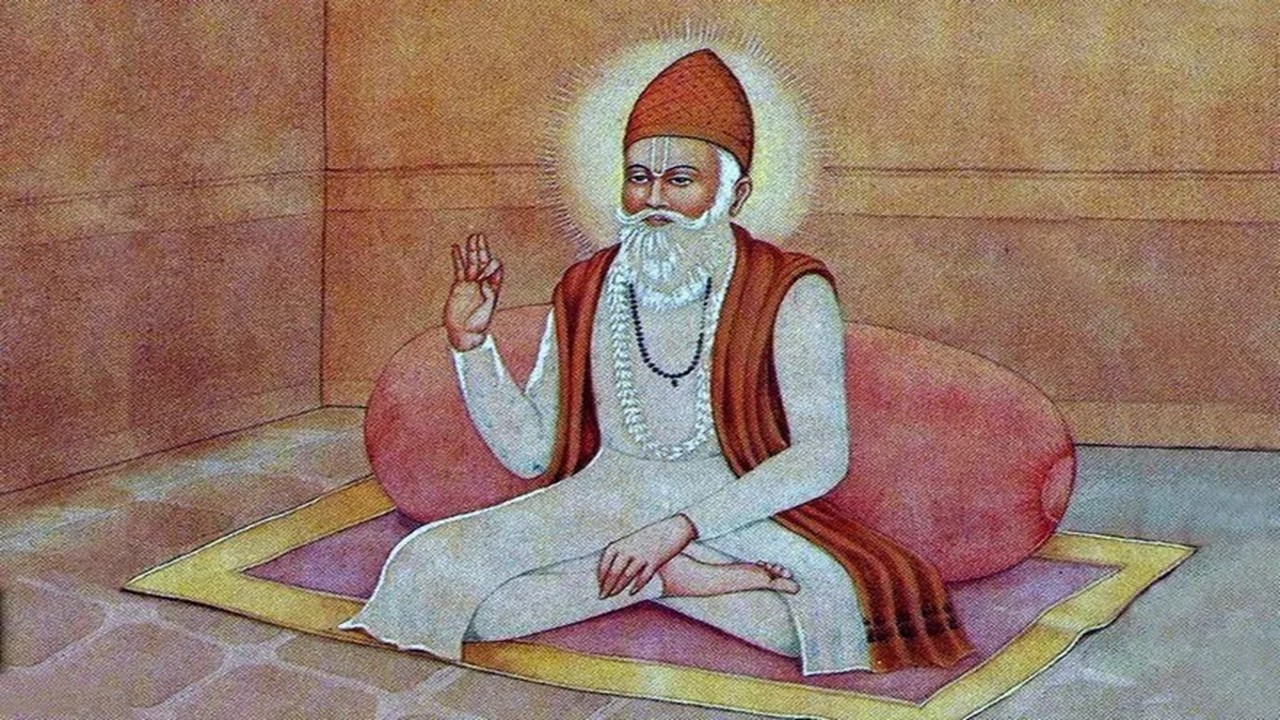
Who Was Sant Kabir Das?
Although Sant Kabir Das was raised in a Muslim weaver family, he was deeply influenced by the teachings of Swami Ramananda, who later became his spiritual Guru. Kabir‘s teachings bridged the gap between different faiths and emphasized that God can be realized through sincere devotion and righteous living.
Sant Kabir Das is known by several names, including Kabir Sahib, Kabir Parameshwar, Sant Kabir, Kavir Dev, and Bhagat Kabir.
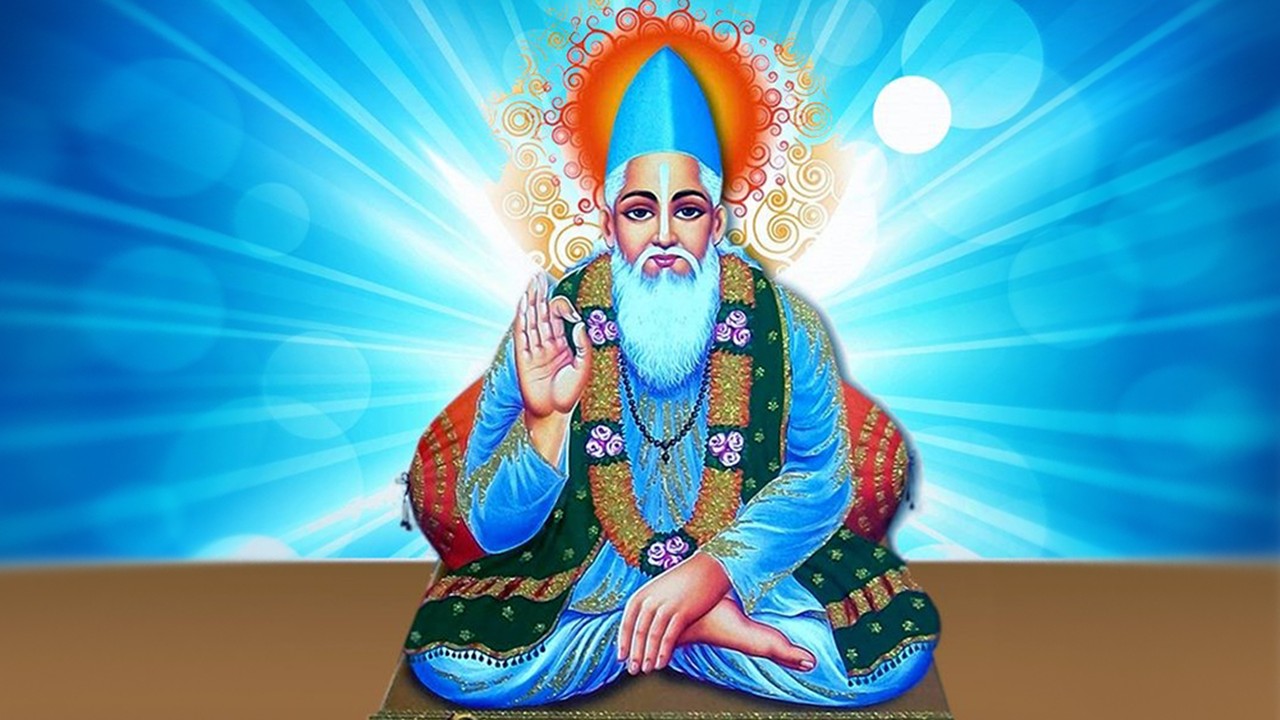
Kabir Das: Early Life, Spiritual Journey, and Legacy (1398–1518 CE)
According to another popular tradition, he was found as an infant on a lotus in Lahartara Lake and was later adopted by a Muslim weaver couple, Niru and Nima, who lovingly raised him as their own child.
Kabir
spent his early years in a humble household and earned his livelihood as a weaver. Despite receiving no formal education, he possessed extraordinary spiritual insight and became one of the most influential figures of the Bhakti Movement.Tradition holds that Kabir became a disciple of Swami Ramananda. Under his guidance, Kabir embarked on a spiritual path that transcended religious boundaries.
Through his teachings, he emphasized that God is one and can be realized through devotion, self-realization, and moral living rather than through religious observance alone.
Through his simple yet powerful Dohas, Kabir spread messages of truth, love, equality, and compassion. He challenged social discrimination, religious intolerance, and superstition while encouraging people to seek spiritual awakening within themselves.
Sant Kabir Das attained Mahasamadhi in 1518 CE at Maghar, Uttar Pradesh. Even centuries later, his wisdom continues to guide millions on the path of spiritual growth and inner peace.
Why Did Kabir Das Die in Maghar?
Kabir
Das strongly opposed this belief and preached that salvation depends solely on one’s devotion, faith, and righteous deeds rather than the place of death. To challenge this belief, he chose to spend his final days in Maghar, where he ultimately attained Mahasamadhi.Today, Maghar remains an important pilgrimage destination closely associated with the life, teachings, and enduring legacy of Kabir Das.
Major Literary Works of Sant Kabir Das
- Shabd (Devotional Hymns)
- Sakhi (Couplets)
- Ramaini
- Kabir Shabdavali
- Amar Mul
- Kabir Dohavali
- Anurag Sagar
Teachings of Kabir Das: Philosophy, Spiritual Wisdom, and Message of Humanity
Kabir
taught that a true human being should live with compassion, kindness, love, and respect for all fellow beings. According to him, humanity stands above distinctions of religion, caste, creed, and gender.He also emphasized self-introspection and inner realization. Looking within oneself and living truthfully is the path to wisdom and spiritual growth.
Another key teaching of Kabir is the importance of seeking guidance from a genuine Guru, whose wisdom can help a seeker attain spiritual liberation.
His teachings remain a timeless treasure, guiding individuals toward truth, wisdom, humanity, devotion, and self-realization.
Miracles Associated with Sant Kabir Das
Restoring the Life of Dead Cow
When a Kazi Ordered to Kill Baby Kabir
Famous Dohas of Sant Kabir Das
जो दिल खोजा आपना, मुझसे बुरा न कोय॥
When I searched my own heart, I found no one wickeder than me.
पल में प्रलय होएगी, बहुरि करेगा कब॥
If the moment is lost, when will you do it?
जो सुख में सुमिरन करे, दुःख काहे को होय॥
“If one were to remember (God) in happiness, why would sorrow ever come?
इडा-पिंगला ताना भरनी, सुखमन तार से बीनी चदरिया॥
What is the warp (vertical threads), and what is the weft (horizontal threads)?
With what thread has this sheet been woven?
बलिहारी गुरु आपने, गोविंद दियो बताय॥
I dedicate myself completely to my Guru, as it is the Guru who showed me the path to realize God.
बिन पानी साबुन बिना, निर्मल करे सुभाय॥
Without soap or water, he cleanses your character.
ढाई आखर प्रेम का, पढ़े सो पंडित होय॥
He who reads just the two-and-a-half letters of love, Becomes truly learned.
औरन को शीतल करे, आपहुं शीतल होय॥
मैं भी भूखा न रहूँ, साधु न भूखा जाय॥
Neither should I remain hungry, nor should any guest (or seeker) go hungry.
A Timeless Legacy




Leave a Reply