
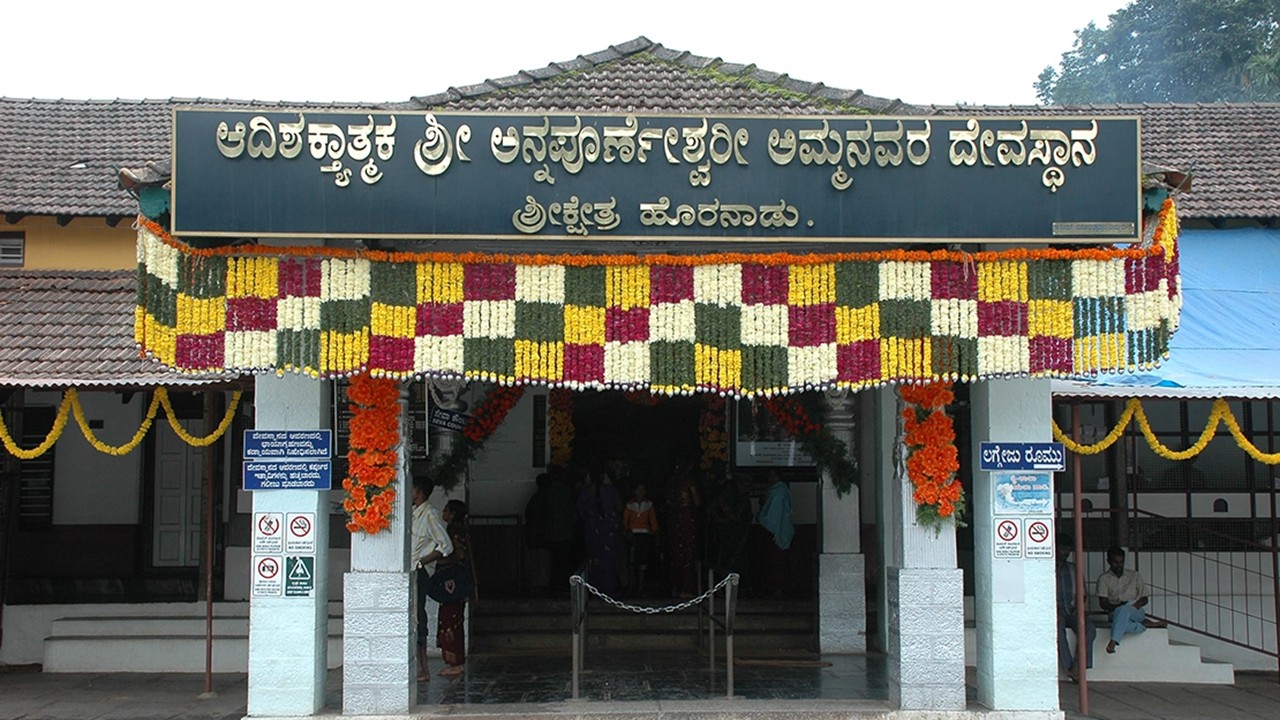
Sri Annapoorneshwari Temple of Horanadu stands as one of Bharath’s most revered pilgrimage destinations. Dedicated to Mata Annapoorneshwari, the manifestation of Mata Parvati as the giver of food and prosperity, the temple attracts lakhs of devotees every year who seek blessings for abundance, well-being, and spiritual fulfilment. The temple is not just a place of worship but also a living symbol of compassion, hospitality, and the timeless tradition of Annadana (offering food to all).
Sthala Purana of Horanadu Sri Annapoorneshwari Temple
The name “Annapoorneshwari” comes from two Samskrita words: Anna, meaning food, and Poorna, meaning complete or abundant. Mata Annapoorneshwari is worshipped as the divine mother who nourishes all living beings and ensures that no devotee goes hungry. In Vedic tradition, she is considered an incarnation of Mata Parvati.
According to popular tradition, Mahadev once declared that the material world, including food, was merely an illusion. To teach humanity the importance of nourishment, Mata Parvati disappeared, causing widespread famine and suffering. Later, she manifested as Annapoorna and distributed food to all, demonstrating that sustenance is an essential aspect of life and spiritual growth.
According to temple tradition, the original consecration (Pratishthapna) of Mata Annapoorneshwari was performed by revered Maharishi Agastya several centuries ago. Maharishi Agastya is one of the most respected sages in Vedic literature and is credited with spreading Vedic culture throughout Bharatha. The association of the temple with Agastya Maharishi elevates its status as an ancient and sacred pilgrimage centre.
The temple has been administered by hereditary trustees known as Dharmakartharus for about 400 years. Despite being located in a remote and forested region of the Western Ghats, regular worship, rituals, and service to pilgrims continued uninterrupted through generations. This continuity demonstrates the temple’s enduring spiritual importance and the dedication of its custodians.
For much of its history, Horanadu remained isolated amidst dense forests and rugged terrain. The temple itself was initially a modest temple with limited infrastructure. Nevertheless, pilgrims continued to visit, and the temple maintained the practice of offering food and shelter to travellers. This perseverance allowed the temple’s traditions to survive even when it was largely unknown outside the local region.
The most distinctive feature of the Horanadu Temple is its centuries-old tradition of Annaprasadam, the free distribution of food to all visitors. Regardless of caste, creed, religion, language, or social background, every devotee is served meals at the temple. Tea, coffee, snacks, and wholesome food are offered throughout the day.
This reflects the very essence of Mata Annapoorneshwari, who symbolises nourishment and motherly care. The temple firmly upholds the belief that no person should leave the temple premises hungry.
History of Horanadu Sri Annapoorneshwari Temple
A turning point in the temple’s history came under Sri D.B. Venkatasubba Jois, the fifth hereditary Dharmakartharu. Recognising the temple’s spiritual importance, he undertook extensive renovation and development works, transforming it from a small rural temple into a prominent pilgrimage destination. His efforts helped preserve the temple’s heritage while making it accessible to a larger number of devotees.
One of the most significant historical events occurred on Akshaya Tritiya in 1973, when the present deity of Mata Annapoorneshwari was ceremonially re-established. This event marked a new era in the temple’s history, attracting devotees from across Karnataka and beyond. The annual celebration of Akshaya Tritiya at Horanadu commemorates this milestone.
Architecture of Horanadu Sri Annapoorneshwari Temple
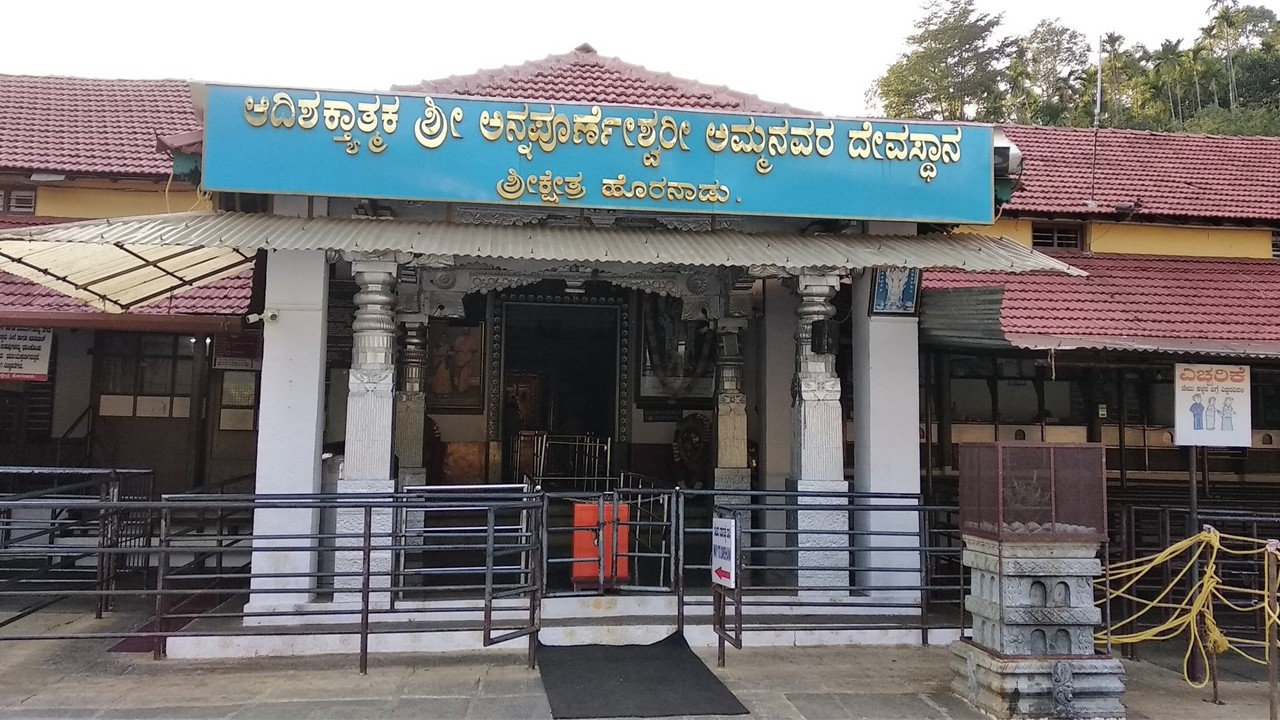
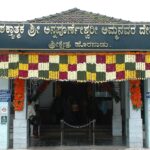
The temple is a harmonious blend of traditional Karnataka temple architecture and modern renovations. The entrance gateway, intricately decorated with sculptures and colourful motifs, which welcomes devotees into a peaceful spiritual environment.
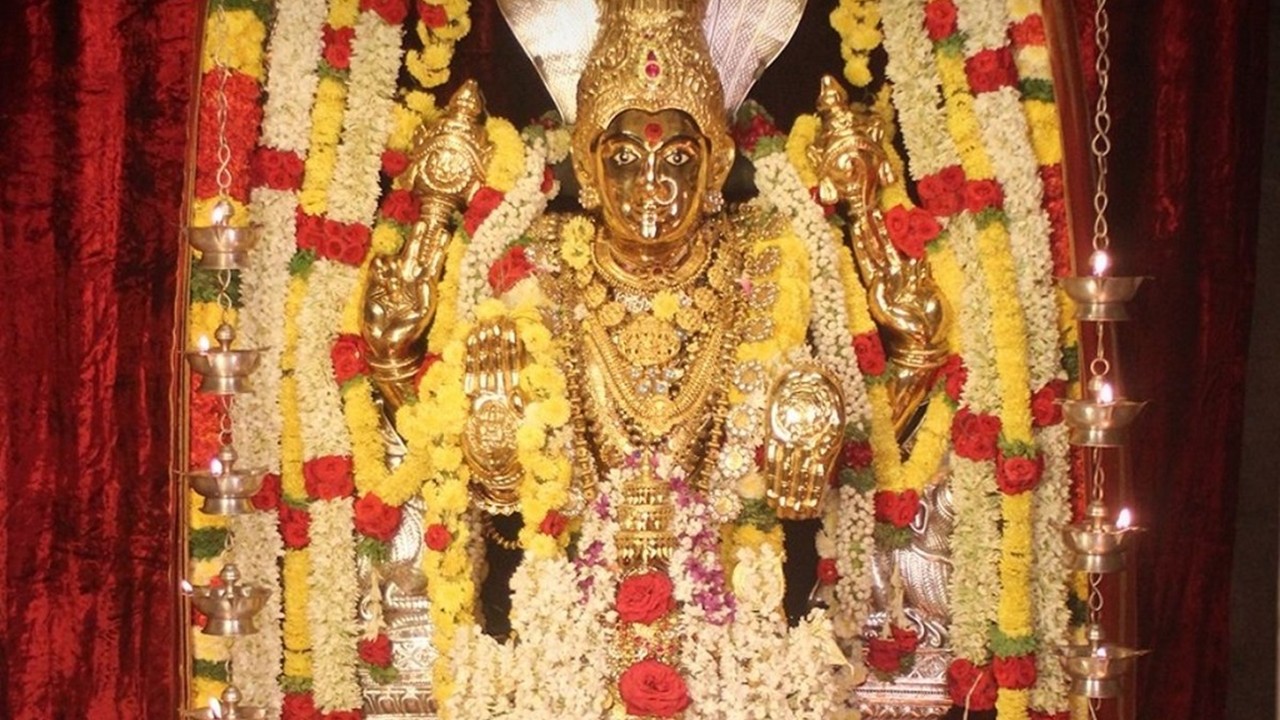
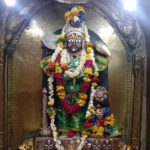
The presiding deity of Sri Annapoorneshwari Devi is made of Krishna Shila (a magnificent black stone). The Mata is depicted standing majestically and holding sacred symbols including the Shankha (conch), Chakra (discus), Sri Chakra, and a representation of Gayatri Devi. She is adorned with beautiful ornaments and vibrant floral decorations, creating a powerful and awe-inspiring vision for devotees.
The Garbha Griha is designed with profound symbolic significance, reflecting traditional Vedic cosmology and spiritual philosophy. The sacred atmosphere within the temple inspires devotion, contemplation, and inner peace.
Festivals
The temple celebrates several Sanatana festivals with great enthusiasm.
Navaratri Mahotsava – A nine-day grand celebration of Mata Shakti with special decorations, poojas, and cultural programs.
Vijayadashami (Dasara) – Marks the victory of divine good over evil and concludes the Navaratri festivities.
Akshaya Tritiya – A highly auspicious day commemorating the re-consecration of the present Annapoorneshwari deity in 1973.
Sriman Maharathotsava (Rathotsava) – The annual chariot festival during which Mata is taken in a grand procession.
Brahma Rathotsava – A ceremonial festival featuring elaborate Vedic rituals and special worship of the deity.
Varamahalakshmi Vrata – Celebrated by devotees seeking prosperity, wealth, and family well-being.
Deepavali – The Festival of Lights celebrated with special poojas and illumination of the temple premises.
Ugadi – The traditional New Year festival observed with prayers for a prosperous year ahead.
Kartika Deepotsava – A sacred festival of lamps celebrated during the holy month of Kartika.
Pournami Special Pooja – Monthly full-moon worship dedicated to the blessings of Mata Annapoorneshwari.
Amavasya Special Pooja – Special new-moon day rituals performed for spiritual well-being and divine grace.
Best Time to Visit Horanadu Sri Annapoorneshwari Temple
October to February is the best time to visit the temple because in these months, the weather is pleasant, and you can make the best use of it to have darshan, unlike the monsoon where rain may affect the itinerary or travel.
March to May is also preferable, but try to have darshan in the early mornings as there will be more intensity of heat at noon.
Darshan Timings of Horanadu Sri Annapoorneshwari Temple
The temple darshan is open from morning 6:00 AM to evening 9:00 PM throughout the year.
Nearby Places to Visit
Kalaseshwara Temple, Kalasa – Sri Shiva temple and one of the most important pilgrimage sites in the Malnad region.
Sringeri Sharada Peetham – A renowned matha established by Adi Shankaracharya and dedicated to Mata Sharadamba.
Kigga Rishyasringa Temple – a temple dedicated to Rishyasringa, associated with the Ramayana.
Udupi Sri Krishna Temple – one of the most revered Sri Krishna temples of Bharath.
How to Reach Horanadu Sri Annapoorneshwari Temple?
The best way to plan for Horanadu Sri Annapoorneshwari Temple tour is through Tirtha Yatra’s Udupi Yatra. We’ll take care of all arrangements, so you can focus on the spiritual experience of the journey.

By Air: The nearest airport is Mangalore International Airport, about 130 km from Horanadu.
By Train: The nearest major railway stations are Mangaluru and Kadur Railway Station.
By Road: Horanadu has well-connected road transport and private buses from major cities like Bengaluru, Mangaluru, Chikkamagaluru and Kalasa.
0

Leave a Reply