
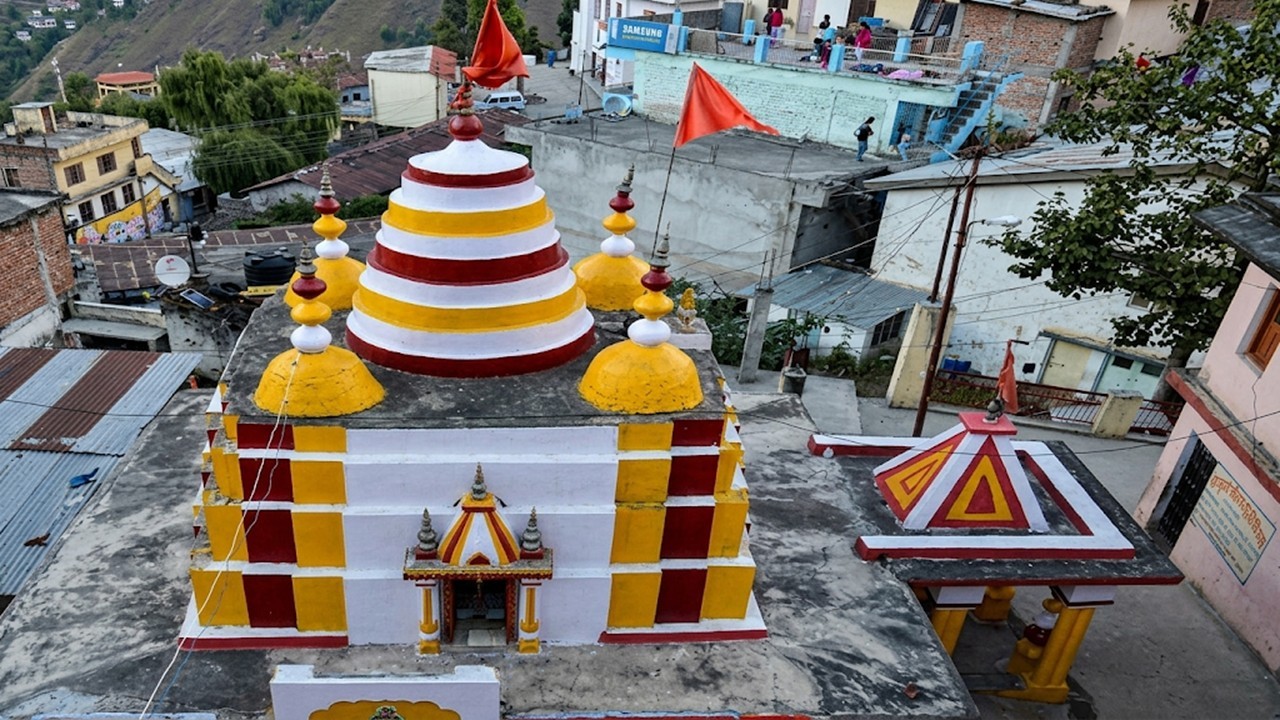
Bhavishya Kedar, meaning the “Future Kedarnath” is a sacred Shiva temple located near the Jyotirmath in the Chamoli region of Uttarakhand. According to local tradition, it is believed that the current Kedarnath Temple in Rudraprayag will one day become inaccessible due to natural and cosmic changes, and worship of Bhagavan Shiva will then continue at Bhavishya Kedar temple.
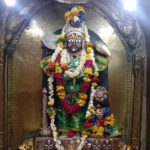
Dedicated to Bhagavan Shiva and Mata Parvati Devi, a unique feature of the temple is that the deity is Swayambhu, a naturally emerging Shiva form within a rock. Devotees believe this manifestation is slowly growing over time and in the future, it will reveal itself completely as the divine form of Kedarnath Shiva. Also, the Shankaracharya of Uttaramnaya Peetham has established a representative Bhavishya Kedar Temple near the Subhain village, which is not considered as the original Bhavishya Kedar temple.
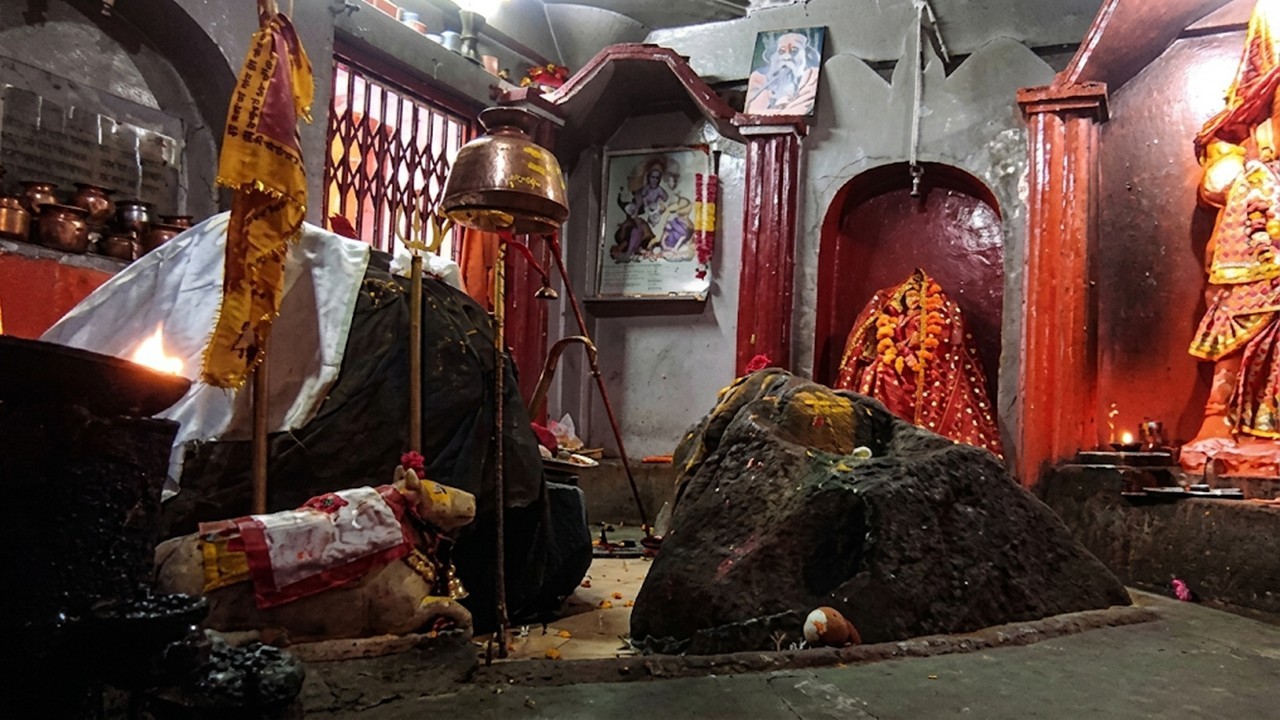
Sthala Purana of Bhavishya Kedar Temple
Bhavishya Kedar temple is not a part of the Pancha Kedar Kshetras. The Pancha Kedar Kshetras refers to the five sacred temples of Bhagavan Shiva in the Garhwal Himalayan region of Uttarakhand. According to tradition, after the Kurukshetra War, the Pandavas sought Bhagavan Shiva’s forgiveness for the sins of war. Bhagavan Shiva, unwilling to meet them, took the form of a bull and disappeared into the earth.
Different parts of his divine form emerged at five different locations, which became the Pancha Kedar temples: Kedarnath – Representing the hump of the bull, Madhyamaheshwar – The navel and stomach manifested here, Tunganath – The arms appeared here, which is also the world’s highest Shiva temple, Rudranath – The face of Bhagavan Shiva emerged here and finally, Kalpeshwar – The matted hair (Jata) of Shiva appeared here.
A related tradition holds that when Kedarnath becomes inaccessible in the future, worship will continue at Bhavishya Kedar, the “Future Kedarnath,” making it closely associated with the Pancha Kedar Kshetras pilgrimage. One of the most popular histories is connected to the Narsingh Temple of Jyotirmath. Devotees believe that the left arm of the deity of Sri Narsingh is gradually becoming thinner. When the arm finally disappears, the path to Kedarnath is expected to block permanently.
At that time, Bhavishya Kedar Temple is believed to become the new temple where devotees will continue worshipping Bhagavan Shiva. The history is closely connected with the prophecy of Nara and Narayana mountains surrounding Kedarnath. It is said that as the Kali Yuga progresses, these mountains will gradually move closer together and eventually block the route to Kedarnath. When this happens, Bhagavan Shiva will manifest fully at Bhavishya Kedar, making it the future temple of Kedareshwar worship.
Architecture of the Temple
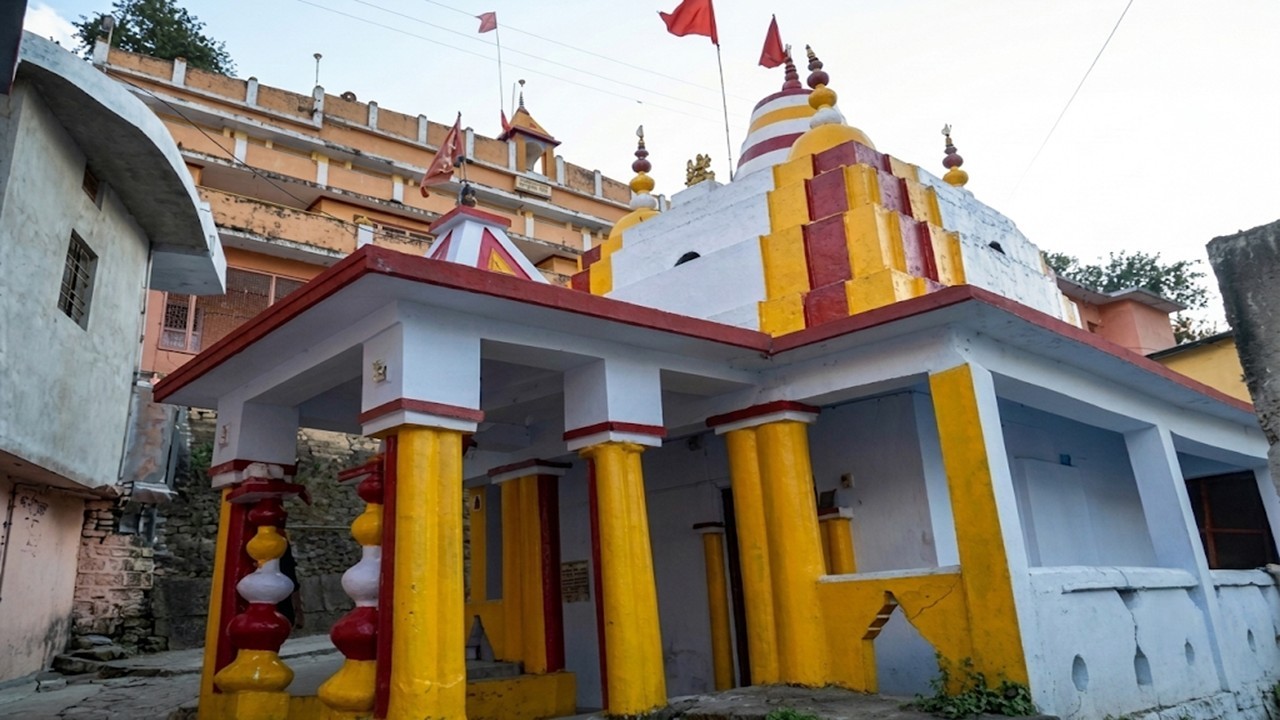
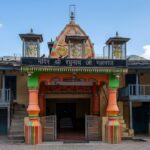
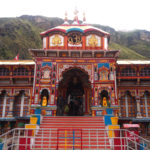
Bhavishya Kedar temple near Jyotirmath is architecturally different from the massive stone structure of original Kedarnath temple. It is a relatively small Himalayan temple, designed in the traditional Garhwali temple style and adapted to the rugged mountain environment. The temple consists of a modest Garbha Griha with a small mantapa or entrance area, reflecting the simple architecture common to remote Himalayan temples.
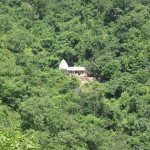
The temple is crowned by a stepped tower with small domes, painted in bright yellow, white, and red colours. Unlike the stone architecture of Kedarnath, Bhavishya Kedar features painted frontages, decorative bands, and saffron-red flags placed atop the spiral dome. The temple stands amid forested slopes and high ridges, with the natural landscape forming an integral part of its sacred tradition.
Festivals
Bhavishya Kedar temple’s principal festival is Maha Shivaratri, when devotees gather to offer special prayers, Rudrabhisheka, and night-long worship to Bhagavan Shiva. The temple also sees increased pilgrim activity during the sacred month of Shravana, where Bhagavan Shiva receives traditional offerings of water, milk, and Bilva leaves.
Kartik Purnima and other local village fairs are observed with devotional gatherings, reflecting the temple’s revered status as the future seat and worship of Kedarnath. Other festivals like Makara Sankranti and Navaratri are also celebrated in honour of the divine couple Bhagavan Shiva and Mata Parvati.
Darshan Timings of Bhavishya Kedar Temple
Bhavishya Kedar Temple is generally open to devotees from 6:00 AM to 12:00 PM and 2:00 PM to 7:00 PM, with regular worship and darshan taking place throughout the day.
Best Time to Visit Bhavishya Kedar Temple
The best time to visit Bhavishya Kedar temple is between April and June and September and November, when the weather is pleasant, trekking paths are generally accessible, and the surrounding Himalayan peaks are clearly visible. The spring and early summer seasons bring comfortable temperatures and lush greenery, while the post-monsoon autumn months offer clear skies and spectacular mountain views. Visitors are advised to avoid the peak monsoon season due to heavy rainfall and frequent landslides, and to be prepared for severe cold conditions during winter season.
Nearby Places to Visit
Narsingh Temple, Jyotirmath – A temple dedicated to Sri Narasimha and established by Adi Shankaracharya, revered as the winter seat of worship associated with Badrinath.
Tapovan – Known for its natural hot water springs and spiritual atmosphere, this serene village offers beautiful views of the surrounding mountains and valleys.
Vriddha Badri Temple – One of the sacred Sapta Badri temples, where Sri Vishnu is worshipped in a seated form believed to pre-exist before the establishment of Badrinath.
Badrinath Temple – The principal temple of Sri Badri Vishal and one of the four sacred Char Dham pilgrimage sites, located amidst spectacular Himalayan scenery.
Vishnuprayag – The first of the five sacred Prayags of Uttarakhand, marking the confluence of the Alaknanda and Dhauliganga rivers.
How to Reach Bhavishya Kedar Temple?
The easiest way to plan your visit is through Tirtha Yatra’s Pancha Badri Yatra package, which takes care of all the arrangements so that devotees can focus solely on the spiritual experience.

By Air: The nearest airport is Jolly Grant Airport, Dehradun, about 269 km from Jyotirmath. From the airport, taxis and buses are available to reach the temple.
By Rail: The nearest major railway station is Rishikesh Railway Station, approximately 251 km from Jyotirmath. Regular taxis and bus services connect the town with the higher Himalayan routes to reach the temple.
By Road: Jyotirmath is well connected by road to Haridwar, Rishikesh, and Dehradun. From Jyotirmath, visitors can travel towards Tapovan and continue to the temple through roadways either by local bus or taxis.
0
Leave a Reply