
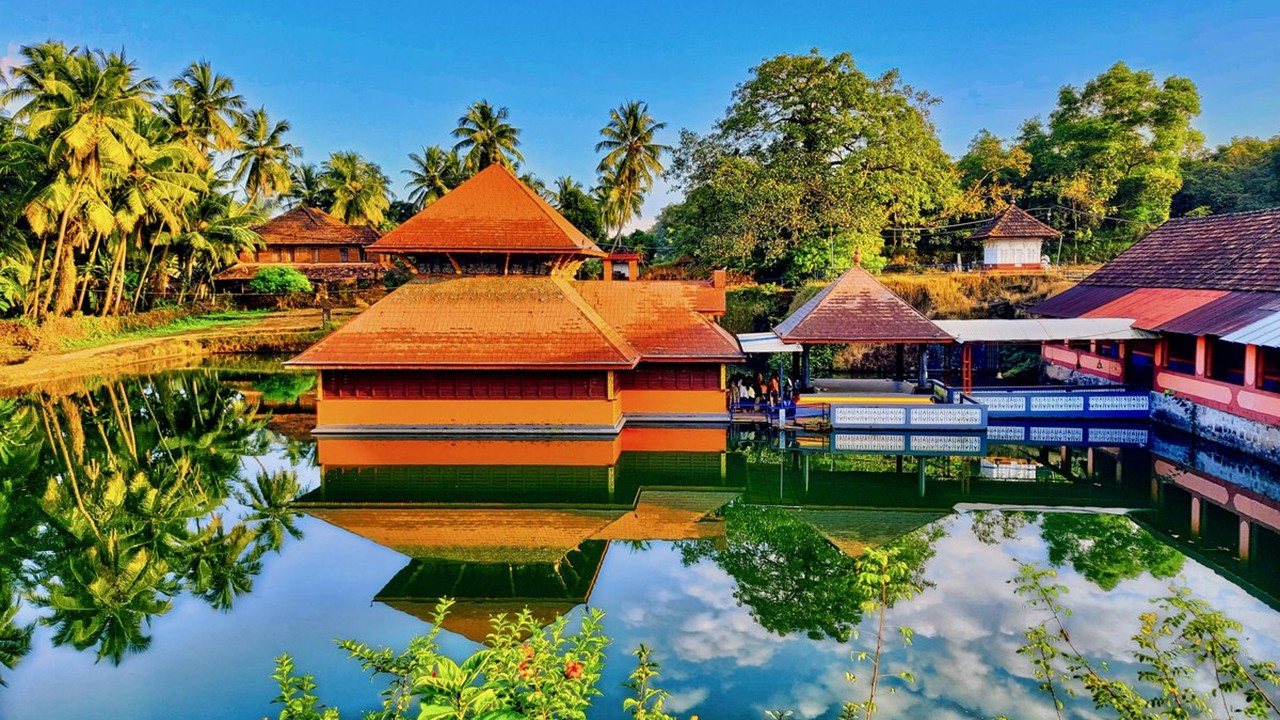
Shree Ananthapadmanabha Swamy Temple is one of the most remarkable and spiritually significant Vaishnava temples in South India. This ancient temple, located in Ananthapura near Kumbala in Kasaragod district, is renowned not only for its antiquity and association with the great sage Vilwamangalam but also for its extraordinary location in the middle of a natural lake and its iconic crocodile guardian.
The temple is widely revered as the original seat associated with the traditions of Bhagwan Ananthapadmanabha and is often linked spiritually with the famous Shree Padmanabhaswamy Temple of Thiruvananthapuram. According to temple tradition, both temples share a common traditional connection through the divine experiences of the great sage Vilwamangalam.
Sthala Purana of Shree Ananthapadmanabha Swamy Temple
Shree Ananthapadmanabha Swamy Temple had been constructed during the 8th-9th century CE, making it one of the oldest Vaishnava temples in northern Kerala. The most important among them involves the celebrated sage Vilwamangalam, who has performed intense penance at this kshetra.
According to the temple records, the sage Vilwamangalam associated with Ananthapura, also known as Divakara Muni, a renowned Tulu Brahmin who likely lived around the 10th century CE. Tradition connects him both with this temple and the later development of the Padmanabhaswamy tradition at Thiruvananthapuram.
The most famous Leela associated with the temple narrates the divine encounter between sage Vilwamangalam and Bhagwan Narayana. While engaged in meditation and worship at Ananthapura, the sage was visited by a radiant young boy of extraordinary beauty. Intrigued by the child, Vilwamangalam asked who he was. The boy replied that he had neither father nor mother and no home. Moved by compassion, the sage allowed him to stay with him.
The child agreed under one condition: if ever he was insulted, he would leave that place forever. For some time, the child served the sage lovingly, but his playful miracles often tested Vilwamangalam’s patience. On one occasion the child drank the milk offered to the deity. On another day, he swallowed the sage’s sacred Shaligrama Shila. Overcome by frustration, Vilwamangalam pushed the child with the back of his left hand.
Feeling insulted, the boy immediately vanished after telling the sage that he could see him again only at Anantha Kadu, the sacred forest of Sri Anantha. Realizing that the child was Bhagwan Narayana Himself, the sage was filled with remorse. Following a mysterious cave at the site where the child disappeared, he journeyed southward from Ananthapura towards Anantha Kadu (present day Thiruvananthapuram) and eventually witnessed the divine manifestation of Bhagwan Mahavishnu reclining upon the thousand-hooded serpent Anantha.
This vision later became the foundation of the Padmanabhaswamy. This event spiritually links Ananthapura with Thiruvananthapuram, creating a sacred connection between Kerala’s northern and southern regions.
One of the unique attractions of Shree Ananthapadmanabha Swamy Temple is Babiya – The Sacred Guardian Crocodile of the Temple. For centuries, devotees have witnessed that a crocodile resides in the temple lake as a divine guardian of Bhagwan Ananthapadmanabha. Remarkably, despite devotees regularly bathing in this lake, there has never been any recorded instance of the crocodile harming anyone.
Temple tradition records that during 1900’s, a crocodile known as Babiya was allegedly shot dead by a British soldier. Soon afterward, the soldier died from a venomous snake bite. Another crocodile subsequently appeared in the lake after a year, reinforcing devotees’ conviction that Babiya serves as the temple’s sacred protector. The crocodile is fed daily with temple prasadam. Priests offer rice, and devotees witnessed the crocodile occasionally rises to receive the offering directly.
Architecture of Shree Ananthapadmanabha Swamy Temple
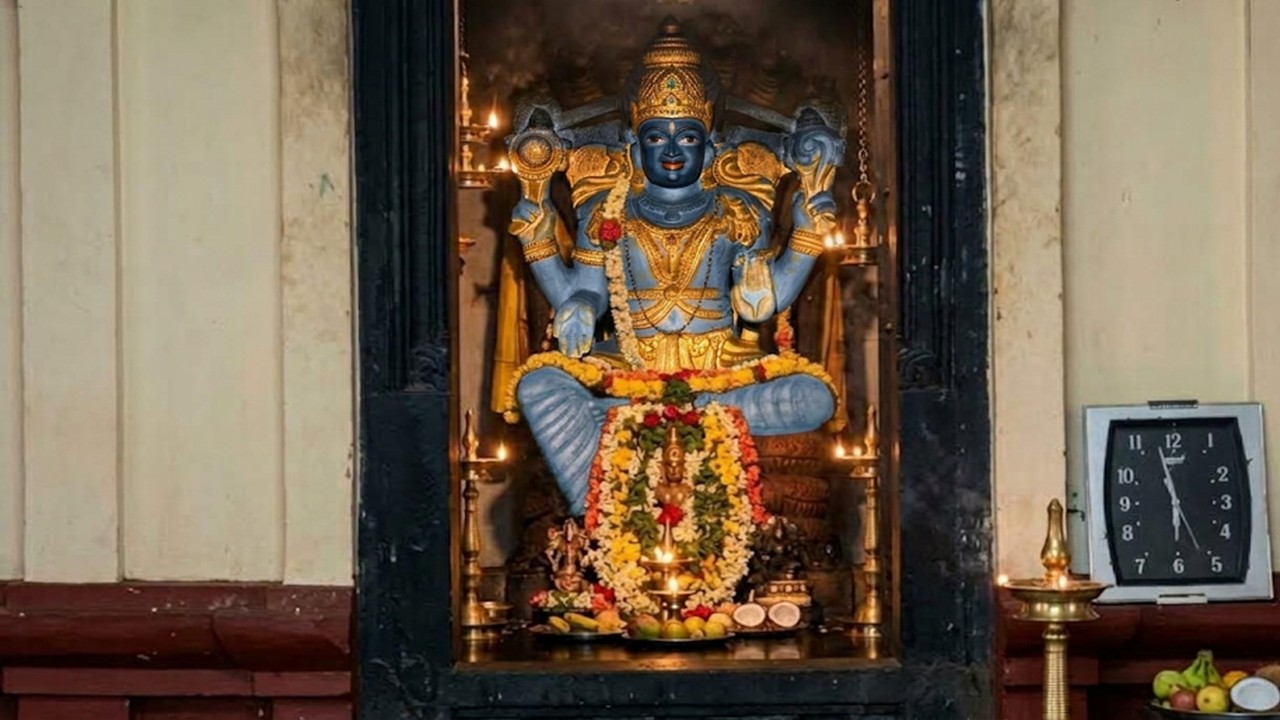
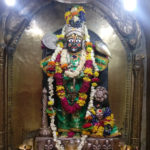
Unlike the famous Padmanabhaswamy Temple at Thiruvananthapuram, where Bhagwan Vishnu reclines on Anantha, the presiding deity here is Shree Ananthapadmanabha Swamy, worshipped in a rare, seated posture upon the five-hooded serpent Anantha. The four-armed deity displays Abhaya and Varada Mudras while holding the Chakra and Shankha, accompanied by Shreedevi, Bhoodevi, Garuda, and Hanuman. The original wooden deity was replaced in 1976 by a Panchaloha deity gifted by the Kanchi Kamakoti Peetham.
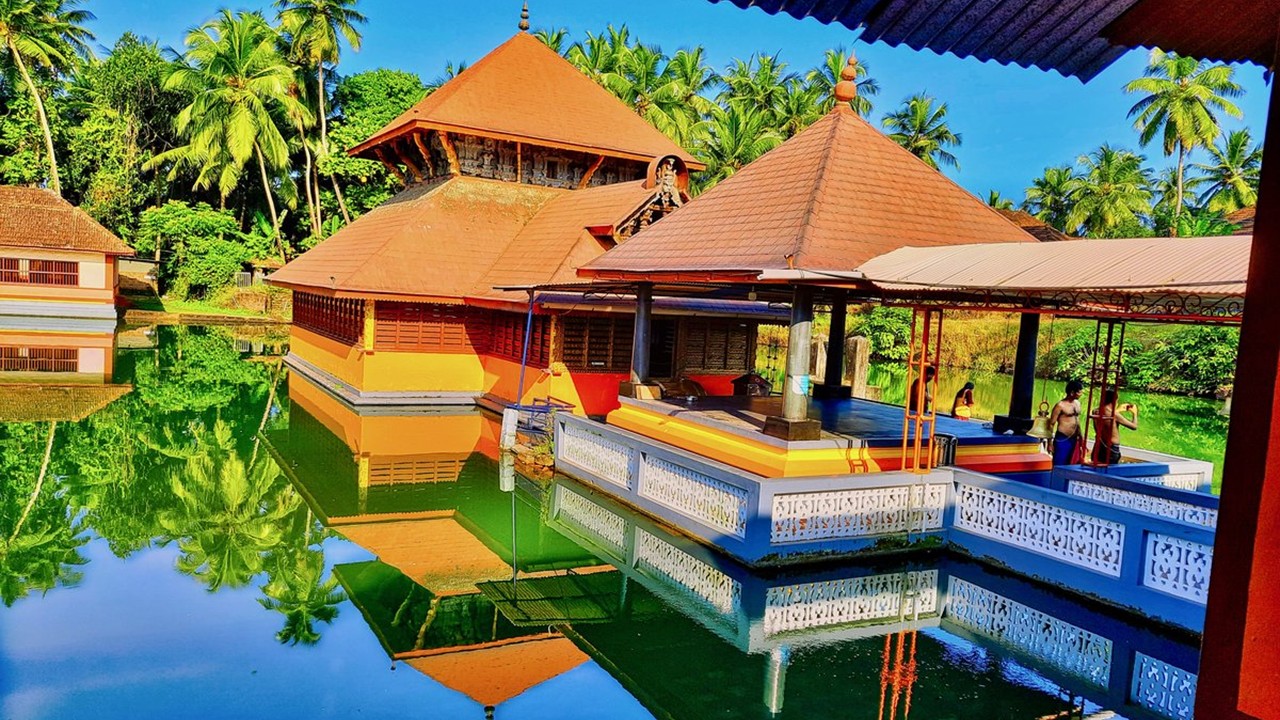
The temple stands at the centre of a 302-foot (92-metre) freshwater lake fed by perennial springs and is accessed by a narrow footbridge. The complex comprises the Shreekovil (Garbha Griha), Namaskara Mandapam, Thidappalli, Jala Durga Temple, and a sacred cave. The Dwi-thala (two-tiered) Sandhara-style Shreekovil features granite foundations, laterite walls, jali windows, ornamentation, copper-sheet roofing, and a granite sopanam adorned with Vyali carvings.
The temple is renowned for its rich artistic traditions. The ceilings of the Namaskara Mandapam contain intricate wooden carvings depicting scenes from the Dashavatara, many retaining traces of their original colours. The temple also features Navagraha paintings, Gaja Mukha motifs, and finely carved wooden images of the Dwarapalakas Jaya and Vijaya.
In the present time the Panchaloha deity is again replaced by a deity made through a unique procedure called Kadu Sharkara Yoga, a unique feature of the temple that use, an ancient Shilpa Shastra tradition employing 108 natural elements. These include extracts from 64 varieties of trees, sandalwood, medicinal herbs, sacred soils, natural resins, fibres, oils, sacred waters, and copper components.
The deity is constructed to symbolically reflect the human form. Artisans first create the Asthi Panjara Sharira (skeletal framework) using Khadira wood, followed by layers representing the body’s internal systems. Finely powdered Shankha Churna (conch shell powder) forms the outer surface, after which the deity is covered with silver and gold and finished with natural colours derived from flowers, fruits, leaves, and tree bark. This makes the entire process a remarkable blend of spirituality, craftsmanship, and traditional science.
Festivals celebrated at Shree Ananthapadmanabha Swamy Temple
Among the most significant celebrations are the annual Ananta Padmanabha Swami Varshika Mahotsava on the 14th day of Kumbha Masa, Nava Anna Samarpane on the 1st day of Tula Masa, and Prathishta Divasa on the 24th day of Mesha Masa.
Vishu Kani is also the temple’s important festival and is celebrated in grand manner. The occasion is marked by special rituals such as Ganapathi Homam, Suddhi Kalasam, Guru Puja, Go Puja, Ganga Puja drawing large numbers of devotees to the temple.
A unique celebration of the Teppotsavam, held on the fifth day after Vishu. During this boat festival, the Utsava Deity is taken in procession around the sanctum aboard a beautifully decorated wooden canoe on the temple lake.
Other major observances include Thiruvonam and Ashtami Rohini. Festival periods are further enriched with religious programmes, classical performances, and traditional devotional dramas, reflecting the temple’s vibrant spiritual and cultural heritage.
All major festivals in the temple are observed according to the Solar Calendar. In addition to these prominent observances, all major Sanatana festivals and sacred occasions are celebrated with great devotion and traditional rituals throughout the year in accordance with the temple’s customs and calendar.
Best time to visit Shree Ananthapadmanabha Swamy Temple
The best time to visit Ananthapura Lake Temple is from October to February, when the weather is pleasant and the lake is full after the monsoon, enhancing the temple’s beauty. Early mornings offer a peaceful atmosphere for darshan and photography, while festival periods such as Vaarshika Utsavam and Tapotsavam provide a vibrant spiritual experience.
Darshan Timings of Shree Ananthapadmanabha Swamy Temple
The temple opens at 5:30 AM and closes for the afternoon at 1:00 PM.
The temple reopens in the evening at 5:30 PM and closes at approximately 8:05 PM to 8:10 PM.
Nearby places to visit
Madhur Shree Madanantheswara Siddhivinayaka Temple – One of Kerala’s most revered Ganapathi temples, known for its unique deity and historic architecture.
Mallikarjuna Temple, Kasaragod – An ancient Shiva temple famous for its rich rituals and annual Rathotsava festival.
Shree Gopalakrishna Temple, Kumbla – A historic temple dedicated to Sri Krishna, renowned for its traditional worship and festivals.
Kanipura Sri Gopalakrishna Temple – Revered for its beautiful Krishna deity and vibrant temple celebrations.
Shree Anantheshwara Temple, Manjeshwar – An ancient temple dedicated to Sri Anantheshwara, holding deep significance in the region’s spiritual history.
How to Reach Shree Ananthapadmanabha Swamy Temple
Best way to plan to Shree Ananthapadmanabha Swami Temple is through Tirtha Yatra’s world-famous Udupi Yatra or Kerala Yatra. All the arrangements for your Yatra will be taken care of by which you focus only on the spiritual experience of the journey.
By Air: The nearest airport is Mangalore International Airport, approximately 60 km from the temple.
By Train: The nearest railway station is Kasaragod Railway Station, located about 13 km from the temple.
By Road: The temple is situated in Ananthapura village, about 14 km from Kasaragod town and is well connected by road.
0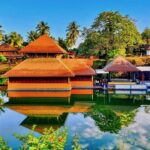
Leave a Reply