
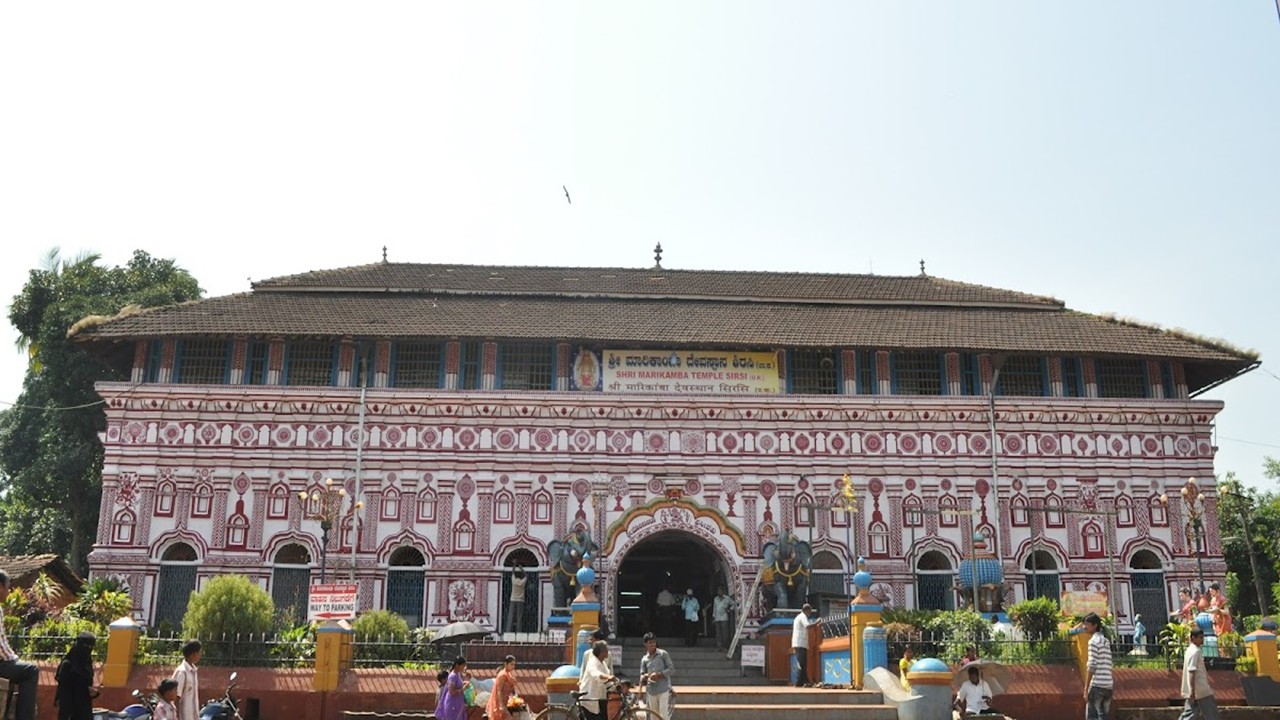
Sri Marikamba Devi Temple in Sirsi, Uttara Kannada district of Karnataka, is one of the most revered Shakti shrines in South India. The temple is dedicated to Sri Marikamba Devi, a powerful manifestation of Adi Shakti who is worshipped as Mariamma, Mahakali, Mahalakshmi, and Maha Saraswati. For centuries, devotees from regions visit Sirsi seeking the blessings of the goddess for health, prosperity, protection, and wellbeing. The temple is regarded as one of the most important centres of Shakti worship in Karnataka.
The present temple traces its origins to the late seventeenth century. Historical records and local traditions associate the establishment of the temple with the Sonda rulers, particularly King Sadashivaraya, commonly called as Sadashiva Rao II. The present installation of the deity is believed to have taken place during Saka 1611, corresponding to 1689 CE.
Before the arrival of Marikamba Devi, the people of Sirsi primarily worshipped local village goddesses such as Marki and Durgi. Over time, a remarkable event transformed the spiritual identity of the town and led to the establishment of the present shrine.
The Pandavas’s Link
The connection between Sri Marikamba Devi and the Pandavas comes through Hanagal, which local traditions identify with the ancient Viratanagara mentioned in the Mahabharata. According to these traditions, during their period of exile and incognito stay, the Pandavas passed through or stayed in the region associated with King Virata. It is believed that Yudhishthira (Dharmaraja) worshipped Sri Durga Devi at a Shakti shrine near Viratanagara and prayed for protection, justice, and the welfare of society. Because Hangal is traditionally linked with Viratanagara, devotees believe that the goddess worshipped there is connected to the same Shakti tradition from which Marikamba Devi emerged. Chalukyan inscriptions referring to Hangal as “Virata’s Fort” are often cited in support of this association.
The Discovery of the Goddess
In Hanagal, after a grand festival, the deity and its ornaments were reportedly kept inside a box for safekeeping. The story says that thieves stole the box, intending to take the valuable jewellery. After removing the ornaments, they discarded the box containing the deity into a lake in the Sirsi region. Over time, this lake came to be associated with the goddess and is remembered in temple tradition. The story of Basava, an Asadi (a community of rural Shakti worshippers in Karnataka) devotee is deeply devoted to the current temple consecration. Every year he travelled to Chandragutti carrying the sacred padalige, a ceremonial basket associated with Devi worship.
During one such pilgrimage, Basava faced humiliation and obstruction from people in the Chandragutti region. Saddened by the incident, he chose not to undertake the pilgrimage the following year. Instead, he remained in Sirsi and prayed earnestly.
One night, he experienced a divine dream. A female voice told him: “I am Dyamavva. I am lying in the village tank. Bring me out.”
The next day Basava informed the elders of Sirsi. Curious and hopeful, the villagers gathered around the tank. After prayers and rituals, they noticed a mysterious box floating on the water. When opened, it contained parts of a divine image. The pieces were carefully assembled, revealing a beautiful deity of the goddess.
Tradition further holds that the sacred image had come from the region of Hangal, an ancient center of Shakti worship. The discovery was regarded as divine grace, and the people of Sirsi celebrated the arrival of the goddess among them.
Following the discovery of the deity, community leaders, village elders, religious heads, and representatives of various social groups consulted the Nandikeshwara Matha. With the approval of the Sonda king, a suitable site was selected near the old fort area of Sirsi.
The deity was ceremonially installed on Vaishakha Shuddha Ashtami, a Tuesday, in 1689 CE. This day continues to be celebrated every year as Marikamba Jayanthi, commemorating the consecration of the goddess. According to temple tradition, the first Jatra was conducted even before the formal installation of the deity.
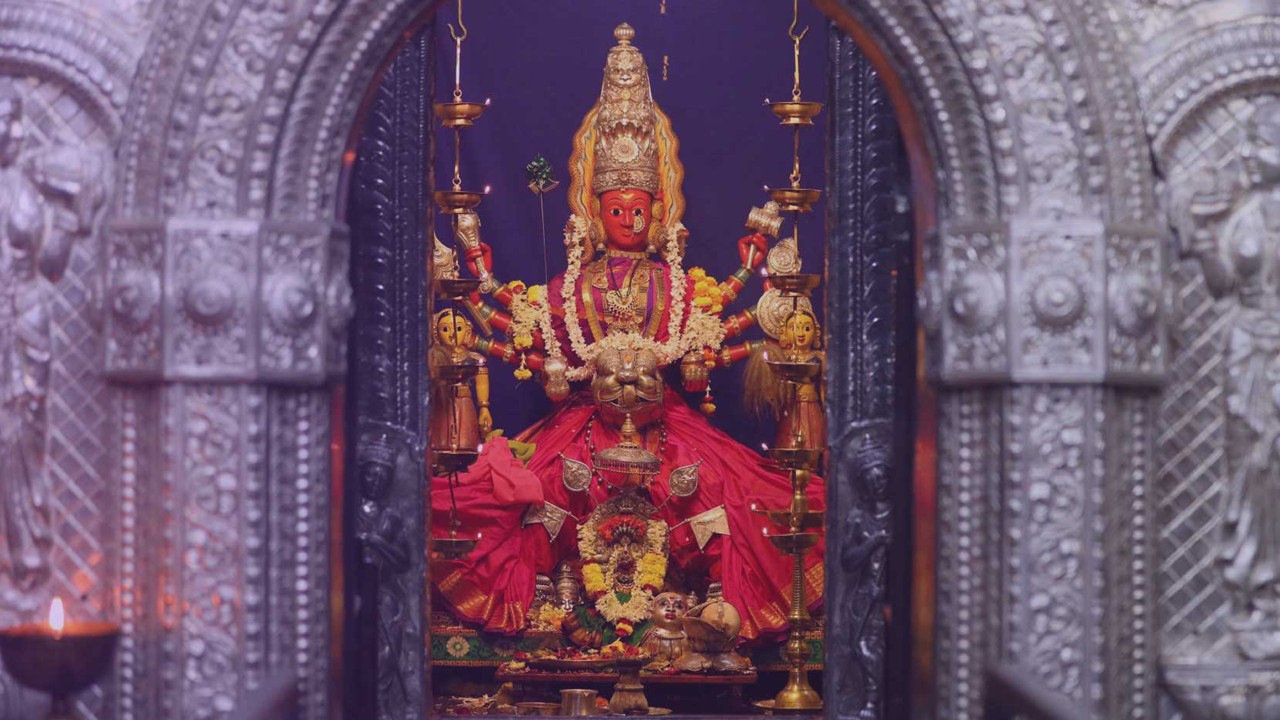
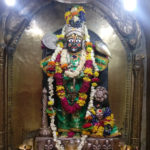
Sri Marikamba Devi, the presiding deity often called as “Doddamma”, is worshipped as both a fierce protector and a compassionate mother. The deity depicts a majestic form of Durga seated on a lion, her vahana, with eight arms carrying divine weapons and symbolizing supreme power. She is portrayed in a victorious posture, slaying a demon to represent the triumph of good over evil and the destruction of negative forces. Standing approximately seven feet tall, the deity embodies the combined energies of Mahakali, Mahalakshmi, and Maha Saraswati, representing the powers of destruction, preservation, and creation.
Devotees believe that Marikamba Devi protects families and communities, removes diseases and suffering, grants courage, prosperity, and wellbeing, safeguards people from natural calamities, and fulfils sincere prayers. Because of these beliefs, countless families across Coastal Karnataka and the Maland region revere her as their Kuladevi, or family deity.
Architecture
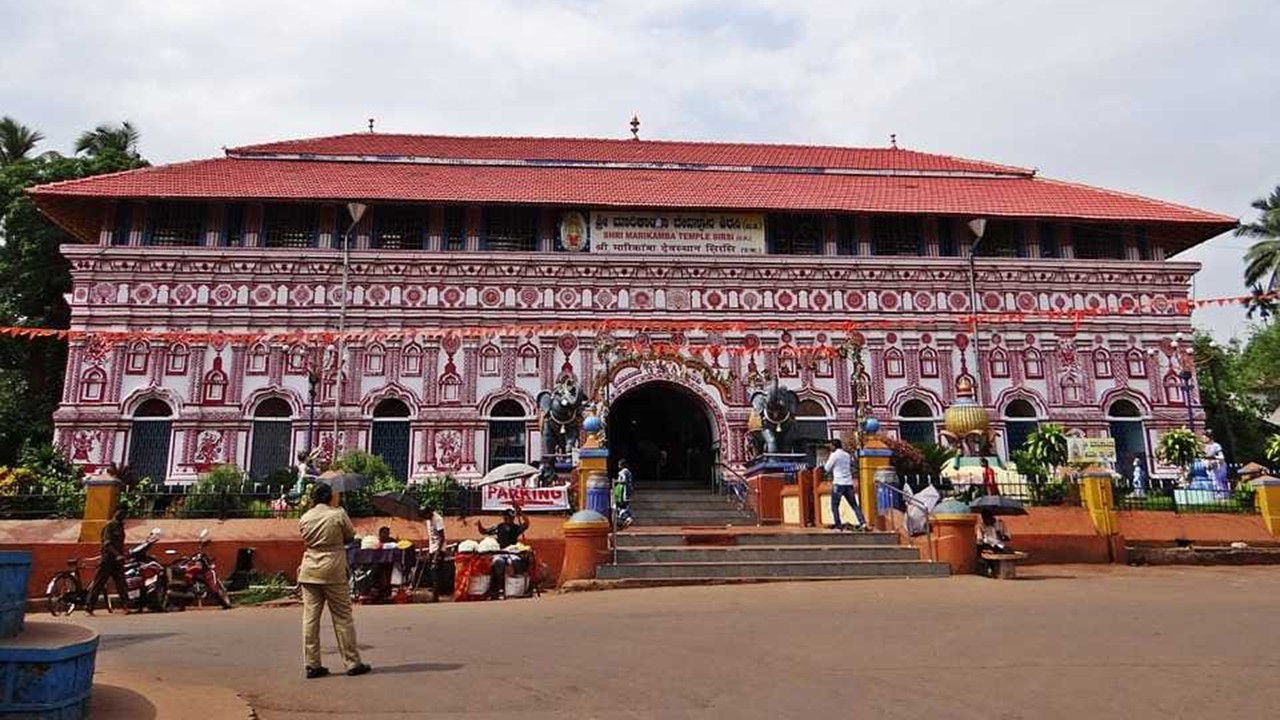
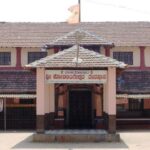
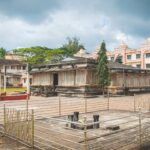
Sri Marikamba Temple blends traditional Karnataka architecture with Malanadu art. Its complex features a prominent entrance facade, a spacious central courtyard with covered cloisters, the sanctum sanctorum, and ritual and administrative structures. The later-added facade is a Sirsi landmark, while the enclosed courtyard offers a serene setting for worship and gatherings. Natural-pigment Kavi art, floral and historical motifs, sacred designs, deity depictions, decorative panels, and traditional iconography reflect the temple’s spiritual character, centuries of devotion, and regional artistic heritage.
Festivals
The temple’s major festivals include the biennial Marikamba Jatra, one of Karnataka’s largest religious fairs, which attracts lakhs of devotees from across South India for a grand wooden chariot procession of the goddess on a Ratha to a ceremonial site and later returned to the temple. Marikamba Jayanthi, observed on Vaishakha Shuddha Ashtami, commemorates the deity’s consecration with special pujas, cultural programs, and community worship. Navaratri is celebrated for nine days with worship of the goddess in her various forms, special rituals, flowers, and lights, while Kartika Deepotsava illuminates the temple with rows of lamps and draws devotees from across the region.
Darshan Timings of the Temple
The temple is open on all the days of the year between 6:00 AM to 9:00 PM.
Nearby Places to Visit
Sri Mahaganapati Temple: Ancient temple known for its large Hoysala-style architecture and traditions.
Madhukeshwara Temple, Banavasi: Historic temple dedicated to Bhagavan Shiva, located in Karnataka’s oldest town, Banavasi.
Sri Kshetra Manjuguni Temple: Revered temple of Sri Venkateshwara, surrounded by scenic greenery.
Sahasralinga: Sacred riverside site featuring thousands of Shiva Lingas carved on rocks in the Shalmala River.
How to Reach Marikamba Temple?
The best way to plan is through Tirtha Yatra’s Udupi Yatra Tour package. All the arrangements for your Yatra will be taken care of which you focus only on the spiritual experience of the journey.

By road: Sirsi is well connected to Hubli, Sagara, Kumta, Honnavara, and other Uttara Kannada towns by NWKRTC/KSRTC buses and private operators.
By train: As Sirsi has limited direct rail service, most visitors travel to Hubli or another regional rail hub and continue by road.
By air: Hubli Airport, about 100 km away, is the nearest airport. Taxis and buses provide onward connections to Sirsi.
0
Leave a Reply