
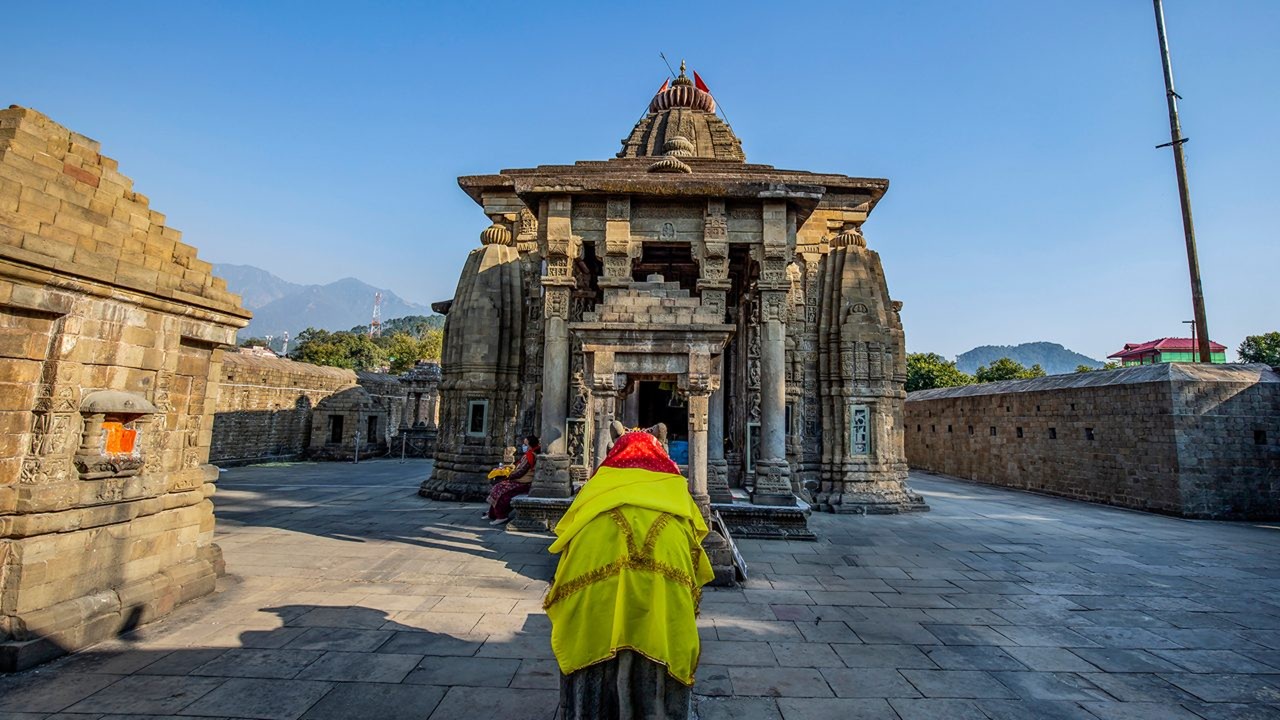
Himachal Pradesh is Devbhoomi Himachal Pradesh. It is one of the most beautiful states to ever visit in this punya Bharata Bhumi. Generally words don’t do justice to its beauty, yet it is one of the most underrated states to visit, seldomly attracting tourist or sanatani crowds. Though the state is known as Devbhoomi like Uttarakhand, not many seekers get to visit the tirtha kshetras in this state. If you ever get a chance to visit Himachal Pradesh, even if you have to extend your yatra by 1 or 2 day, you should never miss Baijnath Mahadev Temple in Kangra, which is one of many such hidden spiritual treasures.
Baijnath Temple is located in the beautiful Kangra district of Himachal Pradesh. It has immense spiritual importance as well as the bounty of the Himalayas. The location of Baijnath Mahadev Temple overlooking the Dhauladhar Mountain ranges is something which is a not-to-miss wonder. It is mother nature worshipping Lord Baijnath with all devotion.
Baijnath Temple is one of the oldest and most revered Shiva temples in North India. It is one of the few Shiva temples in the world where Dusshera festival is not celebrated.
How Lord Shiva came to be known as Baijnath?
Devotees generally think that Baijnath is the corrupted form of Vaidyanath. But there is no evidence of the same in Vedic literature except the inscriptions which is also not very clear if the temple was originally known as Vaidyanath. Though there is a folklore connecting it to the incident of Ravana bringing the kamana-linga from Kailash and establishing it, this cannot be substantiated with any proof from the Vedic literature like Puranas. We cannot confuse ourselves relating this linga to Vaidyanath in Deogarh or even Vaidyanath in Parli. This linga can also not be given the status as of one the Dwadasha Jyotirlingas.
There is no specific reason why the shiva-linga in this temple is known as Baijnath Mahadev except the local folklore which says that the temple was constructed by two brothers named Baijnath and Siddhanath
The History of Baijnath Temple
The Sharda inscriptions in Sanskrit which were found in the temple, state that the ancient name of this place was Kiragrama. The foundation of this temple was laid by two brothers Manyuka & Ahuka in 1204 AD. Though the temple was built many centuries ago, it was repaired thoroughly by Raja Chand Katoch, the King of Kangra from 1776 AD to 1824 AD. The temple was later repaired by Sansar Chand or by his family priest Ganga Ram who also got a temple of Murali Manohar built next to Baijnath Temple. (The Temples of Himachal Pradesh by S L Nagar, 1990)
Dussehra is not Celebrated at Baijnath Temple
Dusshera is a festival which is not missed by any temple in Bharat. However few temples in Bharat do not celebrate Dusshera, including Baijnath Temple. Remember, I had mentioned that the temple’s origin is generally attributed to Ravana. It is due to this reason that the locals here honor Ravana. Obviously on his death ceremony day, they don’t burn his effigies in this town contrary to the entire North Indian plain. There are incidents that people who tried celebrating Dusshera died unnaturally. Some families had to suffer as well. Believing this to be the wrath of Lord Shiva, no one dares celebrates Dusshera in this town. This is surprising especially in the land which was ruled by Sri Ramachandra, the personality of God who descended to kill Ravana.
In summary, people believe that Ravana had performed tapasya to please Lord Shiva in Kailash. He severed his nine heads and offered them in the fire. As he was about to cut the tenth head, Lord Shiva gave him darshan and asked Ravana to ask for a boon. Ravana requested Lord Shiva to travel with him to Lanka and reside there to make it invincible. Lord Shiva created his kamana-linga and handed over to Ravana cautioning him not to keep the linga in any place other than Lanka. Worried devatas rushed to Lord Vishnu for help who instructed Varuna to create an urge for urinating within Ravana.
As Ravana was passing over Binwa River, he felt to relieve himself. He spotted a cowherd named Baiju to whom he handed over the linga to hold until he returned. Ravana took a lot of time to urinate, in the meantime, the linga became heavy. Unable to hold it, the boy kept the linga on the ground. When Ravana returned he was shocked to see the linga in the ground. No matter how hard he tried, he could not lift it. Frustrated he left to Lanka. Later the linga was worshipped by Baiju. This could be another reason why the linga is known as Baijnath. Nearby in the Tara Siddhapeetha Temple, ther is a huge footprint of Ravana which can substantiate this version.
The Pandava’s Connection
As per local belief, during their period of exile, the Pandavas travelled through the Himalayan region and stayed for some time in the Kangra Valley. They are believed to have worshipped Lord Shiva at Baijnath and performed prayers to seek divine blessings, strength, and protection. This Pandava connection comes from local legend and oral tradition, not from confirmed historical records.
The Temple Architecture of Baijnath Temple
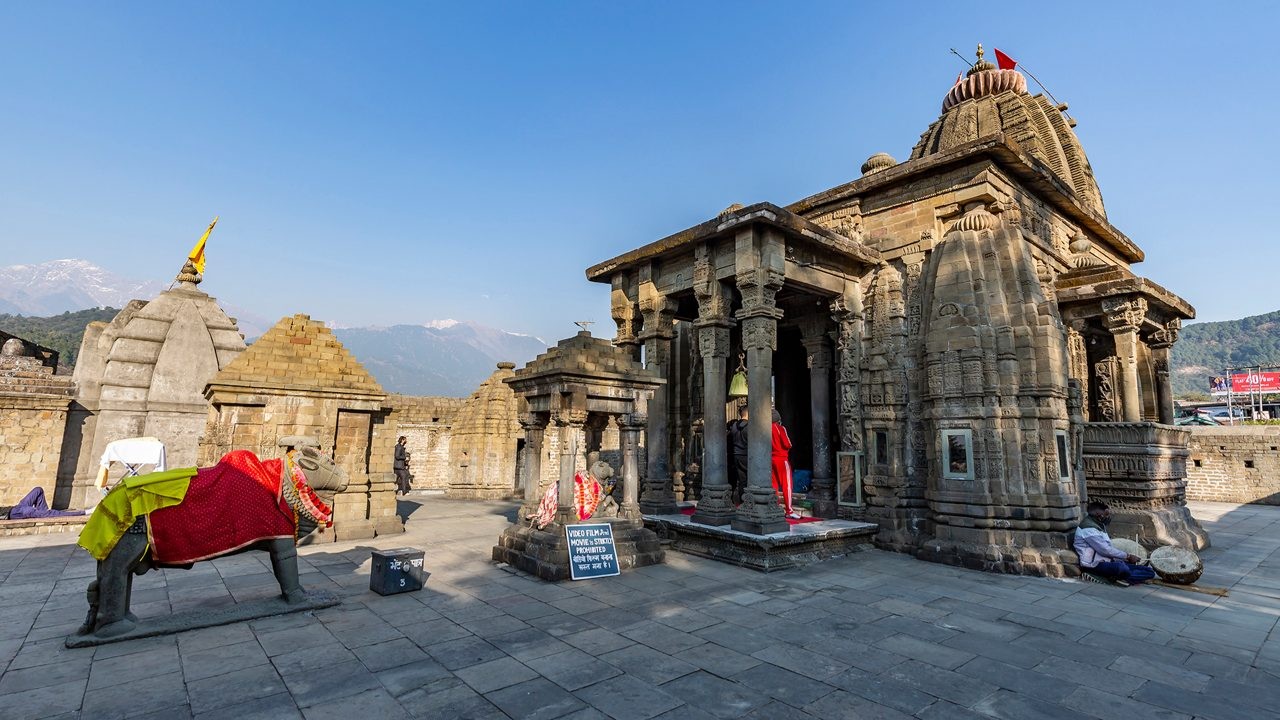
Baijnath Mahadev Temple is a fine example of ancient Himalayan stone architecture. The tall shikhara ,beautifully carved entrance, detailed sculptures of Hindu deities, and the peaceful temple courtyard make it a wonderful temple not to miss. Baijnath Temple is built in the traditional North Indian Nagara style of architecture using large stone blocks. The temple structure consists of mukha-mandapa, mandap and a garbha-griha with a shikhara atop it.
The outer walls of the garbha-griha are enriched with beautiful carved figures of devatas and devis such as Surya wearing a jacked, Brahma, Durga, Chamunda, Kartikeya, Mahishasuramardini, Gajalakshmi, Kalyanasundara Murti, the dancing Ganesha which is one of the rare sights in North Indian temples, three-headed Sri Vishnu seated in Bhadrasana, Trivikrama, Seshashayi, Hari Hara, Uma Maheshwara, dancing Shiva and many more. This temple is a feast to the soul of Archaeologists and Temple Heritage enthusiasts.
In front of the temple there are 2 Nandis. The one standing is of a later date and the one within the mandapa belongs to an ancient period. Many devotees follow an old tradition before entering the temple. They first bow before Nandi and then whisper their wishes or prayers into his right ear. According to popular belief, Nandi carries these prayers directly to Lord Shiva.
Even after standing for more than 800 years, the temple continues to attract pilgrims because of its beautiful carvings, peaceful surroundings, and spiritual importance. During the devastating Kangra earthquake of 1905, many buildings in the region were badly damaged, but Baijnath Mahadev Temple survived with only minor damage. Many devotees believe this was due to Lord Shiva’s divine protection.
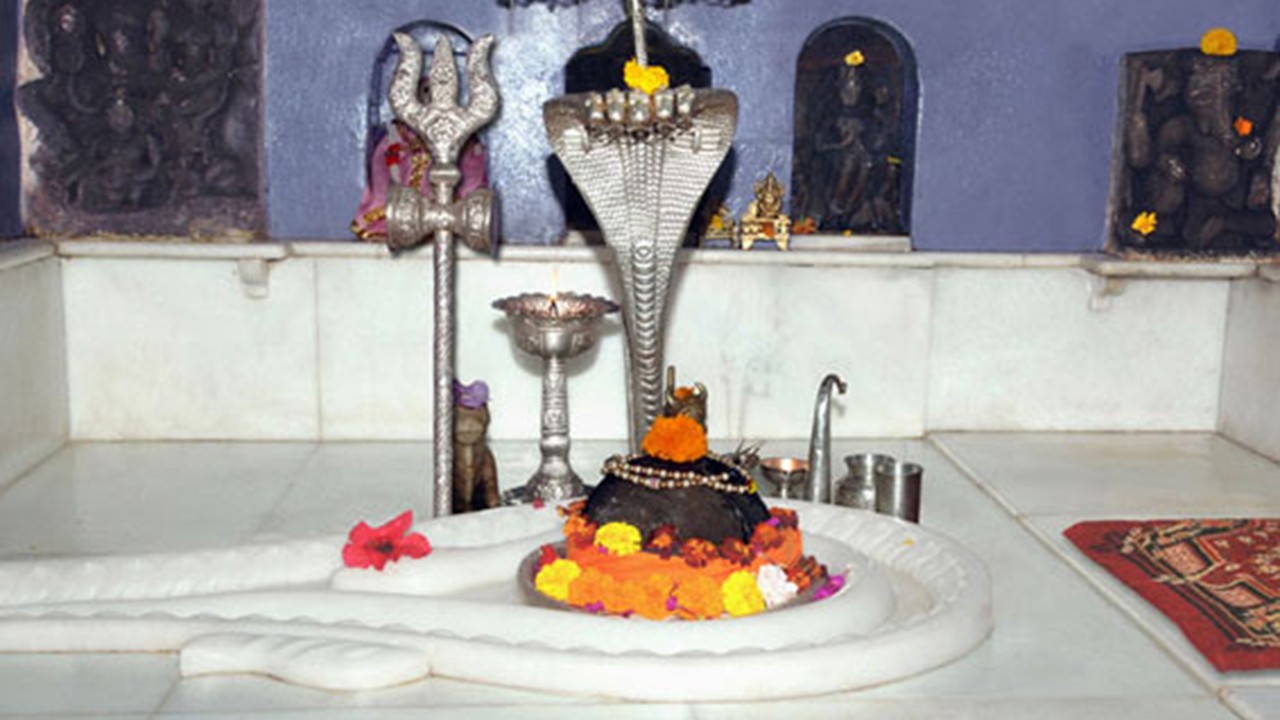
Inside the temple, the shivalinga is worshipped as Sri Vaidyanath or Sri Baijnath. Devotees offer milk, water, flowers, and Bilva leaves while chanting Rudram and Vedic mantras. The atmosphere inside the temple is calm, filled with the sound of bells and devotional chants.
Baijnath Temple Timings and schedule
The temple remains open every day throughout the year.
Temple Darshan Timings: 6:00 AM to 9:00 PM
Pratah Arati: Around 6:30 AM
Sandhya Arati: Around 7:00 PM
The best time to visit is early in the morning when the temple is peaceful and the Himalayan mountains look beautiful in the golden sunlight or during the twilight.
Festivals Celebrated at Baijnath Temple
Himalayan towns in Bharat have still not forgotten their cultural roots. It is essential to inherit the culture and take it forward. The culture carries history and history defines the trajectory of future development. Baijnath Temple is known for celebrating remarkable festivals in Himachal Pradesh.
Mahashivaratri – this is the grandest festival celebrated by the temple. Thousands of devotees flock the temple to offer their prayers and perform rudrabhisheka to Lord Baijnath
Uttarayana Mela – this is another grand festival celebrated here. The local devatas of mountains are brought in doli to Baijnath for a Sabha, Snana and a Jagaar, which is combined with celebrations, feasting and show of cultural dances.
Which is the Best Time to visit Baijnath Temple?
Baijnath temple can be visited during any weather as the temple remains open throughout the year. However, it recommended not to travel during the rainy season. If you want to travel to Baijnath Temple and make most of your yatra or tour, better consider travelling with Tirtha Yatra on Devbhoomi Himachal Yatra which is an exclusive tour covering the temples of Himachal Pradesh extensively.
How to reach Baijnath Temple?
The nearest town to Baijnath is Mandi which is well connected to Shimla or Manali through roadways. You could also approach Baijnath through Palampur or even Dharmashala.
The fastest option is to take a flight till Dharamshala. From the airport, Baijnath Temple is about 65 kms, which can be covered by taxi or bus in around two hours.
Pathankot is the nearest railway station.
If you want to avoid the travel strain and headache and ensure you don’t miss out the deserving spiritual experience at Baijnath, you should not miss Devbhoomi Himachal Yatra by Tirtha Yatra.
Holy Places to Visit near Baijnath Temple
If you are visiting Baijnath Mahadev Temple, you can also explore several famous spiritual destinations nearby.
-
Siddhanatha Temple
-
Murli Manohara Temple
-
Tara Siddhapeetha Temple
-
Chamunda Devi Temple – 23 km: One of the most respected Shakti Peethas in Himachal Pradesh, dedicated to Goddess Chamunda.
- Jwalamukhi Temple – 55 km: is famous for its eternal natural flames that rise from the temple floor. That have been worshipped for centuries.
- Masroor Rock Cut Temples – 58 km: Ancient rock-cut temples carved from a single stone, known for their historical and architectural beauty.
- Brijeshwari Devi Temple, Kangra – 50 km: A popular temple dedicated to Goddess Vajreshwari and It is considered one of the important Shakti Peethas in North India.
-
Baglamukhi Temple, Bankhandi – 42 km: Dedicated to Goddess Baglamukhi, one of the ten Mahavidyas. A well-known temple where devotees pray for strength, protection, and victory over obstacles.
-
Lakha Mandir at Chari
-
Laksmi Narayana Temple in Jaisimghpura
-
Brijraj Bihari Temple in Nurpur
These temples can easily be covered over one or two days along with your visit to Baijnath Mahadev Temple.
Author: Agrani Krishna Dasa assisted by Sunil Sharma
0
Leave a Reply