
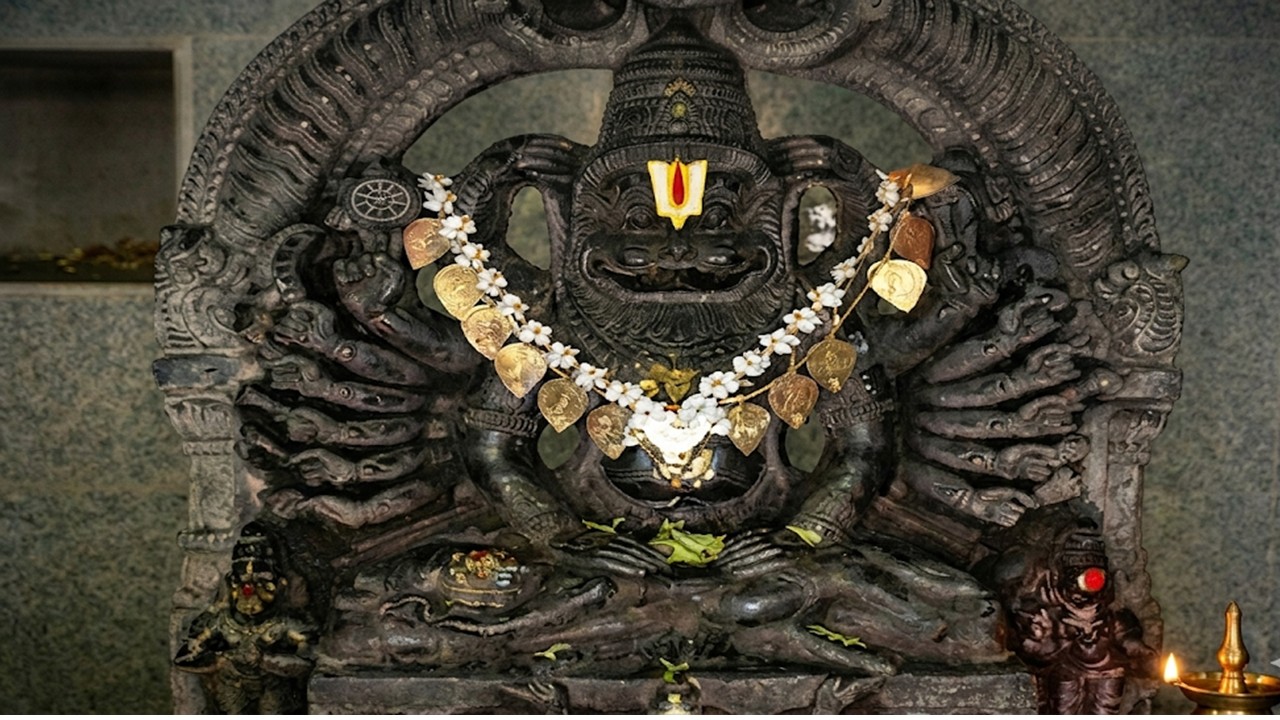

Worship of Shodashabahu Narasimha is believed to provide relief from deep-rooted fears, chronic ailments, and unseen negative influences. Devotees facing mental or physical challenges are encouraged to surrender at His lotus feet, seeking strength, healing, and divine guidance.
Beyond protection from external difficulties, this powerful form also helps devotees conquer their inner enemies – kama (desire), krodha (anger), lobha (greed), moha (attachment), mada (pride), and matsarya (jealousy). By overcoming these obstacles, one can progress steadily on the spiritual path with clarity, discipline, and inner peace.
Shodashabahu Narasimha – The Sixteen Hands of Narasimha
- From the top two hands, the intestines of Hiranyakashipu are held, hanging like a garland.
- In the next two hands, the Lord holds the Shankha (conch – right) and Chakra (discus – left).
- The following two hands hold a Khadga (sword – right) and Charma/Khetaka (shield – left).
- The fourth pair holds an arrow (right) and Dhanush (bow – right).
- The fifth pair holds an Onakke (club – right) and Kaumodaki Gada (mace – left).
- The sixth pair holds a Pasha (noose – right) and Ankusha (goad – left).
- The seventh pair holds the head (right) and limbs (left) of the demon.
- With the eighth pair of hands, the Lord is shown tearing open the stomach with His nails.
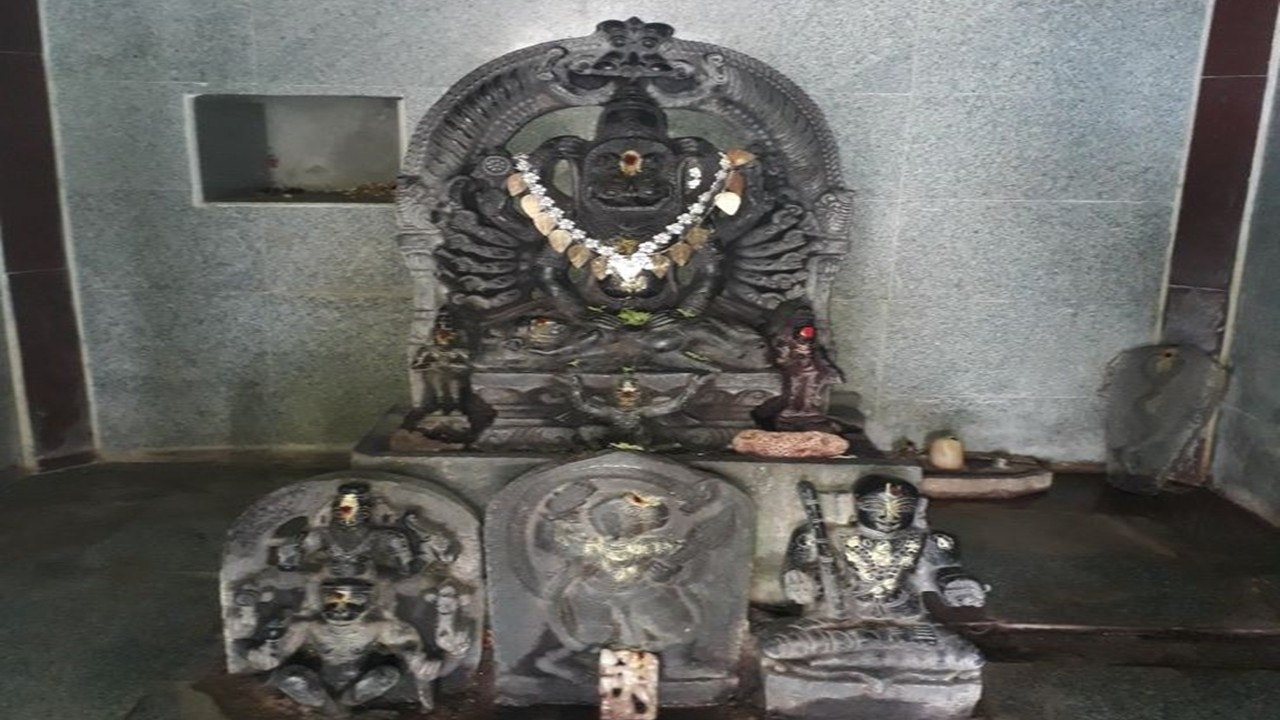
Historical Connection with Vibudhendra Tirtha
According to traditional accounts, Sri Vibudhendra Tirtha had profound spiritual experiences and divine visions that guided his worship. It is believed that through such divine inspiration, he came into possession of the rare and powerful form of Shodashabahu Narasimha. Recognizing its extraordinary spiritual significance, he established strict and sacred modes of worship for the Deity.
He is said to have emphasized disciplined puja, mantra recitation, and adherence to Vedic rituals while worshipping this fierce form of the Lord. Due to the intense and Ugra nature of the Deity, the worship was maintained with great care, purity, and adherence to tradition, often restricted to highly qualified spiritual leaders.
Sri Vibudhendra Tirtha’s devotion helped preserve this rare form of Narasimha within the lineage of the mutt. His legacy ensured that the worship of
Shodashabahu Narasimha continued in a highly sanctified manner, passed down through generations of pontiffs, maintaining its spiritual potency and sacredness even today.
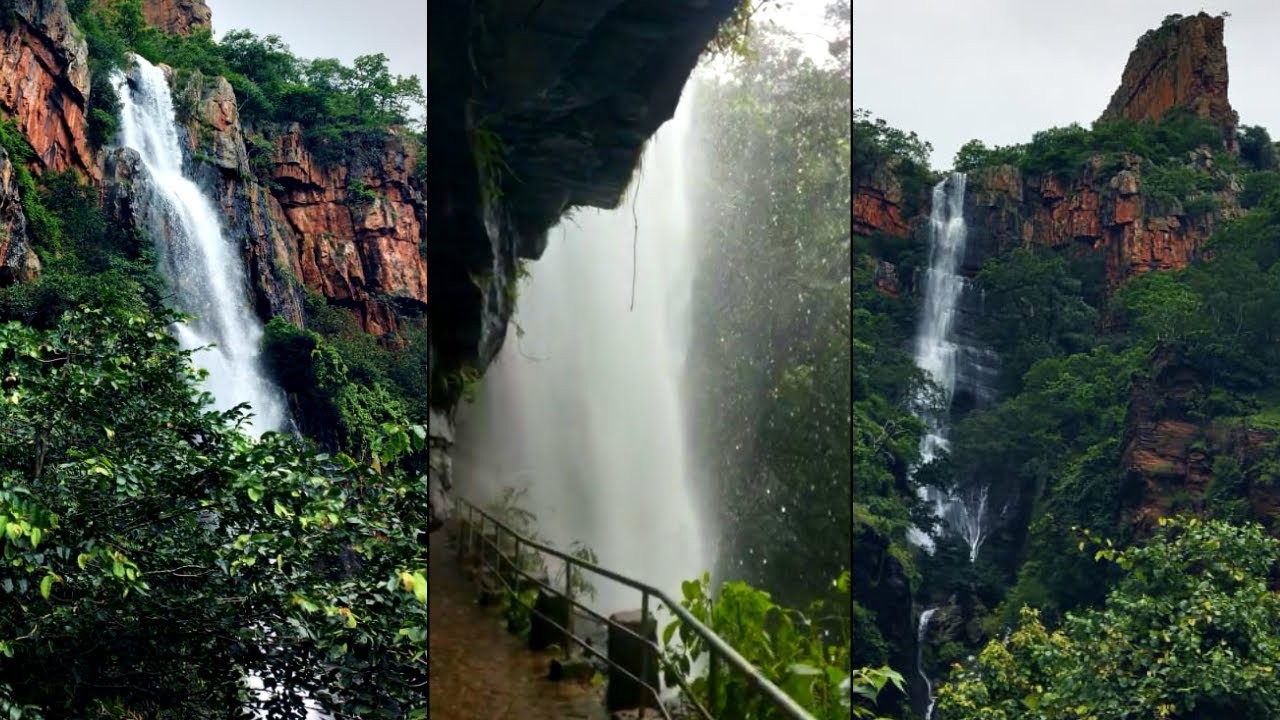
Discovery in the Sacred Waters of Ahobilam
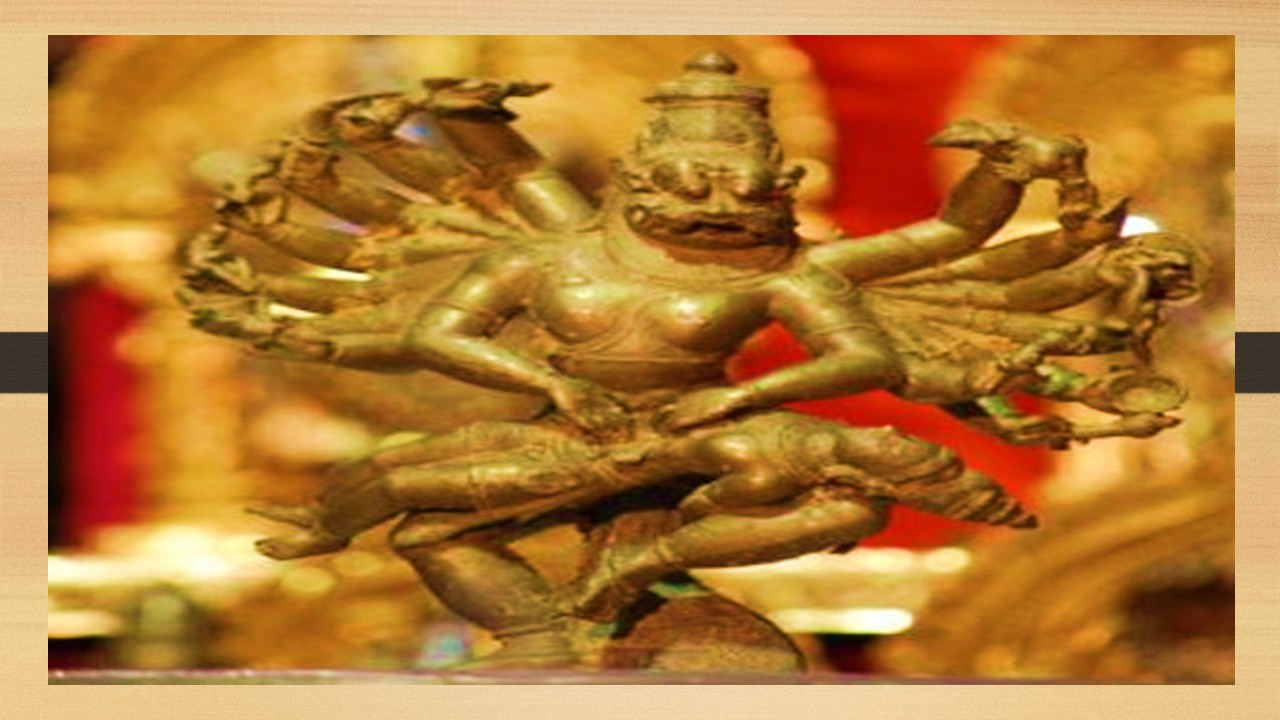
This exceptionally fierce Deity is preserved in a Samputa (a sealed sacred container). The worship of Shodashabahu Narasimha is highly restricted and is performed only by the chief pontiff (Peethadhipati) of the Sri Raghavendra Swamy Mutt, and that too exclusively on the auspicious day of Narasimha Jayanti, observed on Vaishakha Shukla Chaturdashi.
The Deity is a Pancha Loha Vigraha (made of five sacred metals), depicting the intensely fierce form of Narasimha tearing open the stomach of Hiranyakashipu with His Vajra Naka (diamond-like sharp nails), while holding the demon Hiranyakashipu across His thighs.
Glory of Narasimhaashtaka by Vijayendra Tirtha
Moved by divine grace, the Acharya composed this stotra, describing the immense benefits of chanting it. The Narasimhaashtaka is said to be effective for anyone—regardless of age or gender—especially when recited during Sandhya Kaala (twilight hours). Devotees believe that regular chanting can bring peace of mind, promote good health, and provide relief from illness and suffering. It is also thought to protect against negative influences, dispel fear, and remove obstacles, helping one progress smoothly on the path of success.


Leave a Reply