
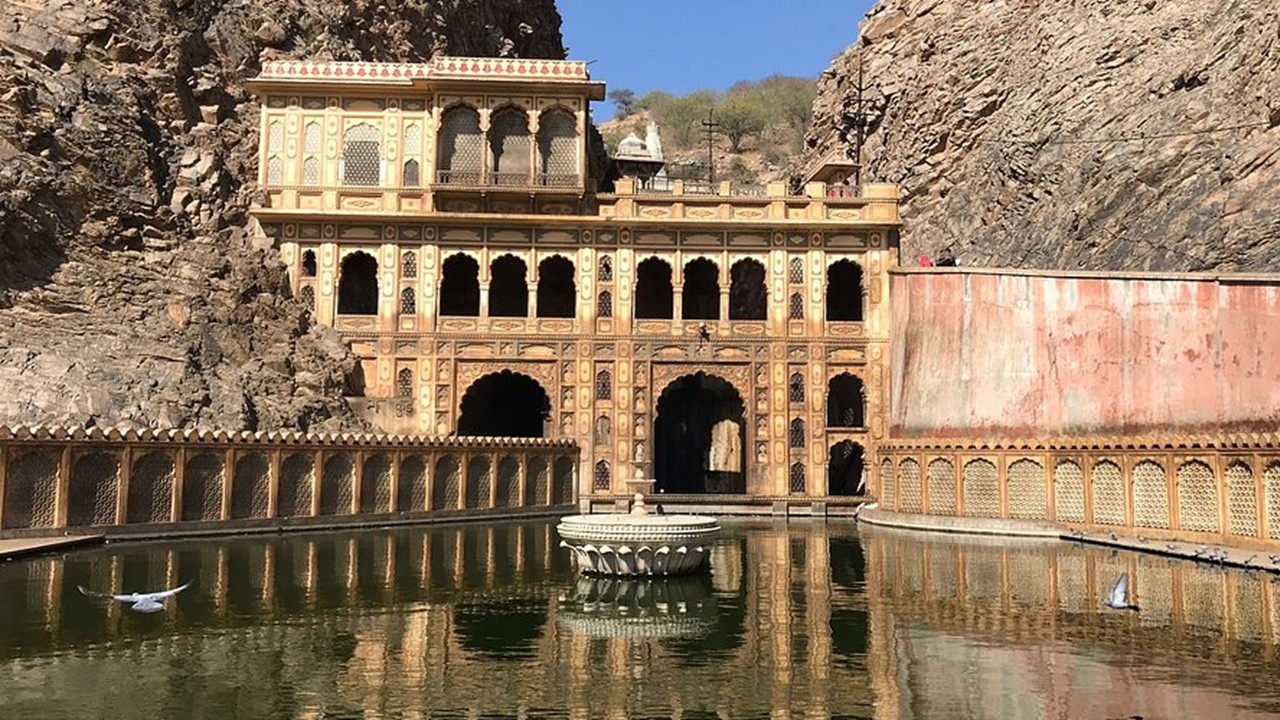
Jaipur, the royal capital city of Rajasthan is mostly missed out for its spiritual tourism. Though the city has a valorous history, its spiritual fervour is not less. The older settlement of Jaipur flaunts Galtaji temple, a rich spiritual heritage descending from Galava Rishi and legacy of acharyas of the Ramanandi Sampradaya.
Galtaji, about 10 km east of Jaipur in the Aravalli Hills, is one of Rajasthan’s most revered pilgrimage sites. Dedicated primarily to Lord Rama, Lord Krishna, and Hanuman Ji, it is renowned for its natural springs and sacred kunda’s (water tanks), which blend harmoniously with the surrounding landscape. The name “Galta” is associated with the sage Rishi Galava, who is believed to have performed intense tapasya here. Through local linguistic evolution, “Galava” gradually became “Galta.” The name also resonates with the Samskrita root gal (गल्), meaning “to drip” or “flow,” reflecting the perennial springs that characterize the site.
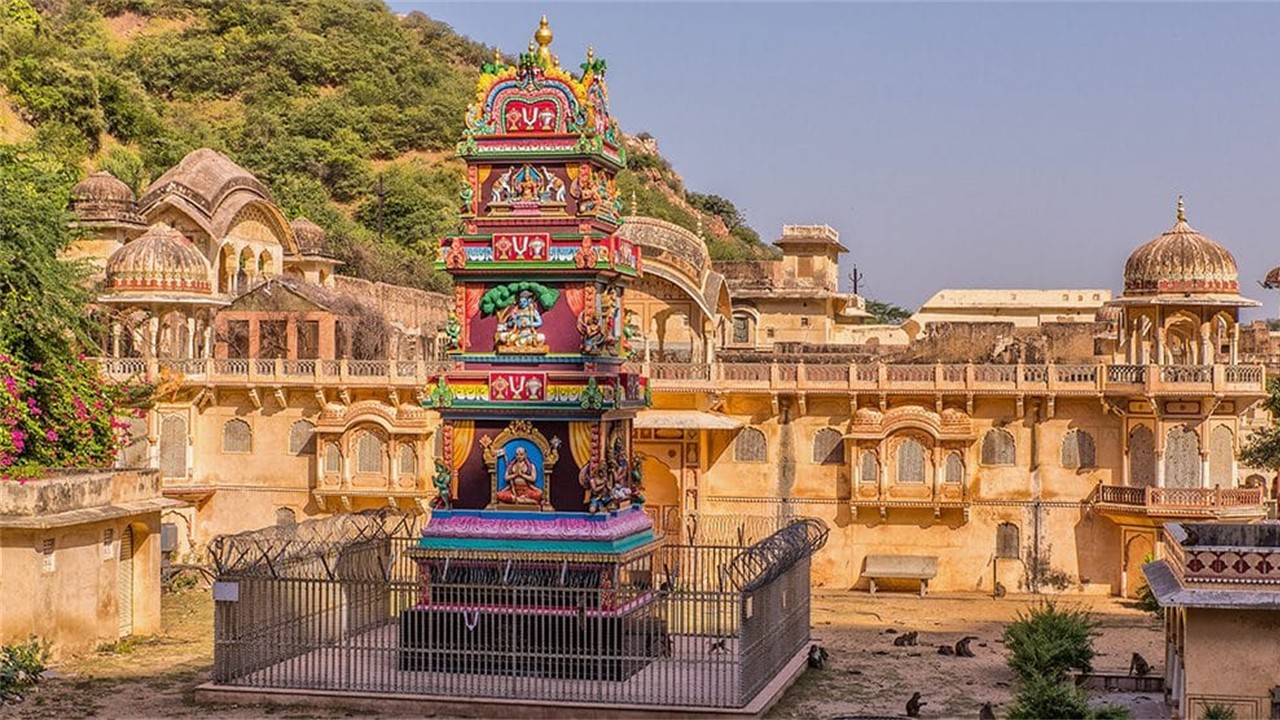
According to tradition, the gods were pleased with Sage Galava’s austerities and blessed the place with the presence of the Ganga, forming the sacred Galta Kund.
Galtaji holds a distinguished place in North Indian religious history as one of the earliest Vaishnava Ramanandi Peethams and an important centre of the Ramanandi tradition. Its prominence grew under the influence of the saint Shri Krishnadas Payahari, whose teachings established Galta as a major seat of Vaishnava devotion. Tradition also holds that Sri Nabha Dasa (Sri Narayana Dasa) composed his celebrated Bhaktamala here under the instruction of his guru, Sri Agradevacharya. Goswami Tulsidas is believed to have resided at Galtaji for three years and composed portions of the Ramcharitmanas. Local tradition further recounts that he received the divine darshan of both Sri Rama and Sri Krishna here. At this same temple, Sri Baladeva Vidyabhushana established the Gaudiya Vaishnava tradition as an independent Vedanta school by composing and presenting the Govinda Bhashya in response to the Jaipur theological controversy with the Ramanandi’s.
Galtaji is also popularly known as the “Monkey Temple” or Galwar Bagh because of the large population of rhesus macaques inhabiting the area. While no historical or religious source explains their origin, the natural environment of the Aravalli hills provides an ideal habitat, making the monkeys an enduring feature of the temple.
Who is Galava Rishi?
Galava Rishi was a revered sage and disciple of Sage Vishwamitra, whose life is described in the Mahabharata, Harivamsha Purana, and Markandeya Purana. He is known for his unwavering commitment to fulfilling his guru dakshina to Sage Vishwamitra. Tradition also holds that Galava performed long years of penance at the site now associated with the Galtaji Temple.
Other Puranic accounts describe his endurance in the face of harassment by the demon Patalaketu, whose defeat by Prince Rtadhvaja restored peace to the sage’s penance here.
Shri Krishnadas Payahari: First Mahant of Galta Peeth
Shri Krishnadas Payahari, or Payahari Baba, was a prominent Ramanandi saint and disciple of Anantananda Acharya, one of the principal disciples of Ramananda Acharya. In the early 16th century, he established the Gaddi of Galtaji Dham and became its first Mahant. His austerity of subsisting only on milk earned him the name “Payahari.”
Through his disciples, particularly Agradev – the guru of Sri Nabha Dasa – the Ramanandi heritage of Galtaji flourished. Tradition further holds that the spiritual power of Krishnadas Payahari inspired the yogis and ascetics of Galta to recognize his greatness, helping in establishing this site as a major centre of Ram Bhakti in the North.
Sri Bhaktamala: The Garland of Devotees
Around 1666, Sri Nabha Dasa (Sri Narayana Dasa), was instructed by Sri Agradevacharya to compose the Sri Bhaktamala, a celebrated work glorifying devotee of the Lord. A century later, Sri Priyadasa enriched it with an influential commentary.
Amid disagreements among different Vaishnava traditions during that period, Agradevacharya instructed Sri Nabha to glorify the devotees and emphasized devotion to the Lord’s servants. Acting on this instruction, Sri Nabha composed the Bhaktamala literature at Galtaji.
Goswami Tulsidas’s Divine Darshan
According to traditions, Goswami Tulsidas spent three years at Galtaji and composed many portions of Ayodhya Kanda of the Ramcharitmanas here. These associations have given Galtaji a key place in India’s devotional and literary heritage.
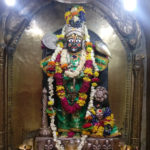
One cherished legend recounts that Lord Krishna appeared before Tulsidas in the form of Lord Rama, affirming the essential unity of the two manifestations of Vishnu. A distinctive deity within the temple complex is believed to commemorate this vision by embodying attributes associated with both Rama and Krishna.
Architecture
Galtaji Temple, near Jaipur, was built in the 18th century by Diwan Rao Kriparam, a minister of Maharaja Sawai Jai Singh II. Historians believe the site was a sacred centre long before this, housing an ancient Shiva shrine, evidenced by rock-cut cave temples in the surrounding hills.
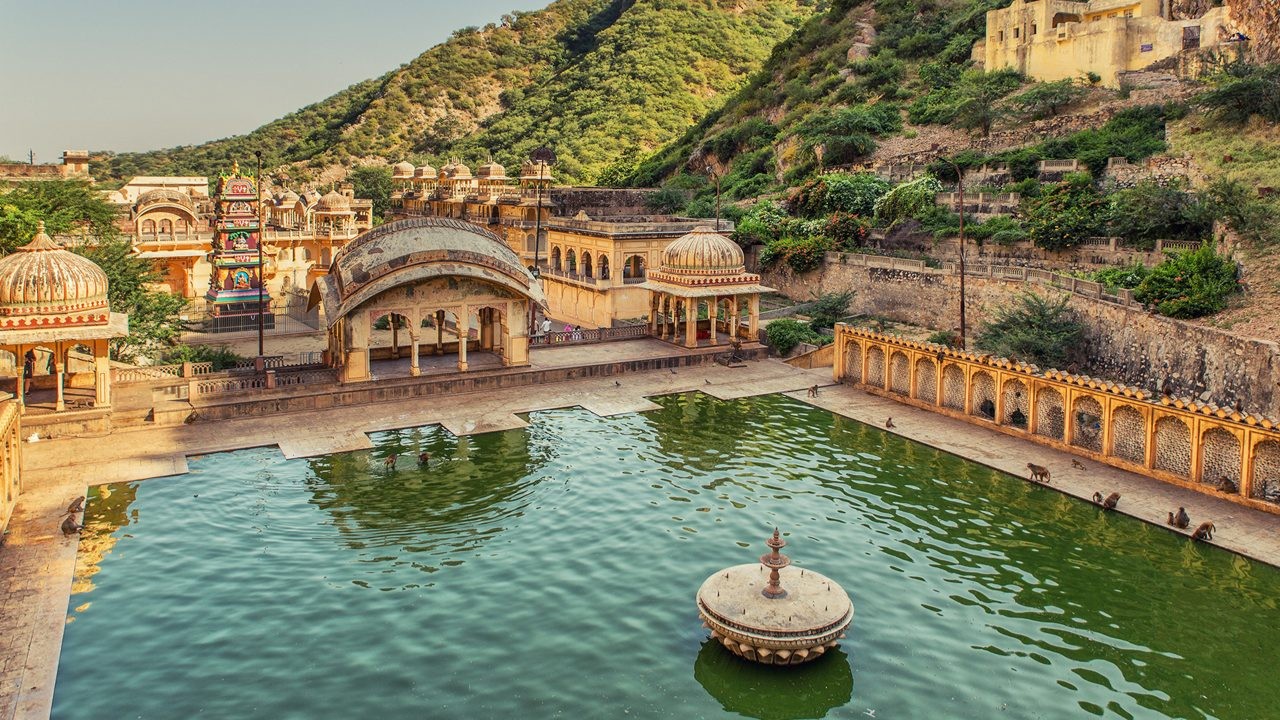
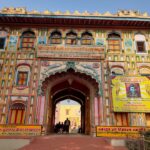
The temple’s ornate pavilions, carved pillars, painted facades, and domed roofs blend harmoniously with the rugged landscape. Natural springs continuously feed seven sacred kundas (water tanks), including Galta Kund, Surya Kund, Gopal Kund, and Janana Kund, located at a distance of few hundred meters from each. Among these, Galta Kund is the most revered, believed never to run dry.
Galtaji is a vast spiritual complex with shrines dedicated to Lord Hanuman, Rama, Krishna, Ganesha, and other deities. The hilltop Suryadev Mandir offers panoramic valley views, while the Sita Ram Ji Temple is a principal shrine. The ancient Sri Lakshmi Narasimha Temple, known as Uttara Thotadri, is an important Vaishnava centre. Other notable sites include the Hanuman Temple with its eternal Akhand Jyoti and the Shri Gyan Gopal Ji Temple, a centre for worship and spiritual education.
Major Festivals at Galtaji
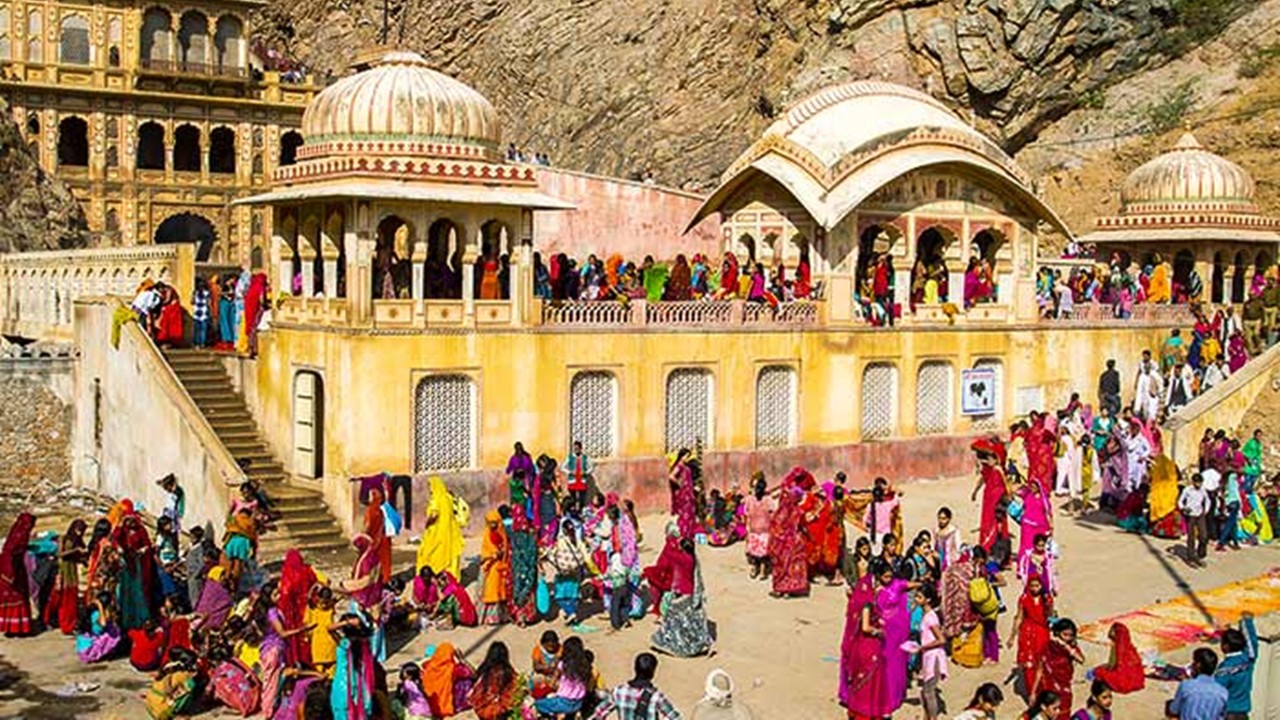
Ritual bathing, especially at Galta Kund, during Makar Sankranti and Kartik Purnima attracts thousands of devotees to seek spiritual blessings. On Kartika Purnima, the divine Trinity – Brahma, Vishnu, and Maheshwara grace the place with their presence. Other festivals like Gangaur festival, honouring the goddess Gauri, Janmashtami, Ram Navami and Diwali are also vibrantly celebrated here.
Darshan Timings of Galtaji Temple
The temple is open all days of the year between 5:00 AM to 9:00 PM.
Entry Fees at Galtaji Temple
Entry is free for everyone, regardless of nationality or faith.
Best Time to Visit Galtaji
The best time to visit Galtaji in Jaipur is from February to March and October to December. Rajasthan’s summers are extremely hot and uncomfortable, so they are best to be avoided.
Nearby Places to Visit
Govind Dev Ji Temple: A famous Krishna temple in Jaipur, who is considered the King of Jaipur. This Deity resembles face of Sri Krishna.
Radha Gopinath Ji Temple: Another Deity of Lord Krishna from Vrindavana. This Deity resembles chest of Sri Krishna.
Radha Vinodilal Temple: One from Deity from Vrindavana.
Radha Madhava Temple: The Krishna Deity which was originally worshiped by Jayadeva Goswami (author of Geeta Govinda) in Vrindavana.
Radha Damodara Temple: The beautiful Deity of Krishna from Vrindavana.
How to Reach Galtaji Temple?
The best way to plan the Galtaji Temple tour is through Tirtha Yatra’s Rajasthan Yatra. All the arrangements for your Yatra will be taken care of which you focus only on the spiritual experience of the journey.
By Road: Due to its location outside of the city, it is better to go by road from the city. One may rent cabs or hire a taxi or rickshaw to reach the temple. If someone intends to travel by bus, there are options for both state- run buses as well as deluxe buses.
By Rail: The Bais Godam Junction and Jaipur Railway Station are the nearest railway stations that can be accessed to reach the temple. You can hire a cab or a rickshaw to reach the temple since its around 13km from each station.
By Air: Jaipur International Airport is the nearest airport to Galtaji Temple. One may hire a cab from airport to reach the temple.
0
Leave a Reply