
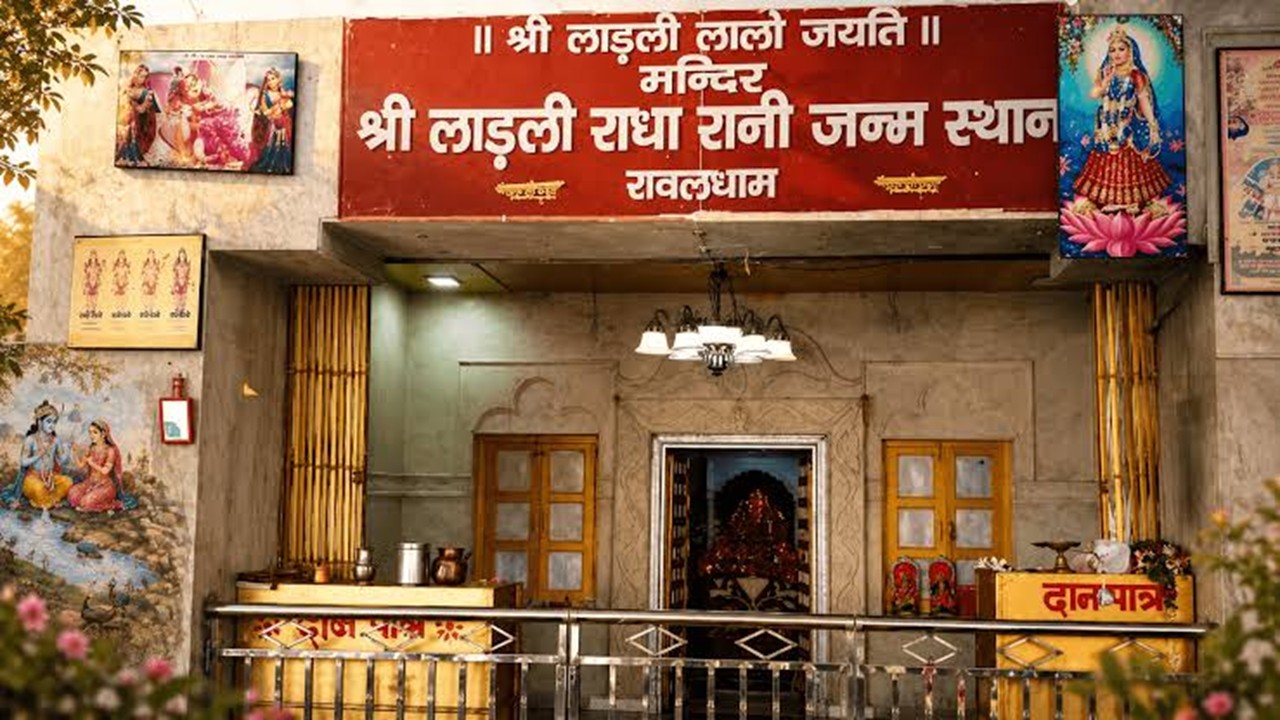
About Raval Dham: Where Shrimati Radha Rani Appeared
In the heart of Vrajabhoomi, away from the crowds of Vrindavan and the hills of Barsana, lies a small village that holds immense spiritual significance for devotees of Shrimati Radha and Sri Krishna. Raval (Rawal), located near Gokul in the Mathura district of Uttar Pradesh, is traditionally revered as the birthplace and appearance place of Shrimati Radha Rani, the eternal divine consort of Sri Krishna.
Unlike many famous pilgrimage destinations that attract thousands of tourists daily, Raval remains simple, peaceful, and deeply devotional. The village is not known for grand architecture or bustling markets. Instead, visitors come seeking something far more precious: silence, faith, and a personal connection with Shrimati Radha Rani. For devotees, Raval is more than a destination. It is where Radha Rani’s 1st earthly pastimes took place in Braj.
Vedic History of Raval Dham
According to Braj tradition and many Vaishnava teachings, King Vrishabhanu Maharaj and Queen Kirtida Devi resided in Raval when Shrimati Radha Rani appeared in this world. The village was once known as Mukharavali and was situated along the sacred Yamuna River. Devotional traditions describe Raval as the place where Shrimati Radha Rani manifested before later moving with her family to Barsana, which became the center of her childhood pastimes.
This distinction is important:
Raval = Shrimati Radha Rani’s Birthplace (Appearance Place)
Barsana = Shrimati Radha Rani’s Childhood Home
Because of this tradition, many pilgrims start their Braj Yatra with Raval before proceeding to Barsana, Nandgaon, Govardhan, and Vrindavan. Unlike modern historical monuments supported by extensive inscriptions and records, the history of Raval survives through oral traditions, devotional literature, kirtans, local legends, and the continuous worship of generations of Braj residents.
Even today, elderly villagers narrate stories of Shrimati Radha Rani’s appearance, preserving centuries of devotion in the simplest and most authentic manner.
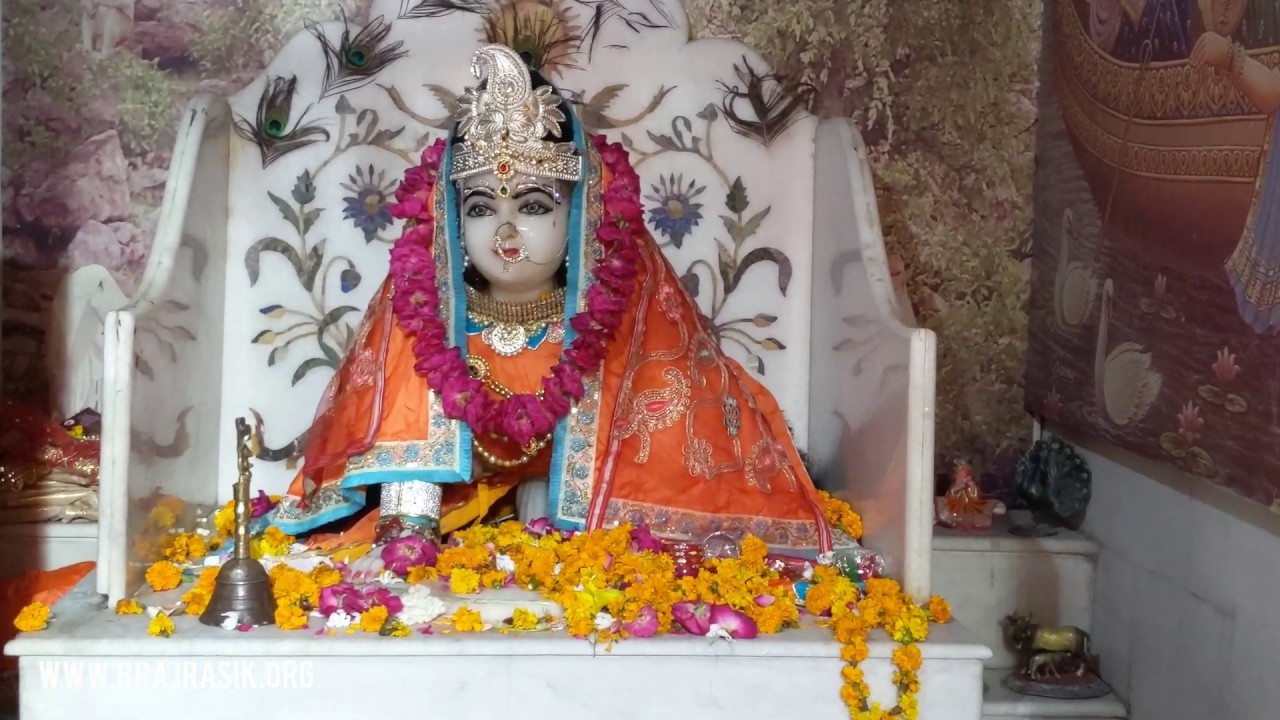
The Divine Appearance of Shrimati Radha Rani
According to sacred tradition, one early morning Vrishabhanu Maharaj, the father of Shrimati Radharani, went to bathe in the holy waters of the Yamuna River. As he approached the river, he noticed a magnificent golden lotus flower with a hundred radiant petals floating gracefully on the water. To his amazement, nestled within the heart of the lotus was a beautiful baby girl, glowing with divine brilliance.
Recognizing the child as a heavenly blessing, Vrishabhanu Maharaj gently lifted the infant from the lotus and carried her home. He lovingly placed the baby in the lap of his wife, Kirti Devi, and the couple rejoiced at the arrival of their daughter. However, they soon became concerned when they noticed that the child kept her eyes closed and did not open them, leading them to fear that she might be blind.
At that time, Narad Muni, the great sage and devotee of the Sri Krishna, knew that if Krishna had descended to the earthly realm, then Shrimati Radharani must have also appeared. Determined to find her, he searched from place to place until he arrived at the residence of Vrishabhanu Maharaj.
“Do you have any children?” Narad Muni asked.
“Yes,” replied Vrishabhanu Maharaj, “I have a son named Shridama and a daughter.”
Hearing this, Narad Muni requested to see the baby girl and offer her his blessings. When Vrishabhanu expressed his concern that the child seemed unable to see, Narad Muni reassured him and advised that her birth should be celebrated with great joy. Following his counsel, Vrishabhanu Maharaj organized a grand festival and invited the residents of Raval, Gokul, and his dear friend Nanda Maharaj along with his family.
During the celebration, Nanda Maharaj and Mother Yashoda arrived with their young son, Krishna. While the elders and mothers were engaged in conversation, little Krishna quietly made His way into the room where baby Radharani was resting.
Climbing onto her bed, Sri Krishna gently touched her eyes. At that very moment, Shrimati Radharani opened her eyes for the first time and beheld the enchanting form of Sri Krishna. It is said that she had chosen not to open her eyes until she could gaze upon her beloved Sri Krishna.
The divine miracle filled everyone with wonder and joy. The entire village celebrated the blessed occasion with great enthusiasm, recognizing it as a sacred moment in the eternal pastimes of Shrimati Radha and Sri Krishna.
Devotees interpret this sacred moment beautifully “Radha opened her eyes only because the first person she wished to see was Sri Krishna.”
For centuries, this story has inspired devotees and remains one of the sweetest devotional traditions connected with Raval Dham.
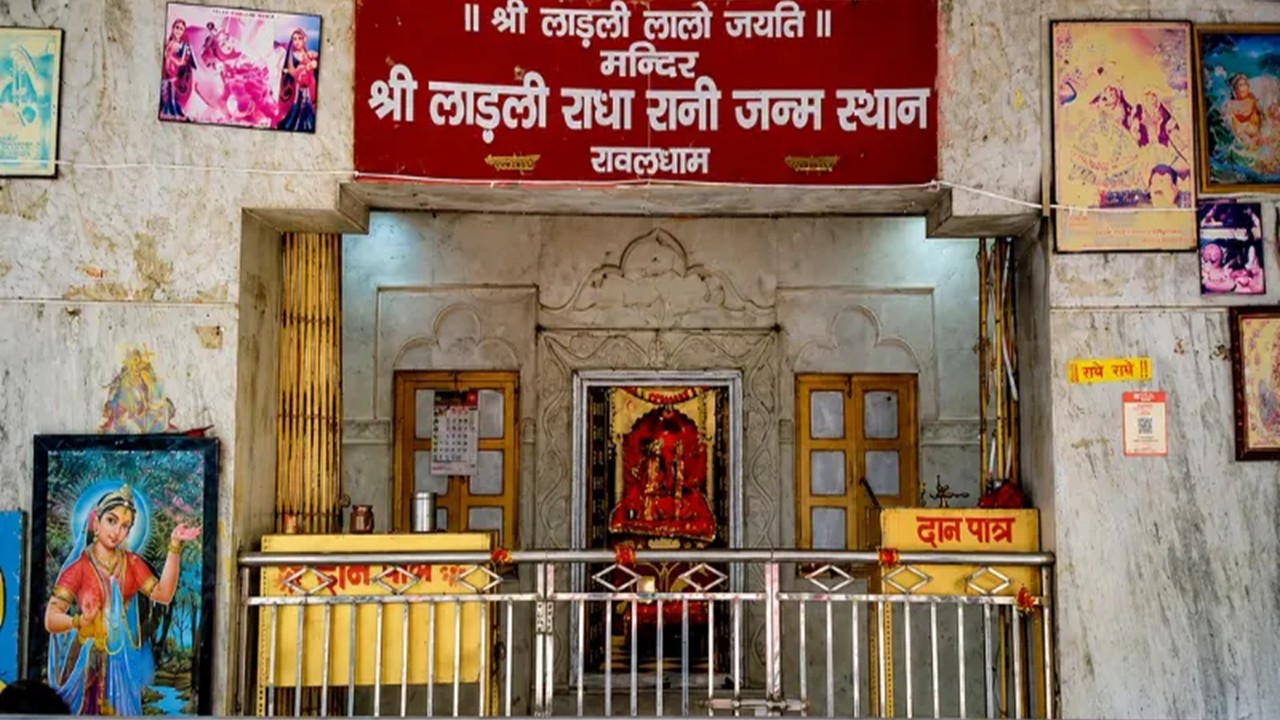
Ladli Lal Temple
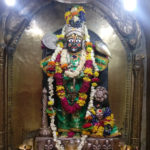
Nestled in the sacred land is the charming and beautiful Ladli Lal Temple, dedicated to the divine couple, Shrimati Radha and Sri Krishna. The temple houses an ancient deity of Sri Krishna, which is traditionally believed to have been established by Vajranabh, Krishna’s great-grandson, more than 5,000 years ago. A unique feature of this temple is the worship of Shrimati Radharani in her infant form, lovingly known as Ladli, symbolizing her divine innocence, purity, and eternal grace.
The principal attraction in the village is the Radha Rani Janam Sthal Temple, the sacred site associated with her appearance. Unlike some of the grand temple complexes of Vrindavan or Barsana, this temple retains a humble and intimate atmosphere. The moment visitors enter the temple, they notice – A peaceful surroundings with simple architecture and having close darshan of the deity which is traditional Braj-style worship and hear devotional singing and kirtan with warm hospitality from local priests.
Morning and evening aartis are especially beautiful. The temple bells, devotional songs, and fragrance of flowers create an atmosphere that invites reflection and prayer. Many pilgrims spend time simply sitting quietly within the temple premises, experiencing the calm that Raval is known for.
Raval and Barsana: Understanding the Difference
Many visitors become confused about the relationship between Raval and Barsana.
The answer lies in understanding Radha Rani’s life traditions.
Raval – Radha Rani Janam Sthal / Appearance place of Radha Rani which is near Gokul and Mathura has a quiet village atmosphere.
Barsana – Childhood home of Radha Rani, center of Lathmar Holi (Holi with sticks) celebrations and home of the famous Sriji Temple.
Festivals
The most important, celebrated festival and occasion to visit Raval is Radhashtami Festival.
During Radhashtami – Special decorations, Large devotional gatherings, Continuous kirtans, Temple celebrations, Spiritual discourses and the entire village come alive in devotion.
Temple Timings and Darshan
Summer – (April to August)
Morning- 05:30 am to 12:00 pm and evening – 04:00 pm to 09:00 pm
In Winter – (September to March)
Morning – 06:00 am to 12:30pm and evening – 04:00 pm to 07:00 pm
Temple timings may vary during festivals.
Best Time to Visit Raval
Although Raval can be visited throughout the year, certain seasons offer a more pleasant experience.
October to March – with cool weather, comfortable travel conditions and clear skies.
July to September – with green countryside, beautiful monsoon scenery and pleasant village atmosphere.
Nearby Places to Visit
A complete Braj pilgrimage should include nearby sacred destinations.
Gokul – Krishna’s infancy and early childhood site.
Mahavan – One of Braj’s oldest sacred settlements.
Baldeo (Dauji Temple) – Famous temple dedicated to Sri Balarama.
Nandgaon – Home of Nanda Maharaj and Krishna’s childhood residence.
Barsana – Radha Rani’s childhood home and Sriji Temple.
Govardhan – Sacred Govardhan Hill and Parikrama route.
Kusum Sarovar – Beautiful historical reservoir and sunset spot.
Radha Kund – One of the holiest sites connected with Sri Radha and Sri Krishna.
Vrindavan – Land of divine Leelas, temples, and devotion.
How to Reach Raval Sri Radha Rani Birthplace
The best way to plan for authentic Vrajbhoomi pilgrimage experiences, local tours, temple darshan, and spiritual travel across Mathura, Vrindavan, Barsana, Nandgaon, Govardhan, Gokul, and Raval Dham tour is through Tirtha Yatra’s Vrajbhoomi Yatra. All the arrangements for your Yatra will be taken care of which you focus only on the spiritual experience of the journey.
By Air: Nearest major airport – Indira Gandhi International Airport (Delhi). From Delhi Airport, drive to Mathura and Continue towards Gokul and Raval
By Train: The nearest railway station is – Mathura Junction (MTJ). From Mathura, Autorickshaw Available locally and Private cab Most convenient.
By Road: From Delhi – Via Yamuna Expressway (3 to 4 hrs). From Agra – Via NH-19 (1.5 hrs). From Vrindavan – 25 to 30 km (45 min)
0

Leave a Reply