
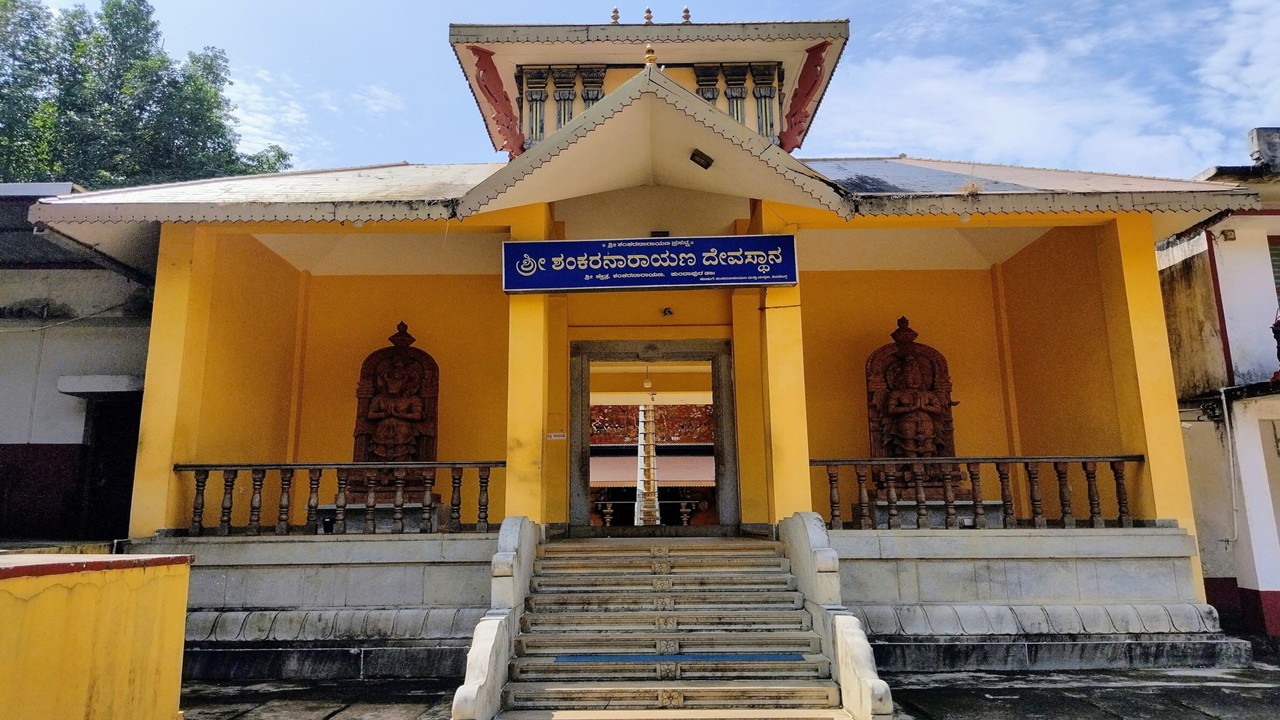
Situated in the historic town of Kundapura near Udupi on Kundapura – Agumbe Highway Road, Sri Shankaranarayana Temple is one of the region’s most ancient and spiritually significant shrines. Dedicated to Sri Shankaranarayana, the unified form of Bhagavan Shiva (Shankara) and Sri Vishnu (Narayana), the temple stands as a powerful symbol of harmony between the Shaiva and Vaishnava traditions. The temple is closely associated with the ancient hermitage of Krodashrama, the abode of sage Kroda Muni, from which it derives the name Kroda Kshetra.
According to sacred tradition, the entire coastal region of Karnataka forms part of Parashurama Kshetra, the land reclaimed from the Arabian Sea by Sri Parashurama, the sixth incarnation of Sri Vishnu. After completing his mission of restoring dharma, Parashurama is believed to have performed penance and thrown his divine axe into the sea. The devata of the seas, Varuna deva withdrew the waters up to the point where the axe landed, revealing a new stretch of fertile land along the western coast of India. This newly emerged land became known as Parashurama Kshetra or Bhargava Kshetra, encompassing present-day coastal Karnataka, Kerala, Goa, and parts of the Konkan region.
In ancient times, the temple enjoyed the patronage of several powerful South Indian dynasties, including the Vijayanagara Empire, the Keladi Nayakas, and the rulers of the Ikkeri and Keladi regions. The spiritual importance of this region is further enhanced by the presence of the Sapta Mokshadayini Kshetras, the seven sacred shrines believed to bestow liberation upon devotees. These seven sites are Gokarna, Udupi, Kollur, Kumbashi, Koteshwara, Kukke Subrahmanya, and Shankaranarayana of Kundapura.
The pilgrimage of the five Shankaranarayana temples comprises a sacred circuit of shrines dedicated to Sri Shankaranarayana: The Kroda Kshetra (Sri Kroda Shankaranarayana Temple) in Kundapura, which is regarded as the principal temple of the tradition, along with Machattu Hole Shankaranarayana, Amasebailu Mandavi Shankaranarayana, Belve Shankaranarayana Temple in Belve, and Avarse Shankaranarayana Temple in Avarse.
Kharasura and Rattasura
Sri Shankaranarayana is also revered by the name Kroda, in honor of Kroda Maharshi, whose tapas sanctified the region. The glory of Krodha Shankaranarayana is described in the 24th Chapter of the Pushkara Khanda of the Padma Purana, where the origin of this Kshetra is narrated.
The ancient history is linked with Kroda Muni, whose hermitage gave the area its original name, Krodashrama. Tradition narrates that the region was once covered by dense forests where sages performed austerities and Vedic rituals. During this period, two powerful demons named Kharasura and Rattasura began terrorizing the land. Having acquired immense strength through penance, they disrupted yajnas, harassed sages, desecrated sacred places, and spread fear among both humans and celestial beings. Unable to bear the suffering inflicted by these demons, Kroda Muni undertook severe penance in the forests of Krodashrama, praying for divine intervention to restore righteousness.
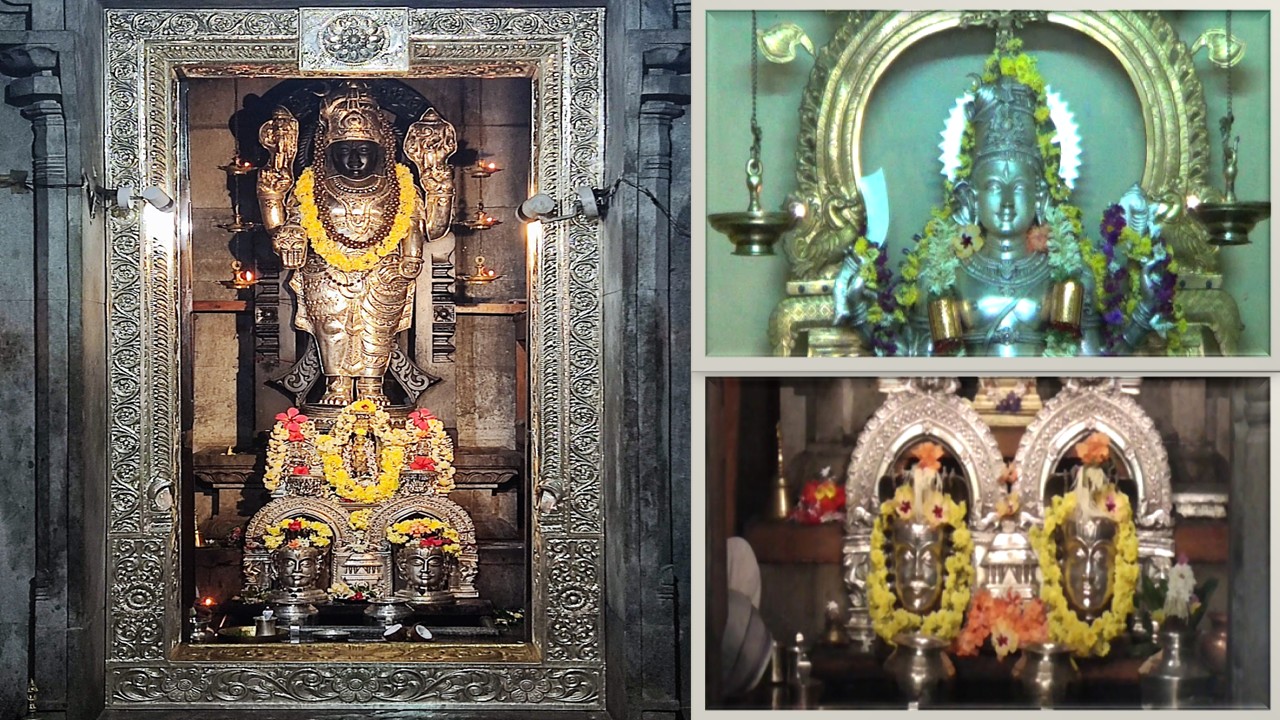
Moved by the sage’s unwavering devotion, the Supreme Lord manifested in a magnificent and unprecedented form known as Harihara or Shankaranarayana. This glorious manifestation united the powers of Shiva and Vishnu in a single body. The right side appeared as Bhagavan Shiva, adorned with matted hair, deer skin, rudraksha ornaments, and the trident, while the left side appeared as Sri Vishnu, bearing the divine crown, conch, discus, and royal ornaments. The radiant deity confronted Kharasura and Rattasura in a fierce battle. Combining the destructive energy of Shiva and the sustaining power of Vishnu, Harihara annihilated both demons and restored peace to the world. The sages and devas rejoiced, recognizing this form as the ultimate expression of divine unity.
Following the victory, Kroda Muni prayed that the Shankaranarayana remain permanently in the region for the welfare of future generations. According to tradition, Brahma also requested them to continue blessing humanity through this unique manifestation. The Lord consented, sanctifying the region and establishing a legacy of Harihara worship that continues to this day. This tradition forms the theological basis of the Svayambhu Shankaranarayana worship prevalent throughout the region.
Some traditions link the Kodavoor Sri Shankaranarayana Temple to the same sacred episode associated with the Kundapura temple. According to tradition, Sri Madhvacharya, the founder of Tattvavada, visited Kodavoor as a child and worshipped Sri Shankaranarayana there. Certain accounts also identify the shrine with the ancient Kanana Devalaya, or Forest Temple.
Architecture and Unique Features
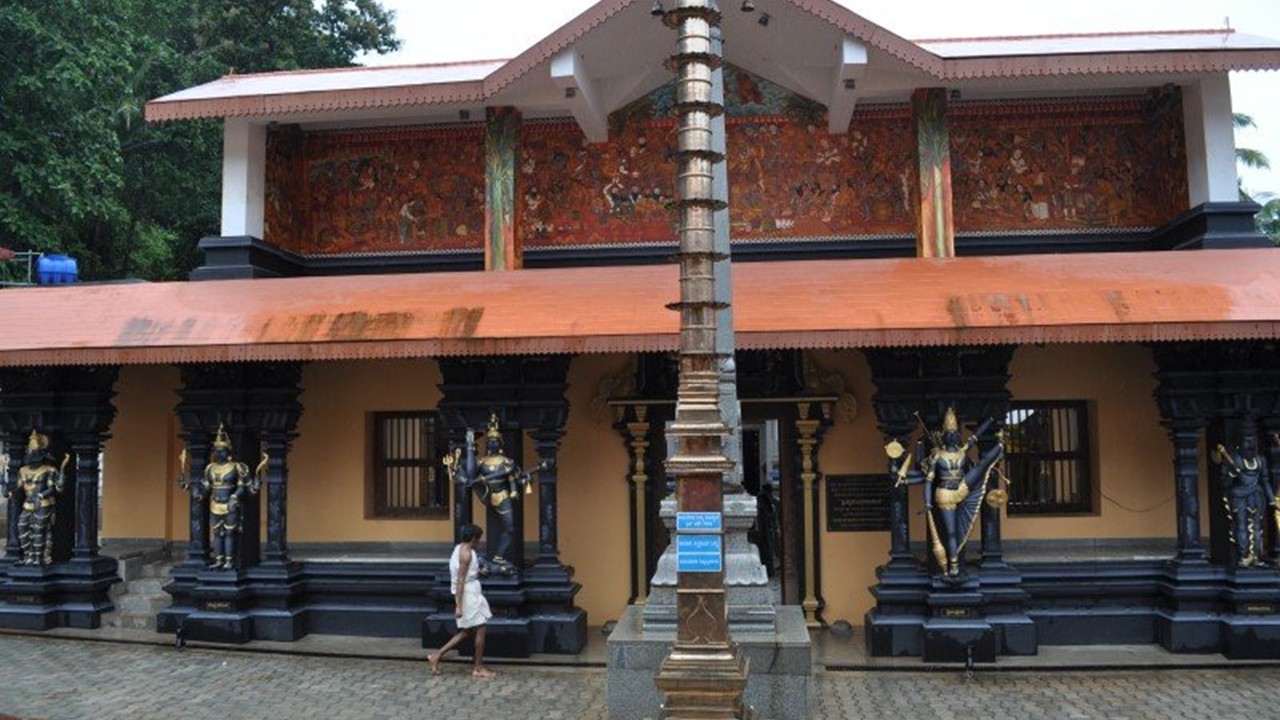
Architecturally, the temple exemplifies the traditional style of coastal Karnataka. Its prominent sloping tiled roofs are specially designed to withstand the heavy monsoon rains of the region. The structure combines granite foundations with exquisitely carved wooden superstructures, reflecting the craftsmanship of generations of temple artisans. Visitors are greeted by a golden flagpole (Kodimaram) at the entrance and doors intricately carved with the forms of Shiva and Vishnu. Intricate wooden carvings depicting both Shaiva and Vaishnava motifs adorn various sections of the temple, visually reinforcing the central theme of divine unity.
The presiding deity of the Sri Shankaranarayana Temple is worshipped in the rare and sacred form of an Udbhava Linga (self-manifested linga). The naturally formed lingas of Sri Shankara and Sri Narayana are situated approximately one foot below the ground level within the Garbhagriha (Sanctum Sanctorum). Owing to their unique placement, devotees do not directly view the lingas; instead, they receive darshan through their reflection in a mirror.
The Shankara Linga is located on the right side of the sanctum (appearing on the devotees’ left) and is circular in shape. Beside it lies the Narayana Linga, which is flat in form and bears marks believed to be the footprints of the divine cow Kamadhenu. Local tradition holds that Kamadhenu stood at this sacred spot and continuously poured her milk upon the deity in worship. Another remarkable feature of the sanctum is the presence of water surrounding the Udbhava Linga throughout the year. This ever-present sacred water is known as Suddhamrita Theertha, and devotees regard it as highly auspicious and spiritually purifying.
Located directly in front of the temple is the revered Koti Theertha, the principal sacred pond among the 21 Theertha’s. Tradition dictates that devotees first perform prokshana (ritual sprinkling of water) using the waters of Koti Theertha before proceeding to have darshan of Sri Shankaranarayana. Sacred rites such as Pitru Tarpana (ritual offerings to ancestors) and Theertha Snana (ritual bathing) are regularly performed here. The Varahi River flows near Sri Sambasadashiva Temple, which is about 1.5 km from the Shankaranarayana Temple.
The hill upon which Kroda Maharshi performed his austerities is known as Kroda Giri. Even today, the summit of this sacred hill enshrines the deities of Shankaranarayana, accompanied by Sri Gowri and Sri Lakshmi. A short distance from the temple lies the sacred Kroda Guhe, the cave where Kroda Maharshi is believed to have performed intense penance and meditation. Situated atop the Kroda Giri Parvatha, this ancient cave measures approximately six feet in width and is entered through a narrow two-foot-wide opening. Local tradition also notes the presence of a unique dual Nandi association; a feature rarely found in neighbouring temples.
Festivals
The temple remains a vibrant center of worship and cultural activity. Its annual Rathotsava or Car Festival attracts thousands of devotees, while the traditional Katte Pooje allows the deity to visit devotees in a silver palanquin. The spectacular Lakshadeepotsava, during which countless lamps illuminate the temple and surrounding streets, transforms the shrine into a breathtaking spiritual spectacle. The temple also hosts Maha Shivaratri and Navaratri celebrations, Chandika Homas, Ganapati rituals, Naga worship, and numerous community observances throughout the year.
Darshan Timings of the Temple
The temple is open year-round from 6:00 AM to 12:30 PM and 4:30 PM to 8:00 PM.
Nearby Places to Visit
Sri Sambasadashiva Temple: An ancient Shiva temple known for its Saligrama Shiva Linga and a monolithic Nandi statue. The Varahi River flows nearby.
Kollur Sri Mookambika Temple: One of Karnataka’s most revered pilgrimage centres, dedicated to Sri Mookambika and located within driving distance from Shankaranarayana.
Anegudde Vinayaka Temple, Kumbashi: A famous temple dedicated to Sri Ganesha, located near Kundapura and linked with Ravana’s pastime.
Kundeshwara Temple, Kundapura: An ancient Shiva temple believed to be associated with the origin of the name “Kundapura.”
How to Reach Shankaranarayana Temple?
By Road: Shankaranarayana village lies on the Kundapura-Agumbe Road in Udupi district, with buses, taxis, and rental vehicles available from Kundapura, Udupi, and nearby towns.
By Rail: The nearest major railway station is Kundapura Railway Station, which is well connected to major cities. The temple is about 32 km from Kundapura station.
By Air: The nearest airport is Mangalore International Airport, located approximately 120 km from Shankaranarayana. From the airport, taxis and buses are available to reach the temple.
0

Leave a Reply