
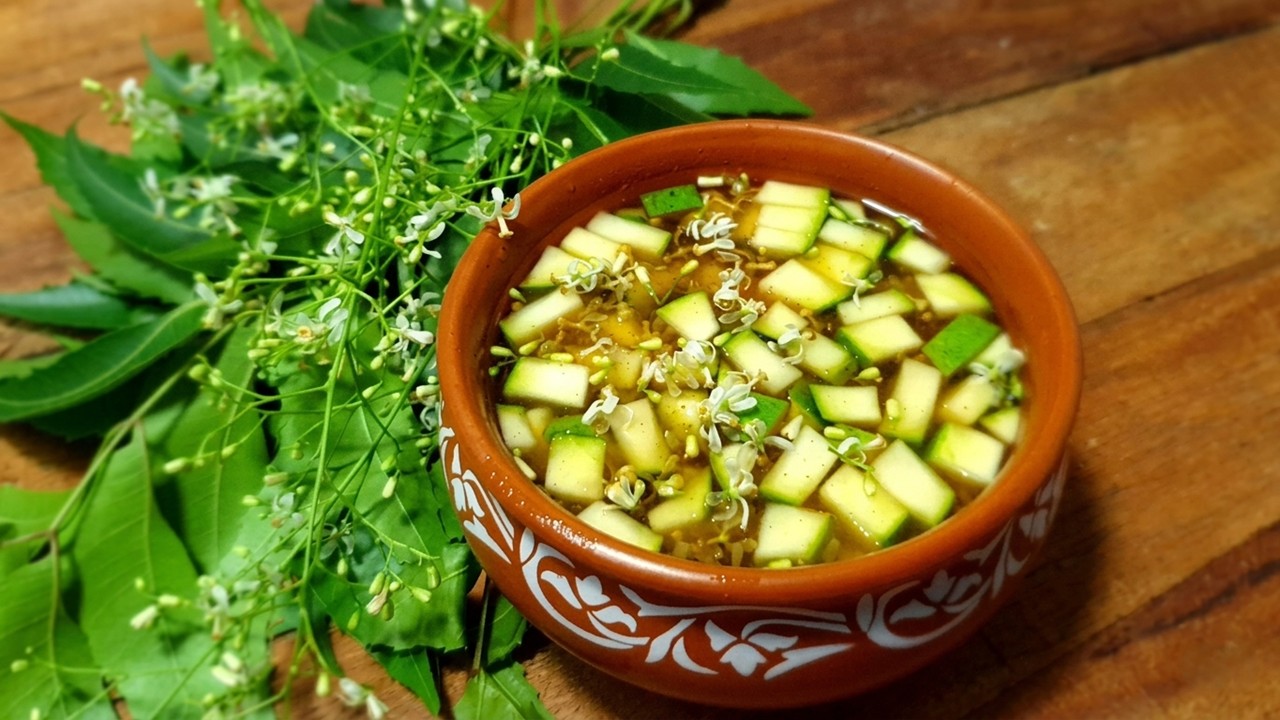
Ugadi, also known as Chandramana Ugadi, is celebrated on the first day of the Chaitra month.

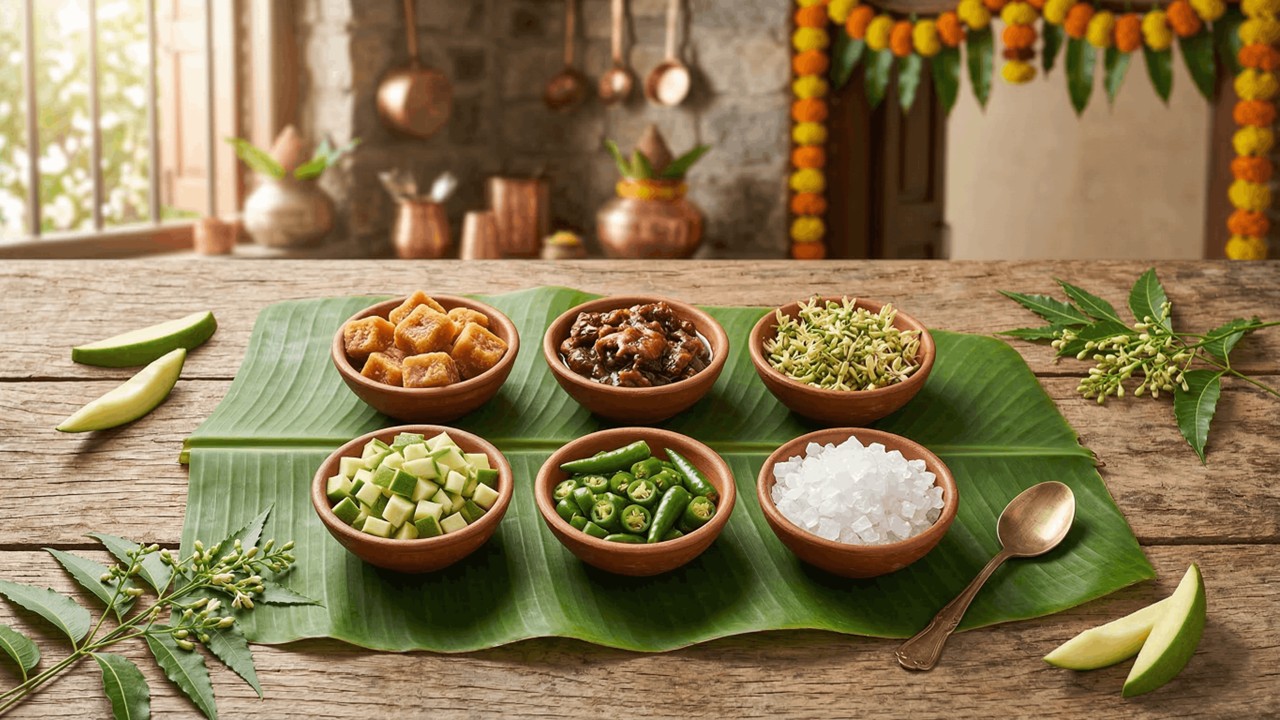
Ugadi Pachadi is the first sweet-tangy dish that must be eaten on this day. It is a simple, easy recipe that one must try at home and includes basic ingredients like raw mango, jaggery, tamarind pulp, fresh neem flowers, black pepper, and salt.
Ingredients Required for Preparing Ugadi Pachadi
- Raw Mango – 1/4 cup
- Jaggery – 1/2 cup
- Tamarind Pulp – 1/4 cup
- Fresh Neem Flowers – 5 tbsp
- Pepper – 2 tbsp
- Salt – 1/4 tbsp
- Water – 1/4 cup
Step-by-Step Methods to Prepare Ugadi Pachadi
- Finely grate raw mango into smaller pieces.
- Take a large bowl and soak the tamarind in water for 10-15 minutes.
- Take another bowl and grate the jaggery and mix with water. Stir until the jaggery dissolves completely.
- Crush the black pepper to make a fine, coarse powder.
- Separate the neem flowers from the stem and set aside.
Methods
Step 1: Nicely squeeze the tamarind to get pulp, then set aside the strings and seeds by using a filter.
Step 2: Filter the jaggery water and pour it into the bowl with tamarind water. Adjust the jaggery and tamarind water according to the consistency required.
Step 3: To the above bowl, add finely grated raw mango, neem flowers, black pepper powder, and salt to the bowl. Instead of black pepper powder, chilli powder or finely grinded chilli paste can also be used.
Step 4: Stir all the above ingredients well to enjoy the delicious sweet-sour-bitter taste.
Offering to the Deity
Offer the Ugadi Pachadi as naivedyam to the deities and then serve it to all the family members.
Each Ingredient
The idea of different tastes representing human emotions comes from the traditional concept of six tastes, especially seen in Indian culture during festivals like Ugadi. Each taste symbolically reflects an experience in life:
Sweet – Happiness
Sweetness represents joy, love, success, and pleasant moments in life. It reminds us of celebrations and achievements.
Sour – Surprise
The tangy taste symbolizes unexpected events—both good and challenging—that add excitement and unpredictability to life.
Bitter – Sadness
Bitterness reflects difficulties, disappointments, and painful experiences that help us grow stronger and wiser.
Spicy – Anger / Energy
Spiciness represents strong emotions like anger, passion, and determination. It signifies intensity and courage.
Salty – Interest / Acceptance
Salt stands for balance and the essential experiences in life. It symbolizes adaptability and the ability to accept situations.
Astringent – Fear / Challenges
This dry, sharp taste represents obstacles, self-control, and moments of uncertainty that test our resilience.











Leave a Reply