

A recent study by the Indian Institute of Management, Lucknow, titled “Economic Renaissance of Ayodhya,” highlights the dramatic economic transformation the city has undergone following the construction and consecration of the Shri Ram Temple. The research underlines how well-planned religious infrastructure, combined with effective policies and development frameworks, can act as a powerful driver of regional economic growth.
Ayodhya Before the Temple: Modest Pilgrimage Hub
Before the temple’s development, Ayodhya was a small pilgrimage town with limited economic activity. Annual visitors numbered around 1.7 lakh, local markets were small-scale, and shopkeepers earned an average of ₹400–₹500 per day. The city lacked major hotels and modern transport facilities, prompting many young residents to migrate to larger cities in search of better opportunities.
Ram Temple Consecration Sparks Visitor Surge
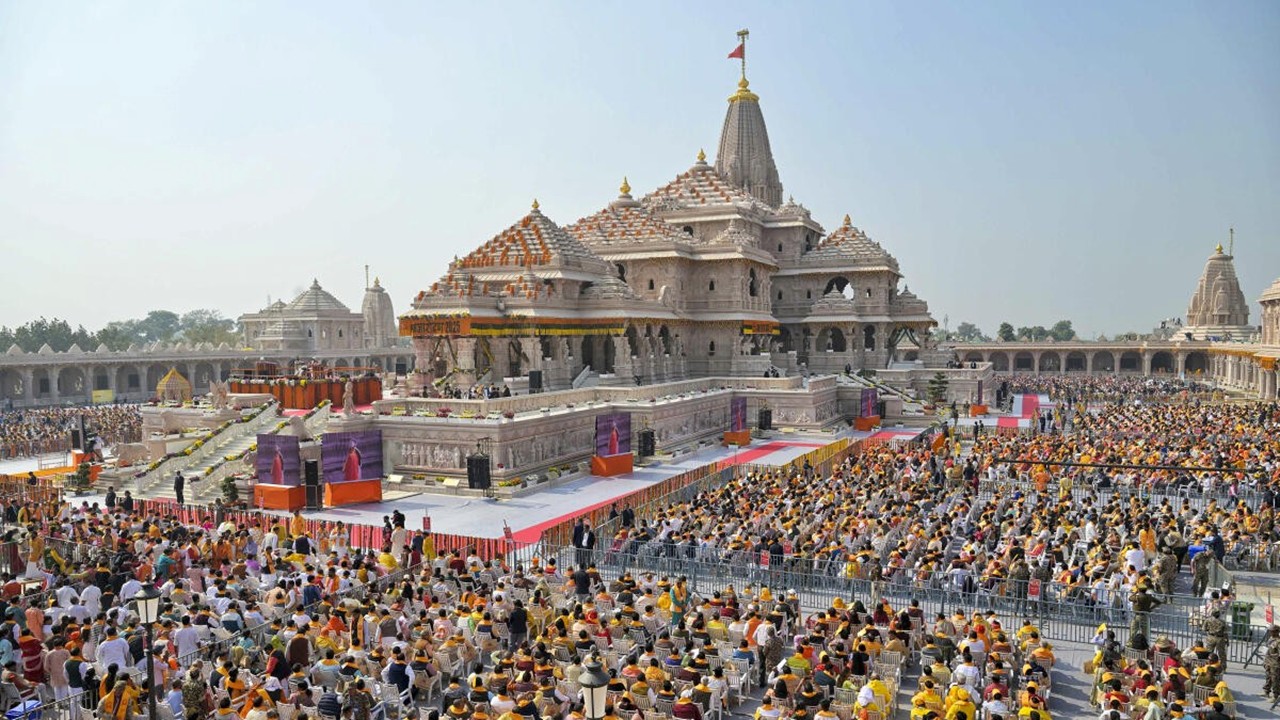
The consecration in January 2024 marked a turning point. Within six months, over 11 crore devotees visited Ayodhya, boosting tourism, hospitality, transport, and local businesses. The city is now projected to attract 5–6 crore visitors annually, establishing it as one of India’s leading religious tourism destinations.
Economic Growth and Rising Incomes
Local traders and street vendors now earn up to ₹2,500 daily, reflecting a significant rise in incomes. Infrastructure projects worth nearly ₹85,000 crore are underway, including an international airport, modern railway networks, wider roads, and urban beautification initiatives. Initiatives promoting sustainability, including electric vehicles and solar energy projects, are also underway.
Employment Expansion and Investment Opportunities
Employment has expanded rapidly, particularly in tourism, hospitality, transport, and service sectors. About 6,000 new MSMEs have been established, with an estimated 1.2 lakh direct and indirect jobs expected in the coming years. Property prices near the temple have surged five to ten times, drawing investors from across the country.






Leave a Reply