
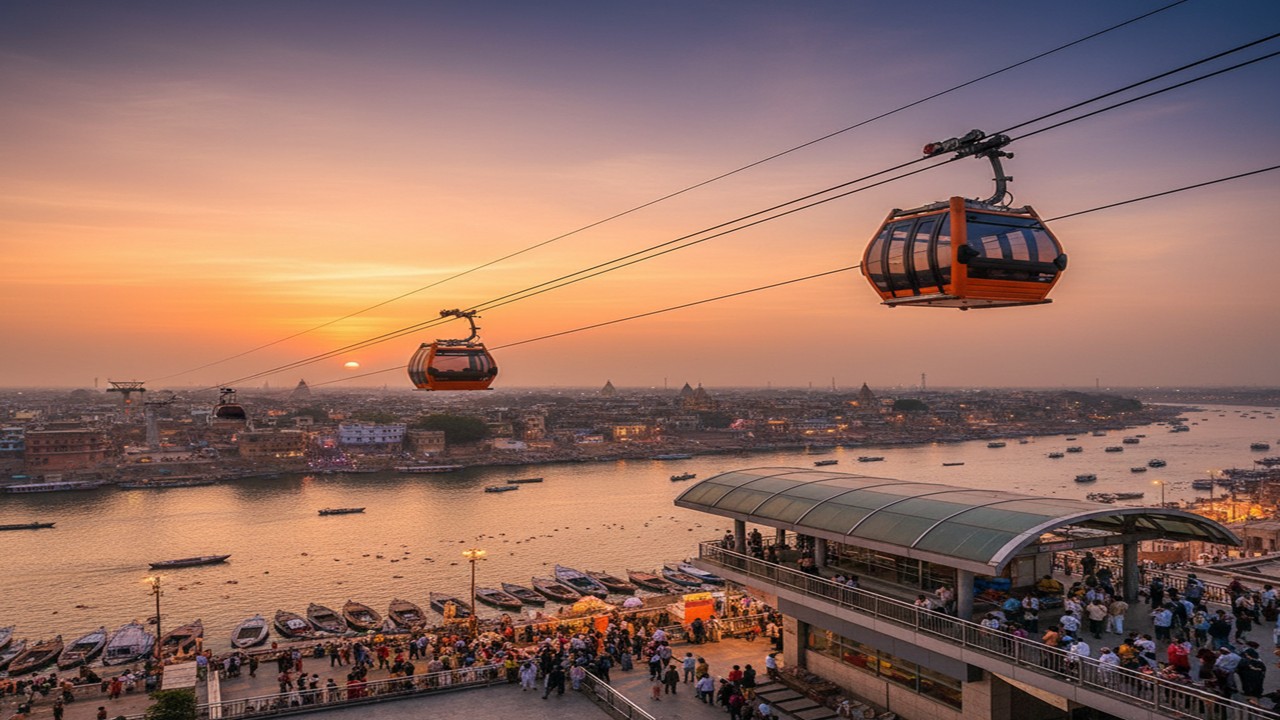
The announcement of the upcoming Kashi Ropeway, set to link Varanasi Cantt railway station with the Kashi Vishwanath Temple by May 2026, has brought immense excitement and pride among devotees and locals alike.
As India’s first urban ropeway system, the project demonstrates how an ancient spiritual city can embrace modern infrastructure without losing its heritage.
For decades, pilgrims and daily commuters have struggled with Varanasi’s narrow lanes and constant traffic jams. The new rope-car service promises a smart, efficient, and peaceful alternative. Instead of navigating crowded roads, passengers will glide over the city and reach the temple comfortably in just 15–20 minutes.
Major Highlights
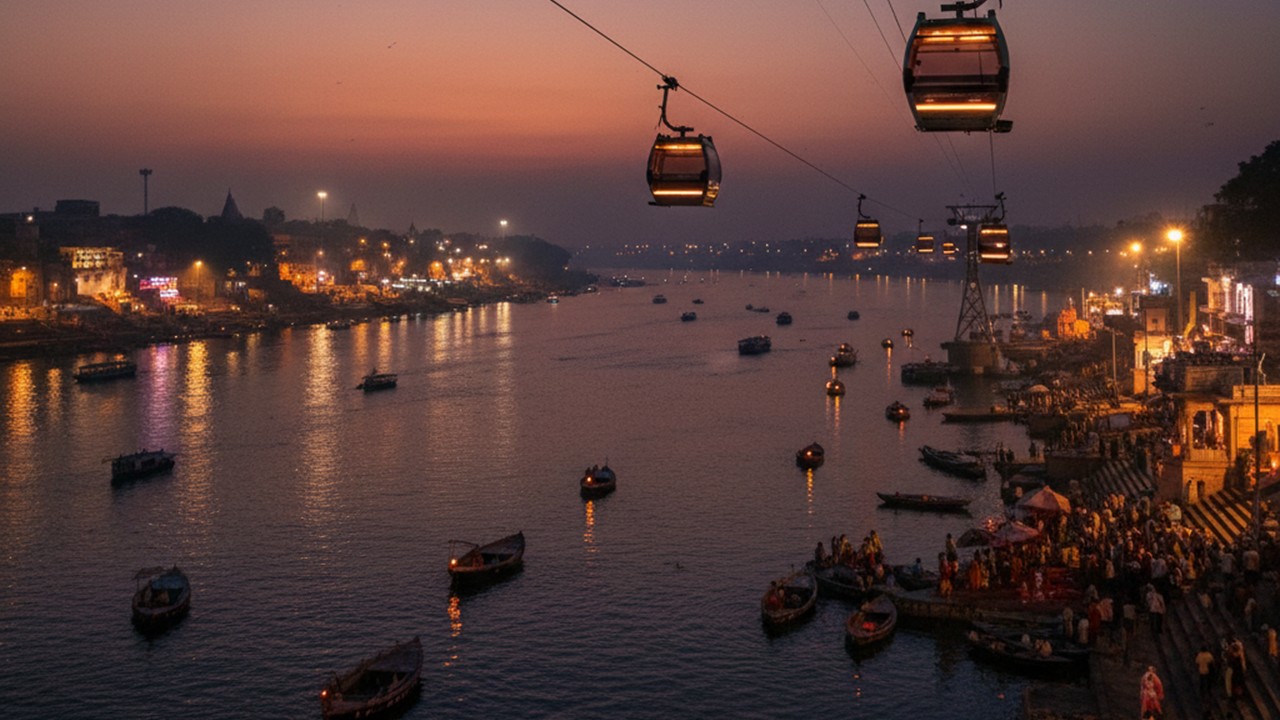
- The Varanasi ropeway project will offer a spectacular aerial view of the city’s ghats, ancient temples, and historic landscape.
- The system will include 5 stations and 150 cabins, with the ability to carry 6,000 passengers per hour.
- It is designed to provide a permanent solution to Varanasi’s traffic congestion, especially around key pilgrimage sites.
- Officials confirm that the project is nearing completion and will soon be operational for commuters and pilgrims.
- The ropeway is expected to transform urban mobility in Kashi, making travel faster, smoother, and more convenient.
- Once launched, it marks a major step forward for modern infrastructure in the historic
Varanasi Ropeway Route
The upcoming ropeway line will span key locations, providing seamless connectivity to major transit points and tourist hubs. The proposed route includes:
- Varanasi Cantt Railway Station (Start Point)
- Khalispur
- Rath Yatra
- Godowlia
- Kashi Vishwanath Temple (End Point)
A New Era of Urban Mobility
With the Varanasi ropeway set for completion by May 2026, the initiative marks a major milestone in India’s urban transport development. Once operational, it will redefine how pilgrims and tourists navigate the spiritual heart of Varanasi, making their journey faster, smoother, and more comfortable.
0









Leave a Reply