
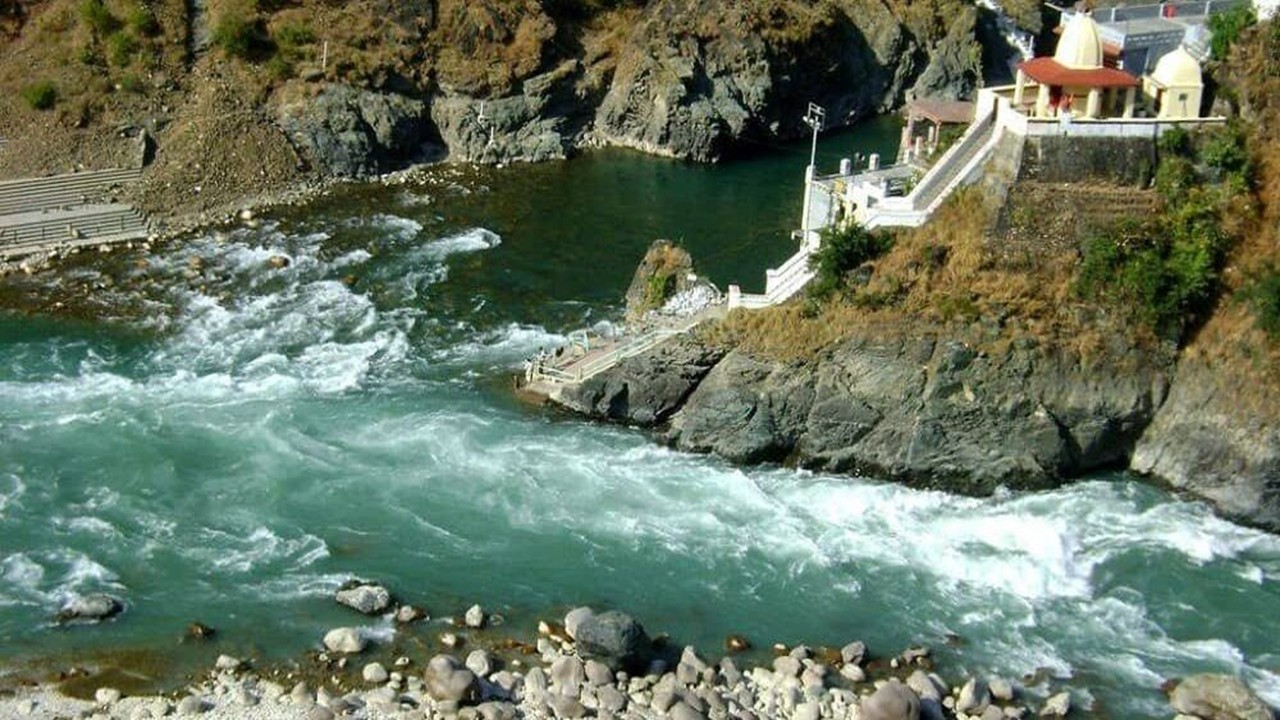
Rudraprayag is a picturesque town in northern India, located 183 km from Dehradun in the state of Uttarakhand. Surrounded by the foothills of the Himalayas, lush green valleys, and flowing rivers. Rudraprayag is a significant spiritual site for Hindus. It is the meeting point, or sangam, of the Mandakini and Alaknanda rivers, known as a prayag. This confluence is one of the five sacred prayags (known as the “Pancha Prayag”) of the Alaknanda River.
Rudraprayag is one of the most significant stops for pilgrims during the Char Dham Yatra, which is one of the most spiritually significant journeys for Hindus. Here, pilgrims stop to take a holy dip and perform rituals to honor their ancestors in order to purify their souls.
The name Rudraprayag is derived from the Hindu deity Lord Shiva. “Rudra” is one of the names of Lord Shiva, representing his aggressive and powerful form, while the term “prayag” comes from the word for “confluence,” meaning the meeting of two points.
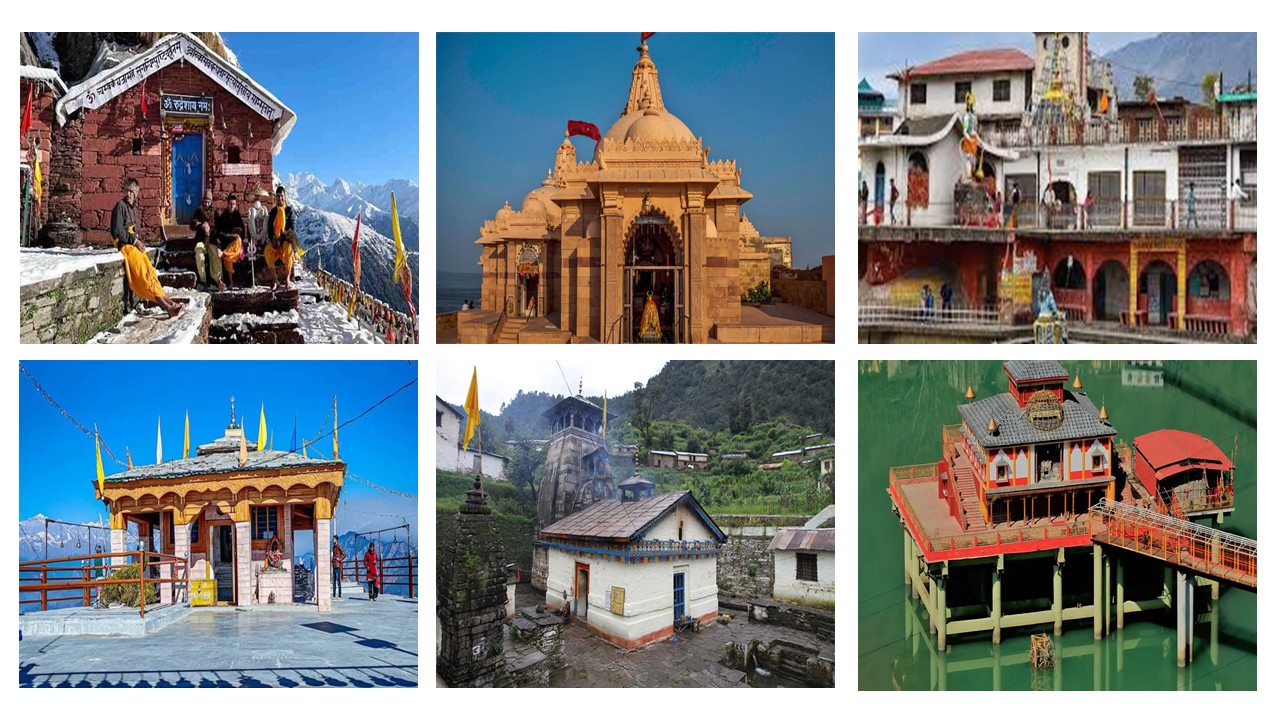
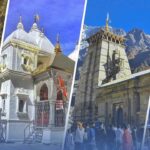
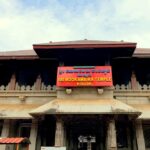
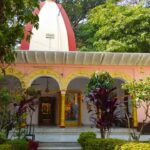
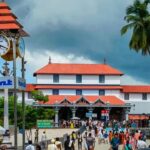
Rudraprayag is home to many historical temples, including the Rudranath Temple, Kartik Swami Temple, Triyuginarayan Temple, Dhari Devi Temple, Guptkashi Temple, Kalpeshwar Temple, Vishwanath Temple, Omkareshwar Temple, Madhyamaheshwar Temple, and many more.
Rudraprayag is not just a spiritual site; it is also an attractive destination for many tourists, including nature lovers, trekkers, and adventurers, due to the stunning beauty of the Himalayas. The town is surrounded by lush landscapes, serene rivers, and trekking paths that lead to the Himalayan foothills. Some of the most famous trekking routes include the Chopta-Tungnath-Chandrashila Trek, Kartik Swami Temple Trek, Madhyamaheshwar Trek, and Deoria Tal Trek and many more .
The Confluence: Meeting of the Alaknanda and Mandakini Rivers
Rudraprayag is one of the prayags of the Alaknanda River, which includes Vishnuprayag, Nandaprayag, Karnaprayag, and Devprayag. The Alaknanda River originates from the Sathopanth Glacier near Badrinath, while the Mandakini River originates from the Chorabari Glacier near Kedarnath. At this confluence, the Alaknanda River meets the Mandakini River to create the River Ganga, one of the most important rivers in Uttarakhand. This place is referred to as prayag or sangam. Both of these significant rivers originate from holy sites such as Badrinath and Kedarnath. According to Hindu mythology, this sangam is a highly significant site; taking a dip in this holy confluence is believed to bring blessings from Lord Vishnu (Badrinath) and Lord Shiva (Kedarnath), purifying one’s sins. People perform rituals here to attain moksha.
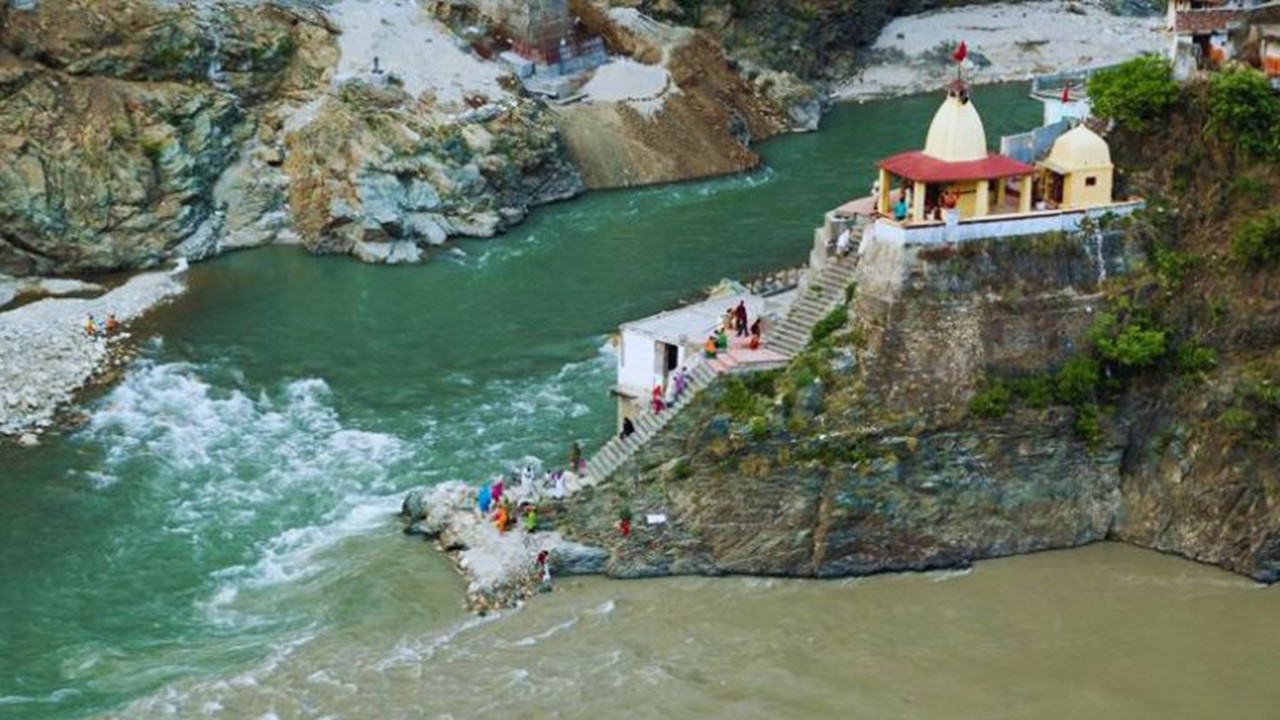
Mythological Legends Enhancing the Confluence’s Significance
Narada Muni and Lord Shiva: According to Hindu mythology, Narada Muni, one of the greatest followers of Lord Vishnu, performed penance to please Lord Shiva in order to attain mastery in music. He engaged in this penance with deep devotion to Lord Shiva. Impressed by Narada Muni’s immense devotion, Lord Shiva appeared to him in his form as Rudra, the most aggressive and powerful aspect of Shiva, and blessed him with the greatest knowledge of music, thereby fulfilling his desires.
Pandavas’ Journey: After the Kurukshetra War, the Pandavas felt guilty for killing their own brothers, teachers, and elders. Seeking blessings from Lord Shiva, they went to Kashi; however, Lord Shiva did not grant them his blessings because they had committed grave sins against their own relatives in their quest for the throne. As a result, Lord Shiva left Kashi and went to Kedarnath. The Pandavas followed the path and, during their journey, visited Rudraprayag, where they took a holy dip and performed rituals to purify their souls before continuing on to Kedarnath to seek blessings from Lord Shiva.
Temples to visit in Rudraprayag
1. Rudranath Temple
The Rudranath Temple, as its name suggests, is dedicated to Lord Shiva. This temple is located in the mountains of the Garhwal region near the confluence of the Alaknanda and Mandakini rivers in the town of Rudraprayag. It is the site of the great saga of Narada Muni and Lord Shiva, where Lord Shiva fulfilled Narada Muni’s desire for immense knowledge of music. It is believed that the temple was constructed by the Pandavas.
2. Koteshwar Mahadev Temple
The Koteshwar Mahadev Temple is located 3 km away from Rudraprayag town. This cave temple, situated on the banks of the Alaknanda River, is dedicated to Lord Shiva and is known for its scenic beauty and spiritual atmosphere. It is believed that Lord Shiva performed meditation here while escaping to Kedarnath from Kashi. Locally, it is said that a naturally formed shivalinga is present in this temple, making it a popular destination among locals for performing rituals during the Sravana month.
3.Chamunda Devi Temple
The Chamunda Devi Temple is another temple located near the Rudranath Temple in Rudraprayag town. It is dedicated to Chamunda Devi, a form of Maa Durga, representing strength, protection, and the destruction of evil. Devotees visit this temple seeking protection and courage from Chamunda Devi, and they perform special rituals during the Navaratri festivals.
4. Dhari Devi Temple
The Dhari Devi Temple is dedicated to Maa Durga. Although not located in Rudraprayag, it is situated on the banks of the Alaknanda River en route from Rudraprayag to Srinagar (Uttarakhand). The temple is built on the upper half of the body of Dhari Devi, and local legends say that if the idol is moved, it may bring misfortune. This temple is considered the guardian of the Char Dham and Uttarakhand from natural disasters.
5.Kartik Swami Temple
The Kartik Swami Temple is located atop a hill, offering breathtaking views of the Himalayas from 38 km away from Rudraprayag town. This temple is dedicated to Bhagwan Kartikeya, the son of Lord Shiva and Devi Parvati, who is considered the “God of War and Victories.” It is believed that in this place, Bhagwan Kartikeya devotedly offered his bone to his parents. The temple includes a trek, which is a significant journey toward divine blessings.
6.Kalpeshwar Temple
The Kalpeshwar Temple is located in the lower region of the Himalayas, about 2 to 3 hours from Rudraprayag town. It is one of the Pancha Kedar temples and the only temple in this group dedicated to Lord Shiva that is accessible year-round due to its lower altitude location and Man y more.
Best time to visit Rudraparayag
Although Rudraprayag can be visited throughout the year, the best times to visit are from March to June and September to October. During these months, visitors can enjoy a peaceful darshan of all the temples and appreciate the scenic beauty of the Himalayas. However, May and June can be very hot and crowded.
How to reach Rudraprayag?
The best way to have darshan in Rudraprayagis to take up Tirtha Yatra’s Char Dham Yatra or the Do Dahm Yatra. All the arrangements are well taken care.

If you wish to venture on your own, you can take up the following route:
By Air – the nearest Airport is the Jolly Grant Airport at Dehradun. From here taxis can be hired to Rudraprayag.
By Rail – the nearest Railway station are Rishikesh Railway Station and Haridwar Junction. From here taxis can be hired to Rudraprayag.
By Road – one can hire taxis or use State Transport Buses from Haridwar or Rishikesh to reach Rudraprayag.
Leave a Reply