

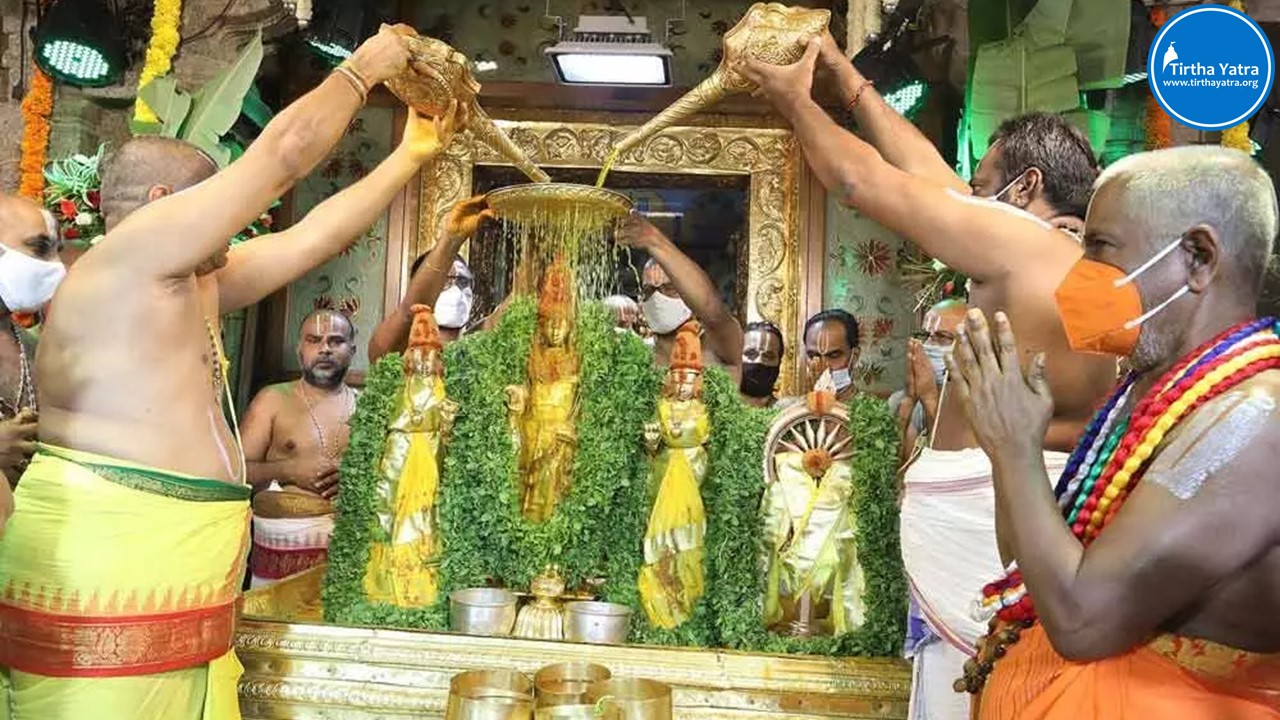
Early in the morning, priests conducted Chakra Snanam at Swamy Pushkarini, immersing the Sudarshana Chakrattalwar in consecrated waters. The ritual, beginning around pre-dawn hours, involved traditional offerings of milk, honey, turmeric, and sandal paste, accompanied by Vedic chants and recitations of Purusha Suktam, Sri Suktam, and other hymns. Devotees lining the Pushkarini Pond participated by passing under the cascading water droplets, believed to confer blessings and purification.
As dusk approached, the temple would witness Dwaja Avarohanam, the ceremonial lowering of the Garuda flag — symbolically ending the nine-day Brahmotsavam. The ritual signals the closure of the divine festivities and is a revered moment when devotees collectively reflect on the spiritual journey through the festival.
The Brahmotsavam, held annually in the month of Purattasi / Asvayuja (September–October), features elaborate daily processions of Lord Venkateswara’s processional deity, Malayappa Swamy, on various vahanams (divine vehicles) across the temple’s streets. On the first day, Dwajarohanam (flag hoisting) marks the festival’s commencement, while the concluding Dwaja Avarohanam signifies its completion.
Temple authorities, including the Tirumala Tirupati Devasthanams (TTD), made elaborate arrangements for crowd control, medical aid, sanitation, and facilities for devotees. Special dress-changing tents, drinking water stations, and volunteer support were deployed to ensure a smooth experience for pilgrims participating in the rituals.
The dual ceremonies of Chakra Snanam and Dwaja Avarohanam not only embody the spiritual essence of the Brahmotsavam but also reinforce the deep cultural and ritual heritage of Tirumala’s sacred worship traditions.

Leave a Reply