
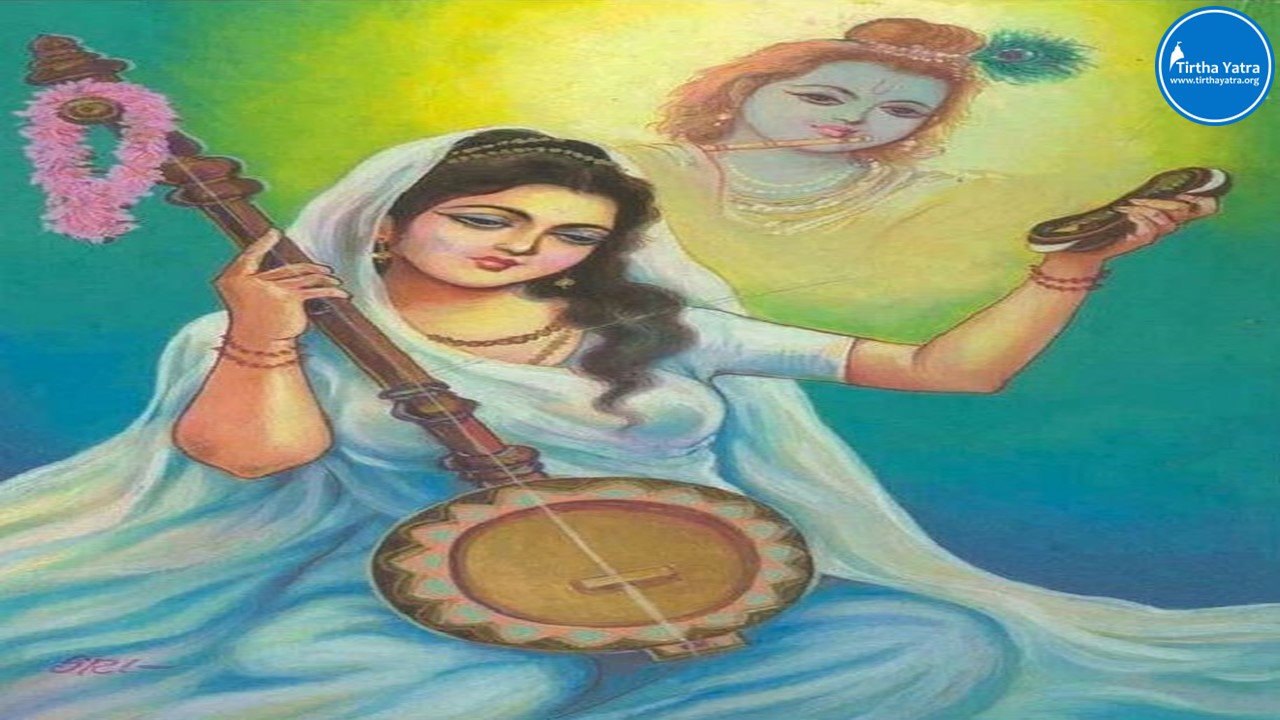
“Payo Ji Maine Ram Ratan Dhan Payo”
The above verse is from her famous Hindi composition expressing her gratitude for knowing the name of the Lord.
Meera Bai, also known as Meera, a 16th-century poet, composed numerous bhajans, pada-valis (poets), kirtans, and dohas praising Giridhara Gopala. She considered Giridhara Gopala, her beloved lover and husband. Her intense love for Him challenged the societal norms of royal lineage of that time, which became a threat to her life.
Though born in a royal lineage as a Rajput princess, she chose Prema, a way to express her love for Giridhara Gopala. Throughout her compositions, Madhurya Bhavam is expressed. Madhurya Bhavam is the divine love and the highest form of devotion in Bhakti Yoga. She considered Ravidas or Raidas as her Guru, a humble cobbler, and also mentioned in one of her bhajans.
“Sadguru sant mile Ravidas
Mira devaki kare vandana aas
Jin chetan kahya dhann Bhagavan Ravidas”
(I found my Guru in Sant Sri Ravidas, and my life became fulfilled.)
In the above verse, Sant Meera Bai expresses her deep gratitude and reverence for her Guru Sri Sant Ravidas. He guided her in fulfilling the spiritual upliftment. His teachings emphasized inner purity, equality, and selfless devotion.
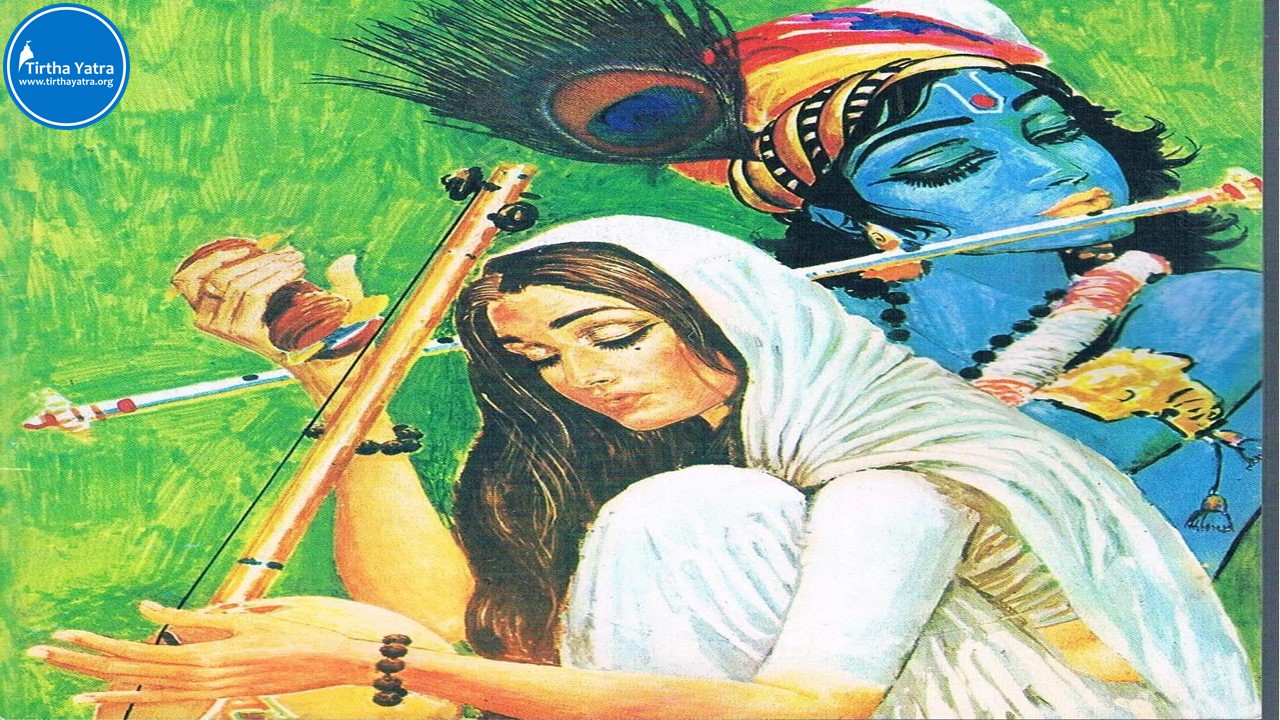
Life of Meera Bai (1498-1546)
Meera Bai was born as a Rajput princess from the Mewar Kingdom. She was born on the auspicious day of Sharad Purnima in the Ashwina month, in a village called Kurki in Mewar (Present day-Pali district of Rajasthan). On Sharad Purnima or Raas Purnima, the night when Lord Sri Krishna performed Raas Lilas, the great saint of all time, Meera Bai was born.
Her parents lovingly named her Mihira or Mihir, which means sun. She was named Mihir, since she was born at midday, when the sun was at its peak. She was born in the year 1498, as a daughter of Ratan Singh and her mother, Veer Kumari. She lost her parents at a very young age, and her grandfather, Rao Duda, brought her up.
When she was very young, about the age of four, she happened to see the marriage procession. She was fascinated by the beautifully dressed bride and groom. Young and innocent Meera asked her mom, Who would be her husband? Mother smiled at her innocence and pointed towards the Deity of Lord Sri Krishna. From then on, she considered Lord Sri Krishna as her beloved and would marry one day. She immersed herself completely in the ocean of bhakti and would talk to the Lord for hours. Her devotion did not stop even after her marriage.
As per the Rajput royal custom, she was married to Prince Bhojraj in 1516, who belonged to the Mewar Sisodiya clan.
Bhojraj was heavily wounded in the warfare and died in 1521. She refused to live the life of a royal widow. She would visit the nearby Krishna temple, dedicate herself to singing and dancing in spiritual ecstasy, breaking the societal norms of a widow. The sound of cymbals and her anklets was heard even on the outskirts of the city.
Her brother-in-law, Vikram Singh, became the successor to the throne, and he disliked Meera Bai for following the path of devotion. Her in-laws even tried to poison her, and also sent her a basket filled with flowers, where a snake was hidden. Only her pure devotion to Giridhara Gopala saved her from all dangers.
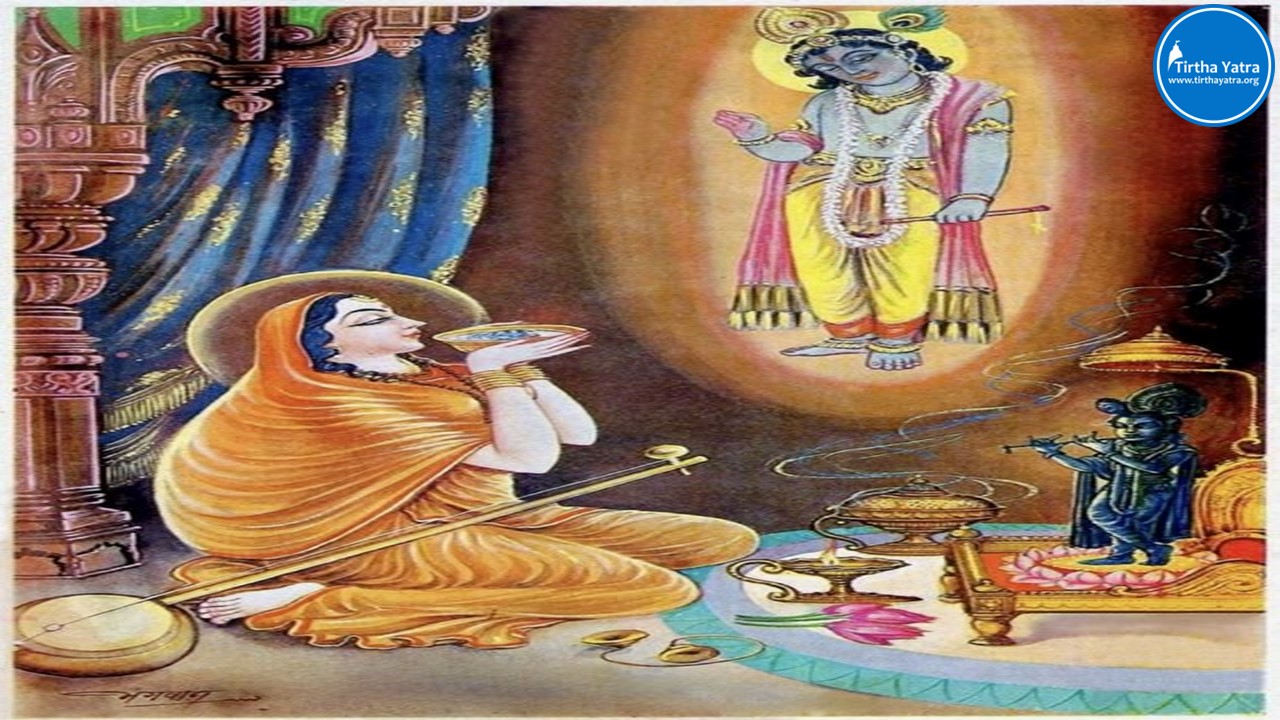
Compositions of Meera Bai
Some of her famous compositions include Mere To Giridhar Gopal, Doosro Na Koi, Payo Ji Maine Ram Ratan Dhan Payo, Chala Vahi Des, Mai Toh Govind Ke Gun Gaawan, Mohe Laagi Lagan Guru Charan Ki, Aisi Lagi Lagan, Meera Ho Gayi Magan, Main To Girdhar Ke Ghar Jaoon, and many more.
On the sacred occasion of Sharad Purnima, celebrating the 527th birth anniversary of Meera Bai, Tirtha Yatra wishes you a happy Meera Jayanthi. May the life of Meera Bai inspire you to take up the bhakti margha and completely surrender to Lord Sri Krishna.






Leave a Reply