

Lalitha Devi Temple is one of the 51 revered Shakti Peethas in Bharat. This is the sacred site in Meerapur, the historic old city of Prayagraj, Uttar Pradesh, where the fingers of the right hand of Goddess Sati fell. Revered as a Shakti Peeth, it honors this divine event and attracts devotees from far and wide. It is located in the Triveni Sangama, the confluence of three rivers: Ganga, Yamuna and Saraswati.
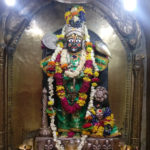
Lalitha Devi is a powerful Deity worshiped in Tantrik style. The Deity is worshiped in three forms: Lalitha Devi, Saraswati Maa, and Kali Maa. Devotees come to seek divine grace for protection, prosperity, and liberation from the worldly obstacles. Visiting this Shakti Peetha offers you with immense peace, joy, and uplifts your spiritual aura.
This revered Shakti Peetha is mentioned in many puranas like Devi Purana. This place is sanctified by the holy feet of Maharishi Bharadwaja and offered his prayers to goddess Lalitha Devi to seek her blessings. This place is also visited by Lord Sri Ramachandra and also Pandavas during their exile.
“prayagasya praveshshu papam nashwati tatkshanam”
It is a Sanskrit verse which states that “All sins of the past life will be cleansed by just visiting Prayag.”
Lalitha Devi Shakti Peetha is not just spiritual retreat but also serves as a pilgrimage destination, a heritage landmark, and a cultural hotspot.
Deities of Lalitha Devi
According to local belief, the sacred Saraswati River flows invisibly beneath the ground, touching the feet of Goddess Lalita at this divine shrine. Within the temple, the three primary deities—Mahakali, Mahalakshmi, and Saraswati—are worshiped in the form of three sacred pindi’s, each representing one aspect of the Divine Feminine. These pindi’s are adorned with silver facial coverings symbolizing the goddess’s presence in her threefold form.

Significance of the Lalitha Devi Temple
- Devotees those who take bath in Triveni Sangama and then have the darshan of goddess Lalitha Devi, She blesses them abundantly and fulfills all their wishes.
- Goddess Lalitha Devi is highly revered on the fifth day of Navaratri, observed as Lalitha Panchami Vrata. She is worshiped as Skandamata, symbolizing motherhood and divine protection.
Sthala Purana of Lalitha Devi Temple
Sati Devi wanted to attend the yagna conducted by her father, Daksha, and requested Lord Shiva to grant her permission. Though Lord Shiva denied it, she attended the yagna. But King Daksha insulted Lord Shiva in front of everyone. Unable to bear the insult, she created the fire from within the body and gave up her life.
When Lord Shiva learned of Sati’s death, he was devastated and consumed by grief. He lifted her burning body and began performing the Tandava, the cosmic dance of destruction.
Fearing the destruction of the universe, Lord Vishnu used his Sudarshan Chakra to cut Sati’s body into 51 pieces. These pieces fell in different parts of the Indian subcontinent, and the place where they fell is called Shakti Peetha—a sacred seat of Goddess Shakti.
Architecture of Lalitha Devi Temple
The temple is constructed using materials such as red sandstone and white marble.
Besides the garbhagriha, there is a smaller mandir dedicated to Lord Shiva, who is worshiped as Lalitheshwar Mahadev. The Shiva lingam is made of a special type of metal called Mercury.

Timings of Lalitha Devi Temple
Best Time to Visit
Festivals Celebrated at Lalitha Devi Temple
Navaratri: It is the vibrant festival, where goddess Lalitha Devi is worshiped in nine different forms. There is huge influx of devotees during these festive seasons. The atmosphere is filled with positive spiritual aura. During this time, Panchmeva (5 types of dry fruits), Kheer and Channa are made as offerings to the Deity. Shat Chnadi Yajna, is a powerful yajna performed to invoke Devi’s blessings, and solve all the problems of life.
Magha Mela: It is the annual festival which begins on the day of Makara Sankranti and continues for 45 days. It is celebrated in the month of Magha (Jan-Feb). Durga Saptashati and Lalitha Sahasranamam are chanted by the temple priest to invoke Lalitha Devi’s blessings.
Nearby Places to Visit
Akshayavata Temple: This ancient temple is known as Patalpuri Temple or Sri Adi Vat Madhava, can be dates back to 3000 years. It was visited by Lord Sri Rama, Lord Lakshmam, and Sita Devi during their exile period.
Triveni Sangama: It is the confluence where two sacred physical rivers, the Ganges and Yamuna, meet the mythical Saraswati, which is believed to have vanished over 4,000 years ago. It is the sacred site where Kumbha Mela takes place once in 12 years.
Sri Adi Shankara Vimana Mandapam: This is one of the revered Shankaracharya temples located in Allahabad, was constructed by Sri Kanchi Kamakoti in the year 1986. It is built on South Indian Style of architecture.
How to Reach Lalitha Devi Temple
If you want to visit Lalitha Devi Temple in Prayagraj and nearby places. Consider taking Tirtha Yatra’s world-famous Ayodhya Kashi Yatra.

By Air: The nearest airport for visiting the Lalita Devi Temple is Prayagraj Airport, located roughly 12 km from the city center. This airport handles domestic flights to major cities like Mumbai, New Delhi Bengaluru Hyderabad, and Bhubaneswar. From the airport, you can hire a taxi or an auto, also board a bus to reach the destination.
By Railway: Prayagraj Junction Railway Station is the nearest Railway station to reach Lalitha Devi Shakti Peetha. Direct trains are available from major cities like Delhi, Varanasi, Ayodhya, Mumbai, Mathura, and Ahmedabad. From the railway station, taxis and autos can be hired. There is frequent bus service available from the railway station to the temple.
By Road: There are many private buses and government buses available from major cities. Prayagraj Bus stop is located just 3.6 Kms from the temple. From the bus stop, taxis and auto-rickshaws are available that will direct you toward your destination.
Leave a Reply