
According to Vedic history, Sati Devi attended Daksha’s yajna despite Lord Shiva’s disapproval. Humiliated by her father’s insult toward Shiva, she immolated herself in grief. Enraged and heartbroken, Lord Shiva created Veerabhadra to destroy Daksha’s yajna and wandered across the universe carrying Sati Devi’s body.
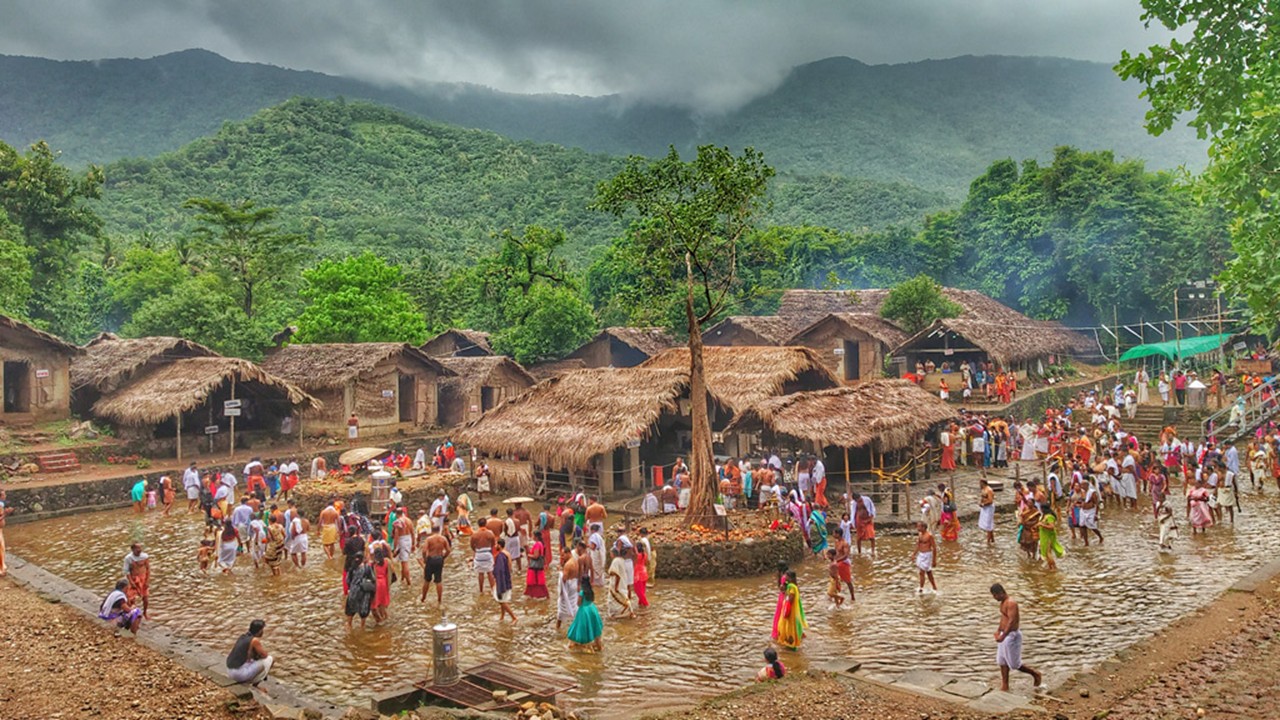
The place where Sati Devi self-immolated herself is known as the Ammarakallu in Akkare Kottiyoor. Lord Shiva is worshipped in Swayambhu form near the Ammarakallu. This festival is celebrated from Choti (Swati) nakshatra of Edavam (Vrishabha) month to Chitra nakshatra of Vaishakha month.
Significance of Attending Akkare Kottiyoor
People experiencing delays in marriage or searching for a suitable life partner can also visit this temple and pray to Kottiyoor Perumal for blessings and a favorable alliance.
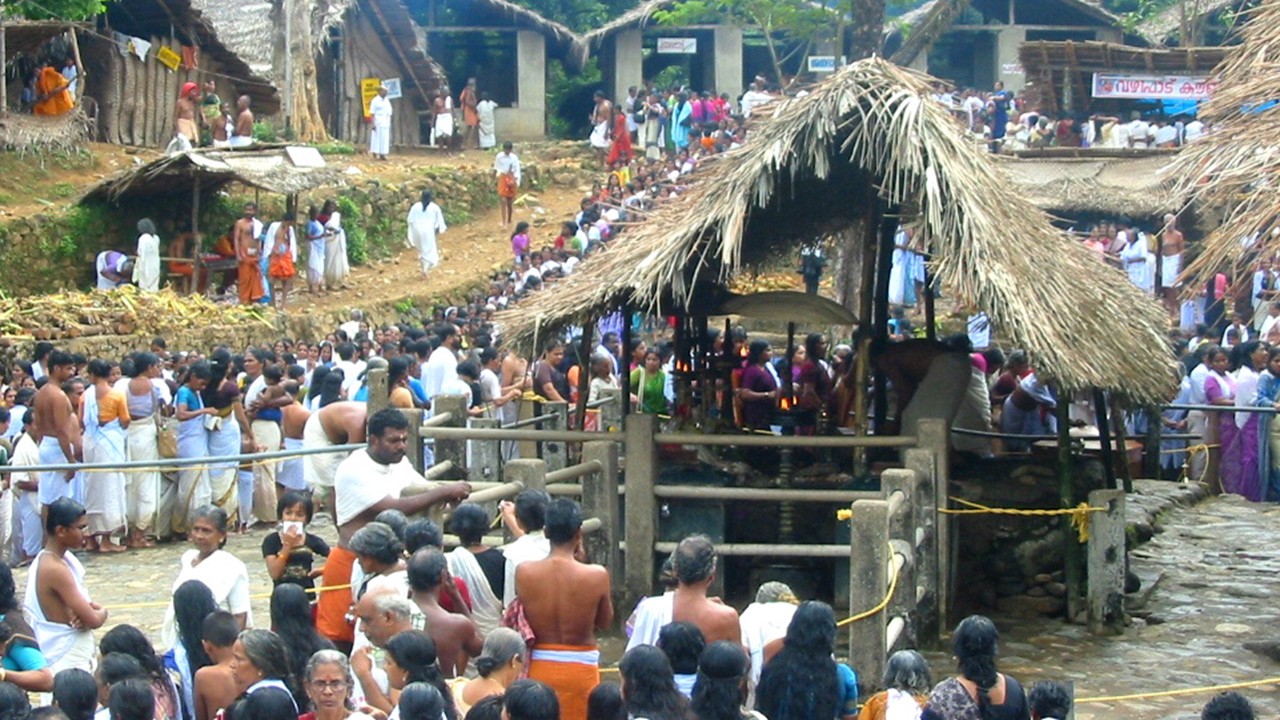
Thousands of devotees offer prayers, coconut, ghee, and other offerings with faith that their wishes and long-pending desires will be fulfilled.
Devotees seek divine blessings for good health, prosperity, protection from hardships, and overall well-being.
It is an opportunity to witness daksha yaga bhumi, making the pilgrimage spiritually significant for devotees of Lord Shiva.
Sacred Stones of Baveli River – A Divine Symbol of the Holy Trinity
Devotees traditionally pick up two stones and gently rub them against each other. It is believed that some stones produce sacred ash (Vibhuti), symbolizing the divine presence of Lord Shiva; some reveal a sandal-like texture, representing the blessings of Lord Vishnu; while others produce a reddish hue resembling Kumkum, symbolizing the presence of Goddess Parvati Devi.
This unique spiritual tradition adds to the divine significance and mystical charm of the holy pilgrimage to Kottiyoor Temple.
Odapoo – The Sacred Symbol of Daksha’s Beard
Kottiyoor Vyshaka Mahotsavam 2026 Festival Dates
- May 23: Neer Ezhunnallathu
- May 29: Neyyattam
- May 30: Bhandaram Ezhunnallathu
- May 30 to June 20: Women entry to Akkare Kottiyoor Temple
- June 7-8: Ilaneer Veppu (Tender coconut offerings)
- June 8: Ilaneerattam & Ashtami Aradhana
- June 14: Rohini Aradhana
- June 20: Women’s entry close.
- June 20: Makam Kalam Varavu
- June 23: Atham Chatusshatham, Vaalattu, Kalashapuja:
- June 24: Thrikkalashattu (Closing ceremony)
Rituals at Kottiyoor Vyshaka Mahotsavam
Neer Ezhunnallathu: It is an important ritual observed on the Makam Nakshatram in the month of Edavam (Vrishabha). On this day, the Stanikers (priests), after completing the rituals at Ikkare Kottiyoor, ceremonially proceed to Akkare Kottiyoor. They take a bath in the Baveli River before entering the temple.
Neyyattam (Ghee Abhishekam): It is the significant ritual where Neyyie Abhishekam or ghee abhishekam is performed to Swayambhu Shiva linga on Chothi Nakshatram (Swati) in the Edavam (Vrishabha) month. Also on this day, the temporary thatched huts are ceremonially handed over by the “Aachari” (carpenter sthanikars) to the “Baburalar” as part of the traditional rituals.
Vaal Yezhunnallath (Bringing of sword): The sword representing goddess is brought from Muthireri kavu in Wayanad to the Kottiyoor Temple. The ritual symbolizes divine power, protection, and the presence of Lord Shiva.
Chothi Vilakku (Swati Nakshtra Lamp): This represents the official start of the festival, where three ghee lamps are lit by priest in three directions – north, middle, and south. The fire or agni is brought from the Chathiyoor Madam.
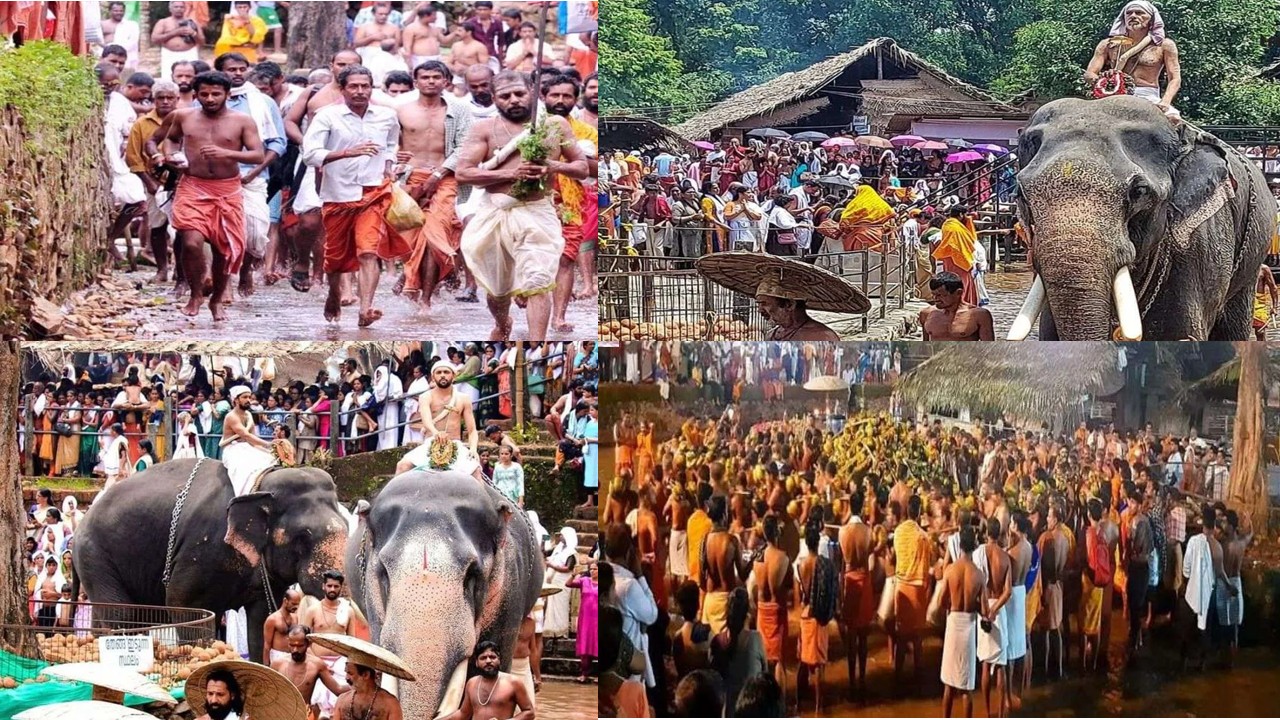
Bhandaram Yezhunnallathu (Bringing of Temple Ornaments): In this ritual, sacred items such as gold and silver ornaments, swords, palm-leaf umbrellas, and puja vessels are ceremoniously carried from Karimbanagopuram to the Akkare Kottiyoor Temple, arriving there at midnight.
Thiruvona Aaraadhana: This ritual is celebrated on the Thiruvonam nakshatram (Shravana) and is marked by a grand worship ceremony featuring special evening poojas, Ponnin Sheeveli, and a ceremonial feast. This is the day on which Alankara Vadyam begins.
Ilaneervaipu (Offering of Tender Coconut): It is an important ritual observed during the Kottiyoor Vyshaka Mahotsavam. During this ceremony, tender coconuts (ilaneer) are ceremonially offered to Lord Shiva as a sacred offering. The ritual symbolizes devotion, purity, and the traditional customs associated with the festival celebrations at Akkare Kottiyoor.
Ilaneerattam (Tender Coconut Abhishekam): Ilaneerattam is a sacred ritual observed during the Kottiyoor Vyshaka Mahotsavam in which tender coconut water (ilaneer) is ceremonially poured as an offering to Lord Shiva. The ritual is performed with deep devotion and is considered highly auspicious by devotees attending the festival.
Rohini Aradhana: It is one of the rare rituals that is never heard or conducted any other temples. The elderly priest from Kurumathoor Namboothiri family assumes the form of Vishnu and embraces the Swayambhu Shiva linga. This is a reminding that Lord Vishnu embracing grief-stricken Lord Shiva to pacify, after the death of Sati Devi. Another unique aspect of this ritual is the offering of Tulsi Archana to Lord Shiva — a practice rarely performed in other Shiva temples.
Trikur Ariyalavu: This ritual is observed on a day between Makeeriyam (Mrigashira) and Ayillyam (Ashlesha) nakshatras. Ladies from the Manathana Nair families — Aaakkal, Karimbanackal Chaathothu, Kollangarayathu, and Thittayil — along with the Ezhillam families such as Komath and Koodathil, can return from the temple only after this ritual.
During the ceremony, ladies of the Kottayam Royal Family receive sacred rice in golden plates from Pantheeradi Kambram, which is accepted in their melmundu. After the night sheveli, the remaining families receive rice, coconut, and jaggery at Manithara from the Palakkunnu Sthanikan. Once the ritual is completed, the women must immediately leave the temple premises.
Makam Naal: On the day of Makam (Makha nakshatra), the rituals and poojas observed until then undergo a significant transformation, marking a change in the very nature of the festival. The elephants used in the sacred processions, along with the ornamental musical ensembles and ceremonial procession items, are ceremonially sent back. They will return only during the next year’s “Bhandara Ezhunallathu” ritual.
Vallattom: It is observed on Atham naal (Hastha Nakshatra), during which the divine power from the Thidambu is ceremonially transferred to the sword.
Thengaeru (Breaking of Coconut): During the Kottiyoor Vyshaka Mahotsavam, coconuts may be offered but are not usually broken. However, on Atham naal, the Kudipathi Sthanikan ceremonially breaks coconuts between Ammarakkal Thara and Poovara. The abhishekam with 1,000 pots marks the end of the festival, and no night poojas or prasadam are offered on this day. Koothu is also an important offering of Atham naal.
Thrikkaleshattu (Offering of Kalasha): All the Kalashams offered during the poojas are brought together to the Manithara by the Brahmins. Though this ritual is usually performed only once in temples, it is conducted twice a year at Kottiyoor Vyshaka Mahotsavam. The Kalasham from the Samuthiri Kovilakam is offered first for the abhishekam.
Thandinmeil Oonu (Food Served on Wooden Plank): Thandinmeil Oonu is a traditional ritual observed during the Kottiyoor Vyshaka Mahotsavam in which food is ceremonially served on a wooden plank or platform (“Thandu”) as part of the sacred temple customs.
Vaal Madakkam (Return of Sword): The sword of Bhagavathi, brought from Muthirerikkavu on Neyyattam day, is ceremonially returned through the ritual known as “Vaal Madakkam.” The sword is briefly placed near the Swayambhu at the Manithara, after which the bearer, holding Tulasi leaves, runs back towards Muthirerikkavu.
After the sword is returned, Trichandana Abhishekam is performed at Ammarakkal Thara using Trichandana powder brought by the Kudipathikal, and the ritual is conducted by Padinjitta.
A visit to Kottiyoor Temple is not just a pilgrimage, but a deeply spiritual experience that connects devotees with ancient traditions, nature, and divine energy. Surrounded by forests and the sacred Bavali River, the temple offers a rare glimpse into centuries-old rituals that continue to be preserved with devotion and purity.


Leave a Reply