
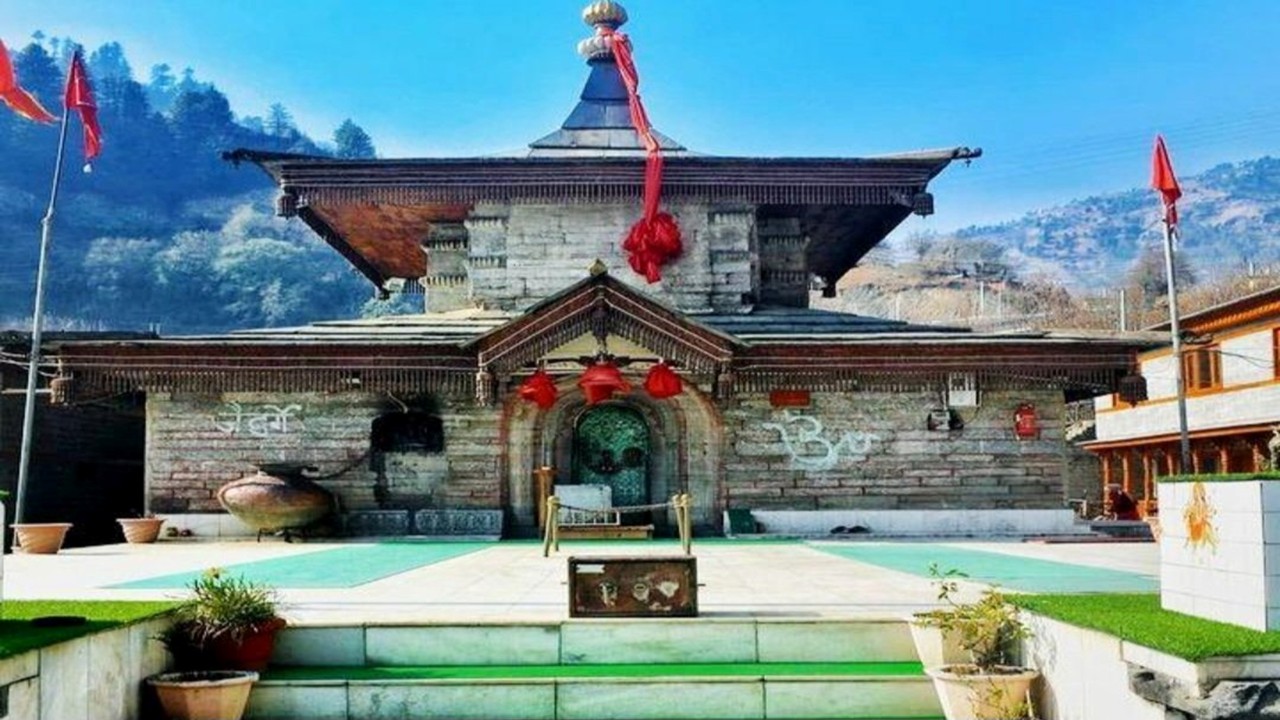
Hidden amidst the picturesque mountains of Himachal Pradesh, Hateshwari Mata Temple in Hatkoti is one of the state’s oldest and most sacred Shakti temples. Situated on the banks of the crystal-clear Pabbar River in Shimla district, this ancient shrine is admired not only for its spiritual significance but also for its remarkable architecture, fascinating legends, and unexplained mysteries.
Maa Hateshwari, a powerful form of Goddess Durga worshipped as Mahishasura Mardini, the temple has been a centre of faith for centuries. Historians believe the present temple was built between the 6th and 9th centuries, According to local temple history claim that the sacred site existed long before the Mahabharata. From stories of the Pandavas and a mysterious chained copper Kalash to the Nepalese king and an deity believed to possess divine powers, every corner of this temple has a story to tell.
History of Hateshwari Mata Temple
The history of Hateshwari Mata Temple beautifully combines archaeological evidence with centuries-old local traditions.
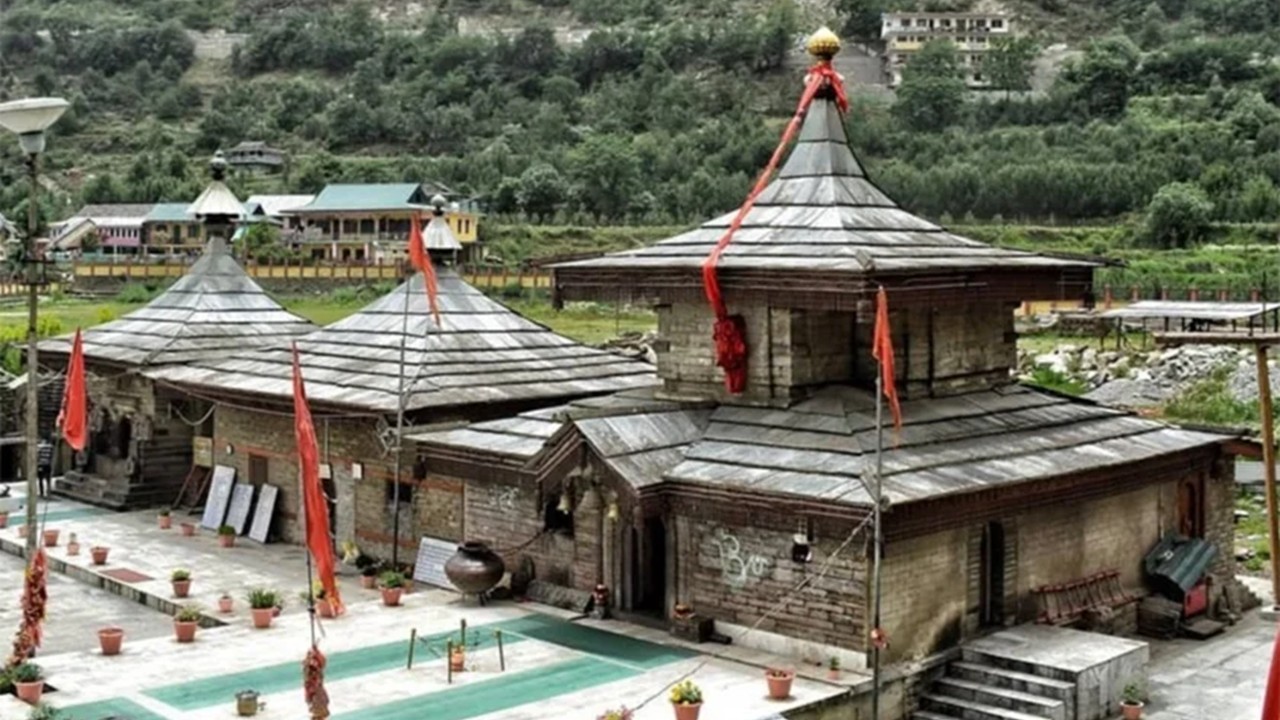
The present stone temple is generally dated between the 6th and 9th centuries. Built in the traditional Himalayan Nagara style, the temple showcases exceptional craftsmanship through its finely carved stone walls, wooden ceilings, and detailed sculptures of Hindu deities. Ancient deitys and sculptures found around the temple complex suggest that Hatkoti was once an important religious and cultural centre in the region.
However, according to temple priests and local devotees, the temple’s spiritual history is much older than the existing structure. They believe this sacred place has been worshipped since the Mahabharata era and has remained under the protection of Maa Hateshwari for thousands of years.
The Sacred History of the Two Sisters
One of the oldest history associated with the temple tells the story of two Brahmin sisters who devoted their lives to serving humanity.
As the sisters travelled across the Himalayan villages helping people, one of them reached Hatkoti and entered deep meditation in a peaceful field near the Pabbar River. After several days, villagers found that she had mysteriously disappeared. History says that the Goddess’s stone deity emerged at the exact location where she had been meditating.
When the Raja of Jubbal heard about this miracle, he visited the site and believed it to be the manifestation of the Divine Mother. He ordered a grand temple to be built around the sacred image, and from then onwards the Goddess came to be worshipped as Maa Hateshwari.
The Pandavas and Hateshwari Mata Temple
Hateshwari Mata Temple shares a deep spiritual connection with the Pandavas, making it one of the important temples linked with the Mahabharata in Himachal Pradesh.
According to local tradition, the Pandavas stayed in Hatkoti during their Agyatvas (incognito exile). During their stay, they worshipped Maa Hateshwari and Lord Shiva and are believed to have either built or restored the original temple.
Inside the temple complex are five small stone deities, which local devotees identify as Yudhishthira, Bhima, Arjuna, Nakula, and Sahadeva. These deities are believed to have been installed by the Pandavas before they continued their journey through the Himalayas. Even today, pilgrims offer prayers before these deities along with the main deity, believing they symbolise courage, righteousness, and unwavering devotion.
Maa Hateshwari – The Divine Mother of Hatkoti
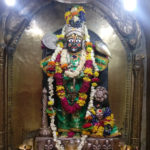
The main deity of the temple is Maa Hateshwari, worshipped as Mahishasura Mardini, the fierce form of Goddess Durga who defeated the buffalo demon Mahishasura.
The deity of the Goddess is around four feet tall and displays exquisite craftsmanship. She is depicted with multiple arms holding divine weapons, representing strength, protection, and the victory of good over evil.
Beautiful stone sculptures on the temple walls portray the powerful scene of the Goddess slaying Mahishasura, reflecting the rich artistic heritage of the Himalayan region.
Many devotees believe that the exact metal or alloy used to create the deity remains unknown even today. While some consider it an ancient sacred alloy, others believe the deity itself possesses divine powers beyond human understanding.
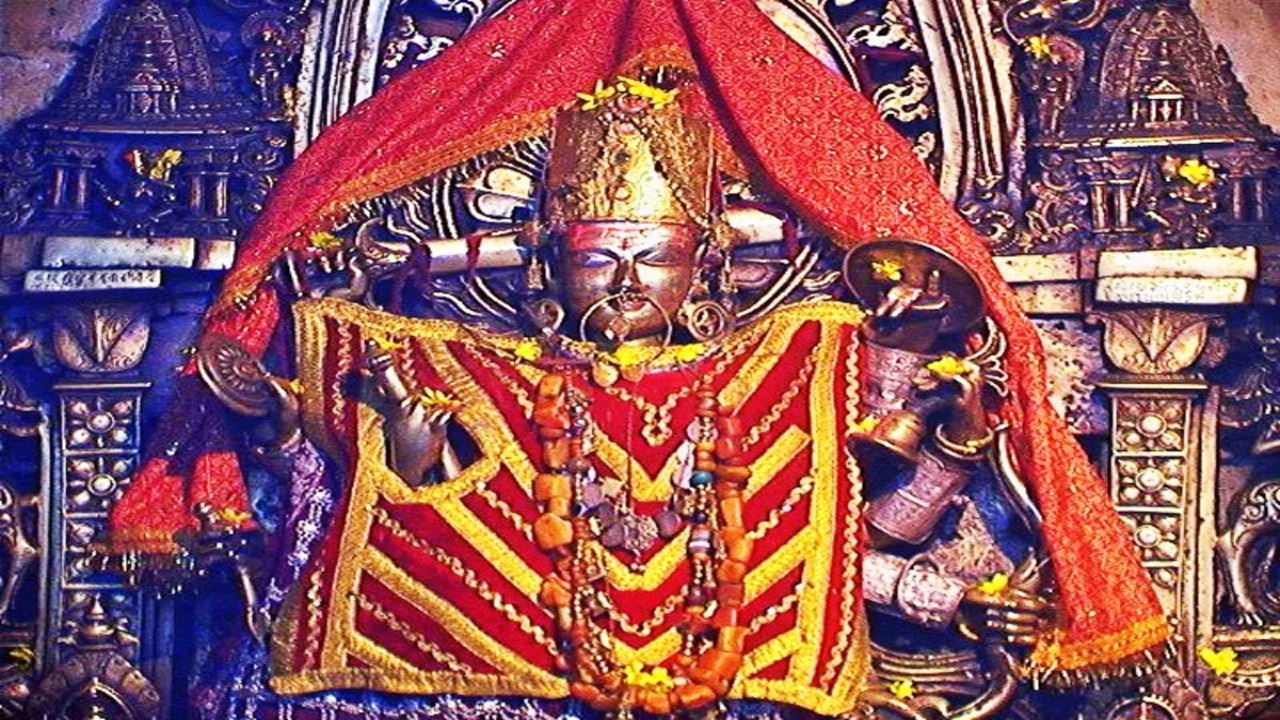
The Divine Mysteries of the Goddess Hateshwari
Several fascinating beliefs surround the deity of Maa Hateshwari.
According to temple tradition, one foot of the Goddess extends deep into Patal Lok (the netherworld), and no one has ever been able to determine its true depth.
Another mystery is the sacred Churu, a small vessel tied near the Goddess’s feet. Local devotees believe that no matter how much prasad is distributed from this vessel, it never becomes empty. It symbolises the Goddess’s endless blessings and generosity towards her devotees.
The Nepal King Who Tried to Take the Goddess
According to local temple history narrated by temple priests is connected with a King of Nepal.
It is said that the king learned about the extraordinary beauty and spiritual power of the Maa Hateshwari deity.He decided to bring it to his kingdom and secretly tried to remove it from the temple..
Initially, the deity could be lifted without difficulty. However, after travelling only a short distance, it suddenly became so heavy that neither the king nor his soldiers could move it any further. Despite repeated efforts, the deity refused to leave Hatkoti.
Realising that the Goddess herself had chosen this sacred place as her eternal home, the king abandoned his plan and respectfully returned the deity to the temple.
According to temple tradition, anyone who steals ornaments, sacred objects, or even small items from the temple premises is said to lose their eyesight or face severe misfortune. Many elderly villagers recall stories of people who allegedly suffered unexplained hardships after disrespecting the temple and later returned the stolen items to seek the Goddess’s forgiveness.
Adi Shankaracharya Connection
The Puranic account states that during his journey across the Himalayas to revive Sanatana Dharma, Adi Shankaracharya reached the sacred valley of Hatkoti. Drawn by the powerful spiritual energy of Goddess Hateshwari, he meditated on the banks of the Pabbar River and offered prayers at the ancient shrine. It is believed that he re-established the temple after it had fallen into neglect and encouraged the local priests to continue Vedic worship and regular rituals, helping preserve the temple’s sacred traditions for future generations.
The Mystery of the Chained Copper Kalash
The Ancient Shiva Temple and the Swayambhu Shivling
Temple Architecture
Daily Rituals and Festivals
How to Reach Hatkoti Maa Temple


Leave a Reply