
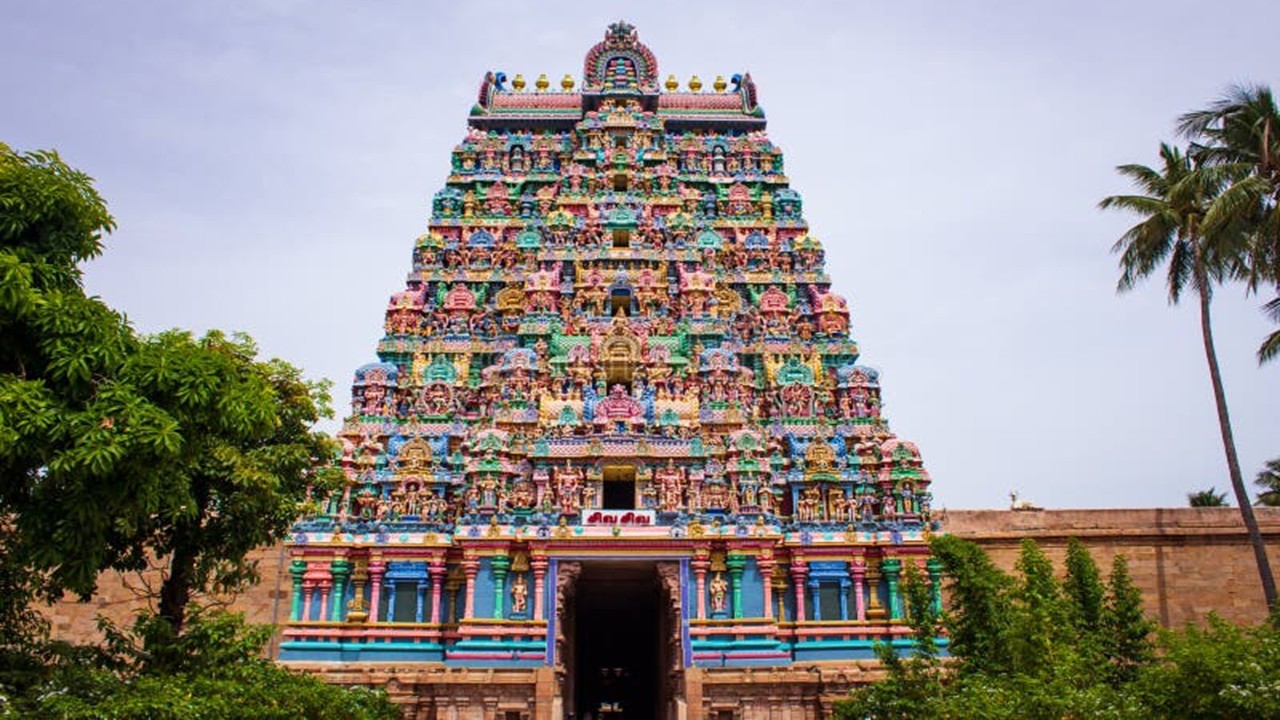
The creation of this world is made from five different gross elements, collectively called as Panchamahabhutas, namely Earth, Water, Fire, Air, and Space. Four of these temples are in Tamil Nadu and one is in Andhra Pradesh.
The Pancha Bhuta Sthalams (temples) are there in South India dedicated to Bhagavan Shiva. This are the Pancha bhuta temple, Earth (Prithvi Linga) Sri Ekambareswara this Tempel Located in Kanchipuram, Tamil Nadu. The water (Appu Linga) Arulmigu Jambukeswara Temple in Thiruvanaikaval Tamil Nadu. Fire (Agni ling) Sri Arunachalesvara or Annamalaiyar Temple, located at the foothills of the Arunachala hill in Tiruvannamalai, Tamil Nadu. And Air (Vayu Linga) Sri Kalahasteswara Temple, Situated in Srikalahasti, Andhra Pradesh. Space/Ether (Akasha) Thillai Nataraja Temple in Chidambaram Tamilnadu. Bhagavan shiva in his form as Nataraja, the cosmic Bhagavan of dance. Remarkably, one of the interesting facts all five align along approximately the 79th meridian east longitude
Vedic History of Jambukeshwara Temple
The core identity of the Jambukeswarar Temple is tied to the Taittiriya Upanishad. Also, In the Rigveda and later Vedic literature, water is revered as a purifying, life-giving, and divine manifestation of the Supreme Consciousness. The temple’s Garbha Griha features a Swayambhu Linga that sits over a perpetual, natural underground Vedic spring.
As per the Sthala Punana According to the Shiva Purana, a Vedic rishi named Rishi Shambu or Jambu performed rigorous Tapas directed at Bhagavan Shiva. Satisfied with his devotion, Bhagavan Shiva granted him liberation (Nirvana) and manifested as a Linga under a Jambu (rose apple) tree, which grew out of the Rishi’s head.
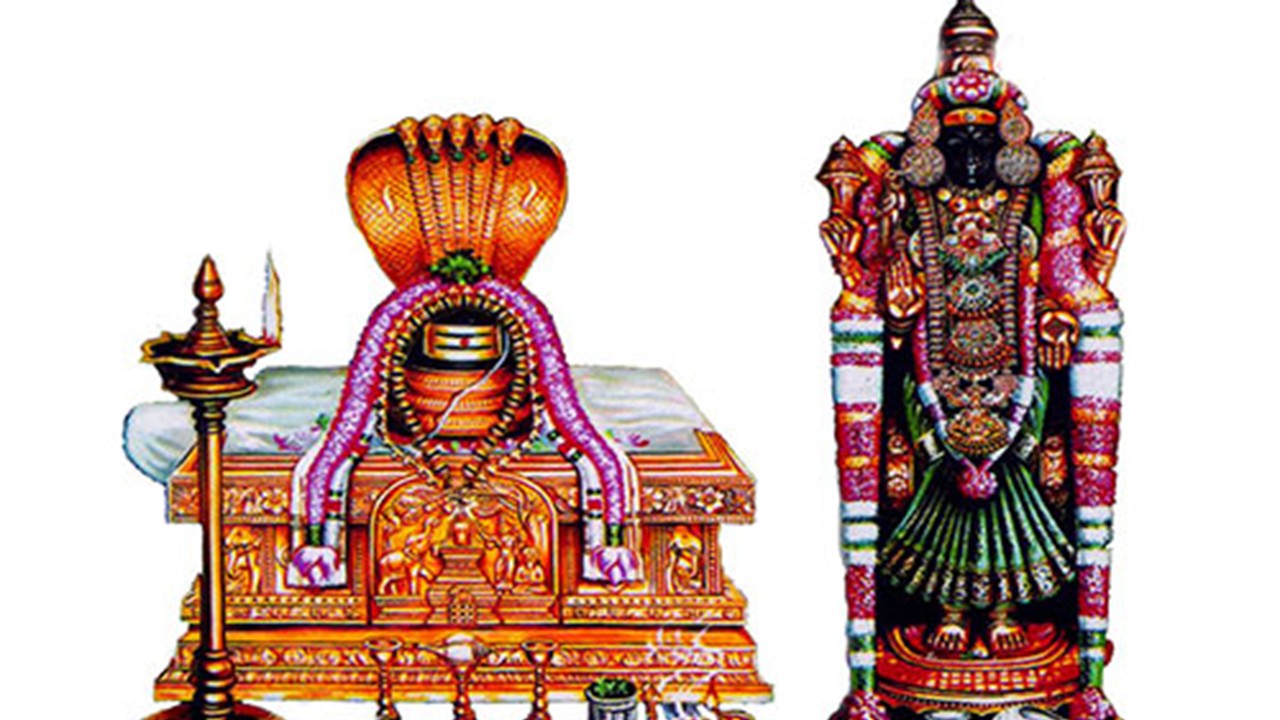
Arulmigu Jambukeshwarar Temple in Thiruvanaikaval, Tiruchirappalli District depicts the water element. Here, Bhagavan Shiva is worshipped in the form of Appu Linga (a water Linga). In the shrine of the temple, a stream of water flows under the Linga. This engulfs the Linga with water, embodying the water element as the story goes on Once Devi Parvati mocked Shiva’s penance for betterment of the world. Shiva wanted to condemn her act and directed her to go to the earth from Kailasa (Shiva’s abode) to do penance. Devi Parvathi in the form of Akilandeswari as per Shiva’s wish found Jambu Forest (Thiruvanaikoil) to conduct her penance. She made a linga out of water of river Kaveri (also called as river Ponni) under the Venn Naaval tree (the Venn Naaval tree on top of the saint Jambu) and commenced her worship. The linga is known as Appu Linga (Water Linga) Bhagavan Shiva at last gave darshan to Akilandeswari and taught her Shiva Gnana. (the ultimate knowledge by Bhagavan Shiva).
There was two Shiva Ganas (Shiva’s army who live in Kailash) Malyavan and Pushpadanta. Though they are Shiva Ganas they always quarrel with each other and fight for one thing or other. In one fight Malyavan cursed Pushpadanta to become an elephant on earth and the latter cursed the former to become a spider on earth. The elephant and the spider came to Thiruvanaikaval and continued their Bhagavan Shiva worship. The Elephant collected water from river Kaveri and conducted ablution to the linga under the Jambu tree the java plum tree) daily.
The spider constructed his web over the linga to prevent dry leaves from dropping on it and prevent sunlight directly falling on it. When the elephant saw the web and thought it was dust on linga. The elephant tore them and cleaned the linga by pouring water and the practice continued daily. The spider became angry one day and crawled into the trunk of the elephant and bit the elephant to death, killing itself. Bhagavan Shiva, in the form of Jambukeswara, moved by the deep devotion of the two, relieved them from the curse. As an elephant worshipped Bhagavan Shiva here, this place came to be known as Thiru Aanai Kaa (thiru means divine, aanai is elephant, kaa means forest).
Bhagavan Shiva is worshipped as the highest teacher in the ancient Indian tradition. Water symbolises wisdom and the flow of water represents learning. The Jambukeshwarar temple therefore symbolises the significance of wisdom and learning in the most beautiful way.
It is said that those who offer worship at this temple will be bestowed with wisdom and intelligence.
Temple Architecture
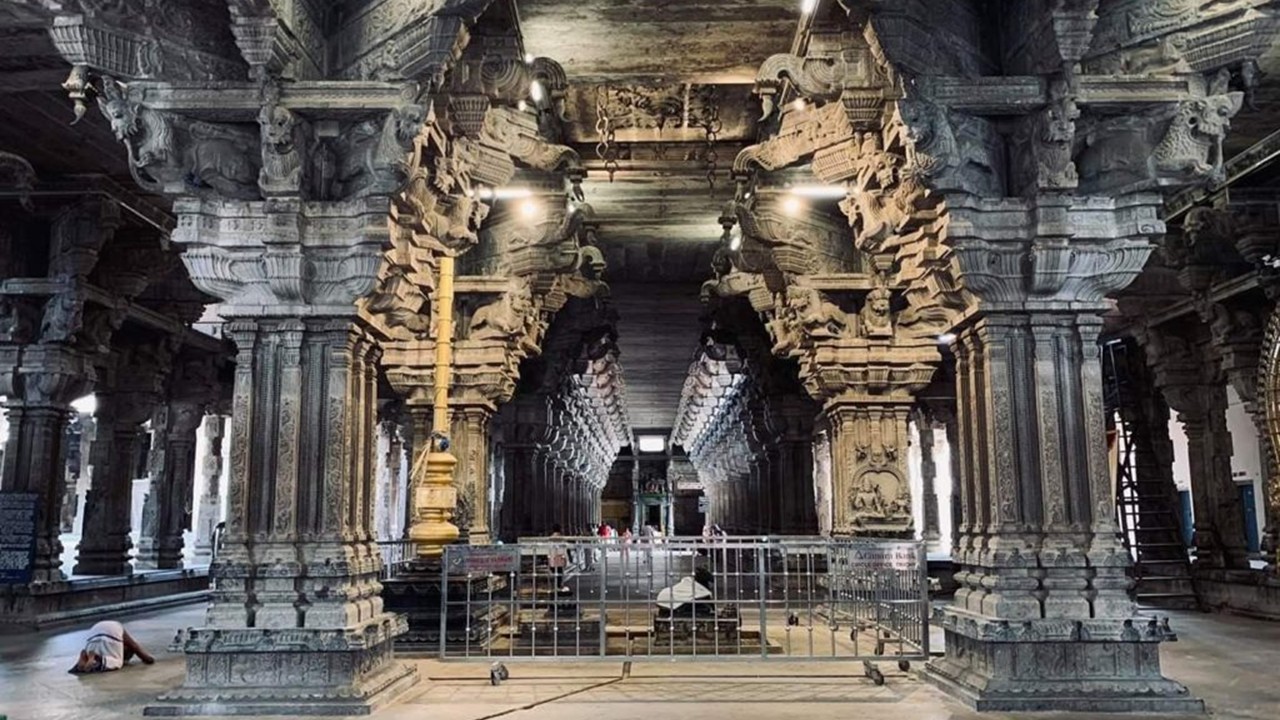
The Jambukeswara Temple is a masterwork of classic Dravidian architecture this was originally built by King Kocengannan (Kochenga Chola), he is one of the Early Chola kings, the sanctum of area 18 acres and approximately 1,800 years ago build this temple and The sanctum is a square structure, found independently situated at the canter of the most central wall, and the featuring five massive concentric courtyards and an underground water which flows around the Linga. Even after pumping the water out, it is always filled with water.
The sthala-vriksham, or Divine tree here is the White Jambuka found growing along the south-eastern wall of the Garbha Griha. The trunk of the tree is protected by a walled structure. The western side of the sanctum, from where the deity is viewed, is continuous with a large, closed hall, the Mukha Mantapa, containing four-pillars and housing a bronze Vigraha of Nandi. Also, Mukha Mantapa has a large,ornate western door gilded with silver that forms the principal entrance and There are two additional entrances to the Mukha Mantapa on the southern and Northeastern sides as well.
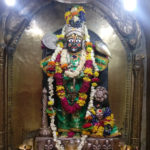
Devi Akilandeshwari vigraha as installed opposite to each other Such temples are known as Upadesa Sthalams. As Akhilandeshwari (Parvati) was like a student and Jambukeswara (Bhagavan Shiva) like a Guru (teacher) in this temple.
Festivals
Panguni Brahmotsavam (Car Festival): Celebrate in the month of March-April Thousands of devotees gather to pull the grand temple chariots carrying the processional deities. Deities are taken out in daily processions on sacred vahanams like the Rishaba Vahanam, Kamadhenu Vahanam, and Surya-Chandra Prabhai Vahanam.
Aadi Pooram: Festival will celebrate in the month of July-August. Celebrated elaborately with special poojas, particularly dedicated to Devi Akilandeswari, drawing large numbers of local and visiting pilgrims.
Purattasi: is the 10days Navaratiri festival Celebrate in the month of (September-October) Devi Akilandeswari is adorned in a unique and distinct form/attire on each of the nine days, accompanied by classical Carnatic music concerts and Bharatanatyam dance programs.
Asantha Urchavam (Vaikasi): 10days celebrations in the month of May–June this Spring festival featuring special decorative and cultural events across the temple premises.
Thai Poosam and Theppam (Float Festival): this festival will celebrate in January-February (Thai Month) with a float festival (theppam) where the float carrying deities moves in the temple tank, alongside special Friday poojas.
Darshan Timings of Temple
The temple is open on all the days of the year between 6:00 AM to 1:00 PM and 3:00PM to 8:00PM
Nearby Places to Visit
Sri Ranganathaswamy Temple: Dedicated to Sri Ranganatha and Devi Ranganayaki, this is the largest functioning temple in the world located in Srirangam.
Rockfort Ucchi Pillayar Temple: Situated about 5 km from the temple, this historic fort-temple sits atop a massive rock and offers panoramic views of Tiruchirappalli Tamil Nadu.
Samayapuram Mariamman Temple: Situated about 5 km from the temple, this place A highly revered and prominent pilgrimage site dedicated to the Devi Mariamman, located a short drive north of the city of Tiruchirappalli Near Kaveri River.
Rockfort Uchi Pillayar Temple: Located around 6 km, this is one of the oldest Ganesha Temple, situated atop of Rock Fort.
How To Reach Jambukeswarar Temple
By Air – Tiruchirappalli International Airport (TRZ) is the nearest Airport to reach temple.there are many Buses and Taxis are available. approximately 15 km
By Railway -Nearest railway station for this temple is Tiruchirappalli Junction (TPJ) there are many Buses, Auto and Taxis are available. approximately 11 km also is Srirangam Railway Station to temple 2.5km to 3km Distance
By Road – Trichy Central Bus Stand to 11km Local Buses also available Route No1 and this temple connected to major National Highways Trichy–Chennai trunk route, NH 38/83/44, making it incredibly accessible for road travellers.
0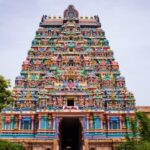
Leave a Reply