
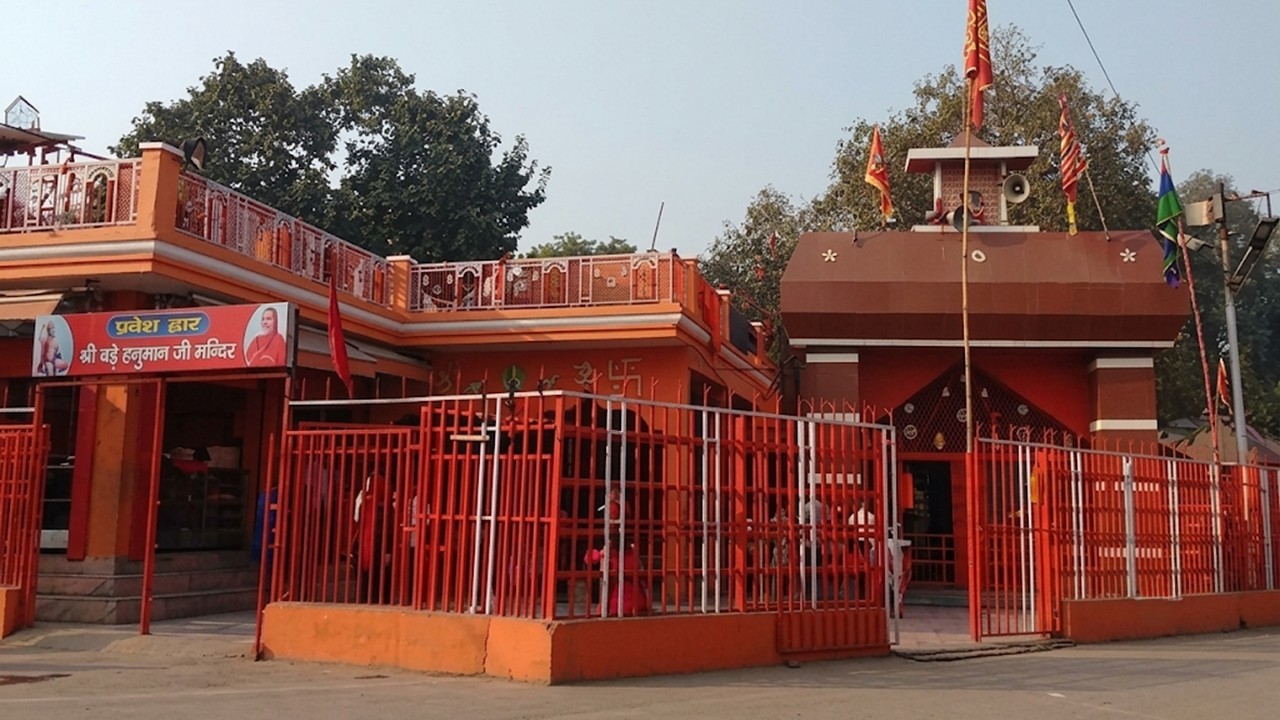
Situated near the Divya Triveni Sangam in Prayagraj, Uttar Pradesh, the Lete Hanuman Temple, also known as Bade Hanuman Ji Mandir, is one of the most unique and revered Hanuman temples in India. Unlike most temples where Sri Hanuman is depicted standing, sitting, or in a devotional posture, this temple is famous for its rare reclining deity of Hanuman Ji. This extraordinary form has made the Mandir a major center of faith for millions of devotees, saints, and pilgrims who visit Prayagraj throughout the year.
Situated close to the Allahabad Fort and the confluence of the Ganga, Yamuna, and the mystical Saraswati rivers, the temple has become an inseparable part of Prayagraj’s spiritual identity. During major Vedic festive gatherings such as the Kumbh Mela and Magh Mela, countless devotees flock to Mandir seeking blessings from Hanuman Ji, whom they regard as the protector of Prayagraj and the remover of obstacles.
The Sangam is the meeting point of three sacred rivers, making it an exceptionally auspicious place for spiritual practices and religious rituals. Many pilgrims traditionally take a sacred dip at the Sangam before visiting the temple to seek the blessings of Hanuman Ji.
Stala Purana of Lete Hanuman Temple
According to tradition, the temple has existed for several centuries and has been a major center of worship for Hanuman devotees. One widely known tradition suggests that the deity emerged near the sacred Sangam and was later established at its current location.
Another historical reference associated with the temple, a wealthy merchant from Kannauj, he commissioned a grand deity of Hanuman and carried it during a pilgrimage. When the deity reached Prayagraj, it became impossible to move further despite repeated attempts. Recognizing this as divine will, the deity was installed at the present site, and worship began there.
The temple is also linked with Baba Balagiri Ji Maharaj, who have played an important role in the installation and worship of the deity. Over time, the Mandir grew into one of the most famous Hanuman mandir in northern India.
Miracle of Hanuman – Akbar’s defeat
One of the most fascinating events associated with the temple concerns with Akbar. Local traditions state that during the construction of Allahabad Fort in the sixteenth century, attempts were made to relocate the deity. However, despite considerable effort, the reclining deity could not be moved. Interpreting this as a divine sign, the deity was left undisturbed, and the fort was constructed nearby. This event further enhanced the temple’s reputation as a place protected by the divine power of Hanuman Ji.
The Unique Reclining Deity
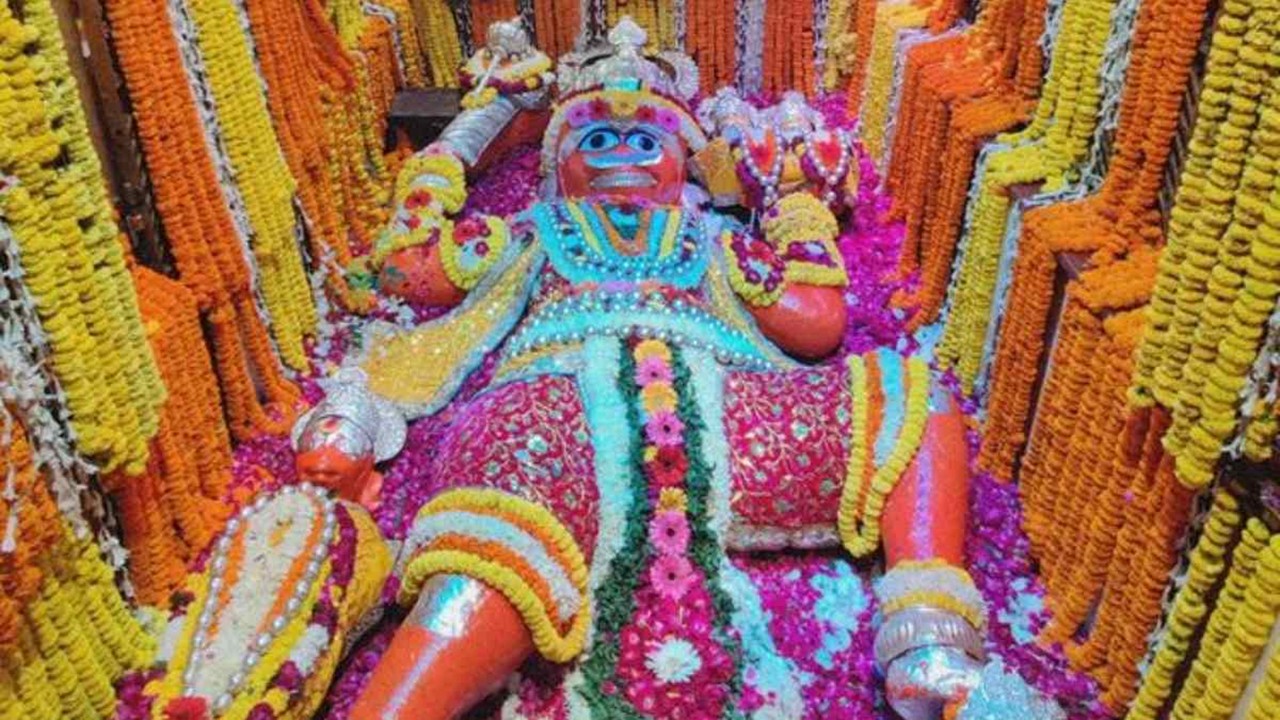
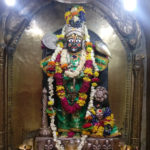
The deity itself is a masterpiece of devotion and symbolism. Hanuman Ji is depicted lying down in a majestic and peaceful posture. The deity is adorned daily with sindoor, flowers, sacred cloth, and garlands, creating a vibrant and spiritually uplifting atmosphere within the Garbha Griha.
The reclining posture has inspired various interpretations among devotees and scholars. Some say it represents Hanuman Ji resting after completing his divine missions in service to Sri Rama. Others view it as a symbol of cosmic energy in a state of peaceful equilibrium. For many devotees, the deity signifies that even the most powerful servant of Sri Rama remains humble and surrendered before the divine.
The Mystery of the Floodwaters
One of the most remarkable aspects of the Lete Hanuman Temple is its relationship with the River Ganga. During monsoon seasons, rising floodwaters often reach the temple and sometimes partially submerge the deity. Rather than viewing this as a natural hazard, devotees regard it as a sacred event.
According to local beliefs, Mata Ganga herself comes to pay respects to Hanuman Ji. When the floodwaters recede and the deity becomes visible again, devotees consider it a symbol of renewal and blessings.
The Lete Hanuman Temple is widely regarded as a powerful center of spiritual energy. Devotees sincere prayers offered before the reclining Hanuman bring protection, courage, and relief from difficulties. Many visit the temple seeking freedom from fear, health problems, financial troubles, and obstacles in life.
Hanuman Ji is revered as Sankat Mochan, the remover of troubles. Thousands of devotees recite the Hanuman Chalisa, Sundarkand, and Ramayana verses within the temple complex, believing that their wishes will be fulfilled through Hanuman ji’s blessings.
Temple Architecture
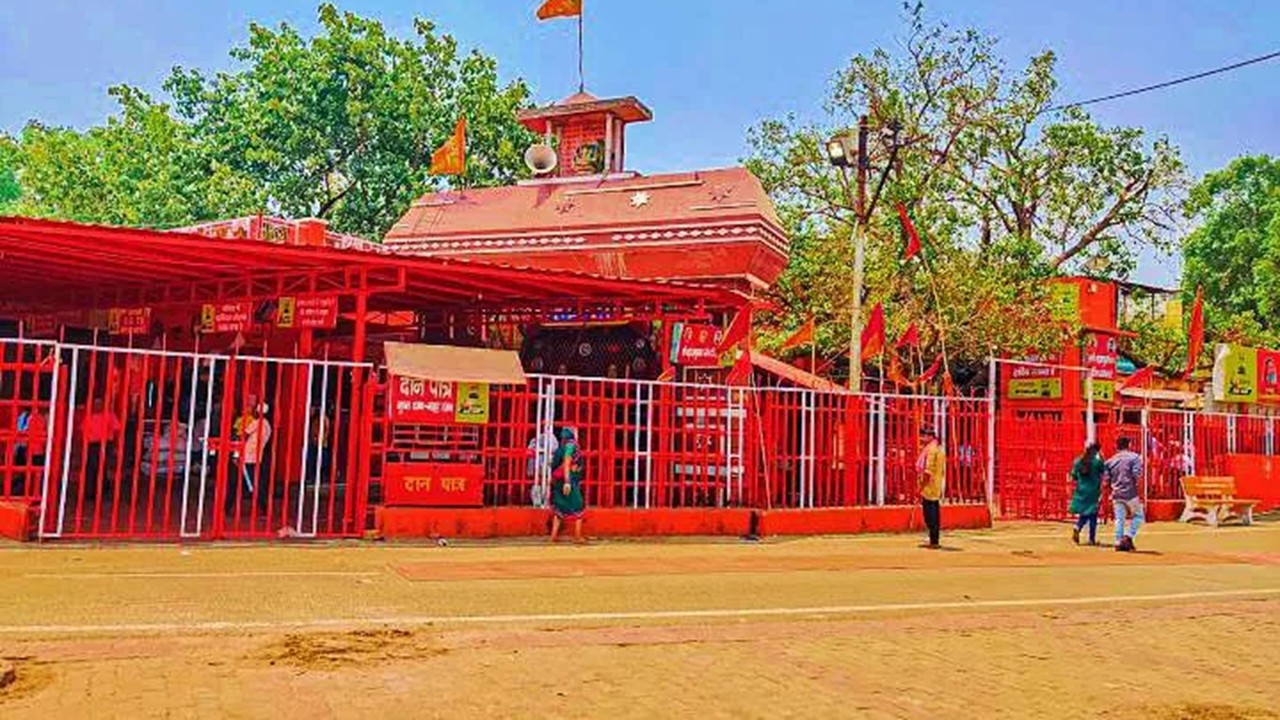
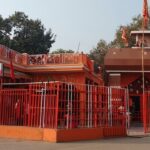
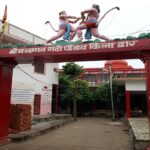
The architecture of the Lete Hanuman Temple is unlike that of most traditional Sanatana temples, as its spiritual significance far outweighs architectural grandeur. Situated near the sacred Triveni Sangam and the Allahabad Fort, the temple is built around one of its most remarkable and massive reclining deity of Sri Hanuman. Measuring nearly 20 feet in length, the deity is depicted lying in a relaxed posture, a rare representation that makes the temple unique among Hanuman temples across India. The Garbha Griha is designed to provide devotees with a close and uninterrupted view of the deity, creating a deeply personal and devotional experience.
Despite its relatively simple structure, the temple exudes a powerful spiritual charm. The deity is adorned daily with bright vermilion (sindoor), colourful flower garlands, sacred cloth, and offerings from devotees, transforming the Garbha Griha into a vibrant center of worship. Spacious prayer halls, open courtyards, and pilgrim pathways allow thousands of worshippers to move comfortably through the temple complex.
Festivals Celebrated in Lete Hanuman Temple
Hanuman Jayanti – Hanuman Jayanti is the most important festival celebrated at the temple. Thousands of devotees gather to participate in special prayers, bhajans, processions, and religious discourses dedicated to Sri Hanuman.
Ram Navami – As the greatest devotee of Sri Rama, Hanuman Ji is closely associated with Ram Navami celebrations. The temple witnesses special worship and increased pilgrim activity during this festival.
Kumbh Mela and Magh Mela – The temple experiences an enormous influx of devotees during the Kumbh Mela and Magh Mela. Pilgrims who come to bathe at the Sangam make it a point to seek blessings from Lete Hanuman Ji afterward. During these periods, the temple becomes one of the busiest spiritual centers in Prayagraj.
Tuesdays and Saturdays – These days are considered especially sacred for Hanuman worship. Large crowds gather for darshan, chanting, and special offerings. Many devotees observe fasts and visit the temple on these days seeking relief from difficulties and fulfilment of wishes.
Nearby Attractions
A visit to the Lete Hanuman Temple can easily be combined with several important attractions in Prayagraj:
Triveni Sangam – The sacred confluence of the Ganga, Yamuna, and Saraswati rivers, considered one of Sanatana’s Divya Kshetra’s.
Akshayavat – The legendary immortal banyan tree associated with ancient Vedic traditions and spirituality.
Patalpuri Temple – An ancient underground temple located within the fort complex and considered highly sacred.
Best Time to Visit Lete Hanuman Temple
The temple can be visited throughout the year, but the most pleasant months are from October to March when the weather is comfortable for sightseeing and pilgrimage. Devotees seeking a vibrant spiritual atmosphere often visit during Magh Mela, Kumbh Mela, Hanuman Jayanti, or Tuesdays and Saturdays.
Temple Timings of Lete Hanuman Temple
The Lete Hanuman Temple is generally open daily from
Morning 5:00 AM to 2:00 PM
Evening 5:00 PM to 8:00 PM
with extended hours until 10:00 PM on Tuesdays and Saturdays, the most auspicious days for Sri Hanuman ji’s worship.
How to Reach Lete Hanuman Temple
The best way to plan is through Tirtha Yatra’s Ayodhya Kashi Yatra package. All the arrangements for your Yatra will be taken care of which you focus only on the spiritual experience of the journey.

By Air – The nearest airport is Prayagraj Airport (Bamrauli), which is well connected to major Indian cities.
By Rail – Prayagraj Junction is one of the most important railway stations in North India. The temple is located approximately 7 km from the station.
By Road – Prayagraj enjoys excellent road connectivity with major cities such as Varanasi, Lucknow, Kanpur, and Ayodhya
0


Leave a Reply