
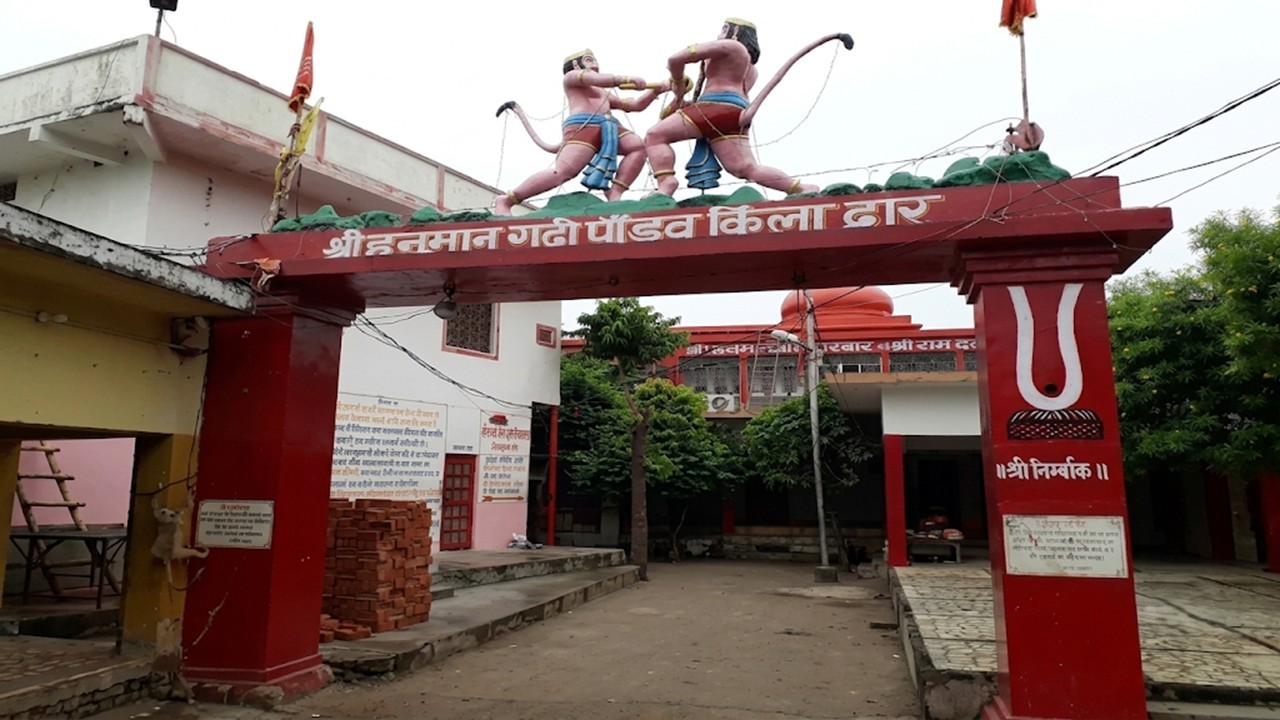
Situated within the spiritually charged kshetra of Naimisharanya, one of Sanatana’s most ancient and revered pilgrimage kshetra’s, Hanuman Gadhi stands as a powerful symbol of devotion, strength, courage, and unwavering faith. Dedicated to Sri Hanuman ji, the supreme devotee of Sri Rama, this sacred temple attracts thousands of pilgrims who seek divine protection, blessings, and spiritual upliftment. Situated amid the sacred forests, sacred ponds, and divya kshetra associated with Vedic sages and Puranic traditions.
For centuries, Sri Hanuman continues to reside in subtle form within Naimisharanya, safeguarding its sanctity and preserving the spiritual energy accumulated through countless yajnas, penances, and scriptural recitations.
Naimisharanya: The Sacred Land of Sages
To understand the importance of Hanuman Gadhi, one must first appreciate the spiritual significance of Naimisharanya itself. Situated in the Sitapur district of Uttar Pradesh, Naimisharanya, often referred to as “Neemsar,” is among the most sacred pilgrimage sites mentioned in Vedic scriptures. According to the Puranas, it was here that eighty-eight thousand sages assembled to perform prolonged sacrificial rituals and seek divine knowledge. This Sacred Forest became the setting for many important spiritual discourses, including narrations of the Mahabharata and several Puranas.
The kshetra is believed to possess extraordinary spiritual vibrations because of the incessant prayers, yajnas, and penances performed by saints and sages over thousands of years. Numerous temples, Kunda’s, ghats, and sacred shrines dot the landscape, making Naimisharanya a living repository of India’s spiritual heritage. Hanuman Gadhi forms an essential part of this divya kshetra, offering pilgrims a place to experience the blessings of the great devotee of Sri Rama.
Stala Purana of Hanuman Gadhi
The most fascinating aspect of Hanuman Gadhi lies in its deep connection with the Ramayana. According to local traditions, the temple commemorates one of Sri Hanuman’s greatest acts of devotion and heroism.
The Puranic record relates to the event involving the powerful demon Ahiravana, ruler of Patal Lok, the underworld. During the war between Sri Rama and Ravana, Ahiravana deceitfully abducted Sri Rama and Sri Lakshmana and carried them into the depths of the underworld. Realizing their disappearance, Hanuman embarked upon a perilous journey to rescue them.
After entering Patal Lok and overcoming numerous obstacles, Sri Hanuman confronted Ahiravana in a fierce battle. Using his immense strength, intelligence, and divine powers, he defeated the demon and liberated Rama and Lakshmana. The temple’s central iconography depicts Sri Hanuman emerging triumphantly from the underworld while carrying Sri Rama and Sri Lakshmana on his shoulders, symbolizing supreme devotion and selfless service.
This remarkable event has made Hanuman Gadhi a sacred symbol of protection, loyalty, courage, and divine intervention. Devotees believe that just as Hanuman rescued Rama and Lakshmana from danger, he continues to protect his devotees from adversity and negative influences.
Why Sri Hanuman Chose Naimisharanya
Local traditions further suggest that Sri Hanuman maintains a subtle spiritual presence in Naimisharanya even today. According to tradition preserved by local saints and priests, Sri Hanuman chose this sacred forest as one of his divine abodes due to its immense spiritual importance and association with ancient sages.
The sacred forest has long been regarded as a center of divine knowledge and spiritual energy. Since Sri Hanuman embodies humility, wisdom, service, and devotion, his association with a place renowned for scriptural learning appears deeply appropriate. Pilgrims often believe that the blessings obtained at Hanuman Gadhi are particularly powerful because of the combined sanctity of both Sri Hanuman and Naimisharanya.
Temple Architecture
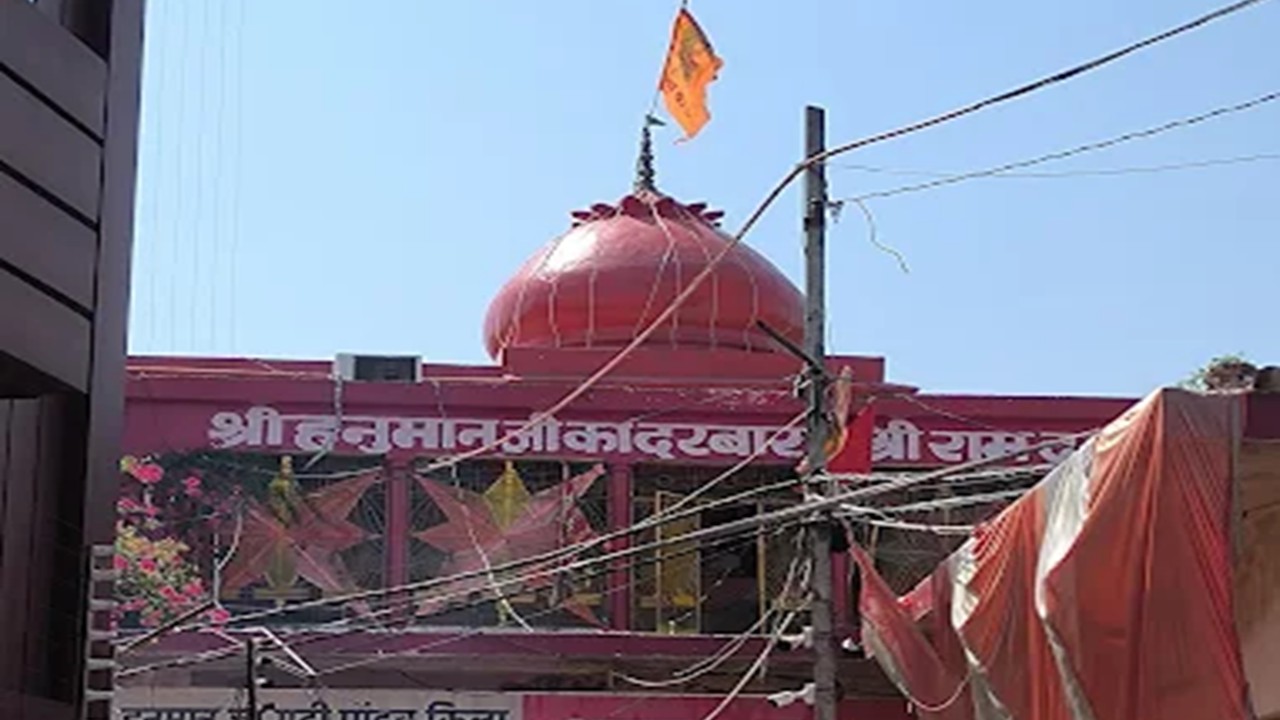
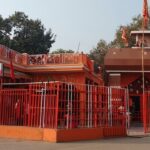
Although Hanuman Gadhi does not possess the monumental scale of some famous Indian temples, its spiritual aura far surpasses its physical dimensions. The temple reflects traditional North Indian temple architecture characterized by simplicity, devotion, and accessibility.
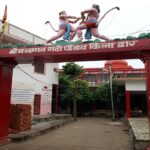
The entrance welcomes devotees through a gateway adorned with motifs and sacred symbols. As pilgrims enter the temple complex, they encounter an atmosphere filled with devotional energy generated by continuous prayers, chanting, and worship.
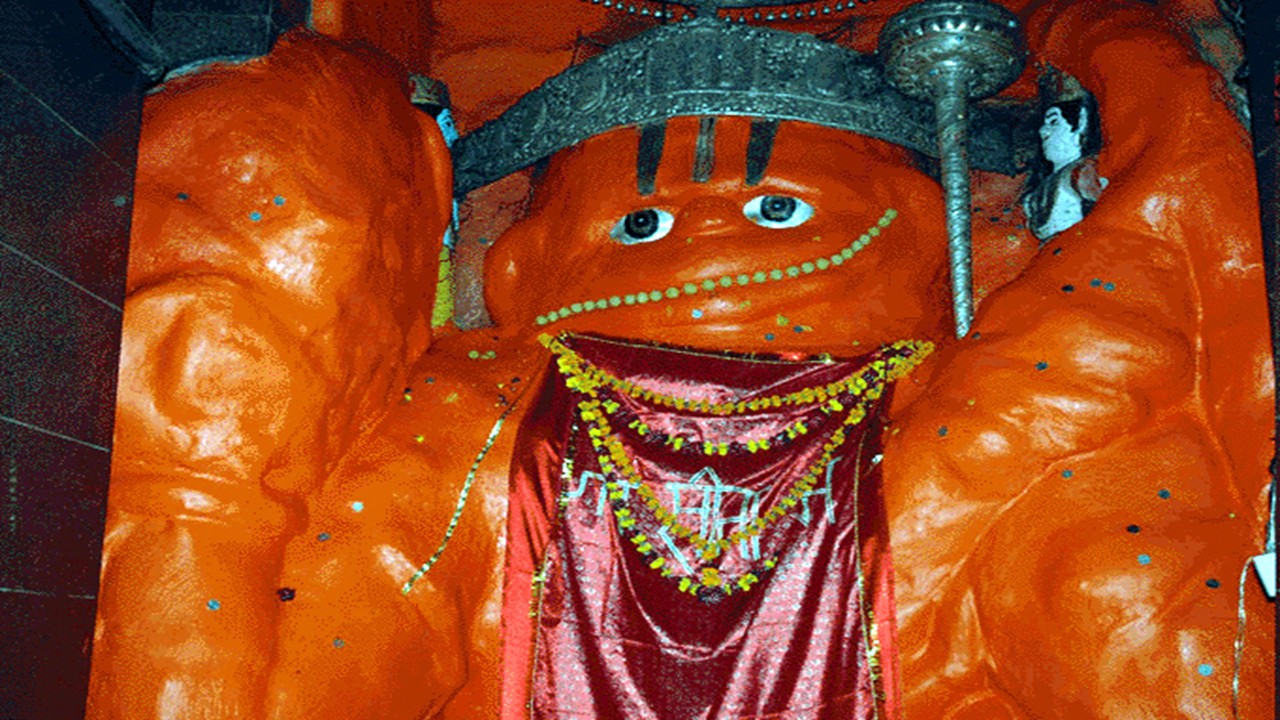
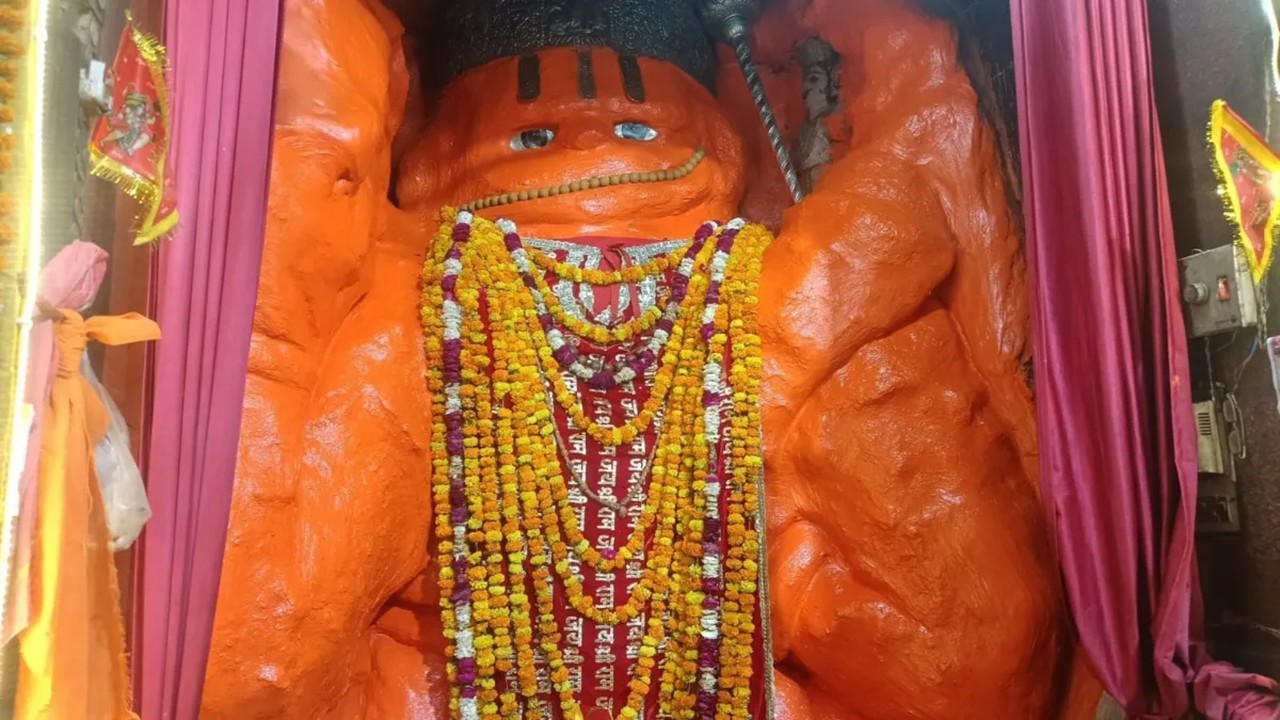
The Garbha Griha houses the principal deity of Sri Hanuman, beautifully decorated with vermilion, flowers, garlands, and sacred offerings. One of the distinctive features associated with the temple is its representation of Hanuman ji carrying Sri Rama and Lakshmana, an image that vividly recalls the rescue from Patal Lok.
The temple courtyard provides adequate space for devotees to sit quietly, meditate, recite sacred texts, and engage in personal prayer. The sound of temple bells and Vedic shloka creates a serene environment that inspires inner peace and spiritual reflection.
The South-Facing Hanuman
One of the unique features of Hanuman Gadhi is that the deity faces the south direction. Because of this, the temple is often referred to as a Dakshineshwar Hanuman Temple. In Vedic traditions, south-facing Hanuman deities are considered especially powerful protectors against negative influences, fear, evil energies, and planetary afflictions.
Many devotees specifically visit the temple to perform prayers aimed at removing obstacles, gaining courage, overcoming challenges, and attaining protection from unseen adversities. The south-facing aspect of the deity significantly enhances the temple’s reputation as a center of divine guardianship.
Offerings at Hanuman Gadi
The temple maintains a vibrant schedule of daily worship throughout the year, drawing devotees from across the region to seek the blessings of Sri Hanuman. From the early hours of the morning until evening, the temple resonates with the sound of prayers, Vedic sloka, and bhajans. Worshippers visit the shrine to offer their respects, express gratitude, and pray for strength, protection, courage, and success in their lives.
Devotees present a variety of traditional offerings to the deity, including vermilion (sindoor), jasmine oil, fresh flowers, coconuts, betel leaves, incense sticks, and sweets such as laddus and boondi. These offerings symbolize devotion, purity, and surrender to Sri Hanuman. Many devotees also undertake special prayers and vows, believing that sincere worship at the temple helps remove obstacles and brings divine grace.
One of the most important aspects of worship at Hanuman Gadhi is the recitation of the Hanuman Chalisa. Pilgrims can often be seen chanting the sacred verse repeatedly within the temple premises, seeking Sri Hanuman’s blessings for protection, courage, and spiritual strength. The powerful verses of the Chalisa create an atmosphere of deep devotion and reverence, enhancing the spiritual experience of visitors.
Festivals Celebrated at Hanuman Gadi
Hanuman Jayanti: The grandest festival of Hanuman Gadhi, celebrated with special pujas, Hanuman Chalisa recitations, bhajans, and elaborate aartis in honour of Sri Hanuman’s birth.
Ram Navami: Commemorates the birth of Sri Rama and highlights the inseparable bond between Sri Rama and his greatest devotee, Sri Hanuman.
Tuesdays and Saturdays: Considered especially sacred for Hanuman worship, attracting devotees who offer sindoor, sweets, and prayers while reciting the Hanuman Chalisa.
Diwali and Dussehra: Celebrated with devotion and festive splendor, as the temple is beautifully decorated and illuminated to mark these important Ramayana-related festivals.
Best Time to Visit Hanuman Gadi
Although Hanuman Gadhi remains open throughout the year, the most pleasant period for visiting is between October and February. During these months, the weather remains cool and comfortable, allowing pilgrims to explore the entire Naimisharanya pilgrimage circuit with ease. Major festivals during this period further enhance the spiritual atmosphere.
Temple Timings of Hanuman Gadi
Morning: From 5:00 AM onwards the temple opens
Evening Closing: Ater Sunset at 9:00 PM the temple closes.
Best Time for Darshan: Early morning and evening aarti hours.
Visitors are advised to check locally for exact timings during major festivals such as Hanuman Jayanti, Ram Navami, and other special occasions, when schedules may be extended.
Nearby Attractions
Hanuman Gadhi’s location within Naimisharanya allows pilgrims to combine their visit with several other significant religious sites.
Chakra Tirth – The most important pilgrimage spot in Naimisharanya, Chakra Tirth is the place where Sri Vishnu’s divine chakra fell to earth. Pilgrims traditionally begin their spiritual journey here.
Lalita Devi Temple – One of the most revered Shakti temples in the region, dedicated to Mata Lalita Devi. It is considered among the principal attractions of Naimisharanya.
Vyas Gaddi – Associated with Maharishi Veda Vyasa, this sacred site commemorates the place where scriptures and Puranic traditions were transmitted.
Dadhichi Kund – Linked to the sage Dadhichi, who sacrificed his bones for the welfare of the devas, this sacred water body holds immense Puranic significance.
How to Reach Hanuman Gadhi
The best way to plan is through Tirtha Yatra’s Ayodhya Kashi Yatra package. All the arrangements for your Yatra will be taken care of which you focus only on the spiritual experience of the journey.

By Air – The nearest major airport is Chaudhary Charan Singh International Airport in Lucknow, approximately 90 to 100 km away.
By Rail – The nearest railway station is Naimisharanya Railway Station, which connects the pilgrimage town with important cities in Uttar Pradesh.
By Road – Naimisharanya enjoys good road connectivity with Lucknow, Sitapur, Hardoi, Kanpur, and other major towns of Uttar Pradesh.
0


Leave a Reply