
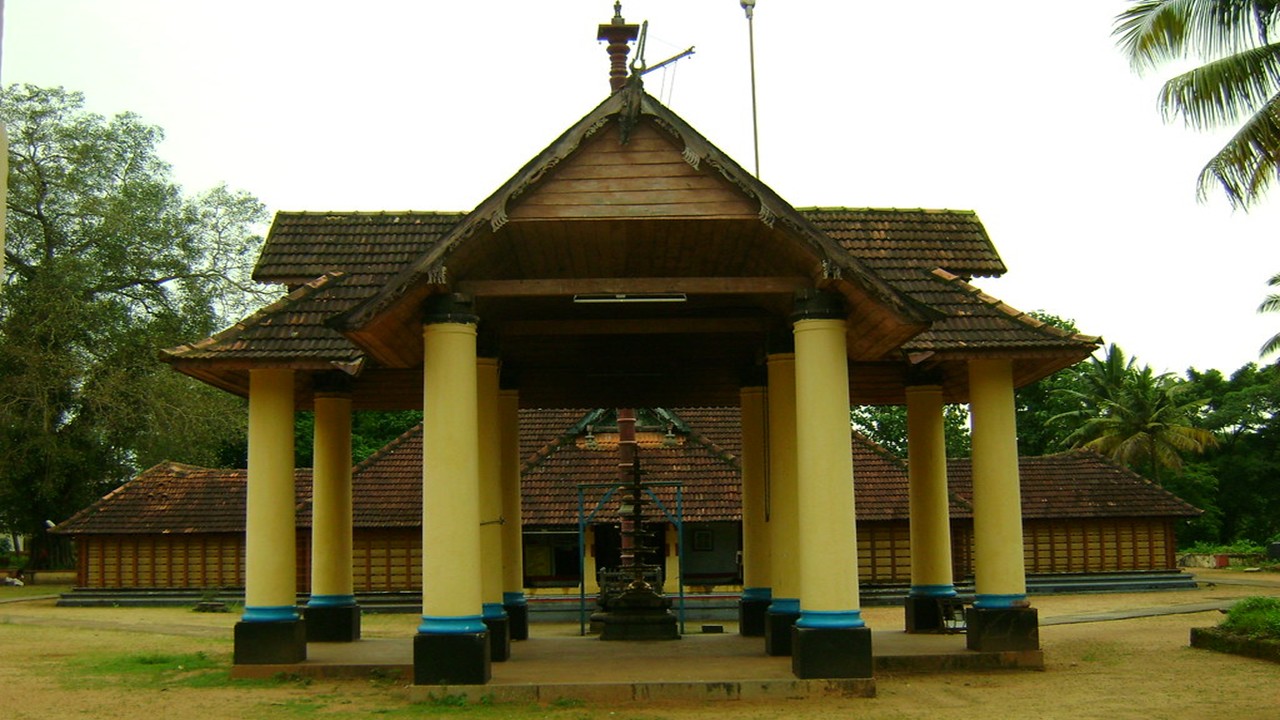
This temple is dedicated to the worship of Lord Vamana, the fifth incarnation of Lord Maha Vishnu, who incarnated on earth to bless Mahabali, the righteous and beloved ruler of Kerala.
Nestled in the tranquil village of Thrikkakara near Kochi, in God’s Own Country, Kerala, this beautiful and simple elegant architecture temple carries a legacy of 1000 to 2000 years of old tradition, rituals, and the story of Lord Vamana and Maha Bali.
This is the only unique and rare temple in Kerala as well as in India, where Lord Vamaha, an avatara of Lord Maha Vishnu is worshipped. There are only a few temples of Lord Vamana in India.
For those seeking spiritual solace, serenity, and a truly divine experience, it is a must-visit destination for devotees and spiritual seekers.
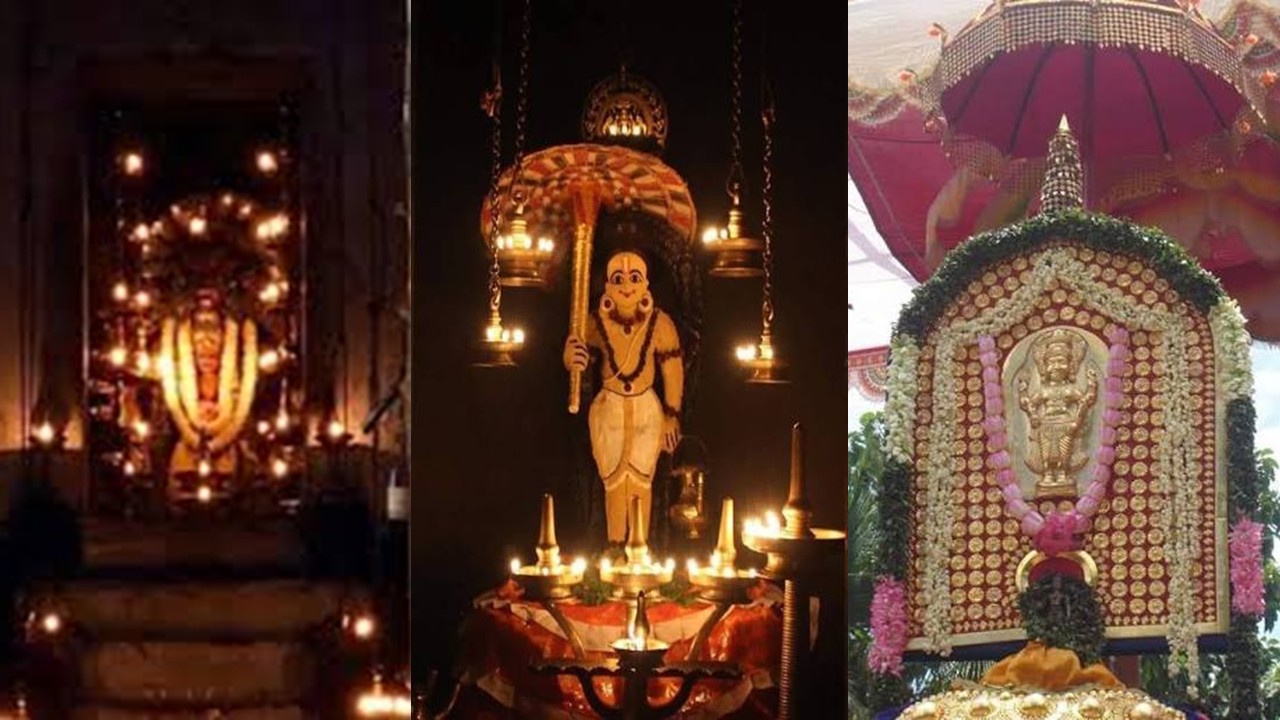
Other Deities Worshiped Inside the Temple Complex
Why is Thrikkakara Vamana Temple famous?
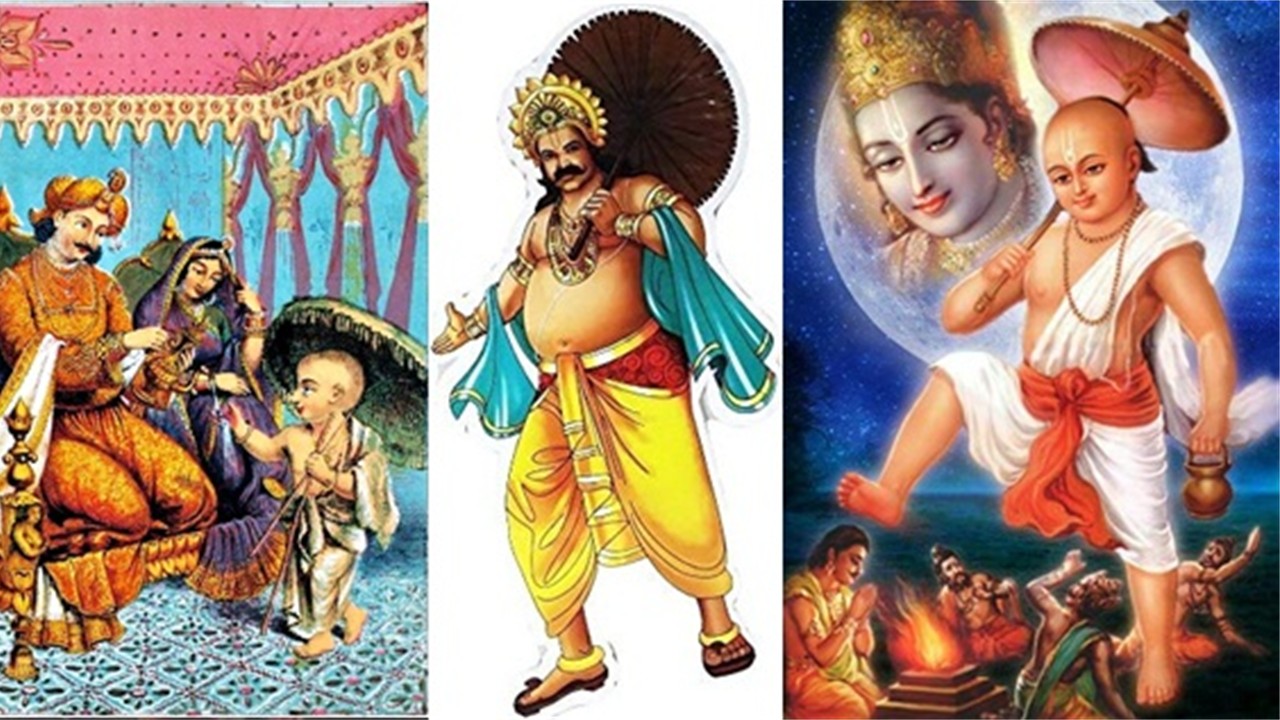
Timeless Tale of Lord Vamana and King Mahabali
King Mahabali, also known as Bali Chakravarti, was the grandson of great devotee Prahlada and also a great Vishnu devotee. Although he was born into the Asura clan, he was a righteous, generous, and great devotee of Lord Vishnu. Under his dharmic rule, his kingdom flourished like heaven on earth. There were no poverty, hunger, falsehood, or chronic and age-old diseases. His subjects lived in peace, prosperity, and happiness, and they loved him dearly for his just and compassionate rule.
King Bali was so powerful that he conquered heaven and threw the devas out of their abode. This created panic among the devas who approached Lord Vishnu and requested to help them to regain heaven.
Over time, due to growing power and influence, it gave rise to pride. To restore dharma and balance the universe, Lord Vishnu incarnated on earth as Vamana.
One day, King Mahabali was performing a grand Yajna under the guidance of his Kula Guru, Shukracharya. During the Yajna, a young Brahmin Boy, Vamana, arrived at the sacrificial site. Instead of asking for wealth or riches, He requested only a small piece of land measuring three paces of His feet.
Mahabali, known for his generosity, readily agreed to the request. However, Shukracharya, recognizing the divine identity of the young Brahmin, warned the king that the boy was none other than Lord Vishnu. Despite the warning, Mahabali remained true to his promise and offered the requested land.
The very next moment, the dwarf Brahmin Boy assumed the magnificent Trivikrama form. He took His first step and covered the entire earth region i.e. Bhuloka. With His second step, he covered the entire cosmos. And He had no place to keep His third step.
King Mahabali realized that the young Brahmin was not a mere child, and realizing to be Lord Maha Vishnu Himself, surrendered completely at His lotus feet. Bowing his head with humility. Lord Trivikrama gently placed his third step on the king’s head and sent him to Palala Loka. This act is considered as Sharanagati, the highest expression of complete surrender and not regarded as Mahabali’s defeat.
Pleased with his unwavering devotion and humility, Lord Vishnu granted Mahabali a unique boon—that he would be permitted to visit his beloved subjects once every year. This annual visit is celebrated across Kerala as Thiruvonam, the most important day of the Onam festival.
According to tradition, the name Thrikkakara is derived from the Malayalam words “Thiru-Kaal-Kara,” meaning “the sacred place where the holy feet of Lord Vamana touched the earth.” This divine event sanctified the place, making it one of the most revered pilgrimage centres dedicated to Lord Vamana.
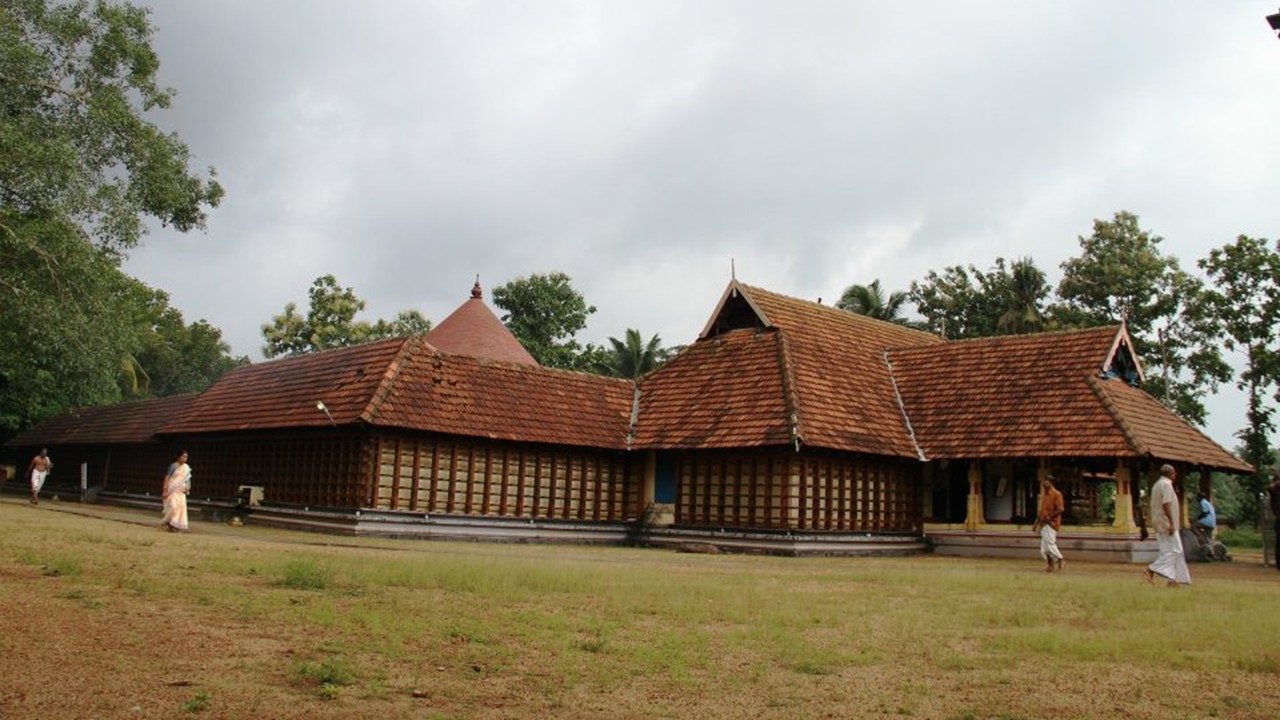
Architecture of Thrikkakara Vamana Temple
Unlike many South Indian temples that are known for their towering gopurams, the Thrikkakara Vamana Temple has a simple yet elegant entrance. The temple complex is enclosed by sturdy laterite walls, reflecting the distinctive architectural style of Kerala.
The stone walls of the Srikovil are adorned with beautiful carvings depicting the divine story of Lord Vamana and King Mahabali, also Dashavataras, adding to the temple’s artistic and spiritual significance.
Divine Circular Srikovil
Chuttuvilakku
Namaskara Mandapam
Kapila Tirtham
Major Festivals Celebrated at Thrikkakara Vamana Temple
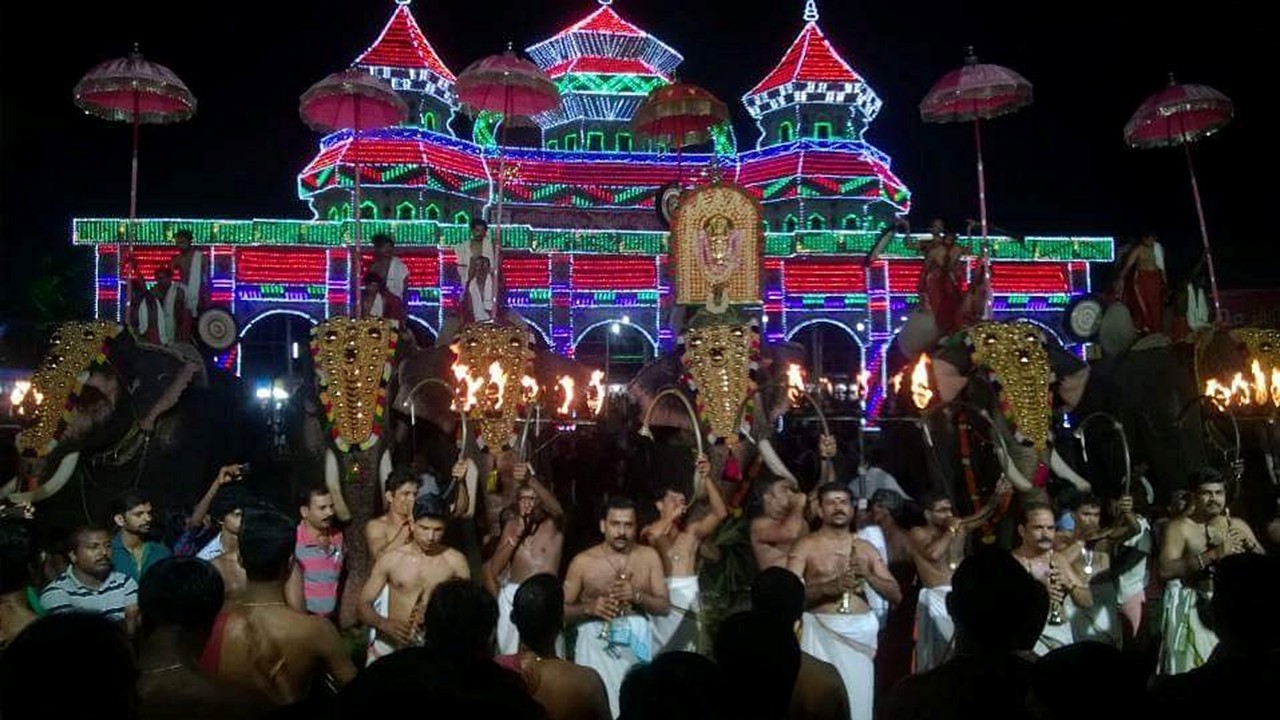
The celebrations begin with Kodiyettu, a flag-hoisting ceremony. During this season, the temple comes alive with the vibrant sounds of Chenda Melam, along with Kathakali, Pulikali, classical music, and dances performances.
Throughout the ten days of the festival, Lord Trivikrama is adorned in ten different forms representing Dashavatara. Special Vamana avatara is the major attraction and attracts large number of crowds to witness this grandeur.
Another major attraction of the festival is the grand and elaborate Pookalam, a floral decoration inside the temple premises.
Traditional Onam Sadya is served on the day of Uthradam and Tiruvonam. The festival concludes with the traditional Arattu festival, a sacred bathing procession of the Deity.
Tiruvonam: This is the 10th day of the Onam celebration. This is the most auspicious day that falls under the Tiruvonam star in Chingam masam (August-September).
The celebrations include Attam Chamayam (royal procession), Pookalam (floral carpet), Pulikali (tiger dance), and the grand Onam Sadya (traditional feast). This day is considered as the day when Mahabali visits his beloved people. The temple experiences a huge crowd to have the darshan of Lord Vamana, and blesses them with prosperity, peace, and happiness. Mahabhishekam, special alankaram, and grand deeparadhana are the major rituals performed on this day.
Vaikuntha Ekadashi: Since it is a Vaishnava temple, this day is celebrated with great festive fervour and devotion. Special Puja, Vishnu Sahasranama Parayana, and other rituals are conducted. Every monthly Ekadashi is also celebrated with bhakti and shraddha.
Sri Krishna Janmashtami: This day is celebrated on the Ashtami Tithi of the Bhadrapada month, also known as Krishna Ashtami. This day is celebrated when Ashtami Tithi coincides with Rohini Nakshatra.
On this day, Nishita Puja is performed at midnight, according to the birthtime of Lord Krishna. Midnight Deeparadhana and Mangala Aarti are offered to Lord Gopala Krishna.
Lord Gopala Krishna is beautifully adorned with silk garments and fresh flowers, and offerings such as butter, milk, curd, and aval (flattened rice) are presented to Him.
Vishu: This is another major festival celebrated at the Thrikkakara Vamana Temple. It marks the Malayalam New Year and is observed with special prayers and rituals.
Also, other festivals like Rama Navami, Narasimha Jayanti, and Deepavali are also celebrated with immense devotion and festive spirit.
Timings of Thrikkakara Vamana Temple
Best Time to Visit
Visiting this temple on Thursdays and Ekadashi days are also considered very auspicious.
However, visiting the temple during monsoon season is not recommended, as Kerala witnesses’ heavy rainfall.
Dress Code for Men and Women
- Men must wear a mundu or dhoti and are required to remove their shirts before entering the temple.
- Women should wear a saree, set mundu, or salwar kameez (churidar).
Nearby Places to Visit
Ernakulam Shiva Temple: This is an ancient and famous Shiva temple, located 14 km away from the temple. Lord Shiva is the presiding deity of the temple.
Sri Poornathrayeesa Temple: It is one of the most prominent Vaishnava temples dedicated to Lord Vishnu worshiped in the form of Santhanagopala Krishna. This is famous for celebrating the annual Vrischikotsavam festival and is located 12 km away from Trikkakkara.
Sri Edappally Mahaganapathy Temple: It is a famous Lord Ganesha temple, located in Edappally, Ernakulam district, Kerala. Devotees visit this temple seeking blessings to remove obstacles in life, and gain success, and prosperity. It is just 7 km away from Trikkakkara Vamana Deva temple.
Kalady: It is one of the important pilgrimage sites in Sanatana Dharma. It is the birthplace of Adi Shankaracharya and is situated on the banks of River Periyar. It is located at a distance of 22 km from the Vamana Temple.
These sacred sites can easily be covered along with Thrikkakara Vamana Deva Temple, making for a spiritually enriching pilgrimage circuit around Kochi.
How to Reach Thrikkakara Vamana Moorthy Temple
From comfortable travel and accommodation to darshan arrangements, all your needs are taken care of. Our thoughtfully planned itinerary ensures a seamless and hassle-free experience, allowing you to focus entirely on your spiritual journey.
By Air: Cochin International Airport is the nearest airport to the Thrikkakara Vamana Temple, located 26 km away from the temple. From here, a taxi or public transport is readily available to the destination.
By Railway: Ernakulam Junction is the nearest railway station, which is 121 km away from the temple. From here, local public and private transportation are available.
By Road: The town of Trikkakara is well connected to Kochi and other major cities and towns. There are frequent KSRTC and private buses from nearby towns and cities. Taxis and auto-rickshaws are also readily available, making the temple easily accessible by road.
Leave a Reply